
AR-15 Complete Uppers
AR-15 Upper: Should You Build or Buy in 2026?
Apr
Table of Contents
If you are trying to decide whether to build or buy an AR-15 upper in 2026, the real answer depends on your budget, your experience level, and how specific you want your setup to be. The upper assembly does most of the rifle’s real work. It houses the barrel, gas system, handguard, upper receiver, and usually the bolt carrier group and charging handle if you choose an AR-15 complete upper. It also has a major impact on reliability, recoil feel, weight, and accuracy.

For some shooters, building makes sense because it gives them full control over barrel length, rail style, gas system, muzzle device, and features such as a slick-side or AR–15 side-charging upper. For others, buying a factory-assembled upper is the smarter move because it saves time, reduces guesswork, and gets the rifle running faster. In 2026, that choice is less about right versus wrong and more about what kind of shooter you are.
Why does the upper matter so much
A lot of AR owners focus first on the lower, trigger, or stock, but the upper is where performance really starts to take shape. Barrel quality, gas port tuning, receiver fitment, handguard rigidity, and proper assembly all affect how the rifle cycles and shoots. That is why shoppers comparing AR-15 uppers or looking for the best AR-15 uppers are usually trying to solve for more than one thing at once. They want a setup that matches their intended use without wasting money on the wrong parts.
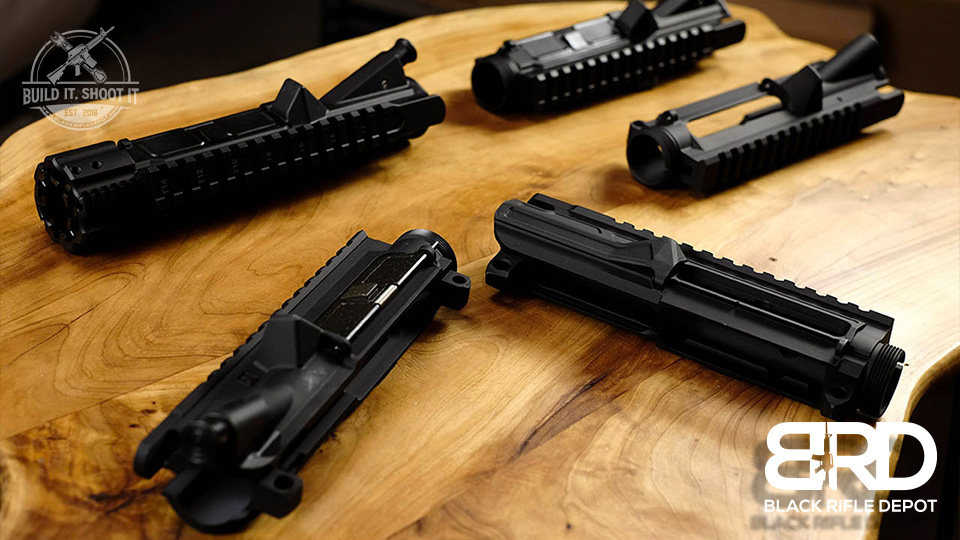
A complete upper also makes the AR platform attractive because it lets one lower support multiple roles. You can run a general-purpose 16-inch upper for range use, then swap to another upper for a more specialized setup. Black Rifle Depot’s catalog reflects that flexibility with a range of fully assembled uppers, calibers, barrel lengths, and feature sets.
The case for building an AR-15 upper
Building your own upper is attractive for one big reason: control. You get to choose the exact AR-15 upper receiver, barrel profile, gas system, handguard length, muzzle device, and finish. If you have a very specific goal in mind, such as a lightweight rifle, a suppressor-ready setup, or a certain rail-and-barrel combination, building can be the cleanest path. General build-versus-buy discussions from 2024 through 2026 continue to point to customization as one of the biggest reasons enthusiasts go the DIY route.
Building also teaches you how the rifle actually works. You learn how the barrel interfaces with the receiver, how the gas system supports cycling, how torque and alignment matter, and why details like headspace, gas block placement, and handguard fit are not just background specs. That knowledge pays off later when you maintain the rifle, troubleshoot malfunctions, or decide to upgrade.
There is also the satisfaction factor. A custom upper built around your own priorities simply feels different. Some shooters want a pinned muzzle device and a long handguard. Others want a compact upper with a specific optic height, a specific handstop placement, or a left-side charging solution. If you are the kind of buyer who hates compromise, building often feels worth the effort.
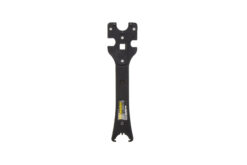
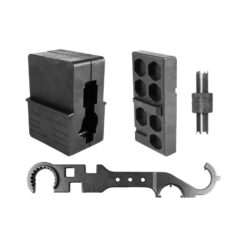
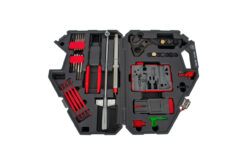
Still, building is not automatically the cheaper option. That assumption used to be more common, but it breaks down fast once you start adding quality parts and the right tools. A bare receiver, barrel, handguard, gas block, gas tube, muzzle device, BCG, charging handle, small parts, and shipping can add up quickly. Then you still need tools like a torque wrench, punches, receiver support tools, and some type of AR 15 upper receiver vise block or reaction-style support.


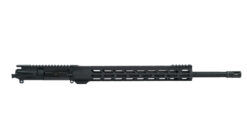
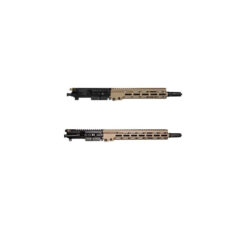
Geissele URGI CHF Barrel 5.56 Complete Upper Assembly Black/DDC Anodized-MK16 HG
Geissele AutomaticsThe case for buying a complete AR-15 upper
Buying a complete upper is usually the best move for shooters who want speed, simplicity, and confidence. A factory-built AR 15 complete upper removes much of the uncertainty from the process because the barrel, gas system, handguard, and upper receiver are already assembled and aligned. Black Rifle Depot specifically highlights this convenience, noting that complete uppers eliminate guesswork and provide buyers with a faster path to a ready-to-run rifle configuration.
This is especially important for first-time AR owners and buyers who do not already own armorer tools. A prebuilt upper helps you skip the learning curve and focus on ammo, optics, and range time instead of barrel nut timing or gas block alignment. It also helps buyers avoid hidden costs. Once you factor in tooling, trial and error, and the chance of ordering the wrong parts, a complete upper often becomes the better value. That is one reason the 2024 AR15Discounts article argues that buying makes sense for many shooters, depending on skill set and tools.
A second advantage is time. If you buy a ready-made upper, installation is usually as simple as pinning it onto a compatible lower. That matters in 2026 because many buyers are not looking for a project. They are looking for a dependable upper that ships quickly, fits their lower, and works. If that sounds like your situation, shopping AR-15 upper parts is likely smarter than sourcing every part individually.
Is building actually cheaper in 2026?
If you already own the tools, understand what parts to buy, and are disciplined enough to avoid feature creep, building can save money in certain cases. That is particularly true when you catch parts on sale, already have a spare BCG or charging handle, or are piecing together a very specific setup that would cost more as a premium factory offering.
But for the average shooter, buying a complete upper is often more cost-effective once everything is counted. Recoil’s component list alone shows how many pieces go into a functional upper: receiver, barrel, muzzle device, gas system, rail, BCG, and charging handle. Add assembly tools, and the margin between “build” and “buy” can disappear fast.
Black Rifle Depot also currently offers complete uppers across a broad price range, from value-minded assemblies to premium options, which makes the buy option even more competitive. In practical terms, that means a shooter looking for an AR-15 upper for sale may find a ready-built option that costs less than a comparable scratch build once tools and shipping are included.
The place where building still wins is precise customization. If your goal is simply “good quality at a fair price,” buying is hard to beat. If your goal is “exactly this barrel, exactly this handguard, exactly this gas system, and exactly this finish,” building starts to justify itself.
Time, tools, and the reality of the DIY route
A lot of blog posts make the upper assembly sound easier than it is. It is not impossible, but it is also not just a matter of snapping parts together. The upper is less forgiving than many first-time builders expect. Barrel installation, proper torque, gas block alignment, handguard fit, and muzzle device timing all matter. A poor upper body build can lead to cycling issues, accuracy problems, or premature wear.
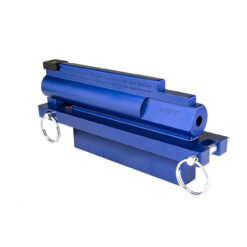
At a minimum, most builders should expect to use a vise, a torque wrench, and a receiver support method such as an AR 15 upper vise block, an AR 15 upper vice block, or a reaction-rod-style tool, depending on the setup. Even among support tools, there are design differences and tradeoffs, which is why experienced builders often compare options rather than treating every best AR-15 upper receiver vise block as interchangeable.
Time matters too. A first build may take hours, including research, setup, double-checking compatibility, and cautious assembly. Buying a complete upper eliminates nearly all of that. For plenty of shooters, the time savings alone are worth it.
Reliability: build or buy?
This depends less on the category and more on the execution.
A well-built custom upper, built with quality parts, can be outstanding. In some cases, it may outperform a mass-produced upper because every part was selected with a specific purpose in mind. But the key phrase is “well-built.” Reliability comes from good parts, correct assembly, and proper testing.
A pre-built upper has the advantage of consistency. The factory has already assembled the components as a system, and reputable sellers are offering combinations designed to work together. Black Rifle Depot’s messaging around complete uppers leans heavily into this benefit, framing them as a practical way to reduce compatibility issues and get dependable performance from day one.
For beginners, that matters. Buying a complete AR-15 upper with a bolt carrier group is often the safer route than trying to piece together every moving part without prior experience. It is also easier to diagnose issues later when you begin with a known-good baseline.
Who should build and who should buy?
You should consider building if you already know the exact features you want, enjoy the mechanical side of the platform, and either own the tools or plan to keep building more ARs. The value of those tools increases over time if you plan to use them again.
You should probably buy if this is your first upper, you want a dependable setup quickly, or you are trying to get the most value per dollar without extra tooling costs. Buying also makes sense if your priority is convenience or if you simply do not want to troubleshoot assembly details.
For most Black Rifle Depot customers, the smartest middle-ground solution is a complete upper from a reputable source, then customizing around it with optics, lights, slings, or a second upper later. That approach gives you an immediate shooting solution without closing the door on future upgrades.
What to look for when shopping in 2026
In 2026, buyers should look beyond just price. Start with the rifle’s intended role. Is this a general-purpose 16-inch build, a compact setup, a range gun, or something specialized? Then look at barrel length, chambering, rail type, handguard length, muzzle device, and whether the upper includes a BCG and charging handle.
Pay attention to product descriptions. Some buyers searching for a blemished AR-15 complete upper are looking for the best value possible, while others want a premium fit and finish. Some want a standard top-charging setup, while others are specifically shopping for an AR-15 side-charging upper. The right choice depends on use, not hype.
Compatibility still matters too. Most standard AR-15 uppers work with standard AR-15 lowers, but not every caliber, magazine system, or platform variation follows the same rules. Black Rifle Depot’s own FAQ guidance notes that fit can depend on platform size and magazine type, so it is worth verifying details before you buy.
FAQ
Below are some of the most common questions buyers ask when deciding whether to build or buy an upper.
Is it cheaper to build or buy an AR-15 upper in 2026?
It can be cheaper to build if you already own tools and can source parts wisely, but for many buyers, a complete upper is more cost-effective once you factor in the cost of tools, shipping, and any mistakes made during assembly.
What parts are needed to build an AR-15 upper?
A basic build typically requires an upper receiver, barrel, gas block, gas tube or piston setup, handguard, muzzle device, charging handle, and bolt carrier group. Depending on the receiver style, you may also need a forward assist and dust cover assembly.
How much does it cost to build an AR-15 upper from scratch?
There is no single price because cost depends on part quality and whether you already own tools. Budget builds can stay reasonable, but premium barrels, rails, BCGs, and assembly tools can quickly raise the final total.
Are pre-built AR-15 uppers more reliable than custom builds?
Not automatically, but pre-built uppers are often more consistent for newer shooters because the parts are already assembled and aligned as a system. A carefully built custom upper can be just as reliable when quality parts and correct assembly are involved.
How long does it take to build an AR-15 upper?
For an experienced builder, assembly can be fairly quick. For a beginner, research, setup, and cautious assembly can stretch the process into several hours or longer. Buying a complete upper saves a significant amount of time.
Do you need special tools to build an AR-15 upper?
Yes. Most builders will want a vise, a torque wrench, punches, and a support tool, such as an AR-15 upper receiver vise block or another secure receiver-holding solution.
What are the advantages of buying a complete AR-15 upper?
The biggest advantages are convenience, faster setup, fewer compatibility headaches, and a lower risk of assembly errors. It is the fastest path to a functional upper.
Can a beginner easily build an AR-15 upper?
A beginner can do it, but it is not always easy. The process requires patience, the right tools, and attention to detail. Many first-time buyers are better served by starting with a complete upper and learning from there.
Are all AR-15 uppers compatible with any lower receiver?
Many standard AR-15 uppers fit standard AR-15 lowers, but compatibility can vary by caliber, platform size, and magazine pattern. Always verify that the upper is intended for your lower setup before buying.
What should I look for when buying an AR-15 upper in 2026?
Focus on intended use, barrel length, chambering, included components, rail style, and whether the upper includes the BCG and charging handle. Compatibility and overall configuration matter more than chasing trends.
Final thoughts
In 2026, building an AR-15 upper still makes sense for experienced shooters who want full control and enjoy the process. But for many buyers, especially first-time owners or anyone who values speed and simplicity, buying a complete upper is the more efficient choice. You avoid tooling costs, reduce the risk of assembly errors, and reach the range faster.
If your goal is a dependable setup with less guesswork, a complete upper is usually the better buy. If your goal is total customization and you are comfortable with the extra work, building can absolutely be worth it. Either way, the smartest move is to start with quality components and a clear purpose for the rifle.
When you are ready to shop AR 15 uppers for sale, compare configurations carefully and choose an upper that fits how you actually shoot. Black Rifle Depot makes it easier to find the right AR-15 upper, upper part, or complete assembly without overcomplicating the process.
For additional content, check us out on our Rumble or X Account.
