
AR-15 Parts
Best AR-15 Kits by Caliber: 5.56 vs .223 Wylde vs .300 Blackout
Apr
Table of Contents
Choosing between AR-15 Kits by caliber is one of the biggest decisions a builder can make. A lot of buyers start by comparing handguards, furniture, and price, but the chambering often matters more than any cosmetic feature. The caliber you choose affects ammo availability, recoil, intended use, barrel-length preferences, and even the finished rifle’s versatility. That is why the smartest way to shop AR-15 Kits is to start with your goal first, then match the kit to that purpose.
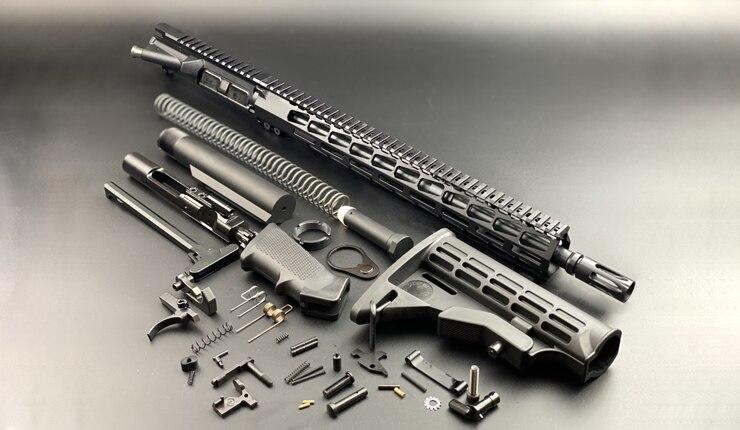
For many builders, the choice comes down to three of the most common options on the market: 5.56 NATO, .223 Wylde, and .300 Blackout. All three can work well in the AR platform, but they are not interchangeable in terms of strengths. Some AR-15 rifle kits are built for general-purpose use, some lean more toward accuracy and ammo flexibility, and others are tailored for short-barreled performance and specialized roles. Understanding those differences can save you money and help you end up with a rifle that actually fits how you plan to shoot.
Why Caliber Matters When Choosing AR-15 Kits
When you shop for an AR-15 build kit, you are really choosing more than just a collection of parts. You are choosing the foundation of the rifle’s role. A 5.56 kit is often the easiest recommendation for a first build because it is common, versatile, and supported by a broad range of ammo. A .223 Wylde kit appeals to builders who want the flexibility to shoot both .223 Remington and 5.56 NATO while chasing a bit more precision. A .300 Blackout kit makes the most sense for builders who want better short-barrel performance or a caliber that is especially popular in suppressed setups.
That is why comparing AR-15 Parts Kits strictly by price can be misleading. A lower-priced 5.56 kit might be the best value for one shooter, while another builder may get more practical benefit from paying more for a .223 Wylde or .300 Blackout configuration that better fits the job. The best kit is not always the cheapest one. It is the one that offers the best balance of functionality, ammo options, and long-term usefulness for your intended build.
5.56 NATO AR-15 Kits: The Most Practical All-Around Choice
If you want the broadest all-around recommendation, 5.56 NATO still has a strong case. A 5.56 chamber is built to handle 5.56 NATO ammunition and can generally also fire .223 Remington safely, which gives the shooter more flexibility than a rifle chambered strictly for .223 Remington. The reason is the chamber design. Sources that explain the difference point to the 5.56 chamber’s longer lede, which helps it accommodate the higher pressure of 5.56 ammo more safely, while.223 chambers typically use a shorter lede that is more accurate but less forgiving with hotter 5.56 loads.
That makes 5.56-based ar 15 kits a great fit for builders who want one rifle that can do a little bit of everything. They are well-suited for training, general range use, recreational shooting, and many defensive roles. If you are buying your first AR-15 parts kit, 5.56 is often the easiest place to start because parts, magazines, and ammo are widely available.
Another advantage is barrel length flexibility. A 16-inch 5.56 setup remains one of the most common and practical configurations for a general-purpose build. It gives you solid ballistic performance, easy parts compatibility, and a familiar setup without steering too far into niche territory. For most builders who simply want a dependable carbine, 5.56 is still the baseline option that is hardest to regret.
.223 Wylde AR-15 Kits: A Smart Middle Ground
If 5.56 is the all-around standard, .223 Wylde is the option many builders choose for more flexibility and a stronger, accuracy-oriented reputation. The .223 Wylde chamber was designed as a hybrid that safely handles both .223 Remington and 5.56 NATO ammunition. It does that by combining design elements from each chamber type, giving shooters the versatility of 5.56 compatibility while aiming for improved precision with .223 loads. Faxon describes it as using 5.56-style external dimensions and leade characteristics with a tighter .223-style freebore diameter, while NRA Family explains that the design essentially blends the ability to handle higher-pressure 5.56 with a shorter leade aimed at accuracy.
For buyers comparing AR-15 build kits, the .223 Wylde is especially appealing for range rifles, more accuracy-focused carbines, and builders who want one rifle that can handle both common ammo types without sacrificing the “best of both worlds” concept. That does not mean every .223 Wylde rifle will automatically outshoot every 5.56 rifle, because barrel quality, ammo choice, and build quality still matter. But it does mean the chamber itself is popular with shooters who care about both precision and flexibility. NRA Family also notes that the practical accuracy advantage can be modest for many shooters, which is worth keeping in mind if you are trying to decide whether the upgrade matters for your use.
If your idea of the perfect AR is a 16-inch rifle that handles training, target work, and general-purpose shooting while keeping ammo options wide open, a .223 Wylde kit makes a lot of sense. It is often a great fit for builders who want a slightly more refined direction than a basic 5.56 setup.
.300 Blackout AR-15 Kits: Built for Short Barrels and Specialized Roles
A .300 Blackout kit fills a different role than 5.56 or .223 Wylde. While 5.56 is a general-use workhorse and .223 Wylde is a hybrid, precision-minded option, .300 Blackout is especially popular with shooters who want strong short-barrel performance or a setup commonly used with suppressors. Ballistic Advantage notes that .300 Blackout performs especially well in short barrels and points to 9 to 10 inches as the best overall barrel length range for balancing portability, power, and accuracy. The same source says 8 to 10 inches is a strong window for suppressed setups and that .300 Blackout remains effective at practical distances from short barrels.
That is what makes .300 Blackout such an attractive option in certain AR-15 kits. If you want a compact defensive firearm, a short-barreled build, or a platform that shines in roles where maneuverability matters, .300 Blackout deserves serious consideration. It was developed with short-barreled designs in mind, which gives it a very different personality from 5.56.
The tradeoff is cost and specialization. Builders should expect .300 Blackout ammo to be more expensive than common 5.56 in many cases, and the caliber is not as universal for general plinking or broad ammo availability. It can absolutely be worth it, but usually for shooters who know why they want it. If your build is centered around short-barrel efficiency, suppressed interest, or a more specialized home-defense concept, then .300 Blackout can be the right answer. If you just want a versatile first rifle with easy access to ammo, 5.56 or .223 Wylde may be the simpler choice.

What AR-15 Kits Usually Include
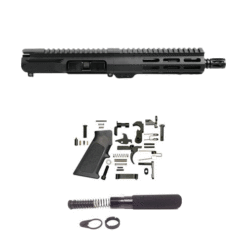
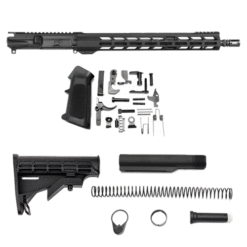
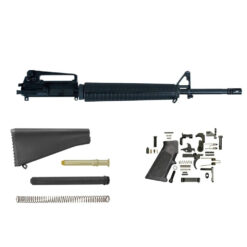
Before choosing caliber, it also helps to know what an AR-15 Parts Kit actually includes. Not every listing means the same thing. AR15Discounts’ guide clearly breaks down the differences: lower parts kits usually include the small components needed to complete a stripped lower, such as the trigger components, safety selector, magazine catch, bolt catch, takedown and pivot pins, springs, and detents. Lower build kits typically include the buffer system and stock, while upper parts kits focus on items such as the forward assist and ejection port cover assembly.
That matters because many AR-15 lower parts kit listings do not include the serialized lower receiver, and many complete-looking kits still require the builder to purchase it separately. Depending on the package, you may also need to confirm whether the kit includes a complete upper, bolt carrier group, charging handle, stock, sights, magazines, or other finishing parts. In other words, one AR-15 build kit may be almost ready to assemble, while another may still require several major purchases.
For buyers comparing 5.56, .223 Wylde, and .300 Blackout, this is important because caliber selection affects the barrel and upper assembly, but many lower-side parts remain shared across builds. That is one reason some builders eventually own multiple uppers in different calibers.
Which Caliber Should You Choose?
If you want the most practical and beginner-friendly answer, choose 5.56. It is the strongest all-around option for first-time builders who want a dependable rifle with broad ammo flexibility and general-purpose usefulness.
If you want a rifle that can handle both .223 and 5.56 while leaning a little more into the precision side of the conversation, choose .223 Wylde. It is a great fit for builders who want a more refined take on the standard AR setup without losing versatility.
If you want a short-barreled or more specialized rifle, especially one centered on compact handling, choose .300 Blackout. It is not the universal answer for every build, but it can be the best option for shooters who know they want that setup.
FAQ
If you are still comparing caliber options, compatibility, and overall value, these common questions can help narrow down the right AR-15 kit for your build.
What is the difference between 5.56 NATO and .223 Remington in an AR-15 kit?
The main difference is chamber and pressure compatibility. A 5.56 chamber generally has a longer leade and is built to handle higher-pressure 5.56 NATO ammunition, while a .223 Remington chamber uses a shorter leade and is not generally recommended for 5.56 ammo. A rifle chambered in 5.56 can generally shoot .223 safely, but the reverse is not typically advised.
Can I shoot 5.56 NATO ammo in a .223 Wylde AR-15?
Yes. The .223 Wylde chamber was designed to safely fire both .223 Remington and 5.56 NATO ammunition. That dual compatibility is one of its biggest selling points.
What does an AR-15 kit include, and what parts do I still need to buy?
It depends on the kit. A lower parts kit generally includes internal components such as the trigger parts, safety selector, magazine catch, pins, springs, and detents. Lower build kits often add the buffer system and stock. You may still need to buy the stripped lower receiver and, depending on the listing, possibly the upper, BCG, charging handle, or sights.
Is .223 Wylde more accurate than 5.56 NATO?
It can be, but not always in a dramatic way. The .223 Wylde chamber is designed to improve flexibility and precision by blending 5.56 pressure tolerance with more accuracy-oriented chamber dimensions. Even so, overall accuracy still depends heavily on barrel quality, ammo, and the rest of the build. NRA Family notes that the practical difference may be minimal for many shooters.
What is .300 Blackout best used for in an AR-15?
.300 Blackout is especially useful in short-barreled and compact AR setups. It is commonly chosen by builders who want strong short-barrel performance, maneuverability, and a caliber often associated with suppressed shooting.
Can I convert my 5.56 AR-15 kit to .300 Blackout?
Often yes, but it depends on the exact setup. Since many lower-side AR components are shared, builders commonly change the upper-side components when moving between calibers. The barrel must match the caliber, and builders should always verify compatibility before swapping parts. The lower components discussed in AR15Discounts’ guide are largely standard lower parts, which is part of why caliber changes often center on the upper assembly.
Which AR-15 kit caliber is best for home defense: 5.56, .223 Wylde, or .300 Blackout?
That depends on the rifle configuration and your priorities. 5.56 is a practical all-around option, .223 Wylde offers similar versatility with a more accuracy-focused chamber design, and .300 Blackout is especially attractive for short-barreled home-defense concepts because it performs well from shorter barrels.
Is it cheaper to build an AR-15 from a kit or buy a complete rifle?
It varies by parts quality and configuration. A kit can be cost-effective because it lets you choose exactly what you want and avoid paying for factory features you may replace anyway. But the total cost still depends on what the kit includes and what you still need to buy, especially the stripped lower and any missing upper or finishing components.
What barrel length should I choose for my AR-15 kit in 5.56 vs. 300 Blackout?
For a general-purpose 5.56 build, 16 inches remains one of the most common and practical choices. For .300 Blackout, Ballistic Advantage recommends 9 to 10 inches as the best overall range for balancing power, portability, and accuracy, with 8 to 10 inches also standing out for suppressed use.
Is .300 Blackout ammo more expensive than 5.56, and is it worth it?
In many cases, yes, .300 Blackout costs more than the common 5.56. Whether it is worth it depends on your goals. For builders who want short-barrel performance and a more specialized setup, it can absolutely be worth the tradeoff. For broad training and high-volume range use, 5.56 is often the more economical choice.
Final Thoughts
The best AR-15 Kits by caliber depend on how you actually plan to use the rifle. A 5.56 build is still the default choice for broad utility. A .223 Wylde build gives you a flexible hybrid chamber that many shooters prefer for accuracy-minded use. A .300 Blackout build offers clear advantages when short barrels and specialized roles are the priority. None of them is automatically best for everyone.
That is why the smartest way to shop AR-15 Parts Kits is to define the role first, then choose the kit that supports it. If you are looking at AR-15 kits, AR-15 rifle kits, or a full AR-15 build kit, Black Rifle Depot makes it easier to compare quality options and find the setup that will make your finished rifle the most useful once the build is complete.
For additional resources, check out our X Page.
