
If you are replacing worn components, upgrading a rifle, or just trying to identify what belongs where, understanding AR-15 upper & lower parts makes shopping a lot easier. The AR-15 platform is modular, but that also means there are many individual components that can confuse newer builders and buyers.
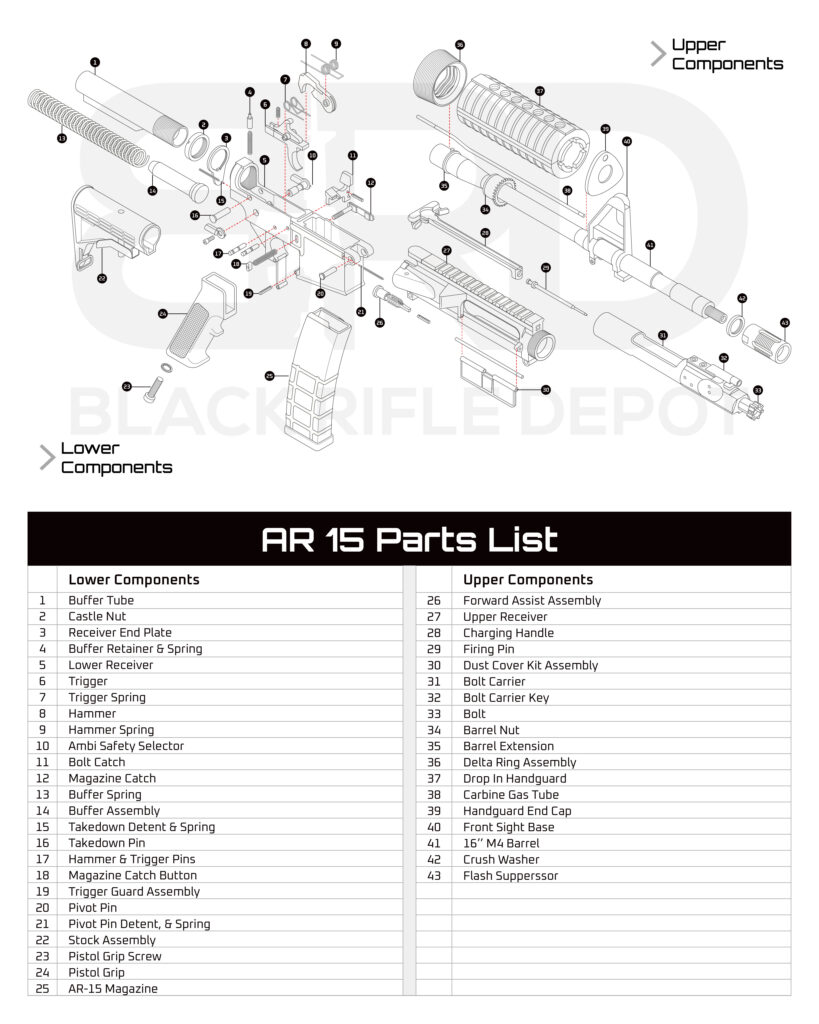
This guide breaks down the common AR-15 upper & lower parts shown in the diagram below, with brief, accurate descriptions of each. Use it as a reference when you need to locate replacement parts or compare components before ordering from Black Rifle Depot.
Understanding AR-15 Upper & Lower Parts
The AR-15 is split into two main sections: the AR-15 lower parts and the AR-15 upper parts. The lower houses many of the fire control and handling components, while the upper contains the barrel, bolt carrier group components, and several parts involved in cycling and directing the rifle.
When shopping for AR-15 upper & lower parts, identifying the exact part name helps you find compatible replacements faster and avoid ordering the wrong component.
AR-15 Lower Components
The lower section of an AR-15 includes the components responsible for fire control, magazine retention, handling, and stock attachment. Centered around the lower receiver, these components work together to manage the rifle’s basic operation.
1. Buffer Tube
Also called the receiver extension, the buffer tube threads into the rear of the lower receiver and houses the buffer and buffer spring. It also provides the mounting point for the stock on most AR-15 rifles.
2. Castle Nut
The castle nut secures the buffer tube in place on carbines with an adjustable stock. It threads against the receiver end plate to help keep the receiver extension from backing out.
3. Receiver End Plate
This plate sits between the castle nut and the lower receiver. It helps retain the rear takedown pin spring and provides a stable interface for the buffer tube assembly.
4. Buffer Retainer & Spring
The buffer retainer and its spring keep the buffer and buffer spring captured inside the buffer tube when the upper and lower receivers are separated.
5. Lower Receiver
The lower receiver is the serialized core of the lower assembly and serves as the housing for the trigger group, magazine catch, safety selector, grip, and stock assembly.
6. Trigger
The trigger is the part the shooter presses to release the hammer. It is a key component of the rifle’s fire control group.
7. Trigger Spring
The trigger spring provides the tension needed for proper trigger reset and function. It works with the trigger-and-disconnector system to ensure reliable operation.
8. Hammer
The hammer is released when the trigger is pulled, striking the firing mechanism to ignite the cartridge primer. It is another critical component of fire control.
9. Hammer Spring
The hammer spring provides the tension that powers the hammer forward. Proper spring tension is important for reliable ignition.
10. Safety Selector
The safety selector allows the shooter to place the rifle on safe or fire from the lower receiver’s control position. It helps manage the rifle’s firing status and is a standard part of the AR-15 fire control system.



11. Bolt Catch
The bolt catch holds the bolt open after the last round is fired when used with a functioning magazine follower. It also allows manual locking of the bolt to the rear.
12. Magazine Catch
The magazine catch locks the magazine into the lower receiver. When the button is pressed, it releases the magazine for removal.
13. Buffer Spring
Also known as the action spring, the buffer spring works with the buffer to absorb rearward energy and return the bolt carrier group forward during cycling.
14. Buffer Assembly
The buffer adds resistance and mass inside the buffer tube, helping control cycling speed and recoil impulse. Different buffer weights can affect how the rifle runs.
15. Takedown Detent & Spring
This small detent and spring help retain the rear takedown pin in position while still allowing the upper and lower to be separated for maintenance.
16. Takedown Pin
The takedown pin is the rear receiver pin that connects the upper and lower receivers. It can be pushed out to hinge the rifle open.
17. Hammer & Trigger Pins
These pins secure the hammer and trigger components inside the lower receiver. They allow the fire control parts to pivot during operation.
18. Magazine Catch Button
The magazine catch button is pressed by the shooter to release the magazine. It works in conjunction with the magazine catch on the opposite side of the receiver.
19. Trigger Guard Assembly
The trigger guard protects the trigger area and helps prevent unintended contact with the trigger. Some designs also provide additional room for glove use.
20. Pivot Pin
The pivot pin is the front receiver pin that connects the upper and lower receivers. It allows the upper to swing open when the rear takedown pin is removed.
21. Pivot Pin Detent & Spring
This detent and spring keep the pivot pin retained in the receiver while still allowing it to be pushed out when needed.
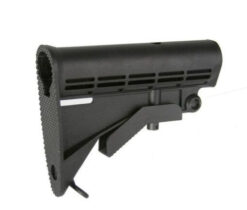
22. Stock Assembly
The stock provides the rear shoulder contact point for the rifle. Depending on the design, it may be fixed or adjustable for the length of pull.
23. Pistol Grip Screw
This screw secures the pistol grip to the lower receiver. It also helps keep the grip firmly in place during use.
24. Pistol Grip
The pistol grip provides the primary firing hand interface on the lower receiver. Grip angle, texture, and size can vary by design and shooter preference.
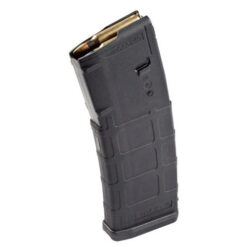
25. AR-15 Magazine
The magazine holds and feeds ammunition into the rifle. Capacity, material, and construction vary depending on the intended use and local regulations.
AR-15 Upper Components
The upper section of an AR-15 contains the parts involved in chambering, firing, gas operation, and projectile guidance. It includes the receiver, barrel assembly, handguard components, and key internal parts that help the rifle cycle reliably.
26. Forward Assist Assembly
The forward assist assembly allows the shooter to manually push the bolt carrier fully into battery if needed. Not every upper receiver uses one, but it remains common on many AR-15 configurations.
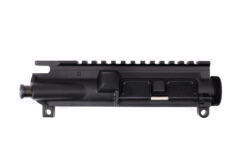
27. Upper Receiver
The upper receiver houses the bolt carrier group and charging handle, and it serves as the mounting point for the barrel, handguard system, and other upper components.
28. Charging Handle
The charging handle is used to manually cycle the action, chamber a round, or clear the rifle. It sits at the rear of the upper receiver.
29. Firing Pin
The firing pin sits inside the bolt carrier group and strikes the primer when driven forward by the hammer. It is essential to the firing sequence.
30. Dust Cover Kit Assembly
Also called the ejection port cover assembly, this part helps keep dust, dirt, and debris out of the upper receiver when the rifle is not actively cycling.
31. Bolt Carrier
The bolt carrier is the main body of the bolt carrier group that moves rearward and forward during operation. It houses the bolt and related internal components.
32. Bolt Carrier Key
The carrier key is mounted atop the bolt carrier and directs gas into the carrier to cycle the action. Proper staking and fit are important for reliable performance.


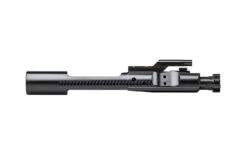
33. Bolt
The bolt locks into the barrel extension and contains the extractor and ejector components that help manage feeding and extraction. It is one of the most critical wear components in the rifle.
34. Barrel Nut
The barrel nut secures the barrel to the upper receiver. Depending on the setup, it may also interface with the handguard mounting system.
35. Barrel Extension
The barrel extension is attached to the rear of the barrel and contains the locking lugs that mate with the bolt. It plays a major role in lockup and chamber alignment.
36. Delta Ring Assembly
The delta ring assembly is commonly found on traditional carbine-style setups and helps retain standard two-piece handguards.
37. Drop In Handguard
A drop-in handguard is a non-free-float handguard that installs into the delta ring assembly and handguard cap. It provides a gripping surface and, in some models, limited accessory mounting.
38. Carbine Gas Tube
The carbine gas tube directs gas from the gas block or front sight base back into the upper receiver to cycle the bolt carrier group. Its length must match the gas system configuration.
39. Handguard End Cap
The handguard end cap sits behind the front sight base or gas block on traditional setups and helps retain the front end of a drop-in handguard.
40. Front Sight Base
The front sight base can serve as both a fixed front sight and a gas block on traditional AR-15 barrel assemblies. It is commonly seen on classic M4-style builds.
41. 16” M4 Barrel
The barrel directs the projectile and determines much of the rifle’s ballistic performance. A 16-inch M4-profile barrel is one of the most common AR-15 barrel configurations.
42. Crush Washer
The crush washer is used when installing many muzzle devices. It compresses during tightening to help properly time the flash suppressor or similar attachment.
43. Flash Suppressor
The flash suppressor attaches to the muzzle and helps reduce visible muzzle flash. It is commonly used on AR-15 rifles to help preserve visibility in low-light conditions.
FAQ’s about AR-15 Upper & Lower Parts
Below are a few common questions customers have when shopping for AR-15 upper & lower parts.
What is the difference between AR-15 upper parts and lower parts?
Upper parts are tied to chambering, firing, gas operation, and barrel setup. Lower parts are tied to the trigger system, safety controls, magazine retention, grip, and stock assembly.
Which AR-15 part is the serialized part?
The lower receiver is the serialized part of a standard AR-15. That is the component legally treated as the firearm in most standard retail transactions.
Can I replace individual AR-15 parts instead of buying a complete assembly?
Yes. Many AR-15 upper & lower parts can be replaced individually, including springs, pins, controls, bolts, charging handles, buffers, and muzzle devices. That makes the platform especially useful for repairs and upgrades.
What parts are usually included in an AR-15 lower parts kit?
A lower parts kit typically includes many small internal components, such as the trigger, hammer, springs, pins, magazine catch parts, bolt catch parts, safety selector components, and detents. Grip, trigger guard, buffer assembly, and stock components may or may not be included, depending on the kit.
What parts are usually included in an AR-15 upper assembly?
A complete upper assembly often includes the upper receiver, barrel, handguard, gas system, and muzzle device. Some complete uppers include the bolt carrier group and charging handle, while others do not.
Do I need to match the gas tube length to the barrel?
You need to match the gas tube length to the gas system length, not just the barrel length alone. For example, carbine, mid-length, and rifle gas systems use different gas tubes.
What AR-15 parts wear out the fastest?
Some of the most commonly replaced wear items include extractor-related parts, gas rings, firing pins, buffer springs, action springs, and certain small detents or springs. Bolts can also wear over time, especially in high-round-count rifles.
Can I upgrade just the trigger or just the charging handle?
Yes. The AR-15 platform allows you to upgrade individual components without replacing the entire rifle. Triggers, charging handles, safety selectors, pistol grips, stocks, handguards, and muzzle devices are all common standalone upgrades.
Why is the bolt carrier key important?
The bolt carrier key directs gas into the carrier, allowing the rifle to cycle correctly. If it is loose or improperly staked, reliability problems can follow.
How do I know which replacement AR-15 part I need?
Using a labeled diagram like the one paired with this blog is one of the easiest ways to identify the correct component. Once you know the part name, it becomes much easier to find the right replacement on Black Rifle Depot.
Final Thoughts
Knowing the names and functions of AR-15 parts makes it much easier to replace damaged components, plan upgrades, or complete a build with confidence. Whether you need a small spring, a replacement bolt, a new barrel, or complete receiver components, having a clear parts reference helps you shop smarter.
At Black Rifle Depot, this kind of parts breakdown can help customers quickly identify what they need and navigate directly to the right replacement parts on your site. If you are building, maintaining, or upgrading your rifle, understanding your AR-15 upper & lower parts is the first step toward getting the right fit for your setup.
For additional support, check out our X Page.