Uncategorized
The Best AR 15 Upgrades | Best AR 15 Modifications | 2021
Aug
If you’re like most people, you probably
started with an essential AR 15 but realized over time that you could upgrade the
rifle to fit your needs better. With the modular system on the AR 15, upgrading
its components is easier than it looks.
But, with so many different ways to customize,
we’ve broken these AR 15 parts into several categories, including essential and aesthetic upgrades, functional upgrades meant to
improve performance, and the most critical promotion of them all: yourself.
Tier 4: Handguards, Sights, Grips, and Slings
If you’re simply a beginner still figuring out
their shiny new rifle, upgrading your handguards, sights, grips, or slings
is an excellent place to start. You won’t significantly change how your AR performs,
but these upgrades and accessories may improve the function
and the rifle’s appearance.
Handguards
While handguards with mounting options are
more standard on AR 15s than they used to be, there are still plenty of rifles
with basic, plastic handguards that don’t allow mounting grips,
flashlights, or lasers.
So, if you don’t have a rail system, switching
to one is an easy upgrade for many beginners, but you’ll still need to pick
out whether you want a free-float rail system or a non-free-float system.
While they may be more challenging to install,
many people prefer free-float rail systems since they’re stronger, rigid and
improve the overall accuracy of the AR 15. A free-float system doesn’t contact the barrel, so you don’t have to deal with barrel warping.
Non-free-float systems won’t improve accuracy,
but they’re usually easier to install, more affordable, and won’t add too much
excess weight to the rifle.
Once you’ve picked out your new rail system,
you’ve still got to decide on one of three significant rail system designs and
attachment styles:
- Picatinny: Picatinny rails are the
oldest rail design and the heaviest. While its original design was meant for
mounting optics, you’ll have no trouble mounting other accessories on a
Picatinny. - M-LOK (Modular Lock): As the
newest mounting system, M-LOK rails have slots that let you mount
your accessories directly or a piece of the rail for your addition. - KeyMod: The lightweight design of
KeyMod systems has made them extremely popular, and while they function
similarly to M-LOK systems, a KeyMod system uses keyholes instead of slots.
Sights
The most accurate shots come when you’ve got
the best sight.
With traditional AR 15s, you’ve got both a
front sight and a rear sight. The rear sight features two ghost rings, a large
pinhole for nighttime and a much smaller one for daytime. The traditional
design had the rear view fixed to your carrying handle, which meant you needed
to modify your upper receiver to remove the picture, although that’s not as
common for AR 15s anymore.
With sight upgrades, many people start by
upgrading their iron sights, which is much easier if you already have a rail
system. Not only are iron sights typically more affordable, but you can upgrade
rear and front sights separately. There’s no shortage of options available.
Flip-up sights, for instance, are a popular option that gives you better
long-range accuracy.
However, if you don’t mind dishing out a
little more money, upgrading your optics with a high-quality red dot will
provide better sight for nighttime shooting and faster target acquisition.
Slings
The AR-15 is a long, heavy gun; if you’ve
got to carry it over any distance, a good sling can make all the
difference. Slings help you handle the rifle when you’re not actively using it,
so you can take some of that weight off your arms and focus on your
destination.
There are a couple of different types of
slings you can get for your AR 15, such as:
- Single-point slings: With a
single-point sling, a single loop goes over your head, and the
strap rests diagonally across your body. Single-point slings are more famous for military or law enforcement personnel since they allow you to grab
the gun quickly from the resting position, but they aren’t great for weight
distribution. - Two-point slings: For anyone not in law enforcement or the military, two-point slings are the more popular
choice. You can carry the rifle in multiple positions, and the
adjustable loops allow you to set up a more stable, accurate shot. The
only downside to two-point slings is that transitioning from one place to
another may be awkward. - Three-point slings: While you may
see the occasional three-point sling, most AR-15 owners don’t opt for this type
because it restricts gun movement and adjustment too much.
Grips
If there’s one thing that can distract even
the best shooters, it’s a grip that doesn’t feel right. Rather than worrying
about your shot, you’ll only be able to think about where to put your hands. That can affect the accuracy of your photo.
While modifying the grip on your AR 15 is an
easy (and standard) upgrade; it’s also important. Some prefer rigid grips with fiberglass reinforcement, while others prefer smooth rubber
with plenty of finger grooves.
A new grip can also come with other benefits depending on the type. For instance, you absorb recoil, reduce muzzle climb, and protect your hand against rail system heat.
Tier 3: AR 15 Muzzle Brakes, Flash Suppressors, Buffer Tube
Kits, and Heavy Buffers
Muzzle brakes, flash suppressors, heavy
buffers, and even buffer tube kits may not be aesthetic upgrades, but they can
make a big difference in how well your rifle performs.
Muzzle Brakes
If you’re worried about recoil and muzzle
climb, the right muzzle brake can make all the difference. Muzzle brakes are significant in keeping your barrel steady and reducing recoil. So you
don’t have to adjust as much while you shoot. When you fire, an AR 15 muzzle
brake redirects the gas that follows your bullet to vents on the side of the
brake.
If you use your AR 15 for competitive
shooting, muzzle brakes are often crucial for maintaining speed and accuracy.
Flash Suppressors
If you’re using an AR 15 for nighttime hunting
or prefer shooting at night, flash suppressors are almost a
requirement. When you fire, a suppressor reduces how much flash comes out of
your barrel, which makes it easier to conceal your location.
Other shooters prefer flash suppressors
because that bright flash from the barrel can distract at night and even
affect your vision.
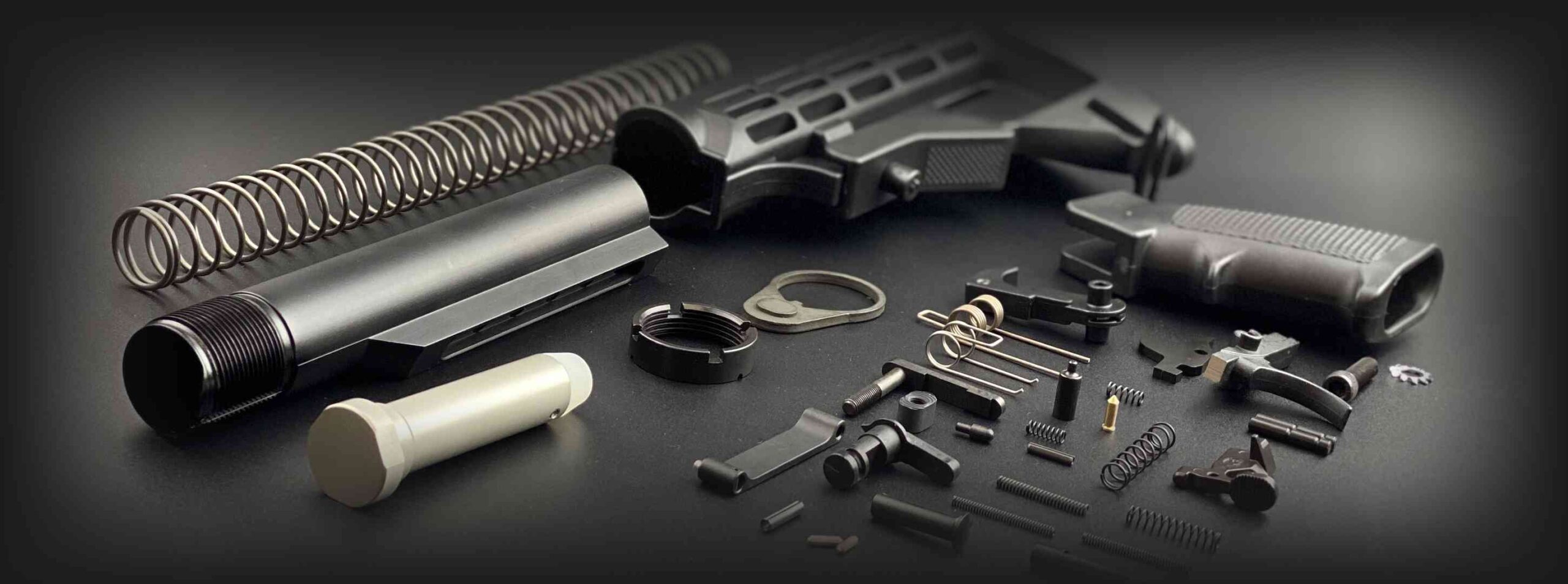
Buffer Tube Kits/Heavy Buffers
While it’s one of the more intensive upgrades
you can make for your AR 15, switching out the AR 15 buffer tube or using a
heavy buffer can be great for performance.
The actual buffer on your AR 15 serves as a
cushion between your bolt carrier group and a buffer spring. If you’re
using the right buffer weight, you can minimize recoil impulse and extend the
overall lifespan of your buffer.
If you don’t mind doing the work yourself,
buffer tube kits have everything you need to upgrade yourself.
Heavier buffer weights are popular with
AR-15s since they cause more resistance and allow the rifle to fire off a
smoother shot. Of course, too heavy buffers can also cause problems
because they may prevent the AR from cycling, messing up your ejection and
extraction.
When it comes to picking out a heavier buffer,
there are a couple of standard options:
- Heavy (H) Buffer (3.8 oz) – If
your rifle has problems with extraction, you may opt for one of
the heavy buffer models, starting at 3.8 ounces. - H2 Buffer (4.6 – 4.7 oz) – If
you have a mid-length gas system, H2 buffers work well. - H3 Buffer (5 – 5.4 oz) – If you’re
missing the traditional gas system in your AR and have a pistol caliber
build, an H3 buffer can help ensure smoother action and reliability.
Of course, if you want to dial in on
your AR’s performance, specialty buffer weights are between
the standard Heavy, H2, and H3 buffers.
Tier 2: AR 15 Barrels, Triggers, and BCGs
Once it comes to upgrading AR 15 barrels,
BCGs, and triggers, you’re making huge adjustments with considerable changes to
performance and function.
Barrels

Depending on your shooting style and what
you’re using it for, there are multiple ways to upgrade an AR 15 barrel. For
instance, longer barrels can provide a more accurate shot, but you’ll often get
more versatility and maneuverability with shorter barrels.
The lining on your barrel can also make a lot
of difference. Chrome lining on an AR 15 barrel protects the component against
corrosion and extends the life span of the barrel. For competitive shooters,
stainless steel may be the better option since it has less effect on accuracy
than a chrome lining.
Triggers
An AR 15 trigger with perfect resistance and comfort can significantly improve your shooting experience. So it’s no surprise that this is one of the first significant modifications that rifle owners like to make.
If you’re worried about firing your rifle in a
high-pressure situation, like a home invasion, single-stage triggers ensure your rifle goes off when you pull the trigger. For
competitive shooting or recreational shooting, two-stage triggers often work
better.
BCGs
When your AR 15 is malfunctioning, a common
culprit is a lack of lubrication of your bolt carrier group or AR 15 BCG. The
more you use your rifle, the more wear and tear you subject your BCG to.
Fortunately, there are plenty of ways to
upgrade your BCG to ensure you get a reliable shot. For instance, with a nickel boron-coated BCG, you’ll get slicker components that don’t
require as much lubrication.
You can also purchase AR 15-style bolt
carriers in complete kits. Many owners appreciate the AR 15-style is
lightweight and offers a higher shot speed. There are also M16-style bolt
carriers that you can use to upgrade. These carriers are heavier and slower but provide better reliability and accuracy.
Tier 1: Upgrading Skill and Training
Whether you switch out your handguard, use a
muzzle brake, or replace the trigger, the most essential AR 15 upgrade you can
make isn’t to the rifle… it’s to yourself. Even top-of-the-line, high-quality upgrades and accessories can become useless if you haven’t improved your skill and training with the gun.
A professional shooter with an essential AR 15 will still outperform a beginner with all the fanciest upgrades. Training
and skill will always matter more than accessories; the only way to
get those upgrades is through plenty of practice.
Before you make any upgrades, it’s always a
good idea for beginners to get comfortable with their rifles’ traditional design and performance. Find out what aspects you like and which parts might not serve your shooting style well. Most likely, you’re not going to need
(or want) to make all the upgrades on this list, but there may be a few
components that you want to switch out.
Final Thoughts
Not all rifles may be easy to customize, but
fortunately, the AR 15 isn’t in that category. From making easy adjustments
like AR 15 handguards and AR 15 grips to AR 15 stocks and barrels, there is no
shortage of ways to upgrade this rifle’s components.
However, investing in your skills and
training is still the best way to change your performance, which comes significantly through practice. Practice won’t just improve how well you shoot but also help you understand which parts of your AR 15 need to be
adjusted to fit your shooting style (and which ones don’t).