
AR-15 Stocks
AR-15 Buttstock: Fixed vs Adjustable – Which Is Better for Your Build?
Apr
Table of Contents
Choosing the right AR-15 buttstock is about more than appearance. The stock affects how the rifle shoulders, how consistent your cheek weld feels, how the rear of the rifle balances, and how comfortable the gun is across different shooting positions. Black Rifle Depot’s AR-15 Stocks and Buffer Kits category includes fixed stocks, adjustable stocks, receiver extensions, springs, buffers, and complete kits, which makes it easier to build around either style depending on your goals.
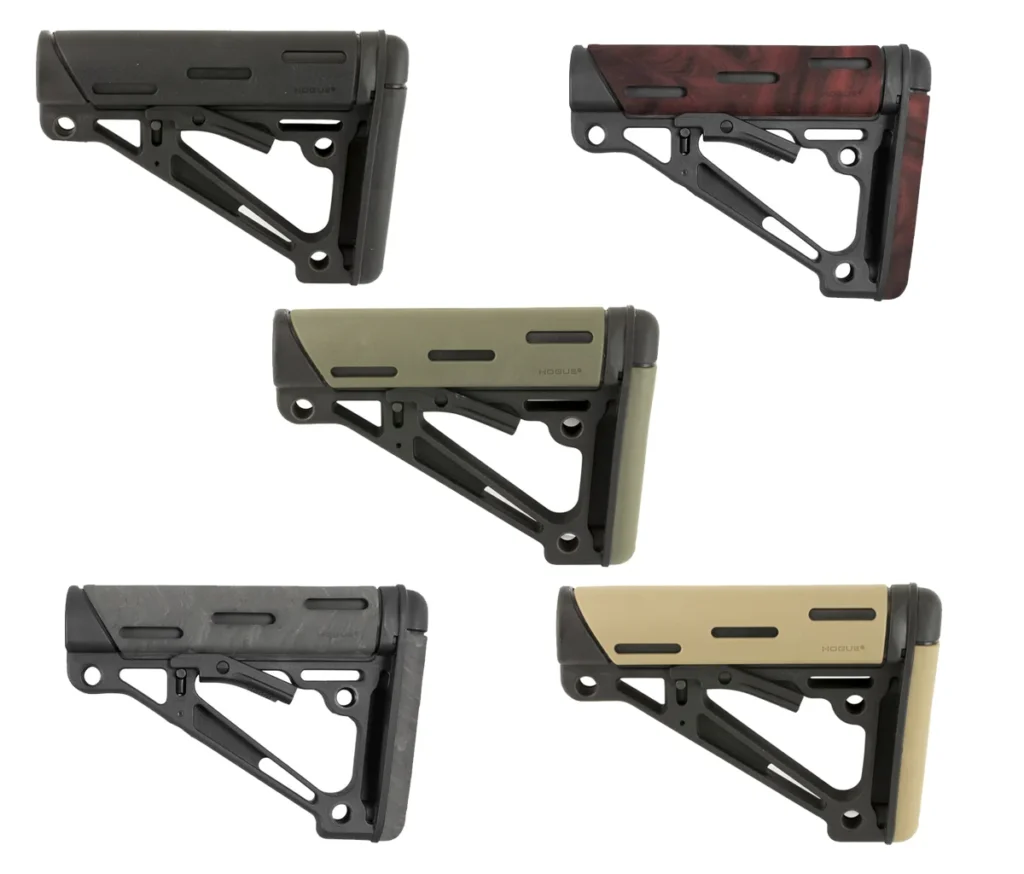
That is why the fixed-versus-adjustable debate still matters in 2026. A fixed stock gives you a locked-in feel and a set length of pull. An adjustable stock gives you flexibility, especially if the rifle is used by more than one shooter, if you shoot in different positions, or if you want a setup that can adapt to different conditions. The better choice depends on how you actually use the rifle, not on which style gets talked about more online.
Why the buttstock matters
The stock is one of the primary points of contact between the shooter and the rifle. If the fit feels off, the whole rifle can feel off. A stock that is too short, too long, too heavy, or too minimal for the build can make the rifle less comfortable and harder to shoot well. On the other hand, a stock that matches the rifle’s purpose can improve control, consistency, and overall handling.
This is especially important on AR-platform rifles because they can be configured for very different roles. A lightweight range carbine, a defensive rifle, a traditional rifle-style build, and a bench-oriented setup may all call for different stock choices. That is why people looking for the best buttstock for an AR-15 are usually not just shopping for looks. They are trying to match the rifle’s rear to the barrel length, handguard, optic setup, and intended use.
Black Rifle Depot’s stock category reflects that variety. The page includes standard adjustable stocks, micro-stock options, complete stock-and-buffer kits, A2-style fixed-stock kits, and related support parts such as carbine buffer tubes, springs, and heavy buffers.
Why some shooters still prefer a fixed AR-15 buttstock
A fixed stock remains a solid choice because it is simple and consistent. Once installed, it stays at one length and gives the rifle the same feel every time you shoulder it. That predictability is one of the biggest reasons fixed stocks still have a place on many builds.
For shooters who already know the exact length of pull they want, a fixed stock can feel more natural than an adjustable model. There is no need to change positions, and no extra adjustment mechanism to consider. You shoulder the rifle, settle in, and the feel is the same each time. That can be especially appealing on rifles intended for slower, more deliberate shooting or for builds where a classic rifle-style feel is part of the goal.
The AR 15 A2 buttstock is a good example. Black Rifle Depot offers both an A2 Stock and Buffer Kit and an A2 fixed stock option, and its product pages emphasize sturdy construction, comfortable handling, and compatibility with AR-style rifle setups. The KAK A2 kit listed by BRD includes the stock, extension tube, spring, spacer, and hardware, making it a practical all-in-one solution for a fixed-stock build.
A fixed stock can also make sense for shooters who want a more traditional profile or who are building a rifle with a classic look. It is not automatically more accurate just because it is fixed, but it can provide a steady and repeatable feel that many shooters prefer.
Where adjustable stocks have the advantage
Adjustable stocks remain popular because they give the rifle more flexibility. The biggest advantage is simple: you can change the length of pull. That means you can shorten the rifle for easier handling or extend it for a more comfortable fit, depending on the situation and the shooter.
For a general-purpose AR, that is a real benefit. A rifle used for range sessions, drills, training, or home-defense-style roles often benefits from a stock that can be adjusted quickly. If the same rifle may be shot in a T-shirt one day and heavier outerwear another day, an adjustable stock makes it easier to keep the fit comfortable. It is also the better choice if more than one person uses the rifle.
Black Rifle Depot’s Mil-Spec AR-15 Stock and Buffer Kit is built around the standard M4-style six-position adjustable stock and a 6061-T6 aluminum receiver extension. BRD’s product page presents it as a complete kit with the core components needed for installation, which is exactly why adjustable setups appeal to many builders. They are practical, widely supported, and easy to build around.
Black Rifle Depot also carries compact options like the CQC 5-Position Micro AR-15 Stock Kit, which the product page describes as smaller overall and better suited to maneuverability in tight quarters. BRD notes that this micro option weighs 4.9 ounces and is lighter than the standard stock kit, which makes it a good example of how adjustable setups can also support compact or lighter builds.



Fixed vs adjustable for accuracy
A stock does not change barrel quality or replace good fundamentals, but it absolutely affects how consistently you mount the rifle. That is where this comparison becomes more useful.
A fixed stock often appeals to shooters who want the same cheek weld and the same rear support every time. On rifles built for consistency, that repeatable feel can be a real advantage. If the gun is dedicated to one shooter and one role, a fixed setup can make a lot of sense.
An adjustable stock, though, can also support excellent shooting if it allows the rifle to fit the shooter better. A stock that lets you dial in a more natural length of pull may help you mount the rifle faster and settle more comfortably behind the optic. In practical terms, the stock that fits you best will usually do more for your real-world shooting than the stock that simply sounds better on paper.
That is why this decision should always be driven by the use case. A bench-oriented or traditional rifle may benefit from the locked-in feel of a fixed stock. A flexible all-around carbine may benefit more from an adjustable design that can be tailored to the shooter.
Weight and balance matter too
The stock also affects the balance. On some builds, a slightly heavier rear end can help offset weight up front. On others, keeping the rifle’s rear light makes the whole setup feel quicker and easier to move.
This is where a lightweight AR-15 buttstock can be appealing. Black Rifle Depot’s CQC micro stock kit is a clear example of a setup designed for compactness and reduced weight. The JE5 AR-15 Stock and Buffer Kit listed by BRD also leans into that idea, with a skeletonized frame and a lightweight design, which are called out directly on the product page.
A lighter stock can make sense on carbines where speed and handling matter, but there is a limit. If the stock is too low for your build or body type, comfort can suffer. The better approach is to consider the entire rifle. Barrel profile, optic weight, handguard length, muzzle device, and stock choice all work together. The right stock is not just the lightest or the heaviest one. It is the one that helps the whole rifle feel right.
Durability and simplicity
A lot of shooters assume fixed stocks are always tougher. There is some logic there because fixed stocks are simpler by design. Fewer moving parts can mean fewer things to adjust or potentially wear over time.
That said, a quality adjustable stock remains a proven option for everyday AR use. Modern adjustable designs are common for a reason: they work well, fit different shooters easily, and pair naturally with common carbine buffer tube setups. Rather than assuming one category is always better, it is smarter to focus on product quality, intended use, and the level of flexibility you actually need.
Black Rifle Depot’s catalog supports both directions. You can go with a traditional fixed arrangement through an A2-style kit, or build around a mil-spec adjustable stock kit or a compact stock kit, depending on what kind of rifle you want.
Do not forget the buffer system
This is one of the biggest mistakes people make when shopping for a buttstock for an AR-15. The stock is not really a standalone decision. On an AR-15, the stock works with the receiver extension, buffer, and spring, which is why Black Rifle Depot groups these products under AR-15 Stocks and Buffer Kits.
If you are switching stock styles, you may also need to think about what type of extension system the stock is designed around. Someone searching for an AR 15 buttstock extension is usually talking about the receiver extension or buffer tube. Black Rifle Depot carries separate carbine buffer tube kits as well as complete stock kits, which help simplify the process when you need more than just the stock body. The AR 15 Carbine Buffer Tube Kit page specifically notes that the six-position receiver extension is made to mil-spec dimensions and is compatible with a wide range of aftermarket stocks.
That is also one reason complete kits are often the simplest route. Instead of mixing and matching parts one at a time, a kit gives you the main components in one package. Black Rifle Depot’s lower build kit page describes a typical lower build kit as including the buffer tube assembly, spring, buffer, end plate, castle nut, and a stock or brace, depending on the configuration.
Which one is better for your build?
A fixed stock is usually the better fit if you want simplicity, a consistent feel, and a more traditional or dedicated setup. It works well when the rifle is meant for one shooter and one purpose, or when you prefer a rifle that always shoulders the same way.
An adjustable stock is usually the better fit if you want flexibility, a more compact transport or storage profile, or the ability to adapt the rifle to different clothing, positions, or shooters. That is why adjustable setups remain so common on practical carbines.
If you are building a classic rifle or want a straightforward, stable feel, a fixed stock may be the right answer. If you are building a general-purpose rifle and want it to be more adaptable, adjustable is often the smarter choice.
Black Rifle Depot makes that choice easier because the category includes both routes. You can shop fixed stock kits, standard adjustable kits, compact micro stock options, and supporting parts in the same section, instead of chasing parts across different places. BRD also notes in its recent live inventory article that it stocks thousands of AR-15 parts across core components and upgrades, which supports the idea of sourcing most of a build in one place.
What to look for before you buy
When choosing an AR-15 stock, start with the rifle’s job. Is this a range rifle, a home-defense-style carbine, a lightweight build, or a more traditional rifle setup? Once you know that, the rest gets easier.
Look at fit first. Think about the length of pull, how the stock feels against your shoulder, and whether it gives you a comfortable cheek weld with your optic setup. Then consider weight, size, sling options, and whether you need just the stock or a full kit.
Also, think about the buffer system. If you need a complete solution, shopping the stock-and-buffer category makes more sense than focusing only on the stock body. Black Rifle Depot’s category structure is helpful here because it includes stock options, receiver extensions, springs, buffers, and kits together.
FAQ
Here are some of the most common questions shoppers ask when comparing fixed and adjustable AR-15 stocks.
What is the difference between fixed and adjustable AR-15 buttstocks?
A fixed stock stays at one set length, while an adjustable stock can be shortened or extended to change the length of pull. Fixed stocks focus on consistency and simplicity. Adjustable stocks focus on flexibility and fit.
Are adjustable AR-15 buttstocks better than fixed stocks?
Not universally. Adjustable stocks are better for shooters who want versatility or a rifle that can adapt to different situations. Fixed stocks are often better for shooters who want a steady, repeatable setup.
Which AR-15 buttstock is best for accuracy—fixed or adjustable?
A fixed stock can help with consistency because the feel stays the same every time, but an adjustable stock can still work extremely well if it gives you a better overall fit. In practice, the stock that fits you best is usually the better choice.
Do adjustable AR-15 stocks affect reliability or performance?
Not on their own. What matters is using the right supporting parts and making sure the stock matches the proper buffer system. Black Rifle Depot’s stock-and-buffer kit category is built around that relationship.
Why do some shooters prefer fixed AR-15 buttstocks?
Many shooters like fixed stocks because they are simple, solid, and consistent. They also appeal to builders who want a classic rifle profile or a dedicated setup with one preferred length of pull.
What are the advantages of adjustable AR-15 buttstocks?
The biggest advantages are an adjustable fit, easier adaptation to different positions and clothing, and greater versatility for general-purpose rifles. Adjustable stocks are also common on builds intended for use by more than one shooter.
Are fixed AR-15 buttstocks more durable than adjustable ones?
Fixed stocks are simpler by design, which is one reason they have a reputation for durability. But a quality adjustable stock is also a dependable option for normal rifle use. Build quality matters more than broad assumptions.
Which AR-15 stock is better for home defense or tactical use?
For many shooters, an adjustable stock is the better fit because it can be shortened for maneuverability and adjusted to suit different shooting conditions.
Can you switch between fixed and adjustable buttstocks on an AR-15?
Yes, but you may also need to change related parts depending on the setup. That is why complete kits can make the process easier. Black Rifle Depot carries both stock kits and separate buffer tube components.
What should you consider when choosing an AR-15 buttstock?
Focus on intended use, fit, weight, comfort, cheek weld, and whether you need just the stock or a full buffer kit. The best stock is the one that matches the rifle and the way you actually shoot.
Final thoughts
The fixed-versus-adjustable debate is not about one option winning in every situation. It is about choosing the AR-15 buttstock that best matches your rifle and your shooting style.
Fixed stocks offer consistency, simplicity, and a more traditional feel. Adjustable stocks offer flexibility, adaptability, and easier fit tuning across different uses. Both make sense in 2026. The right call depends on whether you want a locked-in setup or a more versatile one.
If you already know the exact fit you want and prefer a stable, no-nonsense rear end, fixed is a strong choice. If you want a rifle that can adapt more easily to different roles and shooters, an adjustable one is hard to beat.
Black Rifle Depot makes either path easier by offering fixed stocks, adjustable stocks, receiver extensions, buffers, springs, and complete kits in one place. Whether you want a classic AR-15 A2 buttstock, a standard mil-spec adjustable setup, or a more compact, lightweight option, BRD offers a solid starting point for your build.
For additional content, check out our X Page.
