
AR-15 Optics
AR-15 Scope Reticles: What Works Best
Mar
Table of Contents
The AR-15 Scope Question Most People Get Backwards
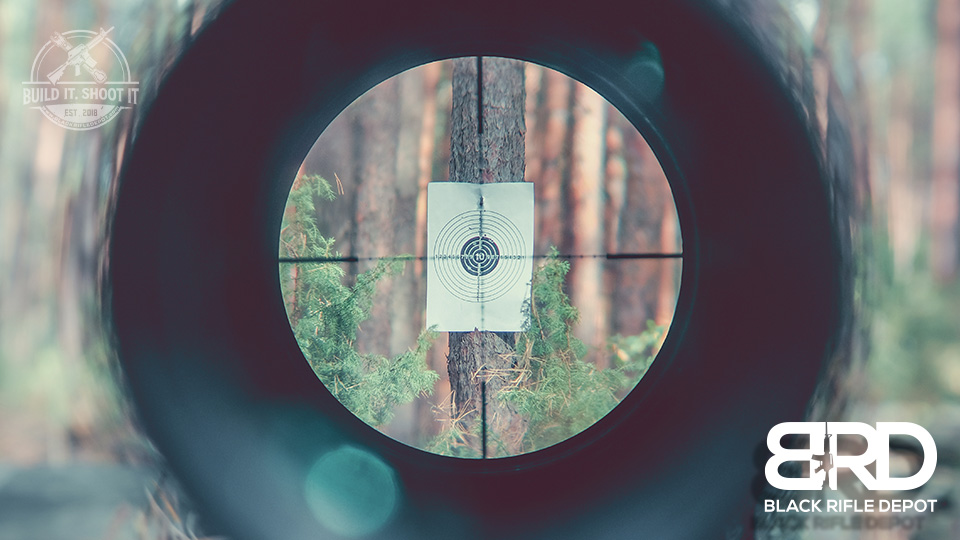
When shooters shop for an AR-15 scope, they usually start with magnification. The smarter starting point is the reticle—because the reticle decides how quickly you can aim, how easily you can correct misses, and whether 300–500-yard shooting feels repeatable or frustrating.
This guide breaks down the reticle choices that matter on an AR-15, with practical advice for common builds (especially the ever-popular 16-inch setup). We’ll also cover the “in-between” question many people have today: should you run a red dot, an LPVO, or an AR-15 scope red dot combo?
If you’re shopping for optics and want quick shipping and easy filtering, Black Rifle Depot is a strong place to start—especially when you already know the role your rifle needs to fill.
What Is the Reticle on a Scope?
A reticle is the aiming reference you see through an AR-15 scope crosshairs, dots, hash marks, circles, holdover ladders, and everything in between. In real use, it does three key jobs:
- Delivers a precise aiming point for fast target acquisition.
- Provides reference marks for elevation and wind holds.
- Supports measurement for ranging or quick corrections, depending on the design.
That’s why reticle choice matters just as much as glass quality. Even the clearest optic falls short if the reticle doesn’t match how you shoot.
The Three Reticle Families That Dominate AR-15 Optics
Most AR-15 reticles fall into one of these categories:
- Simple crosshair/plex reticles
Clean, uncluttered, and easy to see in varied light. Great for general-purpose rifles and “set it and forget it” zeroing. These remain popular because they’re fast and not distracting. - BDC reticles (Bullet Drop Compensating)
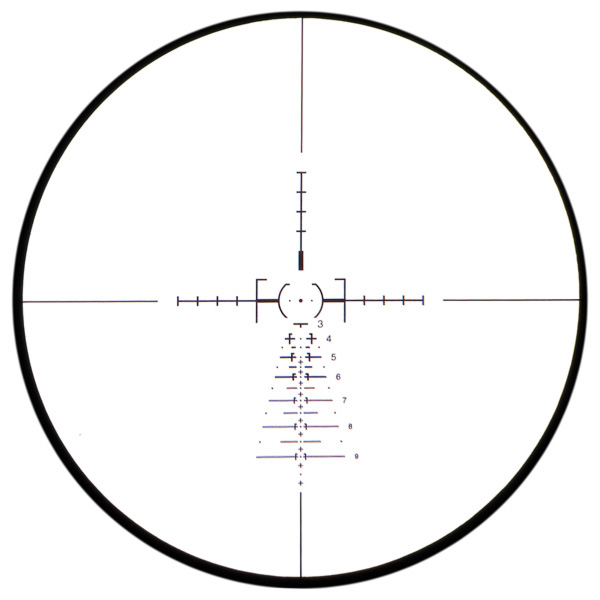
BDC reticles add additional aiming points below center, intended to match bullet drop at various distances. Many are designed around common trajectories (often 100-yard increments), and they shine for practical field shooting when you want speed without dialing. - MOA/MIL hash or “tree” reticles
These use a measurement system—MOA or MIL—with hash marks (and sometimes a full “Christmas tree”) that lets you hold for elevation and wind with precision on an AR-15 scope. These reticles are excellent for repeatability and for learning disciplined corrections.
That’s the core landscape: clean and fast, trajectory-based holds, or measured holds for maximum control.-15 reticles fall into one of these categories:
Best AR-15 Scope: Match the Optic Type to the Job
Before you pick the reticle, choose the optic category that fits how you actually use the rifle.
Red dot sights: fastest up close
If most of your shooting is 0–200 yards, a red dot keeps things quick and intuitive. This is where brands like Holosun (including multi-reticle options) and Trijicon red dot models are frequently considered by shooters building defensive or training-focused rifles.
A red dot is also why many people ask about an AR-15 scope red dot combo—usually meaning either:
- A red dot paired with a magnifier, or
- An LPVO with an offset mini dot
Both can work. The decision comes down to whether you want “instant 1x” (red dot) plus occasional magnification, or “always-available variable magnification” (LPVO) plus a secondary dot for speed.
LPVO (Low Power Variable Optic): the AR-15 all-rounder
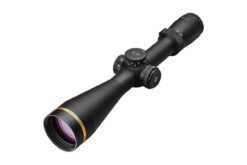
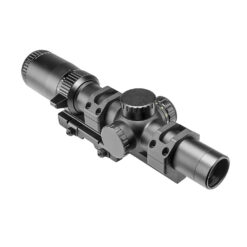
An LPVO (think 1–4x, 1–6x, or 1–8x) is one of the most versatile solutions for an AR-15. At 1x, you can run it fast. At higher magnification, you can identify targets and place shots with more confidence at a distance.
This is where reticle selection really pays off: the right LPVO reticle makes 300–500 yards feel doable without turning every shot into a math problem.
Prism scopes: a smart middle ground
Prisms are popular among shooters who want a sharp, etched reticle, a compact size, and more forgiving aiming than a fine crosshair. They also play well with astigmatism, since the reticle is etched rather than projected.
Reticle Picking for the Real World
If you shoot mostly 0–200 yards
- Simple illuminated center (dot, circle-dot, or bold crosshair)
- Minimal holds (or none)
- Prioritize speed and clarity
This is the “home defense/training” lane. Prioritize a fast, uncluttered aiming point you can pick up instantly under pressure.
If you regularly shoot 200–500 yards
- BDC reticle (especially if you want speed)
- Or MOA/MIL hash reticle (if you want precision and repeatability)
BDC can be extremely effective, but only if you understand what it’s calibrated for and validate it with your ammo. Many BDC designs are cartridge- or velocity-specific, which is why range confirmation matters.
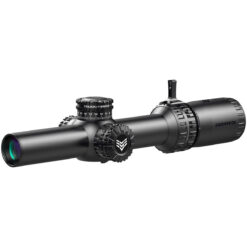

MIL vs MOA Reticle: Which Should You Choose for Your AR-15?
This debate gets loud online, but it’s easier than people make it.
MOA: familiar, “inches at distance” thinking
MOA is an angular measurement; at 100 yards, 1 MOA is about 1.047 inches. MOA scales with distance.
If you think in inches and yards, MOA can feel intuitive.
MIL: clean decimal math
MIL is also angular; at 100 yards, 1 mil is about 3.6 inches. It scales with distance, too.
MIL systems often feel faster for corrections because many shooters use tenths (0.1 mil clicks and 0.2/0.5 mil holds) and straightforward decimals.
The best answer: pick the system that matches your turret adjustments and the way you’ll train. A great reticle becomes “best” when you can use it without hesitation.
Is a BDC Reticle Good for a 5.56 AR-15?
Yes—often. A 5.56 AR-15 is one of the most common use cases for BDC reticles, and manufacturers frequently design BDC references around common .223/5.56-style trajectories.
Two practical notes:
- BDC isn’t magic. Different ammo loads and barrel lengths affect velocity, which in turn affects drop.
- Validate your holds. Confirm where your BDC marks land at real distances with your ammo.
For many shooters, this is the perfect balance: fast holds that are “close enough” for practical accuracy at common distances.
What Reticle Works Best on a 16-Inch AR-15?
AA 16-inch AR-15 often fills the “do everything reasonably well” role, so your AR-15 scope reticle should balance speed and usable holds. The most practical options are:
- Simple BDC: quick holdovers out to 300–500 yards (once you confirm with your ammo).
- MOA/MIL hash: clean holds with straightforward corrections after a miss.
- Bright center aiming point: crucial for fast target pickup at 1x on an LPVO.
If you’re building a rifle that might see both close drills and mid-range steel, a bright center plus usable hold marks is the sweet spot.
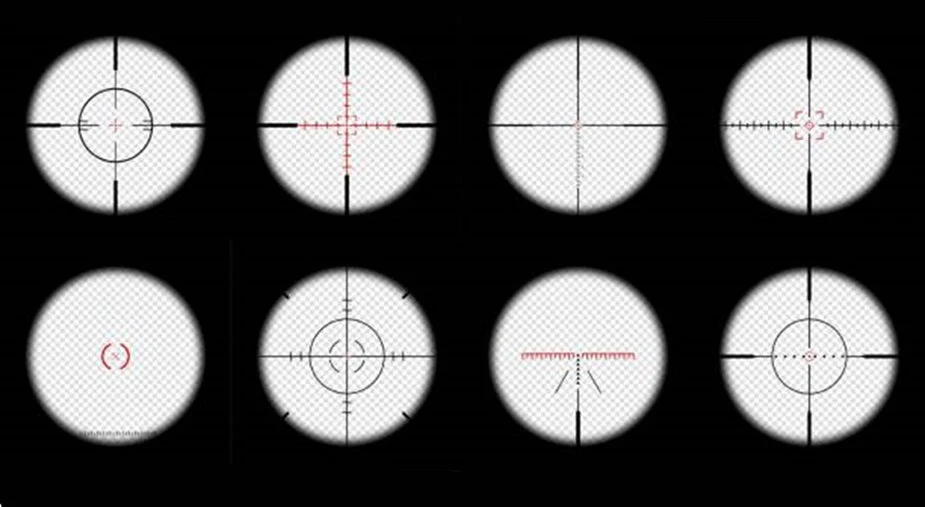
What Is the Best LPVO Reticle for an AR-15?
The best LPVO reticle for an AR-15 scope is the one you can pick up instantly at 1x and still use confidently at distance without feeling cluttered.
Look for:
- Daylight-visible center (dot or segmented circle)
- Simple, readable holds (BDC ladder or clean hashes)
- Wind references if you’re shooting beyond 300 yards
“Christmas tree” reticles add more wind and elevation reference points and can be excellent for precision-style shooting, but they can also feel busy. The tradeoff is straightforward: cleaner sight pictures are faster, while more detailed “tree” layouts give you more hold options when you’re stretching distance or correcting in the wind.
Are Etched Reticles Better Than Illuminated-Only Reticles?
For many AR-15 shooters, yes—etched reticles have a major advantage: they remain visible even if illumination fails or you turn it off.
Illumination is still valuable (especially at 1x for speed), but etched gives you a “failsafe” aiming reference, which is why prism optics and many LPVOs are popular on practical rifles.
What Reticle Is Best for Home Defense AR-15 Setups?
Home defense is about speed, target ID, and simplicity.
Prioritize:
- Bright, simple aiming point (dot or circle-dot)
- Minimal clutter
- A reticle you can pick up immediately under stress
That’s why many people gravitate toward a red dot (Holosun-style circle-dot systems are a common example) or an LPVO with a bold illuminated center.
Do You Need a BDC Reticle for 300–500 Yards With an AR-15?
You don’t need it—but it helps.
For 300–500 yards, you’ll benefit from one of the following:
- BDC holds that matches your ammo reasonably well, or
- MOA/MIL holds that you can apply consistently
BDC shines when you want speed and practical holds. MOA/MIL shines when you want measured corrections and repeatability. Both work—what matters is practicing the workflow you’ll actually use.
How to Use a MOA Reticle (Practical, Not Academic)
Here’s a simple way to train MOA without getting lost:
Step 1: Zero and confirm
Zero at your preferred distance (commonly 50/200 or 100). Then confirm your real-world drop at 200, 300, 400, and 500 with your ammo. Your data beats any generic chart.
Step 2: Learn your reticle’s subtensions
If your reticle is marked in 1 MOA or 2 MOA increments, understand what those mean at distance:
- 1 MOA ≈ 1.047″ at 100 yards
- ≈ 2.094″ at 200 yards
- ≈ 5.235″ at 500 yards
Step 3: Use holds for speed
If your 300-yard drop matches roughly 3 MOA (example only), you hold 3 MOA instead of dialing.
Step 4: Use corrections after a miss
If you impact 2 MOA low and 1 MOA right, you can hold 2 MOA high and 1 MOA left on the next shot. This is where measured reticles become powerful.
Can You Use an MOA Red Dot to Estimate Range?
If your red dot or reticle gives you known MOA references (like a specific dot size or ring subtension), you can estimate distance by measuring how much of a known-size target it covers and applying a basic ranging formula. The same approach works in both MOA and MRAD systems.
A practical MOA ranging formula (in inches and yards) is:
Distance (yards) = (Target size in inches ÷ (MOA measured × 1.047)) × 100
Two important cautions:
- Red dots are built for speed, not precision measuring.
- You need a target of known size and a consistent way to “measure” with your dot or reticle.
So yes, it’s possible—but it won’t be as precise or repeatable as using a dedicated MOA/MIL reticle in a magnified optic.
FAQ: AR-15 Scope Reticles and Holds
What reticle is best for an AR-15 scope?
A bright center aiming point with simple holds is best for most AR-15s—BDC for speed or MOA/MIL hashes for repeatability.
Is a BDC reticle good for a 5.56 AR-15?
Yes. Many BDCs are designed around common .223/5.56 trajectories, but you should confirm holds with your ammo.
MIL vs MOA reticle: which should I choose for my AR-15?
Choose the system you’ll train with and match it to your turrets. MOA can feel intuitive; MIL is often faster for decimal corrections.
What reticle works best on a 16-inch AR-15?
A simple BDC or clean MOA/MIL hash reticle works best, ideally with an illuminated center for fast 1x use.
What is the best LPVO reticle for an AR-15?
Look for a daylight-bright center (dot/circle) plus readable holds. Avoid overly busy designs unless you need detailed wind grids.
Are etched reticles better than illuminated-only reticles?
Often, yes. Etched reticles remain usable without illumination and provide a consistent aiming reference.
What reticle is best for home defense AR-15 setups?
Simple and fast: a bright dot or circle-dot style, minimal clutter, and easy visibility under stress.
Do I need a BDC reticle for shooting 300–500 yards with an AR-15?
You don’t need it, but it helps. BDC offers fast holds; MOA/MIL offers measured corrections and repeatability.
How to use a MOA reticle?
Zero, confirm real drops with your ammo, then hold MOA marks for elevation/wind and use measured corrections after misses.
Can you use an MOA red dot to estimate range?
Sometimes. If you know the dot/reticle subtension and target size, you can estimate range, but it’s less precise than a magnified reticle.
Putting It All Together: The Quick “Best AR-15 Scope” Checklist
Choosing the right AR-15 scope doesn’t have to be complicated—start by being honest about how far you shoot and how fast you need to work. For 0–200 yards, keep it simple and fast with a red dot or a bright-centered LPVO. For 0–300, an LPVO with a clean BDC or hash reticle is sufficient for most real-world use. If you’re spending real time at 300–500 yards, step into MOA/MIL holds (or a simplified tree) so your corrections stay consistent and repeatable.
The common thread is this: pick an optic you’ll actually train with, confirm your holds with your ammo, and stick with one system long enough to build confidence. When you’re ready to narrow options and get parts moving, Black Rifle Depot makes it easy to compare optics and reticle styles in one place and choose a setup that matches your rifle’s role.
For additional support, check out our Rumble Channel.
