
AR-15 Optics
Best AR-15 Scopes Under $300, $500 & $1,000
Feb
Table of Contents
An AR-15 scope works best when it matches how you actually shoot—your typical distance, pace, target size, and whether your rifle needs to excel at one job or handle multiple roles. When the optic fits the mission, your AR-15 settles into the shoulder naturally, targets come into focus faster, and you spend more time shooting and less time fighting your setup.
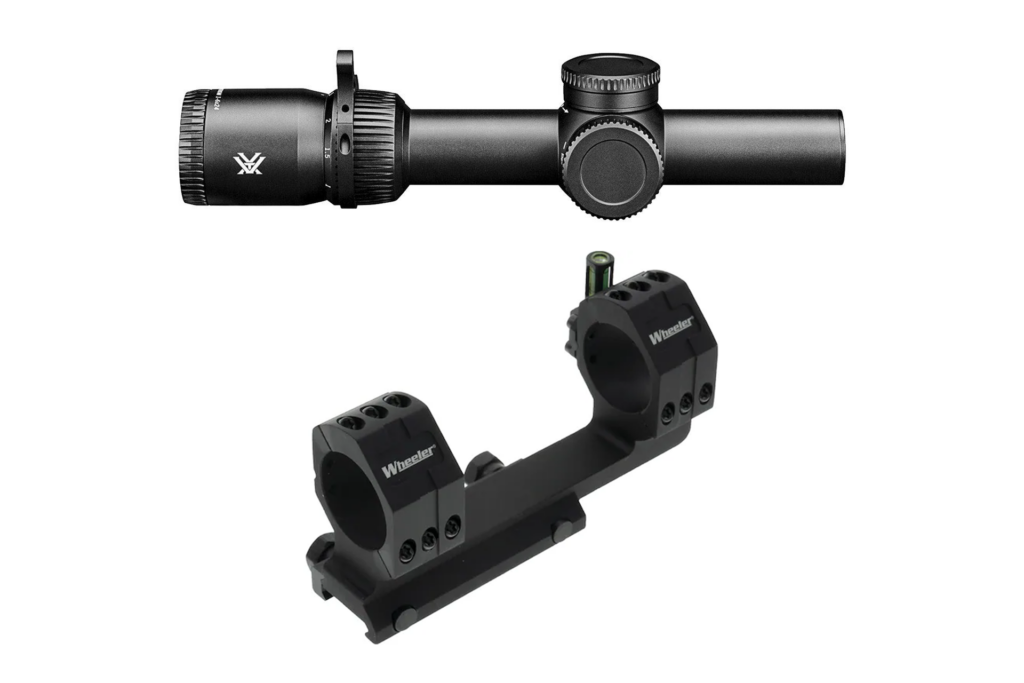
This guide stays straightforward and buyer-focused. You’ll learn what features matter most, what to skip, how to mount an AR-15 scope the right way for proper eye relief, and you’ll see real examples you can shop by budget so you can narrow your options quickly.
Start With Your Use Case (So You Don’t Buy Twice)
Before you choose the best AR-15 scope, decide how your rifle is used most of the time:
- 0–200 yards (training, drills, home defense): Speed is the priority. A scope can still work here, but it needs a forgiving eye box and a reticle that’s quick to pick up.
- 0–400 yards (general-purpose carbine): This is prime LPVO territory. You get near-range speed with enough magnification for practical distance.
- 300–600+ yards (hunting, smaller targets, precision-leaning builds): More magnification helps with target ID and holds, but it adds weight and can feel slower up close.
If you’re asking “what is the best scope for an AR-15,” the real answer depends on which range matches your shooting.
Optic Types That Make Sense on an AR-15
LPVO (1–6x, 1–8x)
LPVOs are popular because they cover a wide range without forcing a second optic. Run 1x for speed, then dial up when you need better target ID or tighter holds.
Best for:
- One optic that covers the most ground
- close-to-mid range use
- rifles that need both speed and reach
Traditional Variable (3–9x, 4–12x, 3–15x)
These shine for hunting, slower-paced shooting, and smaller targets. They’re often the better fit when your AR-15 is built more like a field rifle than a “run it fast at 1x” carbine.
Best for:
- hunting setups
- range sessions focused on groups
- shooters who don’t care about true 1x speed
AR-15 scope red dot combo (when it’s worth it)
Most “combo” builds are an LPVO plus an offset or piggyback dot. It’s worth it when you truly shoot close and far in the same session and want instant transitions. If most of your shooting stays inside 100–150 yards, a dot alone (or dot + magnifier) is usually simpler and cheaper.
Magnification: What’s Best for an AR-15 Scope?
Buy magnification for your targets—not for the occasional long shot.
- 1–6x: best all-around for most AR-15 owners
- 3–9x / 4–12x: great for hunting and general accuracy work
- 3–15x: strong “more reach” option without going extreme
- 6–24x: specialized; best for slower precision use
Most shooters are happiest when their optic matches their most common distance, not their longest possible shot.
Reticle and Focal Plane: Keep It Easy to Use
- BDC reticles are simple for quick holdovers at common distances.
- MIL/MOA reticles make sense if you’re comfortable with holds, dialing, or changing ammo often.
For focal plane:
- SFP is usually the easiest for general AR-15 use (especially with LPVOs at 1x and max power).
- FFP is helpful if you take holds at different magnifications and want the reticle scale to stay consistent.
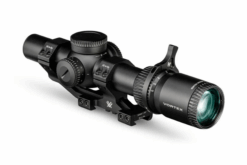

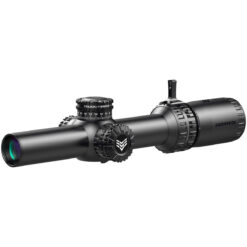
Primary Arms SLx 1-6x24mm SFP Rifle Scope Gen IV – Illuminated ACSS Nova Fiber Wire Reticle
Primary Arms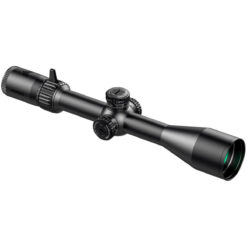
Best AR-15 Scopes Under Each Price
The examples below are pulled from Black Rifle Depot’s AR-15 scopes category, so you can shop by tier without digging.
Best AR-15 Scope Under $300
In this tier, prioritize a dependable zero, a clean reticle, and glass that doesn’t feel fussy behind the rifle.
- Vortex Sonora 3-9×50 SFP Rifle Scope – Dead Hold BDC Reticle — $149.99
A straightforward magnified option for range use and hunting-style shooting where simple holdovers are the goal. - Vortex Venom 1-6×24 SFP 30mm Rifle Scope – AR-BDC3 Reticle — $299.99
A solid entry into the LPVO category for a general-purpose AR-15 that still needs speed. - Aim Sports Alpha 6 2.5-15X50 30MM Riflescope With MR1 Mrad Reticle
Who this tier fits: first-time scoped setups, training rifles, and anyone who wants capability without overthinking it.
Best AR-15 Scope Under $500
This is where value usually peaks—better clarity, improved illumination, and optics that feel more refined.
- Primary Arms SLx 1-6x24mm SFP Gen IV – Illuminated ACSS Nova Fiber Wire Reticle — $349.99
A strong “do most things” LPVO-style pick—fast up close, useful holds farther out. - Vortex Venom 1-6-24 SFP AR-BDC3 LPVO w/ 2″ Cantilever 30mm Mount — $349.95
A ready-to-go setup that removes the guesswork of pairing optic and mount, and helps you get proper eye relief on an AR-15. - Vortex Venom 3-15×44 FFP 34mm Rifle Scope — $449.99
A smarter fit when your AR-15 leans toward accuracy and distance more than close-range speed.
Who this tier fits: most buyers searching “best scope for AR-15,” especially if they want one optic that stays useful as skills improve.
Best AR-15 Scope Under $1,000
Under $1,000 is where compromises shrink—stronger performance across magnification, better systems, and more confidence for frequent use.
- Vortex Strike Eagle 1-8x24mm FFP EBR-8 MOA LPVO w/ Cantilever 2″ Offset 30mm Mount (Bundle) — $599.99
A complete LPVO package with extra magnification over a 1–6x, consistent FFP holds, and the mount included—install, zero, and run it. - Vortex Razor HD Gen II-E 1-6×24 — often under $1,000 on sale
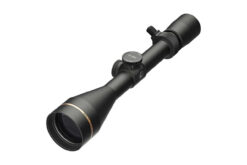
A higher-end 1–6x built for fast close-range work with excellent clarity and a confident sight picture at distance. - Leupold 177228 VX-Freedom 3-9X50 (30mm) Illum. FireDot Twilight Hunter $599.95
The VX-Freedom 3-9x50mm delivers legendary Leupold performance and dependability for hunters and shooters in one of the most popular magnification ranges.
Who this tier fits: frequent shooters, match- or training-heavy schedules, and anyone who wants an AR-15 scope that stays relevant as distance increases.
Which AR-15 Scope Offers the Best Value?
For most shooters, the best balance is a 1–6x LPVO in the under-$500 bracket—paired with a solid mount and a reticle you can read fast. A strong example is the Primary Arms SLx 1–6 Gen IV ACSS Nova.
How to Mount a Scope on an AR-15 (So It Feels Right)
- Use an AR-15-friendly mount
Cantilever mounts are common because they push the optic forward for proper eye relief while keeping everything on the receiver. (That’s why bundles can be convenient.) - Mount on the upper receiver only
Avoid bridging to the handguard. - Set eye relief at max magnification
Shoulder the rifle naturally and slide the scope until the sight picture is full without crawling the stock. - Level the reticle
A canted reticle makes holds inconsistent. - Tighten evenly
Even ring pressure helps maintain zero and prevents stressing the optic.
That’s the difference between an AR-15 that feels dialed-in and one that never quite settles.

FAQ: AR-15 Scope Buying by Budget
If you’re trying to narrow down an AR-15 scope quickly, these are the questions most buyers ask before they buy. Use the answers below to choose the right magnification, optic style, and mount—without overcomplicating the decision.
What is the best AR-15 scope under $300?
A strong under-$300 option is the Vortex Venom 1-6-24 SFP 30mm AR-BDC3 LPVO w/ 2″ Cantilever 30mm Mount (BNDL-VEN-1601-CM202). It’s a practical “one optic” setup because you get LPVO versatility and the cantilever mount included—so you’re not guessing on mount fit or eye relief.
What is the best AR-15 scope under $500?
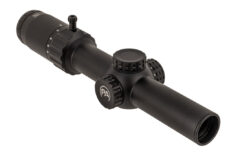
A standout under-$500 pick is the Primary Arms SLx 1-6x24mm SFP Rifle Scope Gen IV – Green Illuminated ACSS Nova Fiber Wire Reticle (PA-SLX-1-6X24S-NOVA-G). It’s a strong general-purpose LPVO choice for quick close-range aiming with useful magnification for mid-range shooting.
What is the best AR-15 scope under $1,000?
A strong under-$1,000 choice is the Vortex Viper PST Gen II 3-15×44 FFP. The EBR-7C reticle remains the same across magnifications from 3x to 15x, enabling accurate, consistent subtensions.
Which AR-15 scope offers the best value for the money?
For most shooters, the best value is a dependable 1–6x LPVO that’s easy to run at 1x and still gives enough magnification for target identification and holds. In practical terms, that usually lands in the under-$500 range for the best balance of performance and cost.
Should I choose an LPVO or a red dot for my AR-15?
Choose a red dot if most of your shooting is close, fast, and simple. Choose an LPVO if you want one optic that can still be quick up close but gives you magnification for better target ID and more confident hits at distance.
What magnification is best for an AR-15 scope?
For general use, 1–6x is the most versatile. If your AR-15 is used more for hunting or for shooting at smaller targets farther out, 3–9x, 4–12x, or 3–15x may make more sense. Higher magnification helps at a distance, but it adds weight and can slow you down up close.
Do I need a cantilever mount for an AR-15 scope?
Often, yes—especially with LPVOs. A cantilever mount helps position the scope far enough forward for proper eye relief while keeping everything on the receiver, which is why bundle setups can be so convenient on an AR-15.
Where can I buy AR-15 scopes online by budget?
Shop by category, filter by price, and compare within your budget tier. This keeps your comparisons consistent and helps you choose based on magnification, reticle, and features—without getting pulled into random upgrades that don’t match how you shoot.
Final Thoughts: Buy the Right AR-15 Scope for Your Setup
The right AR-15 scope isn’t about chasing the biggest numbers—it’s about choosing an optic that matches how you shoot most often. Start with your realistic distance, pick the magnification range that fits, and make sure your mount and eye relief are set up correctly. When everything lines up, your AR-15 feels more natural, target confirmation is quicker, and your shots stay more consistent session after session.
Ready to upgrade your setup? Shop AR-15 scopes at Black Rifle Depot for a strong selection, budget-friendly options, and quick shipping—then filter by price to find the best fit for your rifle and your range time.
For additional resources, check us out Twitter/X Page or on Instagram.
