
AR-15 Parts
M&P 15 Safety Selector: The 60° vs 90° Safety Debate
May
Table of Contents
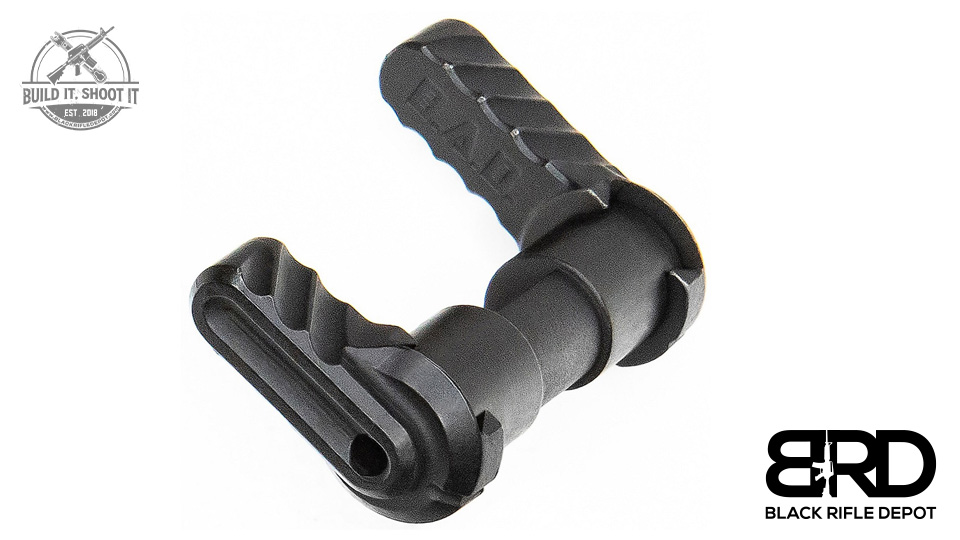
The M&P 15 Safety Selector may seem like a small part, but it plays a major role in how a rifle feels, handles, and responds. Every time the shooter moves from safe to fire, the selector has to be positive, predictable, and easy to reach. That simple movement is why the debate between 60° and 90° safety selectors has become so common among AR-style rifle owners.
A standard 90° safety selector has long been the familiar option on AR-15 style rifles. It gives the shooter a full quarter-turn movement from safe to fire, making it easy to understand and hard to mistake. A 60° safety selector uses a shorter throw, which can feel faster and more ergonomic because the shooter does not have to rotate the lever as far. Neither option is automatically better for everyone. The right choice depends on preference, hand size, shooting style, parts compatibility, and how the rifle is used.
The Smith & Wesson M&P 15 and M&P 15-22 platforms make this topic especially interesting because many owners want a selector that feels more refined than a basic factory lever. Aftermarket options, including ambidextrous and reversible 60°/90° selectors, have made it easier for shooters to choose the feel they prefer. Battle Arms Development, for example, lists an M&P15-22-specific BAD-ASS-PRO selector with reversible 0°–90° and 0°–60° short-throw options, along with interchangeable levers for left- or right-handed shooters.
Why the Safety Selector Matters
The safety selector is one of the most frequently used controls on the rifle. It is not just a small lever on the side of the lower receiver. It is part of the user’s handling routine, especially during range work, training, competition, and defensive-style use. A selector that is too stiff, too loose, uncomfortable, or difficult to reach can slow the shooter down and make the rifle feel less natural.
A good safety selector should move with clear resistance, lock positively into position, and be easy to manipulate without changing your grip too much. That is why many shooters upgrade from a standard selector to an ambidextrous safety, short-throw safety, or enhanced lever design. Black Rifle Depot’s AR-15 Safety Selectors category also describes the selector as an important rifle control because it affects safe handling, readiness, and user confidence.
When discussing the M&P 15 Safety Selector, the main question is not just whether the rifle needs a replacement part. The bigger question is what style of selector best matches the shooter. That is where the 60° vs 90° debate begins.
What Is a 90° Safety Selector?
A 90° safety selector is the traditional AR-style safety throw. The lever rotates roughly a quarter turn between safe and fire. This is the setup many shooters learn first, which makes it familiar and easy to understand.
The biggest advantage of the 90° selector is its clear movement. When the lever is in the safe position, it points in one direction. When it is on fire, it moves a full 90 degrees. That longer travel can make the selector feel deliberate and easy to confirm by touch or sight.
For some users, that deliberate movement is a benefit. It may reduce the chance of accidentally moving the selector and give a very traditional feel. Shooters accustomed to standard AR controls often prefer 90° selectors because there is no learning curve. It feels like what they already know.
The downside is that the longer throw can feel slower or less comfortable for some hands. Depending on grip style and hand size, the shooter may need to shift the firing hand slightly to move the selector cleanly. This is one reason shorter-throw selectors have become popular.
What Is a 60° Safety Selector?
A 60° safety selector uses a shorter rotation between the safe and fire positions. Instead of moving a full 90 degrees, the lever travels about 60 degrees. That shorter movement can make the rifle feel faster and more modern.
The main advantage is efficiency. The shooter can often move the selector with less thumb travel and less disruption to the firing grip. For people who run their rifle frequently, that small difference can feel noticeable. A 60° selector may also feel more natural for shooters with smaller hands or those who prefer a more ergonomic control layout.
This style is especially popular among shooters who use ambidextrous controls, competition-style setups, or rifles built for faster manipulation. Some enhanced safety selectors are reversible, allowing the user to choose between 60° and 90 °. Battle Arms Development’s BAD-ASS-PRO selector line is one example of a design offering reversible 90° and 60° throw options.
The tradeoff is that a 60° selector can feel different if you are used to a traditional rifle. Some shooters need a little time to build the same level of muscle memory. It is also important to ensure the selector is compatible with the lower and trigger setup in use.
The M&P 15 Safety Selector Perspective
The M&P 15 Safety Selector discussion depends partly on which platform is being discussed. The Smith & Wesson M&P15 is an AR-15 style rifle, while the M&P15-22 is a rimfire rifle that looks and handles similarly but does not share every part with standard AR-15 rifles. That distinction matters when shopping for replacement selectors.
For standard M&P15 rifles, many AR-15-style selector options may fit, depending on the model and lower configuration. For the M&P15-22, owners need to be more careful, as some selectors are specifically designed for that rifle. GunMag Warehouse, for example, notes that the Battle Arms Development M&P15-22 Pro Ambidextrous Safety Selector does not fit standard AR-15 rifles and is compatible only with the M&P15-22.
That is why the phrase M&P 15 Safety Selector can be a little broad. A customer may mean a selector for an M&P15 Sport, a standard M&P15 rifle, or an M&P15-22. Before buying, it is important to confirm compatibility with the exact firearm model.
From a user experience standpoint, though, the debate is similar. A 90° selector gives the shooter a traditional feel. A 60° selector offers a shorter, faster movement. An ambidextrous selector can make the rifle easier to operate from either side. The best choice depends on how the shooter wants the rifle to feel.

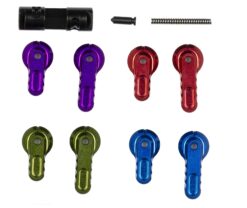
Ambidextrous Selectors and Why They Matter
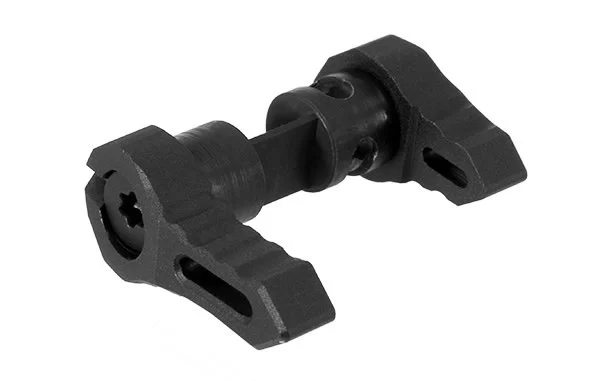
Ambidextrous safety selectors are popular because they allow the shooter to manipulate the safety from either side of the rifle. This is helpful for left-handed shooters, but it is also useful for right-handed shooters who train from alternate positions or want more control options.
An ambidextrous selector can make the rifle feel more balanced and easier to manage. For left-handed shooters, it can be one of the most important upgrades because a standard right-side control layout may feel awkward. For right-handed shooters, the opposite-side lever can still be useful for confirming selector position or operating the rifle with the support hand when needed.
The main concern with ambidextrous selectors is lever shape and size. A lever that is too large on the trigger-finger side may rub the hand or feel distracting. Many modern designs solve this by using one long lever and one short lever, giving the shooter more flexibility. Battle Arms describes its M&P15-22 selector as having standard and short interchangeable levers that can be configured for left- or right-handed shooters.
That configurability is one of the biggest reasons upgraded selectors are popular. Instead of forcing every shooter into the same control layout, they let the user tune the rifle to their own preference.
60° vs 90°: Which Feels Faster?
A 60° selector usually feels faster because the lever travels a shorter distance. Less movement can mean quicker operation, especially when the shooter is moving between ready positions, drills, or multiple strings of fire. For some users, the difference is immediately noticeable.
However, speed is not the only factor. A selector still needs to feel positive and deliberate. If the shorter throw feels too light, vague, or unfamiliar, the shooter may not trust it as much. A good 60° selector should have a firm, tactile click when it reaches the safe or fire position.
A 90° selector may be slightly slower, but it can feel more reassuring to shooters who prefer the traditional movement. The longer throw provides more travel, which some people interpret as stronger confirmation that the selector has fully changed position.
In real use, the difference often comes down to training and preference. A shooter who practices regularly with a 90° selector may run it very quickly. A shooter who prefers modern controls may feel more comfortable with 60°. Neither is wrong.
60° vs 90°: Which Feels Safer?
The word “safer” can be misleading in this debate. A properly made and installed 60° selector and a 90° selector should both provide safe, reliable operation when used correctly. The difference is not that one angle is safe, and the other is unsafe. The difference is how the selector feels and how confidently the user operates it.
A 90° selector can feel more traditional because it requires a full quarter-turn. Some shooters like that because it feels harder to bump accidentally. A 60° selector requires less movement, so it may feel more responsive, but it should still have a clear detent and positive engagement.
The most important factor is not the degree of throw alone. It is the part’s quality, compatibility with the rifle, proper function, and the shooter’s familiarity with the controls. Any selector should be tested for proper safe and fire engagement before the rifle is used.
For customers shopping in Black Rifle Depot’s AR-15 Safety Selectors category, the goal should be to find a selector that fits the rifle, feels positive, and matches the shooter’s preferred control style.
When a 90° Selector Makes Sense
A 90° selector makes sense for shooters who prefer a classic AR-15 feel. It is also a good choice for people who want a simple, familiar control layout without changing their muscle memory.
If you train with multiple rifles that all use traditional 90° selectors, keeping the same throw may help maintain consistency. This can matter for shooters who do not want different rifles to operate differently. A 90° selector can also be a practical choice for a basic rifle, range build, or customer who simply wants a dependable replacement part.
For many shooters, there is no need to overthink it. The standard 90° selector has been used for years because it works. If the lever is easy to reach, clicks positively, and does not interfere with your grip, it may be the right option.
When a 60° Selector Makes Sense
A 60° selector makes sense for shooters who want a shorter, more ergonomic throw. It can be a strong option for users who feel like the standard selector requires too much thumb movement or forces them to shift their grip.
Short-throw selectors are especially appealing on rifles set up for faster handling. They may also pair well with ambidextrous controls, upgraded grips, and modern handguard setups. If you are already customizing the rifle for comfort and control, a 60° selector can be a natural upgrade.
The key is familiarity. A 60° selector may feel better right away, but it still requires practice. The shooter should be comfortable moving the selector on and off safe without looking or hesitating.
What to Look for in an M&P 15 Safety Selector
When shopping for an M&P 15 Safety Selector, start with compatibility. Confirm whether the part is intended for a standard AR-15 pattern rifle, an M&P15 Sport, or an M&P15-22. Some parts are not interchangeable across these platforms.
Next, consider the throw angle. If you want traditional movement, choose a 90° selector. If you want a shorter, faster feel, consider a 60° option. If you are unsure, a reversible selector may be appealing because it gives you more flexibility.
Lever design is also important. A long lever may be easier to reach, while a short lever may reduce interference on the opposite side of the receiver. Texture matters too. A selector with enough surface grip can be easier to operate with gloves, wet hands, or under stress.
Finally, consider the overall quality of the part. Steel construction, secure lever attachment, clean machining, and positive detent engagement all matter. For example, Black Rifle Depot lists the Sons of Liberty Gun Works Quick Ambi Safety Selector as a defense-grade selector using a robust lever-to-center attachment with 420 stainless steel roll pins.
FAQ’s
Before choosing a new safety selector, it helps to understand the differences among throw angles, ambidextrous controls, compatibility, and how these factors affect rifle handling. These FAQs cover common questions about the M&P 15 Safety Selector, 60° and 90° selectors, and AR-15 safety selector upgrades.
What is the difference between a 60° and a 90° safety selector?
A 90° safety selector uses the traditional quarter-turn movement between the safe and fire positions. A 60° safety selector uses a shorter throw, which can feel faster and more ergonomic because the lever does not travel as far.
Is a 60° safety selector better than a 90° safety selector?
Not always. A 60° selector may feel faster, while a 90° selector may feel more familiar and deliberate. The better choice depends on personal preference, rifle setup, and comfort.
Will an AR-15 safety selector fit an M&P 15?
Many standard M&P15 rifles use AR-15 style controls, but compatibility can vary by model. Always verify the specific selector fits your exact rifle before purchasing.
Will a standard AR-15 safety selector fit an M&P15-22?
Not necessarily. The M&P15-22 is not the same as a standard AR-15, and some safety selectors are designed specifically for the M&P15-22. Always check product compatibility before buying.
What is an ambidextrous safety selector?
An ambidextrous safety selector has levers on both sides of the receiver, allowing the shooter to operate the safety from either side. This is helpful for left-handed shooters and for users who want more control options.
Is a short-throw selector safe to use?
A quality short-throw selector can be safe when it is compatible with the rifle and functioning correctly. The selector should engage positively in both safe and fire positions.
Why do some shooters prefer a 90° safety selector?
Some shooters prefer a 90° selector because it feels traditional, deliberate, and familiar. It is also common on standard AR-style rifles, which helps maintain consistent muscle memory.
Why do some shooters prefer a 60° safety selector?
Some shooters prefer a 60° selector because it requires less thumb movement and can feel faster to operate. It may also be more comfortable for certain hand sizes and grip styles.
Should I choose a long- or short-lever safety selector?
A long lever is usually easier to reach, while a short lever may reduce rubbing or interference on the opposite side of the receiver. Many ambidextrous selectors use one long and one short lever for balance.
Where can I buy AR-15 safety selectors?
You can shop AR-15 safety selectors, ambidextrous selectors, and related AR-15 parts at Black Rifle Depot, with options for different rifle setups, preferences, and budgets.
Shop AR-15 Safety Selectors at Black Rifle Depot
Choosing between a 60° and 90° selector ultimately comes down to preference. Some shooters want the familiar feel of a traditional 90° safety, while others prefer the shorter movement and ergonomic feel of a 60° short-throw selector. Ambidextrous options add another layer of control, especially for left-handed shooters or anyone who wants more flexibility from their rifle.
Black Rifle Depot offers AR-15 safety selectors, ambidextrous selectors, lower parts, and AR-15 components for different builds and budgets. Whether you are replacing a worn selector, finishing a lower, or upgrading your rifle’s controls, the right selector can improve comfort, confidence, and overall handling. When you match the selector to your rifle and your personal preference, the M&P 15 Safety Selector becomes more than a small part. It becomes a control that helps the rifle feel more natural every time you use it.
For additional resources, check out our Rumble Page.
