
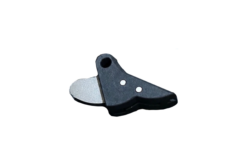
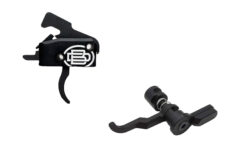

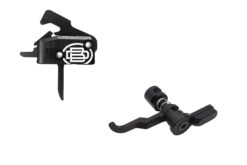
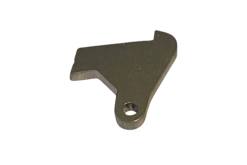
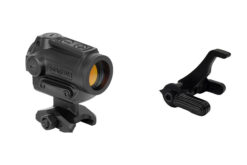
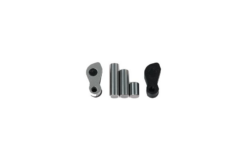
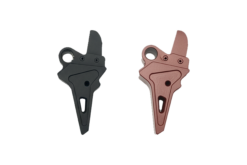
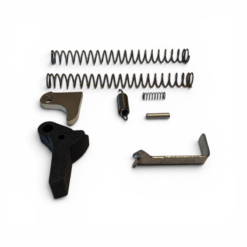
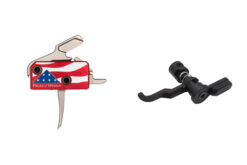
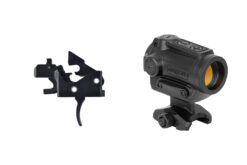
Partisan Disruptor Black Forced Reset Trigger + Holosun ARO 2 MOA Red Dot
Holosun, Partisan Triggers

Bestsellers in this category
What Are Forced Reset Triggers and Systems?
Forced Reset Triggers and Systems are mechanical fire control products designed to alter or assist the trigger reset cycle or fire control operation within a firearm. Unlike conventional trigger upgrades that focus mainly on pull weight, break, or feel, these systems affect the movement and timing of the trigger, selector, disconnector, or other fire control components.
Some products use a dedicated forced reset trigger assembly, while others rely on selectors, cams, conversion components, or related mechanical systems. Because designs vary by platform and manufacturer, proper compatibility, installation, and understanding of the firearm’s fire control system are important for reliable operation.
Types of Forced Reset Triggers and Systems
This category may include complete forced reset triggers, selector-based reset systems, active reset conversions, hybrid trigger and selector designs, mechanical cams, linkage systems, replacement parts, and other related fire control components.
Some systems integrate directly into the trigger assembly, while others work alongside existing triggers, selectors, or fire control components. Designs are often platform-specific and may require specific supporting parts or configurations for proper fit and function.
Why Buy Forced Reset Triggers and Systems from Black Rifle Depot?
Black Rifle Depot offers Forced Reset Triggers and Systems from manufacturers producing specialized mechanical fire control products for supported firearm platforms. Our selection includes complete trigger systems, selectors, conversion components, replacement parts, and other forced reset-related products.
As new forced-reset and active-reset designs become available, this category is structured to accommodate a broad range of mechanical fire control solutions while maintaining a focus on compatibility, product quality, and responsible use.
Forced Reset Triggers and Systems FAQs
Learn more about forced reset triggers, active reset systems, compatibility, mechanical operation, and legal considerations. These FAQs cover key details about FRTs and related fire control components.
What is a forced reset trigger (FRT)?
A forced reset trigger is a mechanical fire control device that uses energy from the firearm’s operating cycle to push the trigger back toward its reset position after a shot. This differs from conventional triggers, which rely primarily on spring pressure and the shooter’s trigger release to complete the reset cycle.
How does a forced reset trigger differ from a standard AR-15 trigger?
A standard AR-15 trigger requires the shooter to release the trigger sufficiently for the mechanism to reset. A forced reset trigger uses mechanical interaction with the firearm’s operating cycle to force the trigger toward its reset position actively. The operating characteristics depend on the specific trigger design.
What is the difference between a forced reset trigger and an active reset system?
A forced reset trigger uses a mechanical mechanism to force the trigger through its reset cycle. Active reset systems are a broader category of mechanical designs that assist or control trigger reset behavior. The terms can overlap, but the specific components and operating methods differ by manufacturer.
Are all forced reset triggers compatible with AR-15 rifles?
No. Forced reset triggers are designed for specific firearm platforms and configurations. Compatibility depends on the manufacturer, trigger assembly, fire control components, and supported firearm specifications. An AR-15-compatible designation does not guarantee compatibility with every AR-pattern firearm.
Do forced reset triggers require special selectors or additional components?
Some forced reset systems are complete trigger assemblies, while others incorporate dedicated safety selectors, cams, or additional mechanical components. Required parts depend on the specific system. Manufacturer documentation identifies the components necessary for proper installation and operation.
Are forced reset triggers electronic?
No. Mechanical forced reset triggers operate through physical interaction between fire control components and the firearm’s operating cycle. They do not require electronic activation, batteries, or electronic fire control systems.
Can a forced reset trigger be installed in any AR-15 lower receiver?
No. Receiver dimensions, internal clearances, fire control components, and manufacturer requirements determine compatibility. Some systems have additional restrictions involving the firearm’s configuration or supporting components. Always verify manufacturer specifications before installation.
Are forced reset triggers considered machine guns?
Federal classification depends on the device’s design and operation under 26 U.S.C. § 5845(b). Certain forced reset triggers have been found not to meet the federal definition of a machine gun, but that determination does not automatically apply to every design. State laws can independently prohibit these devices.
Are forced reset triggers legal in every state?
No. Several states restrict or prohibit forced reset triggers and related trigger activation devices. Federal legal treatment does not override state or local restrictions. Customers must verify applicable laws before purchasing, possessing, or using these products.
Forced Reset Trigger (FRT) Legal Disclaimer
Under 26 U.S.C. § 5845(b), a machine gun fires more than one round automatically by a single function of the trigger. FRTs designed to fire one round per separate trigger function operate as semi-automatic mechanisms. Modifying an FRT to fire multiple rounds automatically per trigger function may constitute an unlawful machine gun under federal law. FRT legality varies by jurisdiction, and certain states restrict or prohibit their possession or use. Black Rifle Depot does not ship FRTs to restricted jurisdictions. Customers are responsible for complying with all applicable federal, state, and local laws. This information is for editorial and informational purposes only, does not constitute legal advice, and does not guarantee product legality. Consult a qualified firearms attorney for specific legal guidance.