
AR-15 accessories
Best AR Front Grips in 2026: Vertical Grips vs Angled Grips vs. Hand Stops
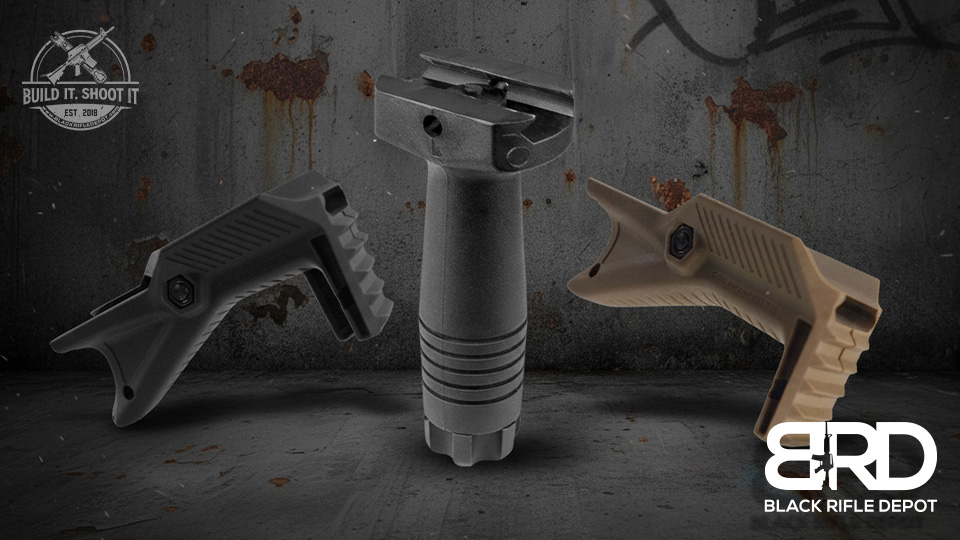
Jul
Table of Contents
Choosing the right AR Front Grip can make an AR-15 feel more stable, more comfortable, and easier to control. While it may seem like a small accessory, the front grip affects how your support hand sits on the rifle, how you drive the muzzle between targets, and how naturally the rifle points during training or range use.
In 2026, AR-15 owners have more options than ever. Vertical grips, angled grips, hand stops, short-grip handles, and hybrid designs all serve slightly different purposes. The best choice depends on your shooting style, handguard length, optic setup, and whether you are building a rifle, carbine, or pistol-style firearm.
This guide breaks down the main types of AR-15 front grip options so you can choose the right setup for your next build.
What Is an AR Front Grip?
An AR Front Grip is an accessory mounted on the handguard that provides the shooter with a more consistent support-hand position. Instead of placing your hand directly on the rail, a front grip gives you a reference point, extra leverage, or a safer stop point near the muzzle end of the handguard.
Some shooters use a front-hand grip for AR-15 builds to pull the rifle tighter into the shoulder. Others use one as an indexing point so their hand lands in the same place every time. On shorter handguards, a hand stop can also help keep the support hand from sliding too far forward.
Most modern front grips attach using M-LOK, KeyMod, or Picatinny mounting systems. M-LOK is especially popular on newer AR builds, while Picatinny remains common on quad rails and older handguards.
Vertical Grips: Best for Leverage and Control
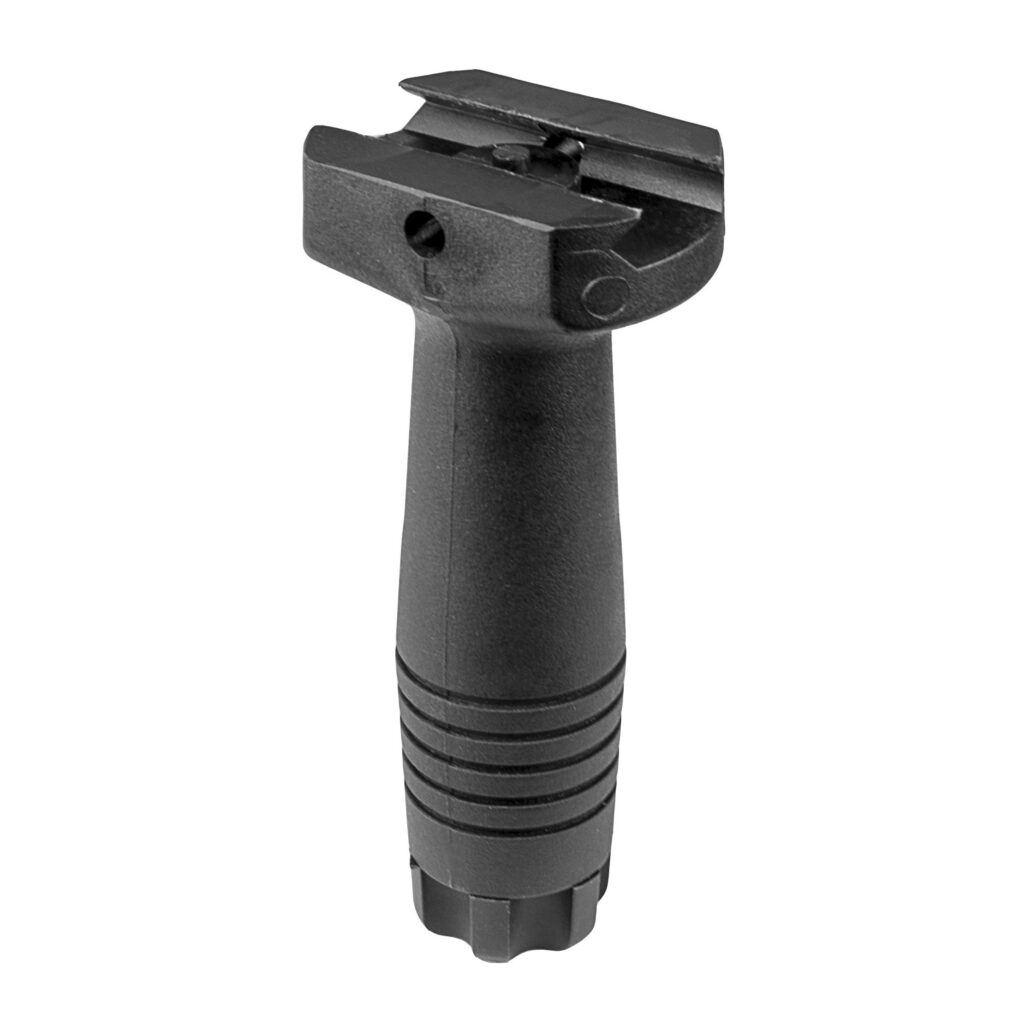
A vertical grip is the classic AR-15 front grip handle. It extends downward from the handguard and provides the shooter with a firm post to hold, pull against, or use as a hand-placement reference.
Vertical grips can help with recoil control by giving the support hand more leverage. They are especially useful on rifles with longer handguards, heavier front ends, or setups that include lights, lasers, and other accessories. Some shooters grip the vertical handle fully, while others use it more like a stop with the thumb wrapped over the handguard.
A vertical AR front grip with a light setup can also make sense when it positions the hand near the weapon light switch. The key is placement. If the grip is too far forward or too far back, it can make the rifle feel awkward instead of controlled.
Vertical grips are a strong choice for shooters who want a positive, repeatable grip point and more control during fast strings of fire.
Angled Grips: Best for Natural Hand Position
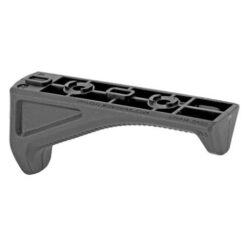
An angled foregrip sits lower than the rail but does not extend straight down like a vertical grip. Instead, it supports a more forward, natural wrist angle. This makes angled grips popular among shooters who use a modern thumb-over-bore or C-clamp-style hold.
For many AR-15 owners, angled grips feel more comfortable than vertical grips during longer shooting sessions. They allow the support hand to pull the rifle back into the shoulder while keeping the wrist in a more relaxed position.
Angled grips are also popular on slimmer, lighter AR builds because they add control without adding much bulk. If you want a front grip for AR use that improves handling while keeping the rifle streamlined, an angled grip is often a smart middle ground.
Angled grips may not provide the same strong downward leverage as a vertical grip, but they are excellent for comfort, indexing, and fast transitions.
Hand Stops: Best for Lightweight Builds
A hand stop is the simplest option. Instead of giving you a full grip handle, it creates a small physical stop on the handguard. This helps your support hand land in the same position and prevents it from sliding too far forward.
Hand stops are popular on lightweight AR-15s, short handguards, and minimalist builds. They work well for shooters who already like gripping the handguard directly but want a little more control and safety.
A hand stop is also a good option if you want a cleaner setup with less bulk. It provides enough indexing to improve consistency without changing the rifle’s feel too much.
For many beginners, a hand stop can be easier to understand than a full vertical grip because it encourages a natural grip on the handguard.


Vertical vs Angled vs Hand Stop: Which One Should You Choose?
The best AR Front Grip depends on how you use the rifle.
Choose a vertical grip if you want maximum leverage, strong recoil control, and a firm reference point. This is a good option for heavier rifles, tactical-style builds, and shooters who like pulling the rifle aggressively into the shoulder.
Choose an angled grip for comfort, speed, and a natural wrist angle. This is a great choice for general-purpose AR-15 rifles, range builds, and shooters who prefer a modern support-hand position.
Choose a hand stop for the lightest and cleanest setup. It works well for compact builds, short handguards, and shooters who want indexing without a full grip.
There is no one-size-fits-all answer. The right AR-15 front grip is the one that helps you control the rifle without adding unnecessary bulk.
AR Front Grip Pros and Cons Chart
| Grip Type | Pros | Cons | Best For |
|---|---|---|---|
| Vertical Grip | Offers strong leverage, helps pull the rifle into the shoulder, improves control during faster strings of fire, and gives a very defined hand placement point. | Adds more bulk than other options, may feel less natural for some wrist angles, and requires extra legal caution on AR pistol builds. | Rifle builds, heavier AR-15 setups, tactical-style rifles, and shooters who want maximum support-hand leverage. |
| Angled Grip | Encourages a natural wrist angle, works well with modern thumb-over-bore shooting, adds less bulk than a vertical grip, and helps with fast transitions. | Does not provide as much straight-down leverage as a vertical grip and may not feel as secure for shooters who prefer a full grip handle. | General-purpose AR-15 rifles, lightweight builds, range rifles, and shooters who want comfort with improved control. |
| Hand Stop | Lightweight, low profile, simple to use, helps prevent the support hand from sliding forward, and keeps the rifle clean and compact. | Provides the least amount of gripping surface, does not offer the same leverage as vertical or angled grips, and may feel too minimal for some shooters. | Short handguards, minimalist builds, lightweight rifles, and shooters who want a simple indexing point instead of a full grip. |
Do Front Grips Improve Accuracy?
A front grip does not make the rifle mechanically more accurate. It does not change the barrel, ammunition, trigger, or optic. However, it can help the shooter become more consistent.
Better support-hand placement can improve stability, recoil management, and target transitions. That can lead to better practical accuracy, especially during rapid fire or positional shooting. In other words, the rifle may not become more accurate, but the shooter may become more consistent behind it.
Choosing Between M-LOK and Picatinny Front Grips
Before buying an AR Front Grip, check your handguard. If your rifle has an M-LOK handguard, choose an M-LOK grip or use a small rail adapter. If your rifle has a quad rail or Picatinny section, choose a Picatinny-compatible grip.
M-LOK grips are usually lower profile and lighter. Picatinny grips are easy to install and work well on traditional rail systems. Both can be excellent choices as long as they match your build.
Conclusion
The right AR Front Grip can make your AR-15 feel more controlled, comfortable, and consistent. Vertical grips offer strong leverage, angled grips provide a natural wrist position, and hand stops keep things light and simple. Each option has a place, and the best one depends on how you shoot.
Shop AR-15 fore grips, angled grips, vertical grips, hand stops, and rail accessories at Black Rifle Depot to find the right front grip for your next AR build.
Faq’s About AR-15 Front Grips
Choosing the right AR Front Grip comes down to comfort, control, rail type, and how you use your rifle. These quick answers cover the most common questions about vertical grips, angled grips, hand stops, AR pistol considerations, and choosing the best front grip for your AR-15 build.
What is an AR front grip, and what does it do?
An AR Front Grip is a handguard-mounted accessory that gives the support hand a consistent place to grip, pull, or index. It can improve comfort, control, and the repeatability of hand placement.
What’s the difference between vertical grips, angled grips, and hand stops?
A vertical grip extends downward from the handguard. An angled grip supports a more natural wrist angle. A hand stop is a small indexing point that helps keep your hand in place without adding a full grip.
Which AR front grip is best for recoil control?
A vertical grip usually provides the most leverage for recoil control, especially on heavier rifles or fast-shooting setups. Angled grips can also help, but they focus more on comfort and natural hand position.
Are angled foregrips better than vertical grips for AR-15 rifles?
Angled grips are better for some shooters because they are comfortable, lightweight, and compatible with modern handguard grips. Vertical grips may be better for shooters who want stronger leverage and a more defined grip point.
What is a hand stop, and do I really need one on my AR-15?
A hand stop is a small accessory that prevents your hand from sliding too far forward and gives you a repeatable support-hand position. You do not always need one, but it can be very useful on short or slim handguards.
Can you legally put a vertical foregrip on an AR pistol?
Be careful. Federal rules have historically treated adding a vertical foregrip to a handgun as making an NFA-regulated firearm. Laws and interpretations can change, and state rules may differ, so check current regulations or speak with a qualified firearms attorney before adding a vertical grip to an AR pistol.
Which AR front grip is best for beginners?
An angled grip or hand stop is often best for beginners because both encourage a natural support-hand position without adding too much bulk. A vertical grip can also work well if the shooter prefers a more defined handle.
Do front grips improve accuracy on an AR-15?
They do not make the rifle itself more accurate, but they can help the shooter hold the rifle more consistently. Better control and hand placement can improve practical accuracy.
What is the best M-LOK or Picatinny front grip for AR builds?
The best choice depends on your handguard and shooting style. M-LOK grips are great for modern lightweight rails, while Picatinny grips work well on quad rails and rifles with rail sections installed.
How do I choose the right AR front grip for my shooting style?
Choose a vertical grip for leverage, an angled grip for comfort, or a hand stop for a lightweight indexing point. Match the grip to your handguard, rifle length, and preferred support-hand position.
For additional support, check out our X Page.
