
AR-15 Stocks
Best AR-15 Stocks in 2026: Budget to Premium Picks
Jun
Table of Contents
Choosing the right AR-15 Stocks can make a bigger difference than many shooters expect. A stock does not change the barrel, trigger, optic, or ammunition, but it does affect how the rifle fits your body, how stable it feels on target, how fast you can shoulder it, and how comfortable it is during long-range sessions. That is why an AR-15 stock replacement is one of the most common upgrades for new builds, budget rifles, and worn-out factory carbines.
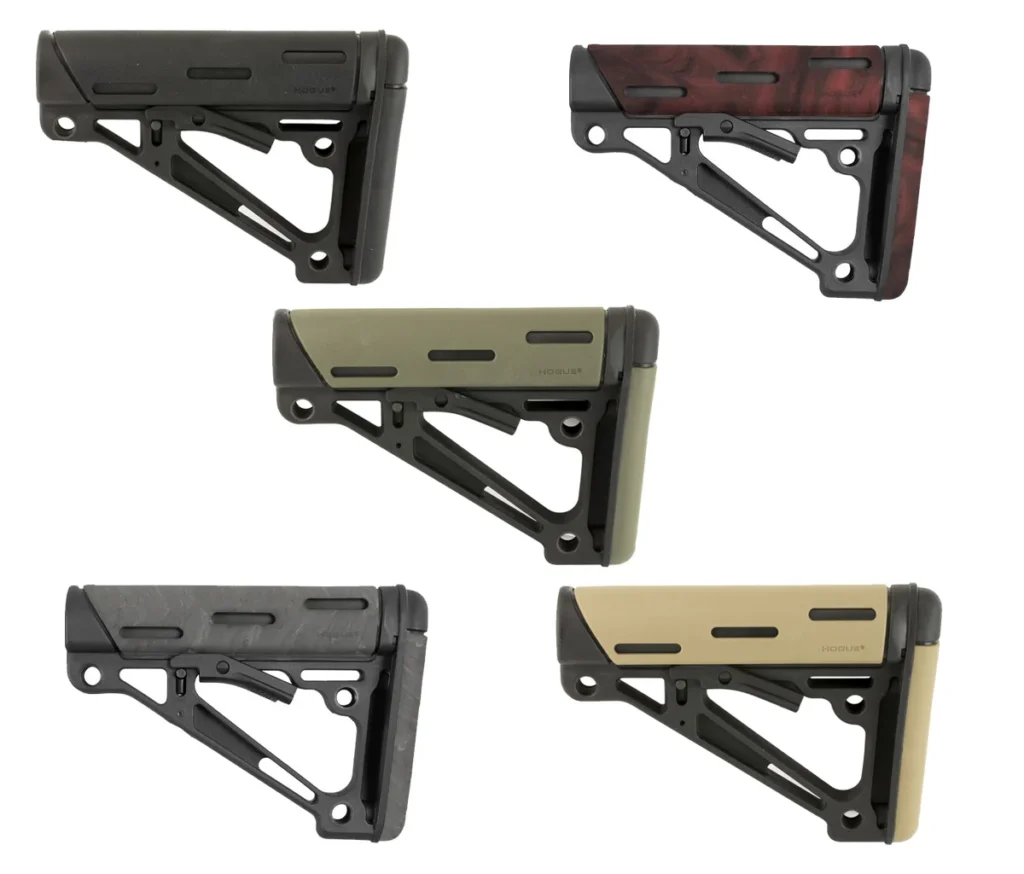
In 2026, there are more options than ever. Some shooters want a simple butt stock for AR-15 builds that costs under $50. Others want an adjustable stock AR-15 setup with a better cheek weld, tighter lockup, QD sling mounts, and a more comfortable recoil pad. Precision shooters may want an AR-15 adjustable stock with a cheek riser, while lightweight builders may prefer a minimalist design that keeps the rifle quick and easy to carry.
The best choice depends on your rifle’s purpose. A lightweight range carbine, a duty-style defensive rifle, a bench rifle, and a scoped hunting build may all benefit from different stock designs. The key is knowing what features actually matter before spending money.
Why Upgrade Your AR-15 Stock?
Most basic AR-15 rifles come with a standard M4-style AR-15 collapsible stock. It works, but it is usually built to meet a price point. Many basic stocks have noticeable wobble on the buffer tube, a narrow cheek weld, limited sling attachment points, and a hard or thin buttpad.
An upgraded AR 15 shoulder stock can improve comfort, control, and consistency. A better stock gives your face a repeatable resting point behind the optic, helps the rifle sit more securely in the shoulder pocket, and may reduce rattling or movement. These upgrades do not magically make a rifle more accurate, but they can help the shooter stay more consistent.
That matters with red dots, LPVOs, magnified optics, and backup sights. If your head placement changes every time you shoulder the rifle, your sight picture may also change. A stock with a better cheek weld can make it easier to find the dot, center the optic, and maintain a steady shooting position.
Budget AR-15 Stocks Under $50
Budget stocks are best for simple builds, range rifles, first-time upgrades, and shooters who want something better than a loose factory stock without spending premium money. In this price range, you are usually looking for basic polymer construction, a simple adjustment lever, and a better shape than a generic M4 stock.
The best budget AR-15 Stocks usually focus on comfort and fit. Look for a rubber buttpad, a slightly wider cheek area, and a snug fit on a mil-spec buffer tube. Many budget stocks are still lightweight, which makes them a good choice for general-purpose carbines.
Under $50, you may not get advanced locking systems, storage compartments, or precision adjustments, but that does not mean the stock is bad. For many shooters, a quality budget stock is all they need. It can make the rifle feel better immediately while keeping the total build cost low.
Budget stocks are also a smart choice for backup rifles, truck guns where legal, loaner range rifles, and simple home-defense builds. The goal is not to impress anyone with premium features. The goal is to get a reliable, comfortable butt stock AR-15 upgrade that works.
Mid-Range AR-15 Stocks Under $100
The under-$100 category is where many shooters find the best value. This price range often includes better materials, tighter lockup, improved cheek welds, multiple sling attachment points, and better overall ergonomics.
A mid-range collapsible stock AR-15 option is ideal for most modern carbines. These stocks are usually adjustable for length of pull, which helps the rifle fit different shooters, clothing layers, armor, or shooting positions. For a general-purpose rifle, this is often the sweet spot.
Popular mid-range designs often include features like ambidextrous QD sling sockets, anti-rattle construction, non-slip butt pads, and angled toe shapes that help the stock shoulder fit smoothly. Some models are built slim for fast handling, while others have a wider cheek area for improved comfort.
For example, Magpul lists the MOE SL Carbine Stock at 9.3 ounces and designed for mil-spec carbine receiver extensions, with a slim profile and 3.3 inches of length-of-pull adjustment. B5 Systems lists the Bravo Stock at 9.3 ounces, with an ergonomic cheek weld, fixed sling mounts, steel anti-rotation QD mounts, and compatibility with mil-spec carbine receiver extensions.
For many shooters, a stock like this is the best upgrade path. It is more refined than a bargain stock, but it does not get into the high cost of premium precision models.
Premium AR-15 Stocks
Premium AR-15 Stocks are built for shooters who want maximum stability, fit, adjustability, or durability. This category includes precision rifle stocks, enhanced-locking stocks, storage stocks, and stocks designed for specific applications.
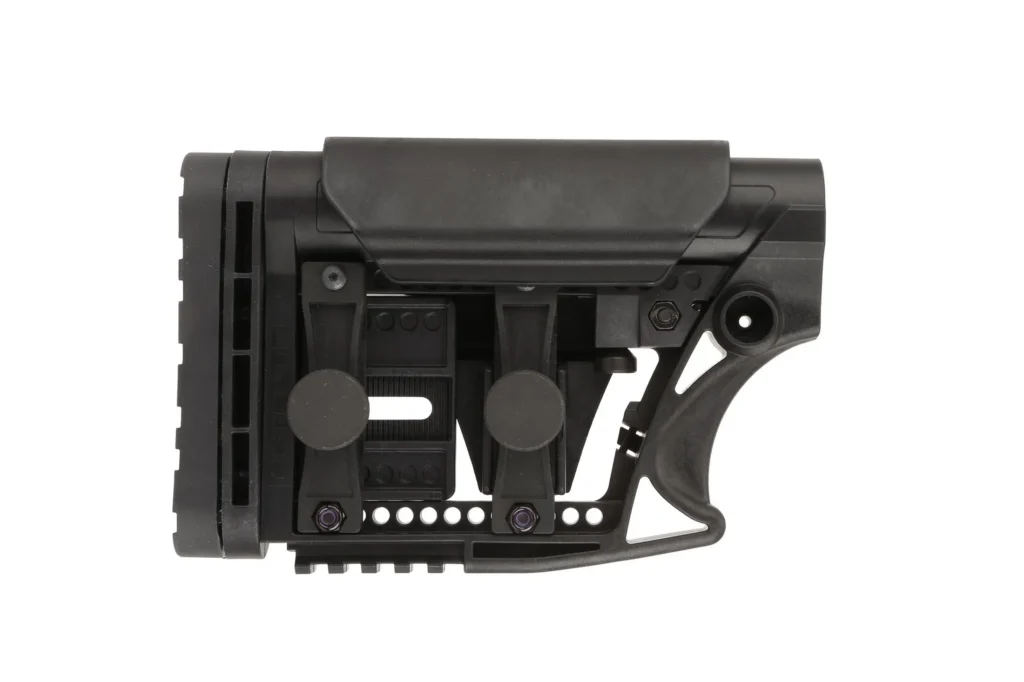
A premium stock may include an adjustable cheek riser, adjustable length of pull, improved buttpad geometry, storage compartments, steel hardware, or extra sling mounting options. These features are especially useful on scoped rifles, SPR builds, bench rifles, varmint rifles, and longer-barreled AR setups.
A precision-style stock can help align your eye with a magnified optic. That matters because scopes are less forgiving than red dots when it comes to head position and eye relief. If your cheek weld is too low, you may need to lift your head to see clearly through the optic. An AR-15 adjustable stock with a cheek riser can help solve that problem.
The tradeoff is weight. Precision stocks are often heavier than minimalist or standard carbine stocks. That extra weight may actually help balance a front-heavy rifle with a long barrel, suppressor, bipod, or large optic. On a lightweight build, though, it can defeat the purpose.
Premium stocks are worth considering if the rest of your rifle is already built around performance. If you have invested in a quality barrel, trigger, optic, and mount, a better stock can help you make the most of that setup.
Lightweight Minimalist Stocks
Minimalist stocks are popular because they reduce weight while keeping the rifle functional. A lightweight stock is ideal for carbines that are carried often, used in classes, or built for fast handling.
Mission First Tactical lists its BATTLELINK Minimalist Milspec Stock at 5.8 ounces, with multiple sling slots, a QD sling mounting point, an enhanced cheek-weld area, and mil-spec buffer tube compatibility. That kind of weight savings can be noticeable, especially when paired with a lightweight barrel, slim handguard, and compact optic.
The downside is that minimalist stocks often sacrifice some surface area. They may not feel as comfortable during long bench sessions, and they may not provide the same cheek weld as a wider stock. They are best for shooters who value mobility, balance, and simplicity.
If your build is meant to be light, handy, and quick, a minimalist stock makes sense. If your rifle is built around precision shooting, magnified optics, or maximum stability, a larger stock may be better.
Fixed Stocks and AR 15 A2 Stock Options
Not every AR needs a collapsible stock. Some shooters still prefer fixed stocks because they offer a solid feel, simple construction, and consistent length of pull. The classic AR-15 A2 stock is still a good option for rifle-length builds, retro rifles, and shooters who prefer a traditional shoulder position.
Fixed stocks are less adjustable, but they can feel extremely stable. They also avoid the wobble sometimes found in cheaper collapsible stocks. For bench shooting, target work, and classic rifle builds, an A2-style stock can still be a strong choice.
The main issue is fit. If the length of pull is too long or too short for your body, gear, or shooting style, you cannot adjust it as quickly as you can with a collapsible stock. That is why most modern defensive and general-purpose builds still use adjustable carbine stocks.
Folding Stocks and Foldable Stock Adapters
Many shooters search for an AR-15 fold stock, an AR-15 foldable stock adapter, or a Magpul AR-15 folding stock setup because they want a rifle that stores more compactly. A folding adapter can make transportation and storage easier, especially for compact builds.
However, AR-15 folding setups require more thought than simply swapping a stock. The AR-15 buffer system runs through the receiver extension, so traditional AR-15 rifles are not designed to fire normally with the stock folded unless the firearm uses a specialized system. Folding adapters add parts, weight, and cost, and may change the rifle’s feel.
For most shooters, a quality collapsible stock is the simpler solution. If storage length is a major priority, a folding adapter may be worth researching, but compatibility and intended use matter. Always make sure the adapter, receiver extension, buffer system, and stock are designed to work together.



What to Look for in AR-15 Stocks in 2026
When shopping for AR-15 Stocks, start with compatibility. Most modern adjustable stocks are made for either mil-spec or commercial-spec carbine buffer tubes. These are not the same size. A mil-spec stock should go on a mil-spec tube, and a commercial-spec stock should go on a commercial tube.
Next, look at cheek weld. A wider cheek area can make the rifle more comfortable and more consistent. This is especially important if you run a red dot on a taller mount, an LPVO, or a magnified optic.
Lockup is another big factor. A stock that rattles may still function, but it can feel cheap and distracting. Better locking mechanisms reduce movement between the stock and receiver extension. That can make the rifle feel more solid when shouldered.
Sling attachment points also matter. QD sockets, sling loops, and rear sling slots give you more flexibility when setting up a two-point sling. For a defensive or duty-style rifle, sling compatibility should not be an afterthought.
Finally, consider weight. A stock can shift the balance of the rifle. A heavier stock may help balance a long barrel or front-heavy rail. A lighter stock may make a carbine faster and easier to carry.
Budget vs Premium: Which Should You Buy?
A budget stock makes sense if your rifle is simple, your factory stock is uncomfortable, or you want an affordable improvement. There is nothing wrong with choosing a basic stock if it fits your build and feels good.
A mid-range stock is the best choice for most shooters. It usually gives you better lockup, comfort, cheek weld, sling options, and durability without pushing the price too high.
A premium stock is best for precision builds, dedicated optics setups, or shooters who want specific adjustments. If you need a cheek riser, tool-less adjustment, or a more stable rear support, premium makes sense.
The biggest mistake is buying based only on price. The best stock is not automatically the cheapest or the most expensive. It is the one that fits your rifle, optic height, shooting style, and budget.
Conclusion: Find the Right AR-15 Stock for Your Build
The best AR-15 Stocks in 2026 are not one-size-fits-all. A budget stock can be a major improvement over a basic factory option. A mid-range stock may offer the best balance of price, comfort, and reliability. A premium stock can make sense for precision rifles, optics-heavy builds, or shooters who want a more customized fit.
Before buying, think about how the rifle will be used. A lightweight carbine needs a different stock than a bench rifle. A red dot rifle may not need the same cheek riser as a scoped SPR build. A defensive rifle should prioritize reliability, sling compatibility, and a secure shoulder fit.
Whether you are building from scratch, upgrading a factory rifle, replacing a worn-out stock, or comparing AR-15 collapsible stock options, Black Rifle Depot has AR-15 stocks and AR parts ready for your next build.
Shop AR-15 Stocks at Black Rifle Depot today and find the right stock for your budget, rifle setup, and shooting style.
FAQ: AR-15 Stocks
Before choosing your next AR-15 stock, it helps to understand how budget, fit, compatibility, weight, and shooting style all work together. These common questions cover what to look for, what to avoid, and how to decide which stock makes the most sense for your rifle.
What is the best AR-15 stock under $50 for improving comfort and stability?
The best stock under $50 is usually a simple upgraded collapsible stock with a better buttpad, improved cheek area, and snug fit on the buffer tube. Look for a stock that fits your receiver extension properly and provides better shoulder contact than a basic M4 stock.
Are premium AR-15 stocks really worth the extra money over budget models?
Premium stocks are worth it when you need better adjustability, a stronger lockup, improved cheek weld, storage, or precision rifle features. For a basic range rifle, a budget or mid-range stock may be enough. For a scoped rifle or serious defensive setup, premium features can be easier to justify.
How much weight can an upgraded AR-15 stock save compared to a standard M4 stock?
Weight savings depend on the stock being replaced. Some minimalist stocks weigh under 6 ounces, while many standard or enhanced carbine stocks weigh 8–13 ounces. For example, Mission First Tactical lists the BATTLELINK Minimalist at 5.8 ounces, while Magpul lists the MOE SL at 9.3 ounces.
What features should I look for when choosing an AR-15 stock in 2026?
Look for proper buffer tube compatibility, a comfortable cheek weld, solid lockup, sling attachment points, a non-slip buttpad, durable construction, and the right weight for your build. If you use magnified optics, cheek height becomes even more important.
Do expensive AR-15 stocks improve shooting accuracy or just ergonomics?
An expensive stock does not make the barrel or ammunition more accurate. It can improve shooter consistency. A better cheek weld, stable shoulder position, and proper length of pull can help you hold the rifle more consistently, which may improve practical accuracy.
Which AR-15 stocks offer the best cheek weld for optics and red dots?
Stocks with wider cheek surfaces usually offer the best cheek weld. B5-style stocks, storage stocks, and precision stocks are popular for this reason. For magnified optics, an adjustable cheek riser may be the best choice.
What is the difference between minimalist AR-15 stocks and precision rifle stocks?
Minimalist stocks are designed to save weight and keep the rifle fast-handling. Precision rifle stocks are designed for stability, optic alignment, and adjustability. Minimalist stocks are best for lightweight carbines, while precision stocks are better for scoped rifles and bench shooting.
Can I install any AR-15 stock on my rifle, or are there compatibility requirements?
There are compatibility requirements. The biggest one is buffer tube size. Most collapsible stocks are made for either mil-spec or commercial-spec receiver extensions. Fixed stocks, A2 stocks, folding adapters, and precision stocks may have additional requirements.
Which AR-15 stock is best for a lightweight build versus a duty or defensive rifle?
For a lightweight build, choose a minimalist stock that keeps weight down while maintaining basic sling support. For a duty or defensive rifle, a stronger stock with better lockup, a good buttpad, QD sling mounts, and a reliable adjustment system is usually a better choice.
How do locking mechanisms on AR-15 stocks affect performance and reliability?
A better locking mechanism reduces wobble between the stock and receiver extension. This can make the rifle feel more stable, quieter, and more consistent when shouldered. It does not replace good shooting fundamentals, but it can improve confidence and comfort.
For additional resources, check out our X Page.
