
AR-15 Lower Parts Kits
Best AR-15 Lower Parts Kits of 2026: Aero, BCM, Geissele, and Other Leading Brands Compared
Oct
Table of Contents
The AR-15 parts market in 2026 offers a wide selection of lower parts kits, ranging from traditional mil-spec-style components to enhanced packages featuring specialized controls and hardware. With manufacturers such as Aero Precision, Bravo Company Manufacturing (BCM), Geissele Automatics, and CMMG offering different configurations, it’s increasingly important to understand what separates these products. While brand reputation plays a role in the industry, the actual components included in each kit tell a much more complete story.
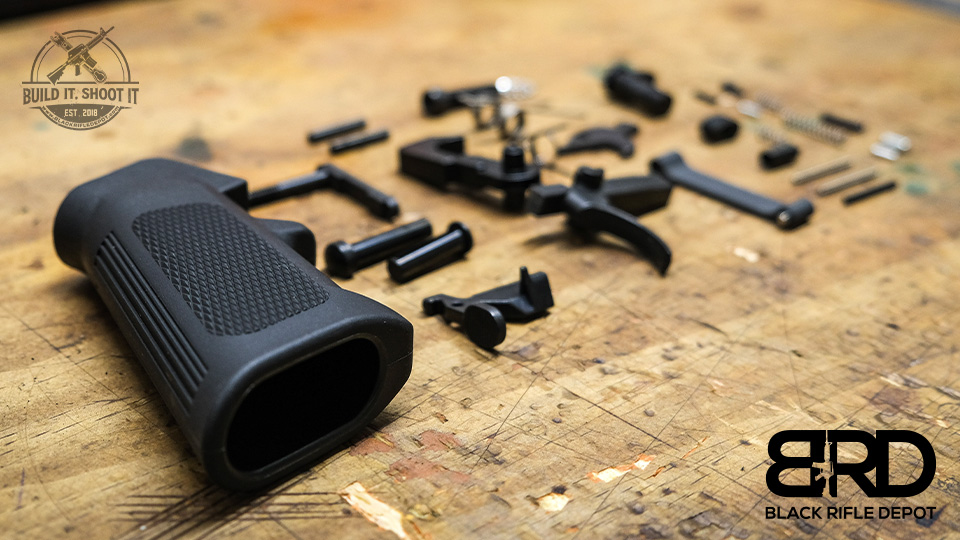
An AR-15 lower parts kit, commonly called an LPK, includes many small components associated with the lower receiver. These include the safety selector, magazine catch, bolt catch, springs, detents, and receiver pins. Depending on the configuration, a kit may also include a fire control group, pistol grip, or trigger guard. Manufacturers don’t follow a single universal standard for what must be included, so it’s important to understand the differences between traditional, enhanced, and reduced-content packages.
The market has also diversified, with manufacturers offering specialized components and alternative configurations beyond traditional mil-spec-style hardware. However, a higher price or a longer list of advertised features does not necessarily mean better quality. In this updated 2026 comparison, we examine several established manufacturers, explain the differences between their lower parts kits, and discuss the specifications that distinguish one product from another.
What Comes in an AR-15 Lower Parts Kit?
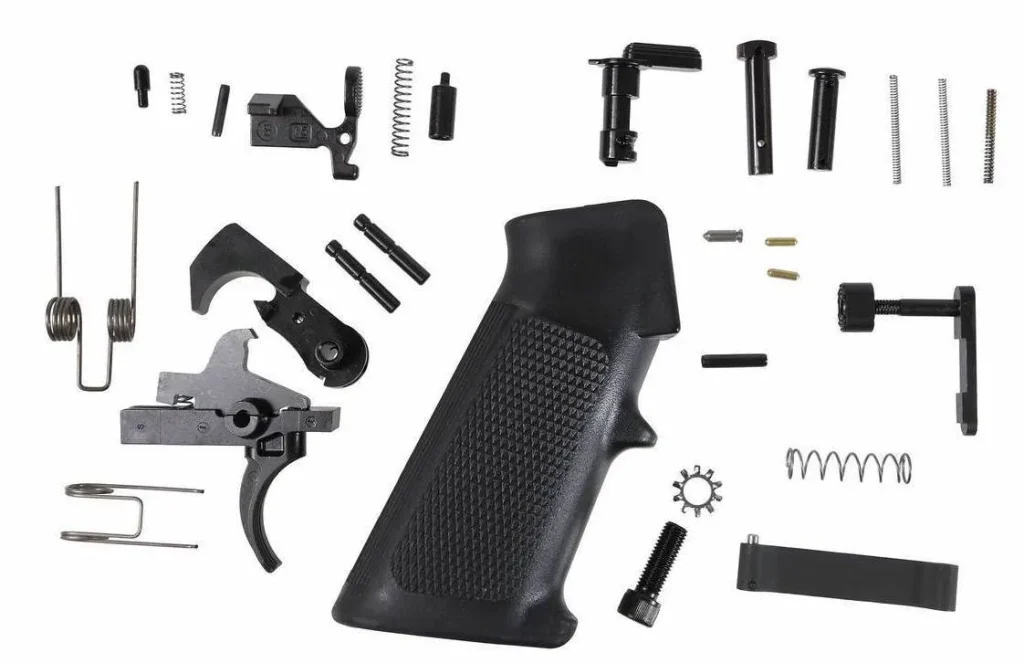
An AR-15 lower parts kit (LPK) contains the small components needed to complete the internal assembly of an AR-15 lower receiver. While the exact contents vary by manufacturer, most standard kits include a trigger assembly, hammer, safety selector, magazine catch, bolt catch, takedown pins, pivot pins, detents, and springs. These components work together to support the rifle’s basic controls and mechanical functions.
Some lower parts kits also include a pistol grip and trigger guard, while others leave those components out. Premium kits from brands like Aero Precision, BCM, and Geissele may feature upgraded materials, enhanced controls, or specialized trigger components. Before comparing the best AR-15 lower parts kits of 2026, understand what each kit includes, since not every manufacturer offers the same parts.
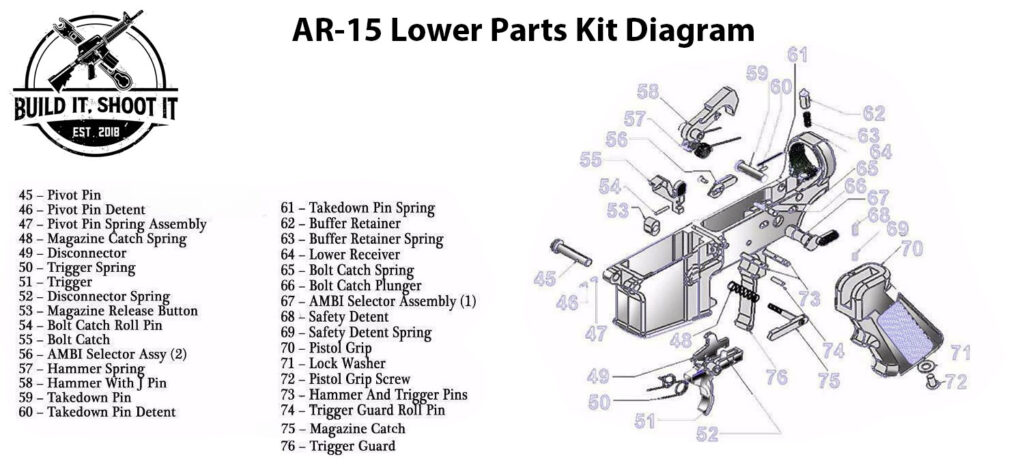
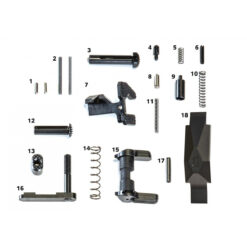
The diagram below shows the components commonly found in an AR-15 lower receiver assembly, making it easier to identify what different kits include.
Understanding AR-15 Lower Parts Kits in 2026
Although the AR-15 platform has been around for decades, the aftermarket still offers different approaches to lower receiver components. Traditional lower parts kits remain a familiar category, but manufacturers also sell packages with enhanced controls, alternative finishes, and different hardware combinations. As a result, two kits carrying the same general description can differ considerably in contents and design.
One important distinction involves the fire control group, or FCG. A traditional lower parts kit may include the trigger, hammer, disconnector, and associated hardware, while a kit marketed without an FCG omits those components. Some manufacturers offer additional variations that exclude the pistol grip or trigger guard. These differences help explain why lower parts kits sold under similar names can have substantially different prices.
Enhanced configurations have added another level of variety to the market. Ambidextrous safety selectors, enlarged bolt catch controls, and alternative trigger guard designs are established aftermarket options. Some manufacturers combine these features into designated enhanced kits, while others offer them as individual components. Not every enhanced package includes the same upgrades, and no industry-wide certification standard governs the term.
For 2026, the distinction between a conventional kit and a specialized component package remains one of the most meaningful considerations when comparing manufacturers. Instead of assuming every AR-15 LPK includes the same parts, review each product’s documented contents, materials, and intended receiver compatibility.
What Separates One AR-15 Lower Parts Kit From Another?
The differences between lower parts kits aren’t always apparent in product photos or marketing descriptions. Two packages may contain similar-looking components while using different materials, manufacturing processes, or surface treatments. Manufacturers can produce individual parts through machining, forming, stamping, or other methods, depending on the design. The suitability of those methods depends on the component, not the manufacturing process alone.
Steel is commonly used in lower receiver hardware, including pins, springs, catches, and fire control components. Aluminum and polymer are also found in certain grip and trigger guard designs. The firearms industry uses protective finishes such as phosphate coatings and various surface treatments to improve corrosion resistance, wear characteristics, or appearance. However, the presence of a particular coating does not determine a lower parts kit’s overall reliability.
Dimensional consistency is another factor that distinguishes component manufacturing. AR-15 lower receivers generally follow established dimensional patterns, but the commercial market includes receivers with proprietary features and specialized hardware. A component described as mil-spec-style may share conventional dimensions but may not have undergone independent military specification testing. For that reason, evaluate claims of universal compatibility or military-grade performance against published specifications.
Package contents also affect overall value. You can’t compare a kit with a conventional set of controls to one with specialized safety selectors or other proprietary components based solely on price. Similarly, a kit that excludes the fire control group contains fewer parts than one that includes it. Understanding these distinctions provides a more useful comparison than relying on broad labels such as budget, premium, or professional-grade.
Aero Precision Lower Parts Kits: Traditional Designs and Multiple Configurations
Aero Precision has established itself as a recognizable manufacturer in the AR platform market, producing receivers, complete firearms, and individual components. Its lower parts offerings include conventional AR-15 kits, reduced-content configurations, and packages with aftermarket grips or trigger guards. This variety is a key characteristic of Aero’s lineup because similarly named products can differ significantly in contents.
Traditional Aero Precision lower parts kits include standard receiver hardware, while other configurations omit a fire control group. Reduced-content versions may also exclude additional components, depending on the product. These distinctions matter when comparing Aero products because a package without trigger components shouldn’t be described as equivalent to one with a complete conventional fire control group.
Aero Precision’s M4E1 receiver family introduces another consideration. Certain M4E1 lower receiver designs incorporate features such as an integrated trigger guard and threaded hardware arrangements that distinguish them from more conventional forged lower receivers. Although many standard AR-15 components share common dimensions, these receiver-specific features mean you should evaluate compatibility at the individual product level rather than assume it based on the brand name.
Aero has also offered lower parts packages that incorporate Magpul components, showing how manufacturers can pair traditional receiver hardware with branded ergonomic accessories. An aftermarket grip or trigger guard does not necessarily mean the package includes an upgraded trigger assembly. Aero’s catalog is better understood as a selection of different configurations rather than a single standardized kit intended to represent every AR-15 lower receiver.
BCM Lower Parts Kits: BCMGUNFIGHTER Components and PNT Triggers
Bravo Company Manufacturing (BCM) manufactures AR-platform firearms and components, including lower receiver hardware and fire control products. Its lineup includes BCMGUNFIGHTER-branded components and configurations associated with the company’s PNT trigger assembly. BCM’s products are frequently discussed alongside other established AR-15 manufacturers, but meaningful comparisons require looking beyond the brand’s reputation.
One distinguishing BCM product is the PNT fire control group. PNT stands for Polished Nickel Teflon, a designation BCM uses for its treated trigger components. The BCM PNT follows a conventional single-stage trigger arrangement, which separates it from aftermarket two-stage systems such as the Geissele SSA. Although both fall under the broader category of AR-15 fire control groups, they do not have identical operating characteristics.
BCM has also offered pistol grips and trigger guards under the BCMGUNFIGHTER product family. Depending on the kit, these components may be included alongside conventional lower receiver hardware. However, the BCMGUNFIGHTER designation does not automatically mean every accessory or trigger component sold under that name is included. The exact configuration determines what is supplied.
Much of the discussion around BCM products uses terms like duty-grade or professional-grade. While these descriptions communicate how products are positioned in the market, they aren’t standardized measures of mechanical performance. An accurate assessment of BCM lower parts kits should focus on identifiable components, documented materials, and published specifications rather than treating promotional language as proof of superiority.
Geissele Automatics: Enhanced Lower Parts and Specialized Controls
Geissele Automatics occupies a distinct position in the AR-15 aftermarket because of its extensive history of producing specialized trigger systems and other firearm components. The company is best known for the Super Semi-Automatic (SSA) family of triggers, but its lower parts kits are not the same as separately marketed fire control products. Geissele offers different component categories, and buying a product with the Geissele name does not automatically mean it includes an SSA trigger.
The company’s Ultra Duty Lower Parts Kit is a useful example of an enhanced component package. Geissele documentation identifies specialized components including the Maritime Bolt Catch, Super Configurable Safety, and Ultra Precision trigger guard. These products distinguish the Ultra Duty configuration from a conventional package with traditional lower receiver hardware.
The Maritime Bolt Catch features an extended control design that provides additional surface area for manipulation. Geissele’s Super Configurable Safety represents another approach to lower receiver controls, while the Ultra Precision trigger guard differs from conventional stamped designs. Together, these components demonstrate how enhanced lower parts packages can incorporate distinct mechanical and ergonomic features without necessarily including an aftermarket fire control group.
Geissele has also manufactured conventional lower receiver components, so it’s inaccurate to describe every product in the company’s lineup as having the same specialized hardware. The distinction between standard parts, Ultra Duty products, and separately sold trigger systems remains important. A manufacturer’s reputation for producing premium triggers should not be interpreted as evidence that every lower parts kit includes those triggers or offers the same features.
CMMG Lower Parts Kits: Conventional Hardware and Gunbuilder’s Packages
CMMG is another established AR-platform manufacturer whose product catalog includes firearms, caliber-specific systems, and lower receiver components. Its lower parts offerings have included traditional configurations and products marketed under the Gunbuilder’s designation. These packages illustrate why lower parts kits cannot always be compared one-to-one.
A conventional lower parts kit generally includes a broader collection of receiver components, whereas CMMG’s Gunbuilder’s configurations have been offered with selected items excluded. Depending on the version, these omissions distinguish the product from a traditional kit that includes a fire control group or other commonly included components. The Gunbuilder’s designation therefore refers to a different package configuration, not a separate universal standard for AR-15 hardware.
CMMG’s broader product lineup also highlights the importance of distinguishing between firearm platforms. The company manufactures components for multiple systems, and products intended for one receiver pattern should not automatically be assumed compatible with another. This is especially relevant when discussing AR-15 hardware alongside components for .308-pattern rifles or proprietary designs.
CMMG is sometimes characterized as a value-oriented manufacturer, but a factual comparison requires more than general price labels. Actual selling prices vary by product, configuration, retailer, and promotional period. Without a consistent price comparison on the same date, it’s misleading to claim CMMG is always the least expensive option or that its components hold one fixed position in the market.


Aero Precision vs. BCM vs. Geissele vs. CMMG: Understanding the Differences
Although these four manufacturers operate in the same general market, their lower parts offerings aren’t identical. Aero Precision produces traditional and reduced-content kits; BCM offers products associated with its BCMGUNFIGHTER line and PNT fire control group; Geissele manufactures specialized lower receiver controls; and CMMG provides conventional and Gunbuilder’s configurations. These differences matter more than a simplified ranking of every manufacturer based on reputation or advertised price.
| Brand | Notable product characteristics | Key distinction |
|---|---|---|
| Aero Precision | Conventional LPKs and reduced-content configurations | Multiple package variations |
| BCM | BCMGUNFIGHTER components and PNT fire control products | Conventional single-stage PNT design |
| Geissele Automatics | Ultra Duty components and specialized controls | Enhanced hardware sold separately from SSA triggers |
| CMMG | Traditional and Gunbuilder’s packages | Different included-component configurations |
The table highlights established product differences rather than declaring one manufacturer’s components more durable or reliable than another’s. Making that determination would require controlled testing using comparable products, clearly defined performance measurements, and consistent evaluation methods. Brand reputation and individual experiences provide context, but they don’t replace documented testing.
Another complication involves how manufacturers package their products. One company may include components that another sells separately, while a third may offer several versions with different accessories. Without accounting for those differences, a direct comparison can produce misleading conclusions about price, quality, or value.
How the AR-15 Lower Parts Market Has Changed for 2026
The AR-15 aftermarket still offers a wide variety of component packages rather than a single standardized lower parts kit configuration. Manufacturers still list conventional hardware alongside enhanced controls, specialized trigger systems, and packages that exclude selected components. This variety creates several distinct product categories that should not be treated as interchangeable.
One established development within the broader aftermarket is the availability of ambidextrous and alternative control designs. These include specialized safety selectors, extended bolt catches, and receiver-specific hardware. These components have existed for years, and their continued presence in contemporary catalogs reflects the range of available designs. However, their availability alone does not prove they became the industry’s best-selling or fastest-growing category in 2026.
The distinction between standard and reduced-content kits is also important. Packages that omit trigger assemblies, pistol grips, or trigger guards are established products, not necessarily incomplete or defective kits. Their contents are deliberately different from traditional configurations. Accurate comparisons require identifying those differences rather than assuming every listing includes the same parts.
Pricing and availability are difficult to summarize with a single market figure. Manufacturers publish suggested retail prices, while dealers establish their own selling prices and may offer discounts. Inventory also changes with production schedules and retailer stock levels. Consequently, don’t carry forward historical price ranges and availability claims from a 2025 article as current facts without fresh, product-specific verification.
Understanding Mil-Spec and Aftermarket Lower Parts
The term mil-spec appears frequently in discussions about AR-15 components, but people often use it more broadly than its technical meaning suggests. Military specifications define particular requirements for applicable equipment and components. In the civilian aftermarket, mil-spec-style commonly describes products that follow established dimensional or design patterns associated with the military M16 and M4 family.
A commercial lower parts kit advertised as mil-spec is not necessarily certified by the military or independently tested against every applicable requirement. Some manufacturers use the term to describe standard component dimensions, while others refer to specific materials or manufacturing characteristics. These distinctions make published product specifications more informative than the label alone.
Aftermarket components may differ from conventional designs in several ways, including control geometry, surface treatments, materials, or compatibility requirements. None of those differences automatically means the product is better or worse than a traditional part. The significance depends on the component’s design, applicable specifications, and documented performance.
The same applies to products described as enhanced, premium, or duty-grade. These terms can communicate meaningful product differences, but they are not universal engineering classifications. A higher-priced package may include specialized hardware without undergoing comparative testing against every conventional alternative on the market.
AR-15 Lower Parts Kit Compatibility and Common Misconceptions
One of the most common misconceptions about AR-15 lower parts kits is that every component described as AR-15 compatible will fit every lower receiver. Although the platform uses many established dimensional patterns, the commercial market also contains proprietary designs and receiver-specific features. Integrated trigger guards, specialized pins, threaded hardware, and ambidextrous controls can create differences between products that otherwise share the same general platform designation.
The distinction becomes even more important when comparing AR-15 components with those intended for AR-10 or other .308-pattern rifles. Unlike the more established dimensional conventions for many AR-15 components, commercial .308-pattern platforms use several competing receiver designs. Some small hardware may share similar characteristics, but don’t assume universal interchangeability.
Another misconception involves the relationship between price and mechanical performance. A more expensive lower parts kit may include additional or specialized components, but the price itself does not guarantee a longer service life. Likewise, a traditional component design should not automatically be considered inferior simply because it lacks a proprietary finish or an enlarged control surface.
Product descriptions, technical specifications, and model-specific documentation remain the appropriate basis for verifying compatibility. When a combination includes unfamiliar or proprietary components, consult the manufacturer or a qualified gunsmith to resolve questions about fit and safe operation.
Where to Buy the Best AR-15 Lower Parts Kits of 2026
Finding the best AR-15 lower parts kits of 2026 comes down to understanding the differences in quality, components, and features offered by manufacturers such as Aero Precision, BCM, Geissele Automatics, and CMMG. Whether you’re comparing traditional mil-spec-style components or enhanced lower parts kits, knowing what each package includes makes it easier to evaluate your options. With so many configurations on the market, choosing a reputable retailer matters as much as understanding the products themselves.
At Black Rifle Depot, we take pride in offering a wide selection of AR-15 parts and accessories from established manufacturers at competitive prices. Our inventory includes everything from standard replacement components to lower parts kits and individual upgrades. We focus on accurate inventory, detailed product information, and fast order processing so customers can shop with confidence.
If you’re searching for AR-15 lower parts kits in 2026, explore our selection of components and accessories. With competitive pricing, dependable shipping, and a commitment to customer satisfaction, we make it easy to find the parts you need. Browse our inventory today and see why firearm owners keep trusting us for their AR-15 parts.
Frequently Asked Questions About AR-15 Lower Parts Kits
The following questions address some of the most common points of confusion surrounding lower parts kits, including what they contain, how manufacturers differ, and what product descriptions mean in 2026.
What does an AR-15 lower parts kit include?
A conventional AR-15 lower parts kit contains various lower receiver components, typically including pins, springs, detents, magazine catch hardware, bolt catch components, and safety selector parts. Some configurations also contain the fire control group, pistol grip, and trigger guard. Because manufacturers offer different package variations, an advertised lower parts kit does not necessarily include every component found in another manufacturer’s product.
Do all AR-15 lower parts kits come with a trigger?
No. Many manufacturers offer kits specifically sold without a fire control group. These packages omit trigger-related components that a conventional kit might include. Some reduced-content packages also exclude additional hardware, so the product’s included-parts list is the best way to distinguish the configurations.
Are Aero Precision lower parts kits mil-spec?
Aero Precision offers conventional AR-15 lower receiver components commonly associated with mil-spec-style configurations. However, the term should not be interpreted as independent certification of every component to every military specification. Aero also produces receivers and component configurations with features that differ from conventional designs.
What makes BCM lower parts kits different?
BCM offers lower receiver components for its BCMGUNFIGHTER product family, including configurations with the PNT fire control group. The PNT follows a conventional single-stage arrangement and differs from two-stage aftermarket trigger systems. Specific kit contents depend on the product being offered.
Do Geissele lower parts kits include an SSA trigger?
Not automatically. Geissele manufactures SSA triggers and lower parts kits as distinct product categories. Its Ultra Duty Lower Parts Kit includes specialized controls, but you should not assume it includes an SSA trigger unless the product description explicitly identifies one.
What is the difference between a standard and enhanced AR-15 lower parts kit?
Standard kits generally contain conventional lower receiver hardware, while enhanced kits may substitute specialized controls, alternative component designs, or different finishes. No universal industry definition specifies which upgrades a kit must include to be labeled enhanced.
What is a CMMG Gunbuilder’s Kit?
CMMG has marketed Gunbuilder’s lower parts packages that exclude selected commonly customized components. These products differ from traditional configurations, which include a broader range of lower receiver parts. The exact omissions depend on the particular product.
Are AR-15 lower parts kits interchangeable between brands?
Many conventional components share common dimensions, but compatibility isn’t universal. Proprietary lower receivers, specialized controls, and certain aftermarket designs can introduce exceptions. Manufacturer documentation is necessary to confirm specific combinations.
Can you use an AR-15 lower parts kit in an AR-10?
An AR-15 lower parts kit should not be assumed universally compatible with an AR-10 or another .308-pattern rifle. Receiver designs and component dimensions can vary by manufacturer. Compatibility depends on the exact platform and parts involved.
Does a more expensive lower parts kit mean better quality?
Not necessarily. Higher prices may reflect additional components, proprietary designs, specialized manufacturing, or different product positioning. Price does not independently measure durability, reliability, or mechanical performance.
What is the difference between a lower parts kit and a lower build kit?
A lower parts kit generally refers to the smaller components associated with a lower receiver. A lower build kit may include additional hardware and assemblies, though manufacturers and retailers don’t always use these terms consistently. The included-parts list provides the most accurate distinction.
Are all mil-spec AR-15 lower parts kits manufactured to the same standard?
No. Commercial manufacturers may use mil-spec terminology to describe particular dimensions, materials, or conventional design characteristics. The label does not establish that every product has undergone identical testing or received the same certification.
For additional support and online deals, check out our X Page.
