
NFA Items
New NFA Ruling 2026: What the End of Federal Enforcement Means for Gun Owners
Oct
Table of Contents
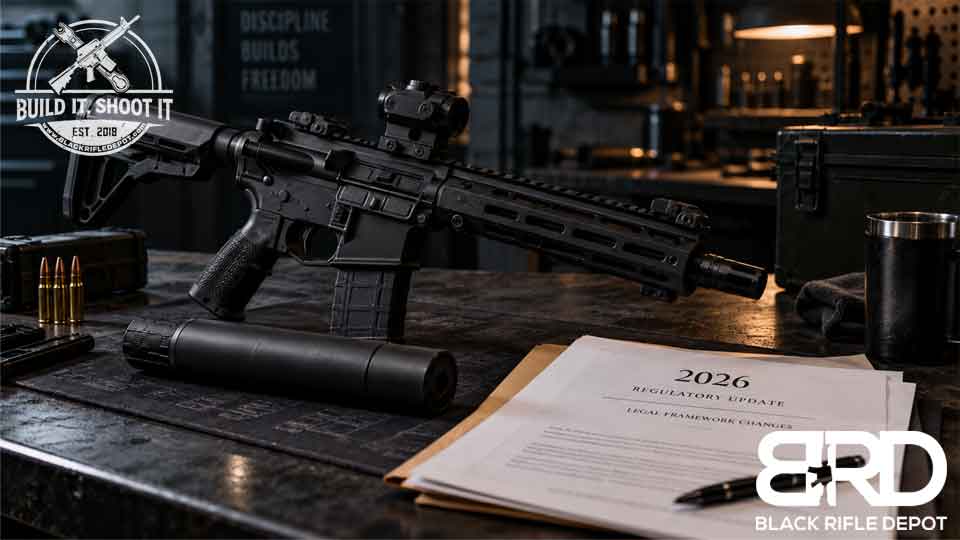
The National Firearms Act (NFA) has undergone one of its most significant changes in decades. On October 9, 2026, the Department of Justice announced a nationwide policy ending enforcement of several federal registration, approval, and tax-stamp requirements for suppressors, short-barreled rifles (SBRs), short-barreled shotguns (SBSs), and certain firearms classified as Any Other Weapons (AOWs). The announcement followed a federal court ruling that challenged the government’s authority to continue enforcing those requirements after Congress eliminated the associated making and transfer taxes.
For firearm owners, manufacturers, and dealers, the decision changes how the federal government regulates several categories of NFA firearms. However, the announcement has also created confusion about what is now legal, which requirements remain, and whether Congress has effectively eliminated the National Firearms Act.
While the federal government has stopped enforcing several longstanding NFA provisions, it has not repealed the law. State restrictions, federal background checks, and other firearm regulations remain in effect. Understanding these differences is important for anyone considering purchasing, transferring, or possessing an affected firearm.
Understanding the National Firearms Act and Its Original Requirements
The National Firearms Act was enacted in 1934 and established federal taxes and registration requirements for specific firearms and firearm-related devices. Unlike ordinary firearms regulated primarily under the Gun Control Act, NFA firearms historically required additional federal approval before they could be manufactured or transferred.
For decades, people buying suppressors or short-barreled rifles generally had to submit an application, complete the approval process, and pay a federal transfer tax. That tax was typically $200, while certain AOW transfers carried a reduced $5 tax. The National Firearms Registration and Transfer Record also listed approved firearms.
The NFA covers suppressors, short-barreled rifles, short-barreled shotguns, machine guns, destructive devices, and certain other weapons. These categories remain legally distinct, even though recent changes have substantially affected how Congress regulates some of them.
A central feature of the original law was its connection to Congress’s constitutional authority to impose taxes. That relationship became especially important when Congress eliminated the making and transfer taxes for several NFA categories, raising questions about the legal basis for the remaining registration and approval requirements.
How the 2025 Tax Changes Led to the 2026 NFA Ruling
In July 2025, Congress passed the One Big Beautiful Bill Act, which reduced the federal making and transfer taxes on suppressors, short-barreled rifles, short-barreled shotguns, and AOWs to $0. The tax reduction officially took effect on January 1, 2026, eliminating the previous tax payment for these categories while leaving the registration and approval process in place.
Although the tax was eliminated, firearm owners still had to complete the traditional NFA paperwork and receive federal approval. This created an unusual situation in which the government continued administering a tax-based regulatory system even though the associated making and transfer taxes had been reduced to zero.
That issue became the focus of a federal lawsuit, Silencer Shop Foundation v. Bureau of Alcohol, Tobacco, Firearms and Explosives. The plaintiffs challenged the continued enforcement of registration and approval requirements, arguing that Congress could no longer rely on its taxing authority to support those provisions once the applicable taxes had been eliminated.
On August 5, 2026, the U.S. District Court for the Northern District of Texas ruled for the plaintiffs on the central issues. The court concluded that Congress no longer supported the challenged making, registration, and transfer provisions with its taxing power for firearms subject to the zero-dollar tax. The ruling issued a permanent injunction protecting the plaintiffs and other specifically covered parties, rather than automatically ending enforcement nationwide.
October 9, 2026: Federal Government Ends Enforcement of Several NFA Requirements
The situation changed significantly on October 9, 2026, when the Department of Justice announced that it would not appeal the August ruling and would extend its nonenforcement policy nationwide. Instead of limiting relief to those covered by the court’s injunction, federal authorities chose to stop enforcing several NFA requirements against individuals and businesses throughout the United States.
The policy applies to suppressors, short-barreled rifles, short-barreled shotguns, and AOWs. For these categories, federal authorities will no longer enforce the traditional NFA requirements for prior approval to make or transfer firearms, registration in the federal NFA registry, or the associated tax-stamp requirements.
The policy also covers restrictions on possessing and transferring unregistered firearms, NFA-specific marking requirements, and specified interstate transportation provisions. However, exceptions remain for offenses involving illegally imported firearms and firearms with unlawfully altered or obliterated serial numbers.
This represents a substantial change from the longstanding federal process. Nevertheless, the decision exercises enforcement discretion, not a repeal of the National Firearms Act. The underlying statutory provisions remain in federal law, and the government’s enforcement position could change under different legal or legislative circumstances.
Which Firearms Are Affected by the New NFA Ruling?
The October 2026 policy covers four primary categories: suppressors, short-barreled rifles, short-barreled shotguns, and Any Other Weapons. These are the same categories for which Congress reduced the federal manufacturing and transfer taxes to zero at the beginning of 2026.
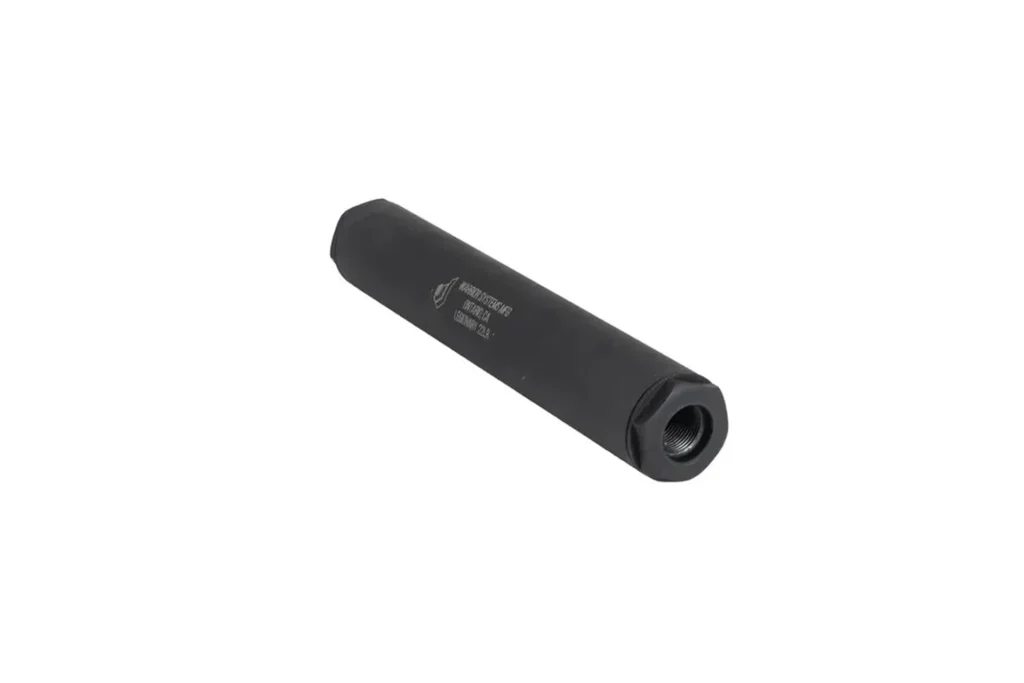
Suppressors are among the most discussed items affected by the announcement because they have historically required additional federal approval and registration. Short-barreled rifles are also particularly relevant to AR-15 owners, as the classification includes certain rifles with barrels shorter than 16 inches or overall lengths below the applicable federal threshold. Short-barreled shotguns and qualifying AOWs are covered by the same federal nonenforcement policy.
Machine guns and destructive devices are not included in these changes. Their federal making and transfer taxes remain in effect, and they continue to be subject to the full NFA registration, approval, and transfer requirements. Special occupational taxes for businesses engaged in manufacturing, importing, or dealing in NFA firearms also remain applicable.
The distinction is important because the announcement does not eliminate federal regulation of every firearm previously covered by the NFA. Only the categories specifically included in the new policy are affected by the revised enforcement approach.
Are Background Checks Still Required for Suppressors and SBRs?
Despite the changes to NFA enforcement, covered firearms remain subject to applicable requirements under the Gun Control Act of 1968. This means the new policy does not remove federal restrictions on prohibited persons or eliminate federally licensed firearm dealers’ responsibilities.
When a licensed dealer transfers a covered firearm to an unlicensed individual, applicable federal procedures still require Form 4473, transaction records, and a National Instant Criminal Background Check System (NICS) check unless a recognized exemption applies. Dealers must also comply with residency restrictions and applicable state or local laws.
Short-barreled rifles and short-barreled shotguns require additional consideration because the Gun Control Act includes a separate dealer-transfer authorization requirement. Federal authorities have temporarily suspended enforcement of that specific requirement while developing a replacement approval process outside the traditional NFA system.
For firearm buyers, the important takeaway is that ending NFA registration enforcement does not mean purchases are exempt from ordinary federal firearm laws. Licensed dealers still have legal responsibilities, and prohibited individuals remain prohibited from possessing firearms.
Do State NFA Laws Still Apply?
One of the most important limitations of the October 2026 announcement involves state and local firearm laws. Although the federal government has changed its enforcement policy, individual states retain the authority to regulate or prohibit certain firearms and devices within their jurisdictions.
Some states allow suppressors and short-barreled firearms without additional state registration, while others impose restrictions or require proof of compliance with federal NFA registration procedures. In states where lawful possession depends on federal registration, the new nonenforcement policy may not satisfy existing state-law requirements.
This means the same firearm may be treated differently depending on where its owner lives. Federal nonenforcement does not automatically make a suppressor, SBR, or another previously regulated firearm legal in every state.
Anyone purchasing, possessing, or transferring an affected firearm should review the laws applicable to the transaction and location. This is especially important for firearms that may be legal under current federal policy but restricted under state law.
What Happens to Existing NFA Registrations?
Individuals who previously completed NFA registrations are not required to remove their firearms from the federal registry. The National Firearms Registration and Transfer Record remains operational, and voluntary registration remains available for qualifying firearms.
Maintaining an existing registration may offer practical benefits, especially for owners in states that require federal registration or who anticipate legal questions about previously registered firearms. Although federal authorities have stopped enforcing certain registration requirements, voluntary registration remains available, giving owners an option to document their firearms under the existing system.
Owners may also request removal of previously registered firearms from the registry. However, doing so can have serious consequences because federal law generally does not allow owners to register an unregistered NFA firearm later unless a qualifying amnesty is authorized.
Given the possibility of future enforcement changes, removing an existing registration deserves careful consideration. The October policy does not guarantee that unregistered firearms will be permanently exempt from future federal requirements.
Interstate Transportation and Remaining Federal Restrictions
Interstate transportation is another area where firearm owners should understand how the new policy differs from existing federal law. Although federal authorities no longer enforce certain NFA restrictions on interstate movement of unregistered covered firearms, separate provisions of the Gun Control Act still apply.
Individuals transporting short-barreled rifles or short-barreled shotguns across state lines must still obtain the applicable federal transportation approval using Form 5320.20, commonly known as Form 20. This requirement remains in effect even when the firearm is unregistered under the new enforcement policy.
Other restrictions involving interstate transfers, prohibited possessors, and state firearm laws also remain relevant. As a result, the October announcement should not be interpreted as unrestricted permission to transport covered firearms between states.
Could NFA Enforcement Return in the Future?
The October 2026 policy is a significant development, but its long-term status is not guaranteed. Because the National Firearms Act remains federal law, future legislative action, court decisions, or changes in federal enforcement policy could change the current situation.
Congress could establish new taxes or amend the existing regulatory framework. Additional court rulings could also address the constitutional questions raised by the August decision. Federal authorities have acknowledged that enforcement could resume if the legal circumstances change.
Another consideration is that federal law does not automatically grandfather unregistered NFA firearms if enforcement requirements return. The government has also said future registration opportunities are not guaranteed, making it especially important not to rely solely on the current nonenforcement policy.
For firearm owners, the current situation brings substantial changes to federal enforcement, but it also carries legal uncertainty that shouldn’t be overlooked.
Final Thoughts: What the 2026 NFA Ruling Means for Gun Owners
The October 2026 NFA announcement marks a major change in federal firearm regulation. By ending enforcement of several longstanding registration and approval requirements, the federal government has significantly changed how the National Firearms Act treats suppressors, short-barreled rifles, short-barreled shotguns, and AOWs.
However, the NFA has not been repealed, and important restrictions remain. Federal background-check requirements, state firearm laws, interstate transportation rules, and regulations involving machine guns and destructive devices continue to apply.
At Black Rifle Depot, we believe firearm owners should have access to accurate, straightforward information about changes affecting the firearms industry. As the legal landscape continues to develop, understanding both the new enforcement policy and the laws that remain in place is essential.
Disclaimer: This article reflects federal legal developments as of October 12, 2026, and is intended for informational purposes only. It does not constitute legal advice. Firearm laws and enforcement policies may change.
Frequently Asked Questions About the 2026 NFA Ruling
The latest NFA ruling and federal enforcement announcement have raised questions about suppressors, short-barreled rifles, registration requirements, and firearm transfers. Here are answers to some of the most common questions.
Is the NFA officially repealed in 2026?
No. The National Firearms Act remains federal law. The October 9, 2026 announcement established a nationwide nonenforcement policy for certain provisions involving suppressors, short-barreled rifles, short-barreled shotguns, and AOWs. Other federal firearm laws and applicable state restrictions remain in effect.
Do suppressors still require a $200 tax stamp?
No. Congress reduced the federal making and transfer taxes for suppressors to $0 effective January 1, 2026. The October 2026 enforcement policy also ended federal enforcement of the traditional NFA approval and registration requirements for suppressors. Applicable dealer requirements and state laws still apply.
Can you legally own an unregistered SBR in 2026?
Federal authorities are no longer enforcing specified NFA registration and possession restrictions for short-barreled rifles under the October 2026 policy. However, state restrictions and other applicable federal laws remain in effect, and the non-enforcement policy may change.
Does the new NFA ruling include machine guns?
No. Machine guns and destructive devices remain subject to existing NFA requirements. The October 2026 announcement did not eliminate federal taxes, registration procedures, or approval requirements for them.
Do you still need a background check to purchase a suppressor?
Yes. Licensed dealers must continue complying with applicable federal firearm transfer requirements, including Form 4473 and NICS background checks, unless a recognized exemption applies. The new NFA enforcement policy does not remove these obligations.
Can you still voluntarily register an NFA firearm?
Yes. The federal NFA registry remains operational, and the ATF continues to accept voluntary registration applications. Existing registrations also remain valid unless someone removes them through the applicable process.
Can you travel across state lines with an unregistered SBR?
Interstate transportation of short-barreled rifles and short-barreled shotguns remains subject to separate federal requirements. Individuals must still obtain the applicable Form 20 approval before transporting these firearms interstate, even if they are unregistered under the current nonenforcement policy.
Can the ATF enforce NFA registration requirements again?
Yes. Changes in federal legislation, court decisions, or enforcement policy could result in renewed enforcement. Federal authorities have also warned that unregistered firearms are not automatically grandfathered if the legal circumstances change.
For additional support or online deals, check out our X Page.
