











Bestsellers in this category
The term best foregrip for AR15 often appears in product comparisons, but no single design is universally superior. Differences in construction, mounting interfaces, and firearm classification make each configuration distinct. AR foregrips are commonly manufactured from reinforced polymer or aluminum, with designs ranging from compact, low-profile accessories to larger grips.
AR-15 Vertical Foregrips vs. Angled Foregrips
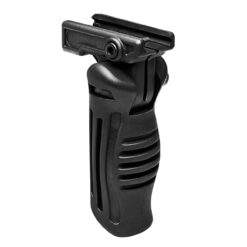
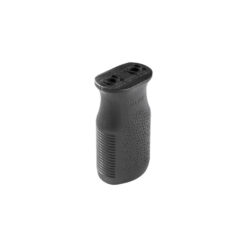
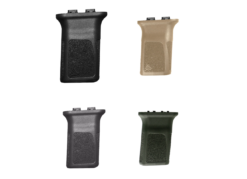
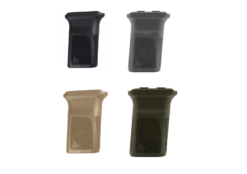
An AR15 vertical foregrip extends downward from the handguard, generally perpendicular to the barrel. Vertical designs are available in different lengths and profiles, including compact models and full-length grips.
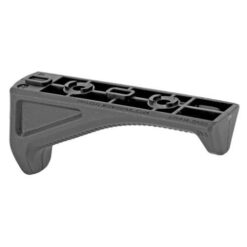
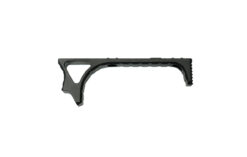
An AR-15 angled foregrip uses a sloped gripping surface rather than a perpendicular handle. These accessories are sometimes called angled forward grips or angled handguard grips. Their overall dimensions vary considerably between manufacturers.
Both categories include lightweight polymer models and metal foregrip designs. However, the distinction between vertical and angled products matters beyond appearance because certain configurations can affect federal firearm classification.
M-LOK and Picatinny AR-15 Foregrip Systems
The mounting interface is one of the most important specifications distinguishing foregrip products. Two common systems are M-LOK and Picatinny.
An AR-15 M-LOK foregrip attaches to compatible M-LOK mounting slots. This interface is widely used on modern handguards, including both polymer and aluminum models. Mounting requirements can vary according to accessory dimensions and manufacturer specifications.
Picatinny foregrips use a rail-based attachment system. Certain adapter rail sections allow Picatinny-compatible accessories to be used with M-LOK interfaces, although product-specific compatibility should always be verified.
Handguard appearance alone does not establish accessory compatibility. Slot dimensions, available mounting clearance, and hardware requirements can differ between individual products.
AR-15 Foregrip Materials and Construction
Foregrips are manufactured using several materials, with reinforced polymer and aluminum among the most common. Polymer models are typically lightweight and corrosion-resistant, while aluminum products often feature machined construction and protective anodized finishes.
Texture, shape, dimensions, and surface treatments also vary. Some designs feature pronounced gripping surfaces, while others use comparatively smooth or compact profiles.
Manufacturers such as Magpul offer different foregrip styles and mounting interfaces. Review individual product specifications rather than assuming every accessory from the same brand shares identical dimensions or compatibility.
AR-15 Hand Stops and Other Foregrip Designs
An AR-15 hand stopper differs from a conventional foregrip because it provides a smaller projecting surface. Hand stops generally occupy less space than full-length vertical grips and are available in multiple profiles.
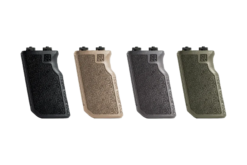
Other AR-15 forearm grip designs include compact angled accessories, textured handguard attachments, and low-profile grip surfaces. These categories can overlap in appearance, but manufacturers may use different terminology.
The firearm’s chambering, whether 5.56 NATO or .300 Blackout, does not independently establish which foregrip will fit. The handguard interface and firearm configuration remain relevant compatibility considerations.
Frequently Asked Questions About AR-15 Foregrips
Understanding mounting systems, foregrip designs, and applicable regulations helps clarify common questions about AR-15 accessories.
Is it legal to put a foregrip on an AR-15?
Under federal law, foregrips are generally lawful on AR-15 rifles. State and local laws can be stricter. In California, for example, a forward pistol grip is one of the listed features in the assault weapon definition for certain semi-automatic rifles. Check your state’s current rules before installing one.
Can you put a vertical foregrip on an AR-15 pistol?
Adding a vertical foregrip to a firearm legally classified as a pistol may cause it to be classified as an “Any Other Weapon” (AOW) under the National Firearms Act, which requires registration. Angled foregrips and hand stops are treated differently, but the rules depend on the specific design and configuration. Review current ATF guidance before modifying an AR-15 pistol.
What is the difference between a vertical grip and an angled foregrip?
A vertical foregrip extends straight down, roughly perpendicular to the barrel. An angled foregrip has a sloped surface that runs back toward the shooter. The two differ in shape, hand position and, on pistols, legal treatment.
Where should you place a foregrip on an AR-15?
Placement depends on your handguard length, the foregrip design and the manufacturer’s instructions. Make sure the grip doesn’t interfere with the rifle’s operation, other mounted accessories or required clearances. Within those limits, position is largely a matter of comfort and shooting style.
What should I look for when buying an AR-15 foregrip?
Start with the mounting interface (M-LOK, Picatinny or another system), then check the material, dimensions, weight and the manufacturer’s compatibility notes. Confirm that the grip is legal for your firearm’s configuration and your state.
How do I know which foregrip will fit my AR-15?
AR-15 foregrips aren’t universal. Fit depends on your handguard’s mounting interface, not on the AR-15 designation alone. Identify whether your handguard uses M-LOK, Picatinny or another system, then match it to the foregrip’s specifications, including hardware and clearance requirements.
Will an M-LOK foregrip fit any M-LOK handguard?
Not always. M-LOK is a standardized interface, but slot spacing, clearance, hardware and the individual product’s dimensions still matter. Check both the foregrip and handguard manufacturers’ documentation.
Can you put a Picatinny foregrip on an M-LOK handguard?
Yes, if you add an M-LOK-compatible Picatinny rail section. Check the rail section’s length, mounting clearance and compatibility with the foregrip you plan to use.
Do AR-15 foregrips help with recoil control?
A foregrip doesn’t change the rifle’s recoil energy. It adds a gripping surface, which can change how the rifle handles and how recoil feels to the shooter. Results vary with the rifle’s setup, the grip design and the shooter’s technique.
Shop AR-15 Foregrips
Explore our selection of AR-15 foregrips designed to improve control, comfort, and confidence. Find the right fit for your rifle and your shooting style.