
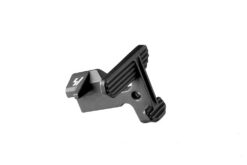

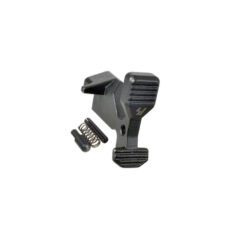
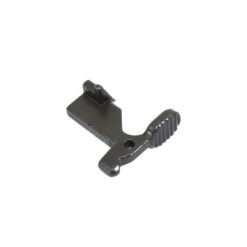
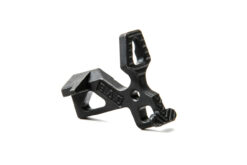
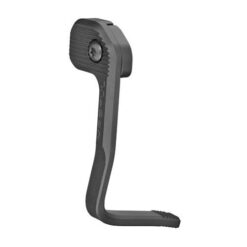

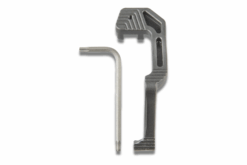
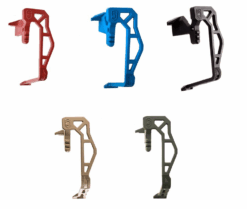
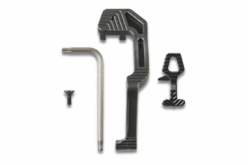
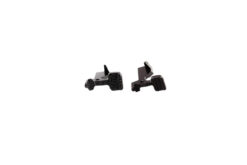
In this category, you’ll find standard mil-spec replacements, ergonomic upgrades like an ar 15 extended bolt catch, and options built for left-handed or off-hand use, such as an AR-15 ambidextrous bolt catch. Whether you’re troubleshooting AR-15 bolt catch problems or tuning your lower for faster handling, choosing the right bolt catch starts with understanding what it does—and what causes it to fail.
How the AR-15 Bolt Catch Works
Mechanically, the bolt catch pivots on its roll pin and is spring-loaded by the bolt catch spring and plunger inside the lower receiver. On the last round, the magazine follower pushes the bolt catch upward; the bolt face then stops against it, holding the bolt open. When you press the paddle, the catch drops and the bolt goes forward.
This “simple” system relies on correct spring tension, a smooth plunger channel, a properly installed roll pin, and magazine followers that actually lift the catch. (Installation order—spring first, plunger second, bolt catch third—is a common reference point for correct assembly.)
Choosing the Right Bolt Catch
Standard vs. extended
A basic mil-spec catch works, but an AR-15 extended bolt catch gives you a larger paddle and easier activation—especially under stress or with gloves. For example, extended designs often include oversized, tactile surfaces to facilitate faster engagement.
Ambidextrous options
An AR-15 ambidextrous bolt catch is designed to improve access from either side, helping left-handed shooters and anyone who wants more efficient manipulation without breaking grip.
AR-15 Bolt Catch Problems (and Quick Fixes)
If your bolt won’t lock back on the last round, the most common causes are:
-
Magazine issues (follower not lifting the catch)
-
Gas/cycling issues (bolt not traveling far enough rearward)
-
Buffer/spring setup issues
-
Bolt catch, friction, or incorrect parts (wrong spring, burrs, binding)
Community troubleshooting often points to checking the mags first and verifying that the buffer system and spring are correct for the build.
AR-15 bolt catch plunger stuck
A stuck plunger is usually caused by a burr, tight tolerance, debris, or an out-of-spec plunger/hole. Typical fixes include careful cleaning, light lubrication, and gently working the plunger free—without gouging the receiver. If you suspect a burr or damage, address it before forcing parts.
Frequently Asked Questions
What does an AR-15 bolt catch do?
It locks the bolt open after the last round and lets you manually lock or release the bolt during reloads and clearing.
Why won’t my AR-15 bolt lock back on an empty magazine?
Start with the magazine (follower), then confirm the rifle cycles fully (gas/buffer/spring), and check for binding or incorrect bolt catch spring/plunger setup.
What’s the benefit of an AR-15 extended bolt catch?
An extended catch gives you a larger, easier-to-hit surface for quicker bolt lock/release—especially helpful with gloves or faster reload technique.
Are AR-15 bolt catches universal?
Most are compatible with mil-spec AR-15 lowers, but always confirm fit if you’re running a billet receiver or proprietary ambi controls.
What causes an AR-15 bolt catch plunger to get stuck?
Burrs, debris, tight channels, or out-of-spec parts can bind the plunger. Cleaning and careful inspection usually solve it; forcing parts can damage the lower.