
AR-15 Optics
Best Red Dot Battery Life in 2026: Is 50,000 Hours the New Standard?
Jul
Table of Contents
Battery life has become one of the biggest selling points in the Red Dot market, especially for AR-15 owners who want an optic they can trust without constant maintenance. A few years ago, a red dot sight with several thousand hours of runtime felt impressive. In 2026, many shooters now expect much more.
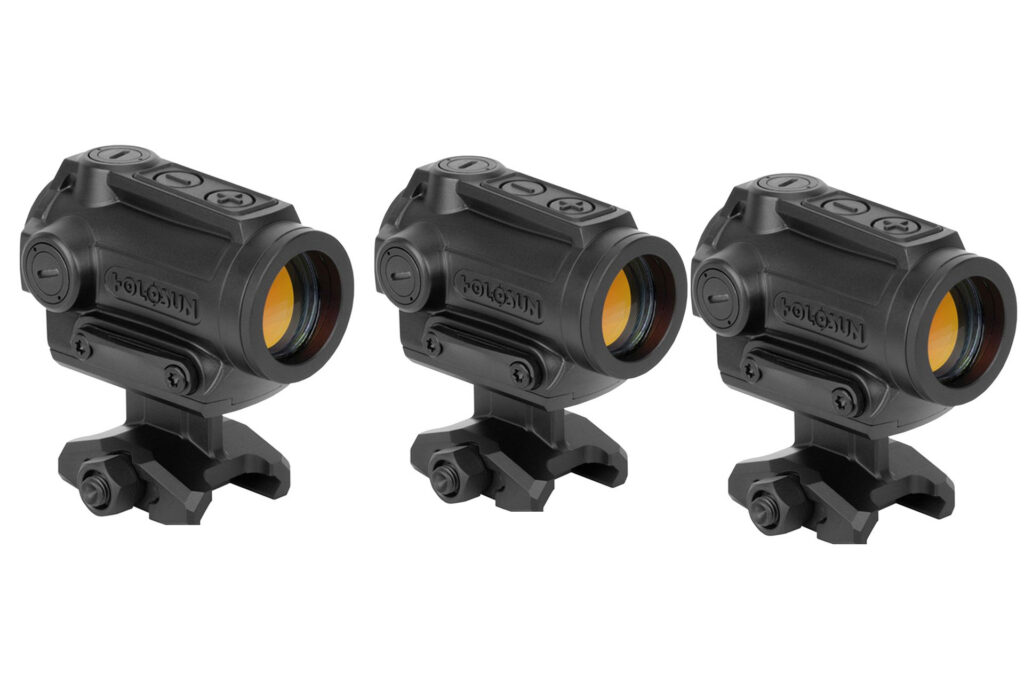
For AR-15 Red Dots, the conversation has shifted from “how many features does it have?” to “will it be ready when I pick up the rifle?” That is why 50,000-hour battery life has become such an important benchmark. Some optics can run for five years or more on a single battery at moderate brightness settings, giving shooters a true set-and-forget setup.
That kind of reliability matters. Whether your AR-15 is used for range training, home defense, competition, ranch work, or general preparedness, the optic needs to be ready before anything else matters.
Why Battery Life Matters So Much on AR-15 Red Dots
A Red Dot is built for speed. It gives the shooter a simple aiming point without needing to line up traditional front and rear sights. That is what makes red dots so popular on AR-15s. They are fast at close range, easy to use from awkward positions, and helpful for shooters with aging eyes or limited time behind iron sights.
However, a red dot sight depends on power. If the battery is dead, the optic loses its main advantage. Some shooters keep backup iron sights on the rifle, and that is smart, but most people still want the optic itself to be ready.
Long battery life solves a real problem. Instead of turning the optic on and off every time you handle the rifle, many modern users leave their Red Dot on at a usable brightness setting. With the right optic, that can mean months or even years of continuous readiness.
That is why ultra-long battery life has become a major buying factor for AR-15 owners. It gives peace of mind, reduces maintenance, and makes the rifle feel more dependable.
Is 50,000 Hours the New Standard?
For many serious Red Dot shoppers, 50,000 hours has become the number to look for. At that level, a red dot sight can often run for more than five years under ideal or moderate-use conditions. Actual runtime will depend on brightness level, battery type, temperature, reticle setting, and whether the optic uses motion activation or auto-shutoff features.
Still, the message is clear. Shooters now expect long battery life, and manufacturers have responded. Many AR red dot sights now advertise battery life measured in tens of thousands of hours instead of hundreds.
That does not mean every optic needs to hit exactly 50,000 hours to be worth buying. A rugged optic with 25,000 to 30,000 hours of service life may still be a great choice. However, once shoppers see 50,000-hour models in the same general price range, shorter runtimes become harder to ignore.
Reliability Is Beating Extra Features
For years, optics companies competed by adding more features: multiple reticles, solar panels, night-vision settings, motion activation, auto shutoff, enclosed housings, and different mount options. Many of those features are useful, but in 2026, reliability is driving buying decisions for many AR-15 owners.
A Red Dot can have a long feature list, but if the battery dies quickly or the controls are confusing, it may not be the best choice for a practical rifle. Most shooters want an optic that is simple, durable, bright enough, and always ready.
That is where set-and-forget optics shine. You install the optic, zero it, choose a practical brightness level, and leave it alone. You can still check the battery on a schedule, but you won’t constantly worry about whether the optic will power up.
For an AR-15, that kind of simplicity is hard to beat.
Do All Red Dot Sights Need Batteries?
Yes, most optics need batteries. The illuminated dot is powered electronically, which gives the optic its fast, easy aiming point. Some optics offer solar backup or fiber-optic assistance, but most modern red dots still rely on a battery as their main power source.
That is why battery type and runtime matter. Common battery types include CR2032, CR1632, AAA, and other compact power sources, depending on the optic design. For most AR-15 Red Dots, the goal is to use a battery that is easy to find, easy to replace, and capable of long runtime.
A practical rule is simple: even if your optic advertises extremely long battery life, replace the battery on a regular schedule. Many shooters change batteries once a year, often around a birthday, New Year’s Day, or the start of hunting season. That habit keeps the optic ready and removes guesswork.
Motion Activation and Auto Shutoff
Motion activation has become one of the most popular features because it helps extend battery life without making the shooter manually turn the optic on and off. With motion activation, the optic powers down or enters a sleep mode when left still, then wakes up when moved.
For AR-15 use, this can be a major advantage. A rifle stored in a safe or staged for home defense may sit untouched for long periods. A motion-activated red dot sight helps preserve battery life while remaining ready when the rifle is picked up.
Auto shutoff is another useful feature, but it works differently. Some optics turn off after a set period of inactivity. This saves battery, but it may require the shooter to manually reactivate the optic. For a range rifle, that is usually fine. For a defensive setup, many shooters prefer motion activation or constant-on capability.
Brightness Settings and Real-World Runtime
Battery life ratings are usually based on a specific brightness setting. That means an optic advertised with 50,000 hours may not last that long if it is left on a high daylight-bright setting all the time.
This is especially important for AR-15 owners who shoot in bright outdoor conditions. The brighter the dot, the more power it usually uses. A setting that works indoors or in shade may not be bright enough in direct sunlight. On the other hand, leaving the optic at max brightness all the time can drain the battery faster.
The best approach is to choose a practical setting for your environment. For a home-defense or indoor-ready rifle, a moderate setting may be enough. For an outdoor range rifle, you may need to turn the brightness up when shooting and back down afterward.
Red Dot Sight for Pistol vs. AR-15 Red Dot
A red dot sight for a pistol and an AR-15 Red Dot may look similar, but they are not always used the same way. Pistol red dots are usually smaller, lighter, and mounted directly to a slide or adapter plate. They need to survive slide movement and fit a compact footprint.
AR red dot sights are often larger and mounted to a Picatinny rail. They may use risers, magnifiers, backup sights, and different co-witness heights. Because an AR-15 gives the shooter more mounting space, battery access, and a control layout that can be easier to manage.
Battery life matters for both, but AR-15 owners often prioritize continuous readiness. A rifle optic is commonly left on, especially when used for defense or preparedness. That makes the long runtime even more valuable.
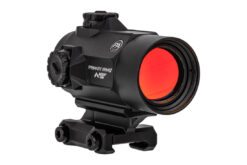

Why Mount Height and Risers Matter
Battery life may be the headline feature, but mount height still matters when choosing an optic for an AR-15. A good optic setup needs to line up naturally with your cheek weld, shooting position, and backup sight plan.
Common AR-15 red dot heights include absolute co-witness, lower 1/3 co-witness, 1.93-inch mounts, and taller riser setups. Lower mounts may feel familiar for traditional shooting positions, while taller mounts can help with heads-up shooting, plate carriers, night vision use, or faster target transitions.
That is why the right AR-15 optic riser can make a good optic feel even better. If your Red Dot sits too low or too high, the rifle may feel awkward. A properly matched riser helps the shooter find the dot faster and maintain a more natural position behind the rifle.
What to Look for in an AR-15 Red Dot in 2026
When shopping, battery life should be near the top of the list, but it should not be the only factor. A strong optic should balance runtime, durability, dot clarity, brightness, mounting options, and ease of use.
Look for a Red Dot with a battery life rating that matches your intended use. For a casual-range rifle, a shorter battery life may be acceptable if the optic is affordable and easy to use. For a home-defense or serious training rifle, longer battery life is worth paying attention to.
Also consider the battery location. Side-loading or top-access battery compartments are convenient because you can replace the battery without removing the optic. Bottom-mounted batteries may require the optic to be removed, which can affect zero if the optic is not reinstalled properly.
Finally, think about controls. Large, easy-to-use buttons or simple rotary dials can be better than complicated menus. A Red Dot should be fast, not frustrating.
Is a 50,000-Hour battery Worth It?
For most AR-15 owners, yes. A 50,000-hour battery life gives you more confidence and less maintenance. It also supports the way many shooters now use their rifles: optic on, rifle ready, battery checked on a schedule.
That does not mean every shooter needs the most expensive model. There are plenty of solid options in the budget and mid-range categories. The key is choosing an optic that fits your rifle, your use case, and your reliability expectations.
If two optics are similar in price, size, and durability, the one with longer battery life will often be the smarter buy. In today’s market, reliability is not just a bonus feature. It is one of the main reasons shooters choose one optic over another.
Conclusion: Battery Life Is Now a Major Buying Factor
In 2026, battery life is no longer a small detail. For AR-15 optics, it has become one of the most important features buyers compare. A 50,000-hour runtime gives shooters the confidence to leave the optic on, train regularly, and trust that the rifle will be ready when needed.
Extra features still matter, but reliability is driving many buying decisions. A good Red Dot should be bright, durable, easy to mount, simple to adjust, and capable of long-term readiness. When paired with the right riser, an AR-15 can be faster, more comfortable, and easier to use.
Shop AR-15 Red Dot sights, optic risers, mounts, and accessories at Black Rifle Depot to find the right setup for your next build. Whether you want a budget-friendly range optic, a set-and-forget Red Dot, or a taller riser for a more natural shooting position, Black Rifle Depot has the AR-15 optics and parts you need to finish your rifle the right way.
FAQ’s About Red Dot Battery Life
Before choosing a Red Dot for your AR-15, it helps to understand how battery life, mount height, brightness settings, and activation features affect real-world performance. These quick answers cover the most common questions shooters ask when comparing long-lasting AR-15 Red Dots in 2026.
Do red dot sights need batteries?
Yes, most red dot sights need batteries because the aiming dot is electronically powered. Some models offer solar backup or power-saving features, but most still depend on a battery as the main power source.
Is 50,000 hours of Red Dot battery life realistic?
It can be realistic under the conditions listed by the manufacturer, usually at a specific brightness setting. Real-world battery life depends on brightness level, temperature, reticle mode, battery quality, and whether the optic uses motion activation.
How often should I replace the battery in my AR-15 Red Dot?
Many shooters replace their battery once a year, even if the optic advertises multi-year runtime. This simple schedule keeps the optic ready and reduces the chance of finding a dead battery when you need the rifle.
Are AR red dot sights good for home defense?
Yes, AR red dot sights are popular for home defense because they are fast, simple, and easy to use under stress. For that role, long battery life and reliable activation are more important than having the longest possible feature list.
What is the best Red Dot height for an AR-15?
The best height depends on your shooting style and setup. Absolute co-witness and lower 1/3 mounts are common, while taller risers such as 1.93-inch mounts are popular for heads-up shooting, faster presentation, and certain tactical setups.
Is a red dot sight for a pistol the same as an AR-15 Red Dot?
Not always. Pistol red dots are usually smaller and designed for slide-mounted use. AR-15 Red Dots are commonly mounted on a rail and may be equipped with risers, magnifiers, and backup iron sights.
Is battery life more important than reticle options?
For many AR-15 owners, yes. Reticle options can be helpful, but reliability often matters more. A simple Red Dot with long battery life, good brightness, and dependable controls can be a better choice than a feature-heavy optic that requires more maintenance.
For additional support, check out our X Page.
