
AR-15 Handguards
How AR-15 Handguard Length Influences Rifle Performance and Handling
Aug
Table of Contents
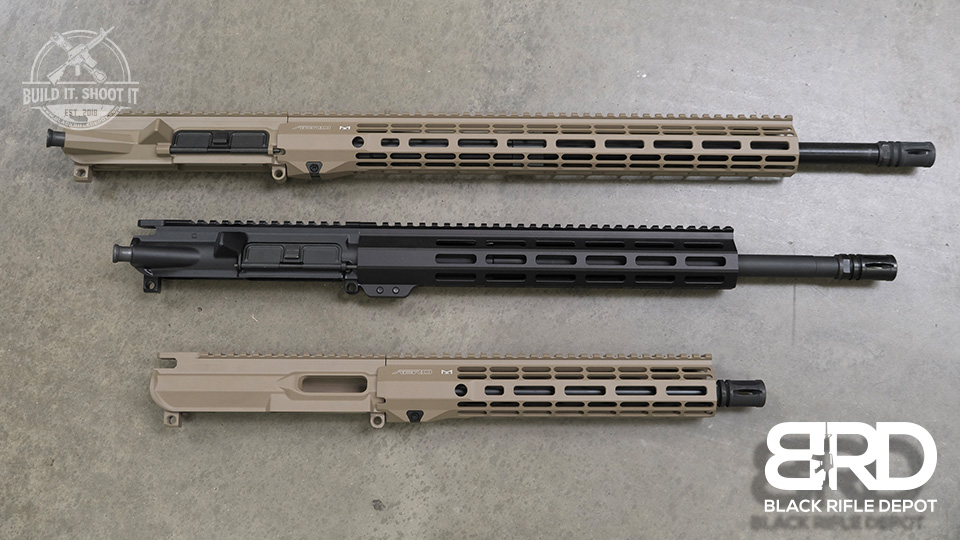
Choosing an AR-15 handguard is not only about finding a rail that looks proportional to the barrel. Handguard length affects the rifle’s balance, support-hand placement, accessory positioning, heat protection, and ability to move smoothly between targets.
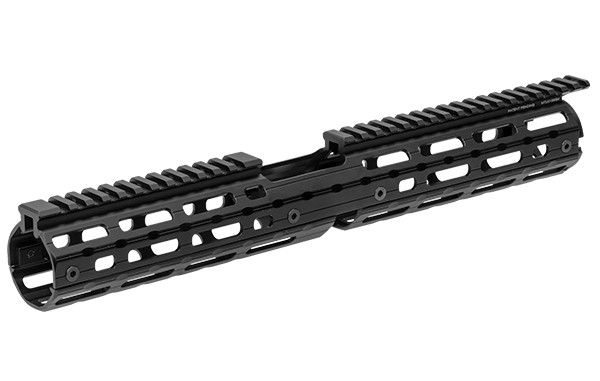
A rail that is too short may restrict your grip and leave little room for accessories. An unnecessarily long rail can add forward weight and make the rifle feel slower or more tiring to hold. The right length depends on the barrel, gas system, shooter, accessories, and intended purpose of the rifle.
Understanding these factors can help you select an AR-15 handguard that improves practical handling without adding unnecessary bulk.
Why AR-15 Handguard Length Matters
The handguard forms the primary contact point between the shooter’s support hand and the front of the rifle. It protects the hand from the barrel and gas system while providing mounting space for lights, sights, sling attachments, hand stops, bipods, and other equipment.
Changing the length of an AR-15 handguard can affect four important areas:
- Support-hand position
- Balance and perceived weight
- Accessory placement
- Gas block and muzzle clearance
These factors are closely connected. A longer rail may allow the support hand to extend farther forward, but the additional material can increase front-end weight. A shorter rail may feel lighter, but it can crowd the shooter’s grip and accessories into a limited area.
Research examining rifle handling has found that support-hand position and handling length can influence aiming stability, body posture, joint loading, and muscle activation. This does not mean that one length is best for every shooter. It reinforces the importance of matching the rifle’s dimensions to the individual using it.
Support-Hand Placement and Rifle Control
A longer AR-15 handguard gives the shooter more freedom to move the support hand forward. Many shooters find that an extended grip provides additional leverage when moving the muzzle, controlling the rifle through transitions, or stabilizing it against a barricade.
The ideal position should feel natural rather than stretched. Extending the arm too far can create tension in the shoulder and increase fatigue. Shooters with shorter arms may not benefit from the final few inches of a 15-inch rail, while taller shooters may feel cramped when using a short carbine-length handguard.
Additional gripping space also helps when changing shooting positions. The support hand may need to move slightly when shooting from standing, kneeling, prone, or supported positions. A longer gripping surface allows those adjustments without forcing the shooter to hold the magazine well or place the hand uncomfortably close to the receiver.
The best AR-15 handguard provides enough room for a consistent grip while leaving some flexibility for positional shooting.
When a Shorter Handguard Makes Sense
A shorter AR-15 handguard can reduce front-end weight and make the rifle easier to move through confined areas. Compact rails are often selected for short-barreled configurations, lightweight builds, vehicle use, or rifles intended to remain maneuverable around obstacles.
However, the actual weight savings depend on the rail’s design. A short steel-heavy quad rail may weigh more than a longer, slim M-LOK model. Length should always be compared with the complete installed weight, including the barrel nut and mounting hardware.
Short handguards also offer less room for accessories. Once a light, sling mount, front sight, and hand stop are installed, the remaining gripping area can become crowded. The support hand may also rest closer to the chamber and gas block, where heat can become noticeable sooner.
A short AR-15 handguard works best when compactness and low weight are more important than maximum reach or accessory capacity.
How Length Changes Rifle Balance
Handguard length influences balance through both the rail itself and the equipment mounted to it. Weight placed near the muzzle has more leverage than weight placed close to the receiver. As a result, even a small amount of added weight at the front can noticeably change how the rifle feels.
A long AR-15 handguard combined with a heavy barrel, steel front sight, weapon light, laser, and bipod may make the rifle muzzle-heavy. That can increase fatigue during unsupported shooting and make rapid transitions feel slower.
The same rail may feel completely different when paired with a lightweight barrel and minimal accessories. This is why handguard length should not be evaluated in isolation.
Consider the weight of the complete front-end system:
- Barrel profile
- Muzzle device
- Handguard and barrel nut
- Light and mount
- Front sight
- Sling attachment
- Bipod or other support equipment
The AR-15 handguard should support the rifle’s intended role without shifting the center of gravity farther forward than necessary.

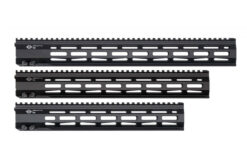
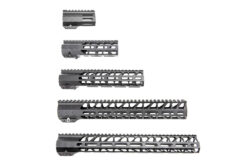
Free-Float Handguards and Accuracy
An AR-15 free-float handguard attaches at the upper receiver and does not contact the barrel along its length. This helps prevent pressure from the support hand, sling, bipod, or barricade from being transferred directly to the barrel.
Free-floating does not improve ammunition consistency or automatically make a rifle mechanically more accurate. It can reduce point-of-impact changes caused by external pressure on the barrel, particularly when shooting from supported positions.
A longer AR-15 handguard gives the shooter and mounted accessories more leverage. If the rail lacks sufficient rigidity, pressure from a barricade, sling, or bipod can cause it to flex. That movement may affect accessories mounted directly to the rail, especially lasers or other aiming devices that depend on consistent alignment.
For that reason, rail rigidity, barrel-nut design, mounting hardware, and manufacturing quality are just as important as length. A longer rail should provide usable reach without unnecessary flex or weight.
Gas System Coverage
Before choosing an AR-15 handguard, identify the rifle’s gas-system length and gas block position. Most modern free-float rails are designed to cover a low-profile gas block, but the rail must extend far enough forward to enclose it completely.
Leaving the gas block exposed does not automatically prevent the rifle from functioning. However, covering it provides additional protection from impact and reduces the possibility of the shooter contacting the hot gas block.
A covered gas system also creates more usable gripping space. The shooter can place the hand farther forward without touching exposed components.
General sizing charts can provide a useful starting point, but gas block positions and component dimensions vary. The most reliable approach is to measure the actual upper or compare the specifications provided by the barrel, gas block, and handguard manufacturers.
Internal Clearance Around the Gas Block
Length is not the only gas block consideration. The gas block must also fit inside the AR-15 handguard without touching it.
Contact between the gas block and rail can interfere with the benefits of a free-float system. As the barrel and gas system heat during firing, normal movement or thermal expansion could cause contact if the fit is too close.
Adjustable and clamp-on gas blocks are often larger than basic low-profile models. A slim rail may have enough length to cover the gas block but lack sufficient internal diameter.
When evaluating clearance for AR-15 handguards, compare the following measurements:
- Handguard internal diameter
- Gas block height
- Gas block width
- Adjustment screw location
- Clamp or mounting hardware dimensions
Leave enough space for installation tolerances and normal movement. Do not assume that two parts are compatible simply because both are advertised as low profile.
Barrel Length and Muzzle Clearance
An AR-15 handguard must stop far enough behind the muzzle to leave safe clearance for the selected muzzle device. Handguard and barrel lengths are not always measured from the same reference points, so the stated dimensions can be misleading when compared directly.
For example, a 15-inch rail mounted over a 16-inch barrel may leave less than a full inch of visible barrel because barrel length is measured from the closed bolt face. The exact spacing also depends on the upper receiver, barrel extension, muzzle threads, and actual handguard dimensions.
Adequate muzzle clearance is important because:
- Hot gas exits around the muzzle device.
- Muzzle brakes may direct pressure sideways.
- The device may require wrench access.
- Carbon and blast can damage nearby equipment.
- Accessories must remain behind the muzzle.
A 13-inch to 15-inch AR-15 handguard is commonly paired with a 16-inch barrel, but that range is only a starting point. Measure the actual components before purchasing.
Accessory Placement and Rail Space
A longer AR-15 handguard provides more options for positioning accessories without interfering with the support hand. This can improve comfort and help keep the rifle organized.
Mounting a light near the end of the rail can reduce barrel shadow. A sling attachment can be positioned where it supports the rifle without pressing against the hand. A front sight requires space on the top rail, while a hand stop or vertical grip must be placed where it supports a repeatable grip.
The available AR-15 handguard rail attachment system also affects how efficiently that space can be used. M-LOK slots allow accessories to be installed only where needed, which helps maintain a slim gripping surface. Quad rails offer continuous Picatinny mounting positions but are often wider and heavier.
Before choosing a rail, plan where each accessory will be mounted. Remember to account for mounts, pressure switches, cables, sling sockets, and backup sights—not only the main accessories.
A longer AR-15 handguard offers greater flexibility, but unused rail space provides little practical benefit if it adds weight and bulk.
Handguard Length and Heat Management
The barrel and gas system generate substantial heat during firing. The AR-15 handguard provides a barrier between these components and the shooter’s support hand.
Longer rails cover more of the barrel and allow the shooter to move the hand between several positions. However, they also enclose more heated components. Ventilation slots can improve airflow, while rail covers and gloves can reduce direct heat transfer.
Short handguards place the support hand closer to the chamber and gas block, where heat may become noticeable sooner during repeated firing. This does not make shorter rails unsuitable, but it should be considered when building a rifle for training or competition.
Material and diameter also affect comfort. Aluminum transfers heat efficiently, while very slim rails place the shooter’s hand closer to the barrel. Larger-diameter models create more space around the barrel but may be less comfortable for shooters who prefer a narrow grip.
The best AR-15 handguard balances length, ventilation, diameter, and weight according to the rifle’s expected firing schedule.
Choosing Length for Different Rifle Roles
General-Purpose Rifles
A general-purpose rifle with a 16-inch barrel often works well with a 13-inch to 15-inch AR-15 handguard.
A 15-inch rail provides maximum gripping and mounting space. It allows a light, sling attachment, front sight, and hand stop to be spread out without crowding the support hand.
A 13-inch rail leaves more barrel exposed and may reduce weight. It can be a good middle ground for shooters who want enough reach without extending the rail nearly to the muzzle.
Lightweight Rifles
For a lightweight build, choose an AR-15 handguard that provides only the space needed for the preferred grip and essential equipment.
A lightweight 12-inch or 13-inch model may balance better than a 15-inch rail, especially when combined with a thin-profile barrel. However, actual installed weight is more important than nominal length.
Compare the rail, barrel nut, mounting hardware, and accessory weight before deciding.
Precision-Oriented Rifles
A precision rifle may benefit from a longer AR-15 handguard because it allows the bipod to be mounted farther forward. Increasing the distance between the bipod and stock can create a wider, more stable support base.
The rail should be rigid enough to withstand bipod loading and barricade pressure without noticeable flex. A lightweight competition rail may not provide the same rigidity as a model designed for supported shooting.
Compact Configurations
Compact builds generally require a shorter AR-15 handguard matched closely to the barrel and gas system.
These configurations leave less room for accessories, so placement must be planned carefully. Compact light mounts, offset sling attachments, and properly positioned hand stops can help preserve usable gripping space.
The rail must still protect the support hand and remain safely behind the muzzle device.
Common Handguard-Length Mistakes
One frequent mistake is choosing an AR-15 handguard based only on appearance. A rail may look proportional in a photograph but feel too long, too short, or too heavy once the rifle is assembled.
Another mistake is assuming that nominal handguard and barrel measurements can be compared directly. A rail advertised as one inch shorter than the barrel may sit much closer to the muzzle than expected.
Builders may also forget to verify the size of an adjustable gas block. The rail may be long enough to cover it but too narrow internally.
Finally, shooters sometimes fill every available slot with equipment. More mounting space should provide flexibility, not become a reason to add unnecessary weight.

How to Select the Right AR-15 Handguard Length
Begin with the barrel and gas system. Determine the gas block’s location, whether it needs to be covered, and how much muzzle clearance is required.
Next, identify the shooter’s natural support-hand position. The rail should extend far enough to support that grip without forcing the arm to stretch.
Then list every accessory that will be installed on the AR-15 handguard. Include the light, sling mount, front sight, hand stop, pressure switch, and bipod. Account for the space required by their mounts and hardware.
Finally, compare the following specifications:
- Actual rail length
- Installed weight
- Internal diameter
- Mounting system
- Barrel-nut design
- Available attachment slots
- Manufacturer compatibility requirements
The ideal length is generally the shortest option that safely clears the gas system and muzzle while providing the gripping and mounting space the rifle requires.
Find AR-15 Handguards for Your Next Build at Black Rifle Depot
Handguard length affects much more than appearance. It influences the rifle’s balance, support-hand placement, heat protection, gas block coverage, accessory positioning, and handling between shooting positions.
Start by confirming the barrel, gas system, gas block dimensions, and muzzle clearance. Then choose the length that supports your natural grip and provides enough mounting space without adding unnecessary weight.
Black Rifle Depot carries AR-15 handguards in multiple lengths and configurations, including lightweight M-LOK rails, free-float handguards, and traditional quad rails. Shop AR-15 handguards at Black Rifle Depot to find the right combination of length, clearance, mounting space, and handling for your next build or upgrade.
Frequently Asked Questions About AR-15 Handguard Length
Handguard measurements can become confusing because barrel length, gas-system position, muzzle-device clearance, and shooter reach all affect compatibility. The following answers address several common questions about selecting an AR-15 handguard.
What length AR-15 handguard should I use with a 16-inch barrel?
A 13-inch to 15-inch AR-15 handguard is commonly used with a 16-inch barrel. A 15-inch rail provides maximum gripping and accessory space, while a 13-inch option may reduce forward weight. Always verify the actual muzzle and gas block clearance.
Should the handguard cover the gas block?
Most modern builds use a low-profile gas block covered by the handguard. Coverage protects the gas block from impact and provides more gripping space. The gas block must have sufficient internal clearance and should not touch the rail.
Can the handguard be the same length as the barrel?
Similar advertised lengths may place the rail dangerously close to the muzzle because barrel and handguard measurements use different reference points. Compare the actual dimensions and leave sufficient clearance behind the muzzle device.
Does a longer handguard improve accuracy?
Length alone does not improve mechanical accuracy. A free-float design can reduce pressure on the barrel from the grip, sling, bipod, or barricade. Rail rigidity and mounting quality matter more than simply choosing a longer handguard.
Is a shorter handguard always lighter?
No. Construction, material, diameter, attachment system, and barrel-nut weight all affect the total. A short quad rail can weigh more than a longer lightweight M-LOK model.
How much clearance is needed around the gas block?
There is no universal measurement that applies to every combination. The gas block and handguard should have enough space to prevent contact during installation, normal movement, and heating. Compare the exact dimensions provided by both manufacturers.
Does handguard length affect accessory placement?
Yes. Longer rails allow lights, sling mounts, hand stops, sights, and bipods to be positioned farther forward or separated from the support hand. Shorter rails require more careful planning because the available gripping area is limited.
What handguard length works with a mid-length gas system?
The answer depends on the barrel and whether the gas block will be covered. On many 16-inch rifles, a 12-inch to 15-inch handguard can work with a mid-length gas system. Confirm the gas block location before selecting a specific length.
For additional support and more online deals, check out our X Page.
