
AR-15 Parts
9 AR-15 Parts Builders Forget Until They Fail
Aug
Table of Contents
When planning a rifle, most builders focus on the barrel, bolt carrier group, trigger, handguard, stock, and optic. Those major components deserve attention, but some of the smallest AR-15 parts can determine whether the rifle continues running or suddenly becomes unusable.
A damaged spring, worn pin, loose gas key, or weakened extractor may cost only a few dollars to replace. However, when that overlooked component fails, it can cause feeding problems, extraction failures, weak ejection, gas loss, or an action that will not cycle correctly.
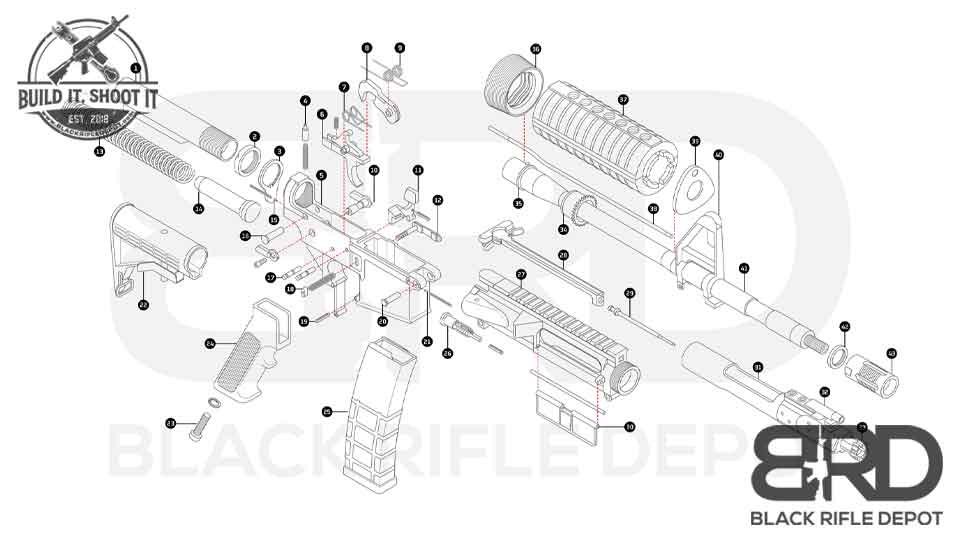
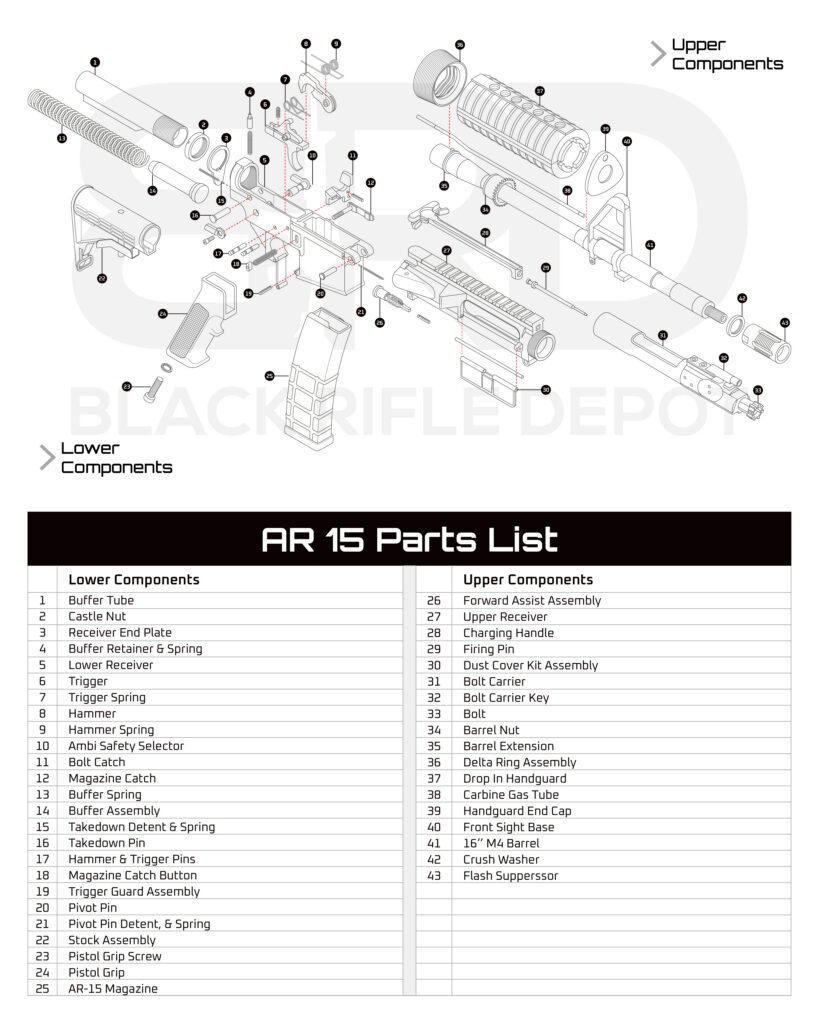
An AR-15 parts diagram is useful for learning where every component belongs, but it does not always show which pieces deserve regular inspection. This guide covers nine commonly overlooked AR-15 parts, why they matter, what may cause them to fail, and which replacements are worth keeping available.
Before inspecting or servicing a rifle, verify that it is unloaded, remove the magazine, clear the chamber, and follow the firearm and component manufacturers’ instructions.
1. Extractor, Extractor Spring, and Insert
The extractor pulls the fired cartridge case from the chamber as the bolt carrier moves rearward. Although builders often think of the extractor as a single part, the assembly typically includes the extractor itself, its spring, an insert, and sometimes an O-ring.
Heat, fouling, high round counts, rough chambers, ammunition variables, and an aggressive gas system can place additional stress on the extractor assembly. A chipped extractor claw may lose its grip on the case rim, while a tired spring can reduce extractor tension.
Common symptoms include:
- A fired case remaining in the chamber
- A case being partially removed and then dropped
- A new round trying to feed behind the fired case
- Intermittent extraction problems as the rifle becomes dirty
The extractor spring is one of the least expensive AR-15 parts, yet it can stop the entire operating cycle when it weakens. Keep the replacement configuration appropriate for the bolt and caliber rather than automatically adding stronger springs or O-rings to every rifle.
2. Ejector, Ejector Spring, and Retaining Pin
Extraction and ejection are separate processes. The extractor pulls the case from the chamber, while the spring-loaded ejector pushes it away from the bolt face and out through the ejection port.
The ejector sits inside the bolt and is held in place by a small retaining pin. Carbon, brass debris, corrosion, spring fatigue, or damage to the ejector can reduce movement. Because the assembly is under spring pressure and requires careful disassembly, it is frequently ignored during routine maintenance.
A sluggish ejector may cause weak or inconsistent ejection. A broken spring or damaged ejector can leave cases trapped in the action even when the extractor is functioning correctly.
When reviewing the parts of an AR-15, the ejector assembly is easy to overlook because most basic field-stripping procedures leave it installed in the bolt. It should still be checked when troubleshooting unexplained ejection problems.
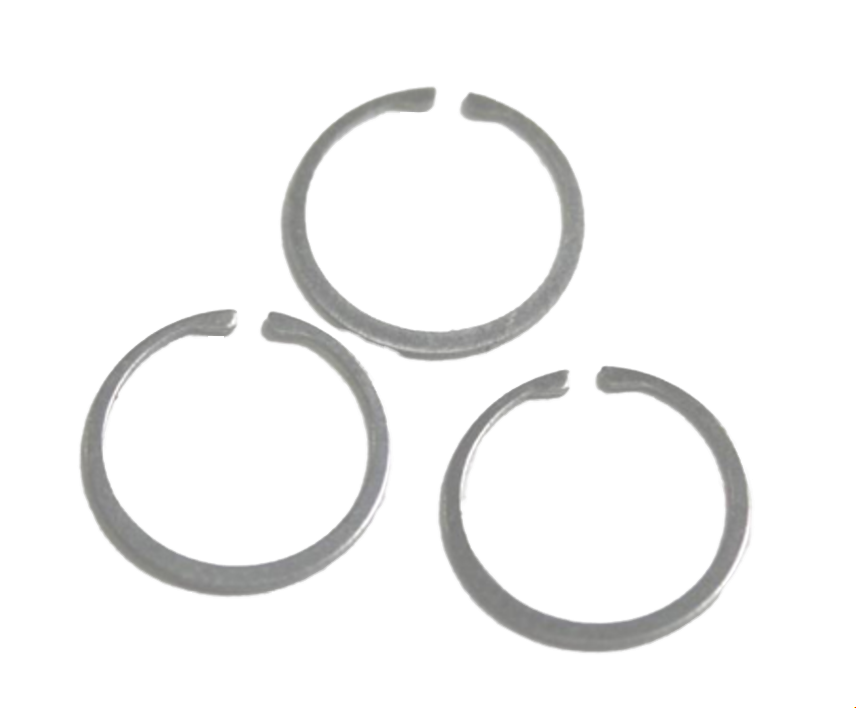
3. Bolt Gas Rings
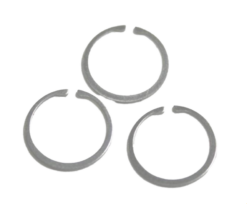
Gas rings form a seal between the bolt and the inside of the carrier. That seal helps the gas system drive the carrier while allowing the bolt to unlock and cycle.
Gas rings gradually wear against the carrier bore. Damage may also occur during assembly or from poor-quality components. One worn ring may not immediately stop the rifle, but excessive wear can contribute to gas leakage and unreliable cycling.
Potential symptoms include:
- Short-stroking
- Failure to feed the next round
- Failure to lock back on an empty magazine
- Cycling that becomes less reliable as the rifle gets dirty
- A bolt that moves with unusually little resistance inside the carrier
Gas rings are inexpensive AR-15 parts, but they must be installed without twisting, stretching, or damaging them. Manufacturer maintenance instructions commonly identify the gas rings, cam pin, firing pin, and retaining pin as areas that should be cleaned, lubricated, and inspected during bolt carrier maintenance.
4. Bolt Cam Pin
The cam pin guides the bolt as it rotates between its locked and unlocked positions. It experiences repeated impact, friction, heat, and side loading every time the rifle cycles.
Normal finish wear is common, but builders should look beyond cosmetic marks. Cracks, chips, deformation, deep grooves, or unusual peening can indicate that the part should be replaced or that the rifle has another issue requiring investigation.
A damaged cam pin may interfere with bolt rotation or carrier movement. In a severe case, failure can disable the rifle and potentially damage surrounding components.
The cam pin is one reason a basic AR-15 parts list should include more than complete assemblies. Replacing an entire bolt carrier group may not be necessary when a properly inspected and compatible small part is the only component that needs attention.
ArmaLite maintenance guidance specifically calls for inspecting the cam pin for cracks or chips and checking the firing pin and retaining pin for damage.

5. Firing Pin Retaining Pin
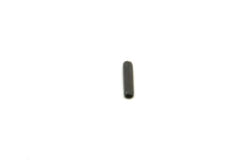
The firing pin retaining pin keeps the firing pin positioned inside the carrier. It is removed during routine bolt carrier disassembly, but it often receives little attention unless it becomes difficult to reinstall.
Repeated removal, improper installation, prying, or forcing the pin against the firing pin can bend or spread it. A badly deformed retaining pin may become difficult to remove, fail to seat correctly, or no longer retain the firing pin as intended.
Inspect it for:
- Bent or uneven legs
- Deep dents or gouges
- Cracks
- Excessive spreading
- Difficulty seating without force
The firing pin retaining pin should never be treated as an improvised cotter pin from a hardware store. Use a correctly manufactured firearm component that matches the carrier design. It is a useful spare to keep with other small AR-15 parts and accessories because it takes up almost no space and can be replaced quickly during maintenance.
6. Gas Key and Gas Key Screws
The gas key is attached to the top of the bolt carrier and receives gas from the gas tube. It must remain secure and properly aligned for the operating system to function correctly.
Builders often purchase a complete bolt carrier group and assume the gas key will never need further attention. However, loose screws, inadequate staking, physical damage, or leakage between the key and carrier may reduce the amount of gas available to cycle the action.
Possible signs include:
- Persistent short-stroking
- Failure to lock back after the last round
- Visible movement at the gas key
- Unusual carbon deposits around the base of the key
- Binding between the gas tube and gas key
Do not simply tighten loose screws and continue firing without determining why they moved. Gas key installation, fastener condition, sealing, torque, and staking should be evaluated according to the carrier manufacturer’s requirements.
The gas key may be larger than a spring or detent, but it is still one of the AR-15 parts many owners ignore until a cycling problem appears.
7. Gas Tube and Gas Tube Roll Pin
The gas tube carries gas from the gas block to the carrier key. The small roll pin passing through the gas block secures the tube in position.
A damaged, eroded, bent, obstructed, or incorrectly aligned gas tube can reduce gas delivery or cause the tube to bind against the carrier key. The retaining pin can also be damaged during installation, especially when the wrong punch or excessive force is used.
Symptoms may resemble other gas-system problems:
- Short-stroking
- Intermittent cycling
- Failure to lock back
- Unusual resistance as the carrier moves forward
- Uneven wear where the gas tube enters the carrier key
Because several problems produce similar symptoms, do not immediately replace the buffer, spring, or bolt carrier without checking the full gas path. A complete AR-15 parts chart may show the gas tube, block, roll pin, key, carrier, bolt, and gas rings separately, but all of them must work together as one system.
8. Bolt Catch, Plunger, Spring, and Roll Pin
The bolt catch locks the bolt carrier to the rear manually or after the final round when used with a compatible, functioning magazine. The assembly consists of more than the visible paddle. It also depends on a spring, plunger, and retaining pin.
The bolt catch may crack, wear, bind, or become damaged from improper installation. The spring and plunger can also become contaminated or installed incorrectly. A damaged roll pin may allow excess movement or make future disassembly difficult.
Before blaming the bolt catch, test the rifle with known-compatible magazines. Magazine followers and springs are frequently responsible for failures to lock back.
When the catch assembly is the problem, symptoms may include:
- Failure to hold the carrier open manually
- Failure to lock back with multiple known-good magazines
- A bolt catch that feels sticky or lacks spring tension
- A catch that moves excessively in the receiver
An AR-15 lower parts kit normally includes these components, but builders should not assume every kit uses the same material quality or dimensions. Careful installation matters because the surrounding lower receiver can be scratched or damaged when the roll pin is started incorrectly.
9. Buffer Retainer and Buffer Retainer Spring
The buffer retainer keeps the buffer and action spring inside the receiver extension when the upper and lower receivers are separated. During normal operation, the rear of the bolt carrier should push the buffer slightly away from the retainer.
The retainer is not intended to absorb continuous impact from the buffer while the rifle cycles. Incorrect receiver-extension positioning, tolerance problems, unusual wear, or an incompatible setup can allow the buffer to repeatedly strike the retainer.
Signs of a problem may include:
- A chipped or bent buffer retainer
- Heavy impact marks on the buffer face
- A damaged retainer spring
- The buffer and spring launching out when the rifle is opened
- Metal fragments inside the lower receiver
A failed retainer does not always prevent the rifle from operating while assembled, but loose or broken pieces can move into the action and cause additional problems. The underlying cause should be corrected rather than repeatedly replacing the same part.
This is also a reminder that the AR-15 parts inside the receiver extension matter just as much as the parts visible on the outside of the rifle.
Honorable Mentions: Other Small Parts Worth Inspecting
A list limited to nine components cannot cover every possible failure point. Several other inexpensive parts deserve attention during assembly and maintenance.
Takedown and Pivot Pin Detents
These small detents and springs rarely stop a rifle from firing, but they are easily lost, crushed, bent, or launched across the room during assembly. Keeping extras prevents a minor mistake from delaying an entire build.
Charging Handle Latch and Roll Pin
The charging handle receives repeated pulling and impact. A damaged latch, worn hook, cracked handle, or failed roll pin may prevent it from staying secured or operating normally.
Magazine Catch and Spring
A worn catch or weak spring can allow magazines to sit too low, fit loosely, or drop unexpectedly. Apparent feeding problems sometimes begin with magazine positioning rather than the upper receiver.
Hammer and Trigger Pins
Standard trigger and hammer pins can wear, walk, or become damaged when the fire-control group is installed incorrectly or when incompatible components are combined. Follow the trigger manufacturer’s installation instructions and verify that each spring and pin is oriented correctly. Geissele’s installation guidance emphasizes confirming the hammer, trigger, disconnector, springs, and pins before assembling the trigger group.
What AR-15 Spare Parts Should You Keep?
There is no need to carry a complete duplicate rifle in a spare-parts box. A practical kit can focus on small, wear-prone components that are easy to inspect and replace.
Useful spares may include:
- Extractor and extractor spring
- Gas rings
- Firing pin retaining pin
- Cam pin
- Ejector spring and retaining pin
- Gas tube roll pin
- Bolt catch spring and plunger
- Takedown and pivot pin detents
- Assorted correctly sized springs and pins
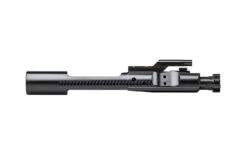
- A complete, proven bolt or bolt carrier group for troubleshooting
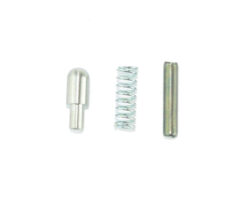
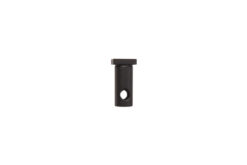
A complete AR-15 lower parts kit can also serve as a convenient source of replacement springs, pins, detents, controls, and hardware. Verify compatibility before installing any spare, especially when working with nonstandard calibers, proprietary receivers, piston systems, pistol-caliber platforms, or specialized bolt carrier groups.
Do Not Diagnose Every Failure by Replacing Parts
A malfunction does not automatically prove that the nearest component is broken. Ammunition, magazines, lubrication, assembly errors, gas-system alignment, chamber condition, and incompatible components can produce overlapping symptoms.
For example, a failure to lock back could involve the magazine, bolt catch, gas block, gas tube, carrier key, gas rings, buffer weight, action spring, ammunition, or excessive friction. Replacing random AR-15 parts may temporarily hide the problem without identifying its cause.
Use a systematic process:
- Make the rifle safe.
- Document the exact malfunction.
- Test known-good ammunition and magazines when appropriate.
- Inspect for obvious damage, looseness, contamination, and incorrect assembly.
- Compare the setup with manufacturer specifications.
- Replace only confirmed damaged or out-of-spec components.
- Have a qualified gunsmith inspect the rifle when the cause remains uncertain.
Final Thoughts on Overlooked AR-15 Parts
The most expensive component is not always the one that determines reliability. A worn extractor spring, damaged cam pin, loose gas key, or bent retaining pin can stop a rifle just as effectively as a failed major assembly.
Learning the AR-15 parts names is a good starting point, but builders should also understand how those parts interact. Use an AR-15 parts diagram to identify each component, inspect wear areas during routine maintenance, and keep a small selection of compatible spares available.
Whether you are completing a new build, repairing an existing rifle, or restocking your workbench, shop AR-15 Parts and AR-15 Parts Kits at Black Rifle Depot. Compare individual springs, pins, controls, bolt components, lower parts kits, and other essentials needed to keep your rifle properly assembled and ready for dependable use.
Frequently Asked Questions About AR-15 Parts
Understanding which components wear out, how failures appear, and what spares to keep can make troubleshooting much easier. These questions cover the most common concerns builders have about maintaining and replacing AR-15 parts.
Which AR-15 parts break most often?
Small wear components such as extractor springs, gas rings, firing pin retaining pins, ejector springs, and roll pins are more likely to wear or become damaged than major components. Actual service life depends on round count, ammunition, maintenance, gas-system setup, and part quality.
What AR-15 spare parts should I keep on hand?
Useful spares include gas rings, an extractor and extractor spring, a firing pin retaining pin, cam pin, ejector spring, gas tube roll pin, takedown-pin detents, and selected lower-receiver springs. A complete bolt or proven bolt carrier group can also be useful for troubleshooting.
How do I know whether an AR-15 part is worn out?
Look for cracks, chips, deformation, heavy peening, unusual finish wear, weak spring tension, loose fasteners, or movement that differs from the manufacturer’s specifications. Changes in extraction, ejection, feeding, or bolt lockback may also indicate worn parts.
Can a lower parts kit be used as a spare-parts kit?
Yes. An AR-15 lower parts kit can provide extra springs, pins, detents, and controls. However, confirm that the components match your receiver, trigger system, safety selector, and other installed parts before using them as replacements.
How often should AR-15 parts be inspected?
Inspect the rifle during routine cleaning and whenever its function changes. High-use rifles, suppressed rifles, competition rifles, and firearms exposed to dirt or moisture may require more frequent inspection.
Can worn gas rings cause an AR-15 to short-stroke?
Yes. Excessively worn or damaged gas rings can allow gas to leak inside the carrier and may contribute to short-stroking, weak cycling, or failure to lock back. Similar symptoms can also come from the gas block, gas tube, gas key, buffer system, or ammunition.
What causes an AR-15 extractor to fail?
Extractor problems may result from a chipped claw, weak spring, damaged insert, fouling, a rough chamber, ammunition issues, or excessive operating stress. Inspect the full extractor assembly before replacing only one component.
Should I replace individual parts or the entire bolt carrier group?
Replace individual parts when the problem is clearly identified, and the remaining components are in good condition. A complete bolt carrier group may be more practical when several parts are worn, the carrier is damaged, or a known-good assembly is needed for troubleshooting.
Are all AR-15 small parts interchangeable?
No. Many standard AR-15 parts share common dimensions, but caliber-specific bolts, proprietary receivers, nonstandard triggers, piston systems, and pistol-caliber platforms may require different components. Always verify compatibility before installation.
Why does my AR-15 keep breaking the same part?
Repeated failure usually points to an underlying problem rather than a defective replacement alone. Incorrect installation, incompatible components, excessive gas, alignment issues, tolerance stacking, or improper receiver-extension positioning can repeatedly damage the same part.
For additional resources and exclusive deals, check out our X Page.
