
AR-15 Parts
2026 Black Friday Deals: Best AR-15 Parts and Upgrades to Watch
Oct
Table of Contents
Black Friday 2026 is approaching, bringing one of the year’s busiest shopping periods for firearms enthusiasts looking for AR-15 parts, accessories, and upgrades. From complete upper assemblies and build kits to triggers, handguards, optics, and lower receiver components, the holiday season offers a chance to compare products across a wide range of categories.
Black Friday falls on Friday, November 27, 2026, with Cyber Monday following on November 30. Black Rifle Depot carries an extensive selection of AR-15 components, making it a destination for customers researching parts, comparing manufacturers, and planning their holiday purchases.
This guide covers the major AR-15 product categories to research during Black Friday 2026, including component differences, compatibility considerations, and three illustrative budget levels. Whether you’re researching an existing rifle or comparing parts for a future project, understanding what each category offers is the starting point.
Disclaimer: This article is for general educational and informational purposes only and does not constitute legal advice. Federal, state, and local laws govern the possession, purchase, transfer, and configuration of firearms and certain components. Verify all applicable laws and manufacturer specifications before purchasing or using regulated products.
Top 10 AR-15 Parts Categories to Watch for Black Friday 2026
Black Friday promotions cover a variety of firearm components, but understanding the differences between similar products is essential when comparing value. The following table highlights ten major categories, their distinguishing features, and the specifications worth reviewing before you buy.
| AR-15 Parts Category | Key Considerations | What to Compare |
|---|---|---|
| Complete AR-15 Uppers | Barrel length, caliber, included components | BCG and charging handle inclusion |
| AR-15 Build Kits | Package contents and component compatibility | Included parts versus individual items |
| AR-15 Triggers | Trigger design and manufacturer specifications | Single-stage versus two-stage |
| Bolt Carrier Groups | Materials, finishes, and inspection standards | Bolt material and testing information |
| Charging Handles | Lever design and receiver compatibility | Standard versus ambidextrous |
| AR-15 Handguards | Length, materials, and mounting interface | M-LOK versus Picatinny |
| Safety Selectors | Selector configuration and ergonomics | Standard versus ambidextrous |
| Stocks and Buffer Kits | Receiver extension and stock compatibility | Carbine, A5, and rifle-length systems |
| AR-15 Optics | Magnification and mounting requirements | Red dots, magnifiers, and LPVOs |
| AR-15 Armorer’s Tools | Manufacturer compatibility and intended use | Tool specifications and quality |
Editor’s note: This table identifies ten product categories to research, not ten verified discounted products. Replace or supplement it with actual advertised sale items, regular prices, Black Friday prices, and savings once promotions are finalized.

Complete AR-15 Uppers: A Major Black Friday Category
Complete AR-15 uppers remain an important category for firearm owners comparing different upper receiver assemblies. These products combine multiple upper components into a single package, allowing shoppers to compare barrel specifications, handguard designs, caliber options, and manufacturer configurations.
Not every complete upper includes a bolt carrier group or charging handle. Some assemblies include both components, while others require you to purchase them separately. Reviewing the exact contents of each product is essential when comparing complete upper options.
Barrel length, chambering, twist rate, and gas system specifications also distinguish one assembly from another. These details affect component compatibility and determine whether the configuration meets the owner’s needs and applicable legal requirements.
Explore the AR-15 Complete Uppers category to review available assemblies and their manufacturer specifications.
Complete Upper Build Kits and AR-15 Build Kits
AR-15 build kits group components into packages, making it easier to compare multiple parts within a single product listing. Upper build kits, lower parts kits, and other component packages differ in scope, so review the included items individually.
Some packages focus exclusively on upper receiver components, while others contain several related parts. A kit’s name alone does not establish which components are included or whether additional parts are required.
Manufacturer specifications, included accessories, compatibility, and package contents are the primary considerations when evaluating a build kit. Comparing these details helps distinguish a genuinely comprehensive package from one containing only a limited set of components.
Black Friday 2026 offers an opportunity to review different kit configurations and compare their contents with individually listed products.
AR-15 Triggers: Single-Stage and Two-Stage Options
Triggers remain a prominent category in the AR-15 aftermarket, with numerous manufacturers offering different designs and operating characteristics. Conventional single-stage and two-stage triggers are two established configurations, each with distinct mechanical characteristics.
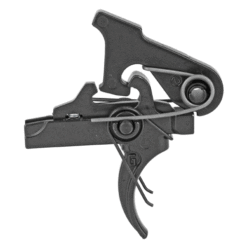
A single-stage trigger has one continuous stage of movement before the trigger breaks. A two-stage trigger includes an initial stage followed by a separate second stage, giving the shooter a distinct transition before the break.
Trigger specifications also include pull weight, construction materials, manufacturer compatibility requirements, and trigger assembly type. Drop-in cassette-style assemblies and conventional component-based triggers differ in construction and installation requirements.
When comparing AR-15 triggers, manufacturer documentation provides the most reliable information about mechanical design, specifications, and supported platforms.
AR-15 Handguards: M-LOK, Picatinny, and Free-Float Designs
Handguards are another established category worth researching during Black Friday 2026. Manufacturers offer designs with different lengths, profiles, weights, and accessory-mounting interfaces.
M-LOK handguards feature elongated mounting slots designed for compatible accessories, while Picatinny rail systems use standardized raised rail sections. Some models combine multiple mounting surfaces, providing different accessory interface options.
Free-float handguards attach through the upper receiver’s barrel nut assembly without contacting the barrel along the handguard’s length. Handguard designs differ in the attachment hardware they require, making manufacturer fitment information important.
When reviewing AR-15 handguards, compare the mounting system, construction materials, dimensions, and compatibility specifications rather than appearance alone.
AR-15 Safety Selectors: Standard and Ambidextrous Controls
Safety selectors are a frequently overlooked category of AR-15 lower receiver components. Standard selectors and ambidextrous configurations differ in lever arrangement, dimensions, and operating characteristics.
Traditional AR-15 safety selectors feature a control lever on one side of the receiver. Ambidextrous models provide controls on both sides, though lever shapes, lengths, and arrangements differ by manufacturer.
Selector compatibility depends on the firearm’s trigger system, lower receiver, and manufacturer specifications. Not every selector is compatible with every fire-control assembly.
Reviewing these details is essential when comparing replacement safety selectors and understanding how different models are designed.
AR-15 Stocks and Buffer Kits: Carbine, A5, and Rifle-Length Systems
AR-15 stocks and buffer systems are closely related components, but they are not interchangeable across every configuration. Receiver extension dimensions, buffer lengths, spring specifications, and stock designs vary across different systems.
Carbine-length receiver extensions are commonly associated with adjustable stocks, while rifle-length systems use different extension and recoil component dimensions. A5-pattern systems introduce another configuration with their own component specifications.
Stock compatibility also depends on the receiver extension design, including dimensional differences between commercial and mil-spec carbine extensions. Confirm these distinctions through manufacturer documentation.
Explore the AR-15 Stocks and Buffer Kits category for available components and specifications.
For additional information on these systems, read our AR-15 Buffer Tube Kits: Carbine vs. A5 vs. Rifle Length guide, which explains the differences between major receiver extension configurations.
Bolt Carrier Groups and Charging Handles
Bolt carrier groups and charging handles are two important upper receiver component categories. Both feature a wide selection of manufacturer designs, materials, finishes, and compatibility specifications.
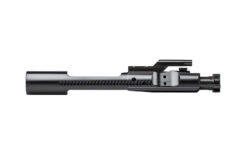
AR-15 bolt carrier groups contain several individual components, including the carrier, bolt, cam pin, firing pin, and retaining pin. Bolt carrier groups differ in materials, surface treatments, inspection procedures, and manufacturer quality-control standards.
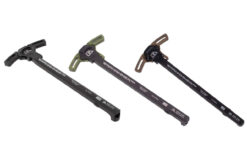
Charging handles are available in traditional single-sided and ambidextrous configurations. Their lever dimensions, construction, and intended receiver compatibility differ between models.
Review product descriptions for material specifications, supported platforms, finishes, and manufacturer testing information. Similar-looking components can differ meaningfully in construction.
AR-15 Optics: Red Dots, Magnifiers, and LPVOs
Optics represent another major category in the AR-15 accessory market. Red dot sights, magnifiers, and low-power variable optics offer different viewing characteristics and optical configurations.
Red dots provide a nonmagnified aiming reference, while magnifiers add optical magnification to compatible sight systems. LPVOs combine a variable magnification range into a single riflescope, with configurations such as 1-6x and 1-8x.
Optical products also differ in reticle design, adjustment specifications, illumination, construction, and mounting requirements. Evaluating these details helps distinguish models that serve different purposes.
Black Friday shoppers comparing optics should review the complete manufacturer specification sheet, including whether the product includes a compatible mount.
AR-15 Armorer’s Tools and Maintenance Equipment
Armorer’s tools and maintenance supplies are essential categories for understanding the equipment associated with AR-platform maintenance. The tools market includes specialized wrenches, punches, fixtures, cleaning equipment, and measuring instruments.
Tools vary in material, dimensional specifications, intended applications, and compatibility with manufacturers. Some products are designed for particular component interfaces, while others cover a broader range of maintenance applications.
Quality and correct application are important considerations. Incorrect or incompatible tools can damage components, making the manufacturer’s instructions and intended use important when evaluating an item.
Explore the AR-15 Armorer’s Tools category for available products and their specifications.
Forced Reset Triggers
Forced reset triggers are subject to complex federal and state regulations, and their legality must be verified for the specific device and jurisdiction.
Suppressors
Suppressors remain subject to applicable federal and state firearm regulations, including restrictions on possession and transfer.
Best AR-15 Build Budgets: $500, $750, and $1,000
A fixed budget provides a useful framework for comparing the price and scope of AR-15 component packages. However, the total cost depends on the specific products, included components, manufacturer requirements, and applicable fees.
The following three budgets are illustrative planning levels, not advertised Black Friday bundles or verified complete-firearm prices.
$500 Budget: Entry-Level Component Comparison
A $500 budget represents a lower-cost planning level for researching AR-platform component categories. At this price point, key considerations include what’s included in packaged products, manufacturer documentation, and whether additional items are excluded from the advertised price.
Comparing individual product specifications can help identify differences between entry-level and higher-priced components without assuming that all products within a category offer identical construction or features.
$750 Budget: Midrange Component Comparison
A $750 planning budget expands the range of product prices you can compare. Midrange products often differ from entry-level alternatives in materials, finishes, manufacturer processes, or included accessories.
Rather than treating a higher price as proof of quality, compare documented specifications, warranty terms, product contents, and verified compatibility.
$1,000 Budget: Premium Component Comparison
A $1,000 planning budget lets you consider more expensive component categories and premium manufacturer offerings. Higher-priced products can differ significantly in features, construction methods, and accessory packages.
The price of a premium component does not automatically establish its suitability for a particular firearm. Manufacturer fitment guidance, technical specifications, and applicable legal requirements remain essential.
| Planning Budget | Comparison Focus | Important Considerations |
|---|---|---|
| $500 | Entry-level products and packages | Included components and total cost |
| $750 | Mid-range product categories | Material specifications and compatibility |
| $1,000 | Premium products and accessories | Manufacturer features, warranty, and documentation |
These are editorial budget comparisons, not specific firearm assembly recommendations. They do not represent confirmed sale prices or complete component lists.
How to Compare Black Friday AR-15 Parts Deals
Black Friday advertisements often emphasize discount percentages, but the largest percentage doesn’t automatically mean the best value. Regular pricing, product specifications, included accessories, warranty coverage, and shipping expenses all affect the final purchase cost.
One of the most important comparisons involves exact product models. Two products from the same manufacturer can have different materials, dimensions, compatibility requirements, or included components.
Inventory availability also matters during major shopping events. Promotional prices and product selection can change throughout the holiday period, and retailer-specific terms determine how long individual offers remain available.
For the most reliable information, compare current advertised prices and product descriptions directly with the retailer’s published terms.
Black Friday 2026 at Black Rifle Depot
Black Friday 2026 takes place on November 27, followed by Cyber Monday on November 30. These dates mark the traditional holiday shopping weekend, although individual retailers determine their own promotional schedules.
Black Rifle Depot carries a range of AR-15 components, including complete uppers, build kits, triggers, bolt carrier groups, charging handles, handguards, safety selectors, stocks, buffer systems, and armorer’s tools.
Customers can review current product specifications, pricing, inventory status, and published promotional terms through Black Rifle Depot’s website.
Frequently Asked Questions About Black Friday AR-15 Parts Deals
The following frequently asked questions address Black Friday 2026 dates, common AR-15 component categories, product specifications, and compatibility considerations.
When Is Black Friday 2026 at Black Rifle Depot?
Black Friday 2026 falls on Friday, November 27, but Black Rifle Depot usually kicks off its Black Friday Deals a few days early. Shoppers can get a head start on savings across AR-15 parts, accessories, and upgrades before the official shopping day. Check Black Rifle Depot for the latest promotions, available inventory, and sale announcements.
What Are the Most Popular AR-15 Parts in 2026?
Triggers, bolt carrier groups, charging handles, optics, complete uppers, barrels, and handguards remain among the most popular AR-15 aftermarket categories. Forced reset triggers have also drawn significant attention, while suppressors have seen considerable growth in industry demand.
Are Forced Reset Triggers Legal in 2026?
Federal treatment of qualifying forced reset trigger designs changed following the 2025 Department of Justice settlement. However, states including California continue to prohibit FRTs. Legality depends on the specific device and applicable federal, state, and local requirements.
Did Suppressor Laws Change in 2026?
Yes. The federal making-and-transfer tax for suppressors was reduced to $0 beginning January 1, 2026. ATF also announced changes to its enforcement of certain NFA requirements on October 9, 2026. Gun Control Act requirements and applicable state restrictions remain in effect.
Are Complete AR-15 Uppers Sold With a BCG and Charging Handle?
Not every complete upper includes a bolt carrier group or charging handle. Some products include both components, while others are sold without them. The manufacturer’s product description identifies what each assembly includes.
What Are the Best AR-15 Upgrades to Look for on Black Friday?
Established upgrade categories include quality triggers, bolt carrier groups, optics, charging handles, complete uppers, and handguards. The right choice depends on the existing firearm, verified component compatibility, and the manufacturer’s product specifications.
Where Can I Find Black Friday Deals on AR-15 Parts?
Black Rifle Depot offers an AR-15 Parts Deals Depot featuring a range of components and accessories. Customers can review current prices, available products, and any published Black Friday promotions directly through Black Rifle Depot.
For more resources and online deals, check out our X Page.