
AR-15 Buffer Kits
AR-15 Buffer Tube Kits Explained: Carbine vs. A5 vs. Rifle-Length
Nov
Table of Contents
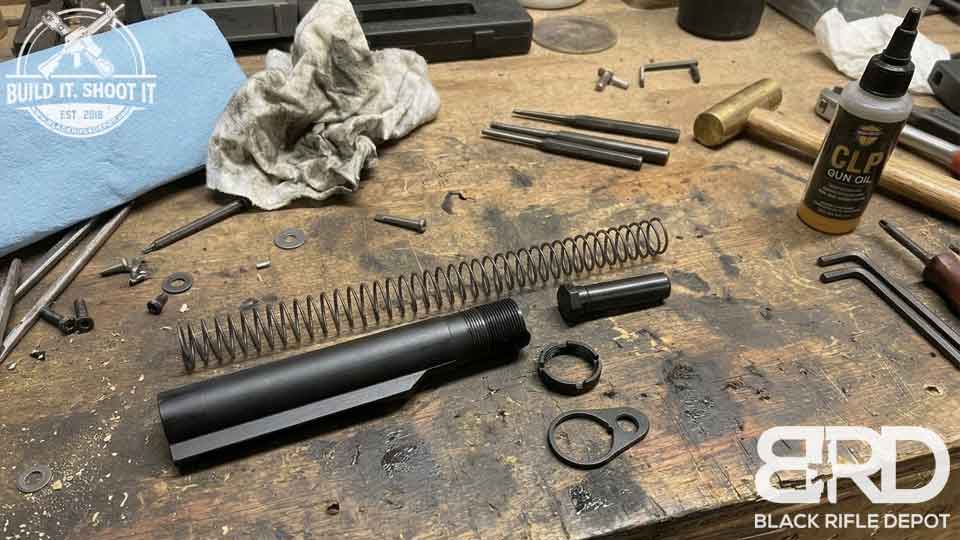
An AR-15 buffer tube kit is an important part of the rifle’s operating system, but not every configuration uses the same components. The buffer tube, also called the receiver extension, houses the buffer and action spring behind the bolt carrier group. These components work together to manage the bolt carrier’s movement during cycling. Choosing the correct tube length determines which buffer, spring, and stock configurations are compatible.
The three primary systems are carbine-length, A5, and rifle-length, each with different dimensions and component requirements. Carbine systems are common on adjustable-stock rifles, while rifle-length extensions support traditional fixed-stock configurations. The A5 system offers an intermediate design that combines an extended adjustable receiver extension with a dedicated buffer and rifle-length spring. Understanding these differences makes it easier to compare products, avoid compatibility problems, and choose the appropriate buffer tube kit.
Carbine vs. A5 vs. Rifle-Length Buffer Tubes
Each buffer system uses a particular receiver-extension depth and matching internal components. The comparison below highlights their main differences.
FeatureCarbineA5RifleInternal tube depth Approx. 7″Approx. 7.75″Approx. 9.6–9.7″Buffer length 3.25 “4”5.9″ Buffer typesStandard, H, H2, H3Dedicated A5 seriesRifle bufferSpringCarbineCompatible rifle-lengthRifle-lengthStock fitAdjustable carbineCompatible adjustableTraditional fixedGas system pairingVariousVariousOften rifle-lengthBest forGeneral-purpose riflesIntermediate systemsFixed-stock rifles
Dimensions are approximate internal measurements, not overall tube lengths. Gas-system length and receiver-extension length are separate specifications.
The most important distinction is that these systems do not use interchangeable buffers. A conventional carbine buffer is shorter than an A5 buffer, while a rifle buffer is considerably longer. Spring compatibility also differs, even when two extensions accept similar adjustable stocks. Selecting a matching system prevents confusion between parts that appear similar but serve different configurations.
What’s Included in an AR-15 Buffer Tube Kit?
A buffer tube kit combines the receiver extension with supporting components needed for a compatible firearm configuration. Complete kits simplify shopping because they bundle several related parts. However, manufacturers package products differently, and some kits exclude hardware buyers expect. Check the product description before ordering replacement parts or completing a lower receiver.
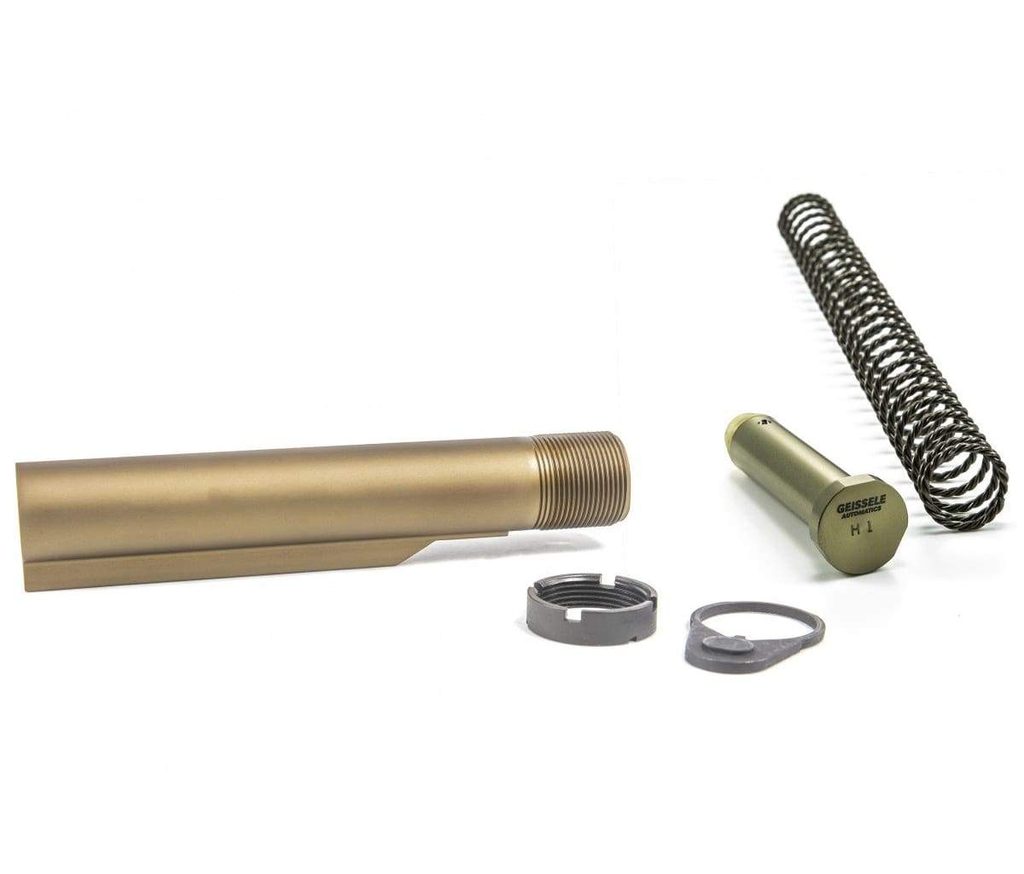
A conventional carbine buffer kit can include the following components:
- Buffer Tube: The receiver extension that houses the buffer and action spring.
- Buffer: A weighted component that helps control bolt carrier movement.
- Buffer Spring: The action spring that returns the operating assembly forward.
- Castle Nut: Secures the receiver extension in conventional adjustable-stock configurations.
- End Plate: Supports the receiver-extension assembly at the rear of the lower receiver.
- Buffer Retainer and Spring: Retain the buffer in compatible receiver designs.
Some products include all these components, while others contain only the tube, buffer, and spring. Some kits also include a stock. Rifle-length systems use different mounting hardware, and proprietary extensions can have additional requirements. Review the kit contents rather than assuming every advertised buffer kit is complete.
Complete Buffer Kit vs. Individual Components
Buying a complete kit provides a convenient way to obtain matching parts without searching for every component separately. It also makes it easier to compare the total purchase price, especially when replacing an entire receiver-extension assembly. Buying components individually offers more flexibility if you want to keep existing stock or use a specific manufacturer’s products. However, separate parts must still meet the same dimensional and compatibility requirements.
Black Rifle Depot carries AR-15 Stocks and buffer kits, along with individual receiver extensions, buffers, and springs. Shoppers replacing additional lower components can also explore our AR-15 Lower Build Kits collection.
Carbine-Length Buffer Tube Systems
The carbine buffer tube is the most widely used receiver-extension configuration for modern adjustable-stock AR-15 rifles. It features a series of external adjustment positions that allow compatible stocks to change the length of pull. Conventional AR-15 carbine extensions have approximately seven inches of internal depth and use 3.25-inch buffers. Their compact dimensions and broad aftermarket support make them a familiar choice across numerous rifle configurations.
A carbine buffer tube kit uses a corresponding carbine action spring and a compatible carbine buffer. Common buffer classifications include standard carbine, H, H2, and H3, which differ in weight while maintaining similar external dimensions. The correct buffer mass depends on several operating factors and should not be determined by tube length alone. Our AR-15 Buffer Weights Guide explains these classifications in greater detail.
Why Are Carbine Buffer Tubes So Common?
Carbine receiver extensions support a large selection of adjustable stocks from established aftermarket manufacturers. They also work with rifles with different barrel lengths and gas-system configurations. A 16-inch midlength AR-15, for example, can have a carbine buffer system without using a carbine-length gas tube. The term carbine describes the receiver-extension system, not necessarily the rifle’s gas-system length.
Most modern carbine extensions use a mil-spec-diameter stock interface, although commercial-diameter alternatives also exist. Six-position tubes are common, but manufacturers offer other adjustment configurations. The number of positions affects available stock adjustments, not buffer compatibility. For many buyers, the carbine system offers an established balance of compact dimensions, replacement-part availability, and stock selection.
Understanding the A5 Buffer System
VLTOR developed the A5 buffer system to combine an adjustable stock with component universality. It also requires more attention when selecting replacement parts because standard carbine buffers are incompatible. Buyers should confirm the receiver extension, A5 buffer, and spring specifications before purchasing components separately. A complete, manufacturer-approved A5 configuration is the appropriate reference point for compatibility.
A5 Buffer Tube Length and Stock Compatibility
Most A5 receiver extensions use a mil-spec adjustable-stock interface, allowing compatibility with many conventional carbine stocks. However, the additional tube length can affect how certain stocks collapse or fit around the rear of the receiver. Some stock designs restrict the extension’s length or mounting hardware. Checking the individual stock manufacturer’s specifications remains important, even when the tube is advertised as mil-spec.
Black Rifle Depot carries A5-compatible receiver extensions and individual buffers, including products from VLTOR and Kratos Design Group. The VLTOR A5H2 buffer weighs about 5.3 ounces, but that specification does not guarantee universal compatibility. Other A5 weights are available for different manufacturer-approved configurations. For a complete explanation of buffer weight differences, consult our dedicated buffer weights article.
Rifle-Length Buffer Tube Systems
A rifle-length buffer tube is associated with traditional fixed-stock AR-15 rifles, particularly A1 and A2 configurations. Unlike a carbine receiver extension, it lacks the external adjustment positions used by collapsible stocks. Its internal depth measures approximately 9.6 to 9.7 inches, depending on the specification. The system uses a rifle-length spring and a rifle buffer measuring approximately 5.9 inches.
Rifle-length systems remain common on traditional 20-inch rifles and fixed-stock configurations. Their longer receiver extensions accommodate correspondingly longer recoil components, but they do not automatically increase bolt carrier travel. The buffer, spring, and receiver-extension dimensions work together as a matched arrangement. Never treat a standard rifle buffer as interchangeable with a conventional carbine or A5 buffer.
A2 Buffer Tubes and Fixed Stocks
The A2 buffer tube is closely associated with the traditional M16A2-style stock configuration. Compatible A2 stocks use a rifle-length extension and their specified mounting hardware, including the appropriate spacer arrangement. This setup offers a fixed length of pull instead of the multiple positions available on adjustable stocks. It remains relevant for traditional rifle configurations and shooters who prefer fixed-stock ergonomics.
Not every fixed stock requires a rifle-length receiver extension, however. Some modern fixed stocks are specifically designed to fit mil-spec carbine or A5 receiver extensions. Stock appearance alone does not establish which buffer system is required. Always verify the mounting specifications before purchasing an A2 buffer tube or replacement stock.
Mil-Spec vs. Commercial Buffer Tubes
Mil-spec and commercial carbine buffer tubes differ primarily in the outside diameter of the adjustable-stock mounting surface. A conventional mil-spec tube measures approximately 1.148 inches in diameter, while a commercial tube measures approximately 1.168 inches. Although the difference seems small, it affects stock compatibility. Mil-spec stock will not fit a commercial tube properly, while commercial stock can fit loosely on a mil-spec extension.
Most modern aftermarket adjustable stocks are designed around mil-spec receiver extensions, making them the more common choice. However, an existing rifle may use a commercial-diameter tube, particularly on certain older configurations. Confirm the actual receiver-extension specification rather than assuming every adjustable stock uses the same dimensions. The terms mil-spec and commercial describe the stock interface, not the buffer weight or operating system.
Pistol Buffer Tubes and Brace Compatibility
An AR pistol buffer tube can have a different external profile from a conventional adjustable rifle extension. Some pistol tubes feature smooth surfaces, while others accommodate specific stabilizing-brace mounting systems. Tube diameter, length, and adjustment features determine which braces physically fit. Compact micro buffer tube systems can also use proprietary springs, buffers, and stock or brace interfaces.
Not every pistol stabilizer is compatible with every pistol receiver extension, even when the advertised dimensions appear similar. A conventional carbine tube and a dedicated pistol tube can also support different accessory arrangements. Buyers should check both the brace manufacturer’s specifications and applicable firearm regulations before selecting a configuration. Explore Black Rifle Depot’s Pistol Stabilizers collection for additional options.


Which AR-15 Buffer Tube Kit Should You Buy?
The correct buffer system depends on the firearm’s configuration, existing parts, stock requirements, and manufacturer specifications. A standard carbine tube is widely supported, but its popularity does not make it appropriate for every platform. A5 and rifle-length systems use different internal components, while pistol-caliber and proprietary systems introduce additional compatibility considerations. The following comparisons identify the main factors to evaluate for several common configurations.
- 16-Inch Midlength AR-15: Carbine and A5 systems are both established configurations. Verify the complete firearm’s specifications rather than selecting parts based only on gas-system length.
- 20-Inch Rifle: Traditional A2 fixed-stock rifles use rifle-length receiver extensions, buffers, and springs. Other configurations require their own compatibility checks.
- AR Pistol: Receiver-extension dimensions and brace compatibility are separate considerations. Firearm classification and applicable regulations also affect the available configurations.
- 9mm PCC: Blowback and delayed-blowback platforms can require different buffers and springs. Standard 5.56 AR-15 components are not automatically compatible.
- Suppressed AR-15: Suppressors can change operating characteristics. Follow the firearm and suppressor manufacturers’ recommendations rather than assuming a particular buffer system is necessary.
Buffer Tube Kits and Components at Black Rifle Depot
Black Rifle Depot offers conventional carbine kits, A5-compatible components, fixed-stock assemblies, and pistol receiver extensions. The following examples demonstrate the available product categories and their differences.
This kit features a six-position, mil-spec-dimension receiver extension made from 6061-T6 aluminum. It includes a standard 3-ounce carbine buffer, coated carbine spring, castle nut, and end plate. Its conventional configuration supports compatible mil-spec adjustable stocks. Confirm whether any additional retention hardware is needed, since the published contents do not separately identify a buffer retainer and spring.
The Kratos receiver extension uses A5-compatible dimensions and provides eight adjustable stock positions. It features 7075 aluminum construction with a Type III hardcoat anodized finish. The product is compatible with designated A5 buffers and rifle-length recoil springs. This listing is for the receiver extension, not a complete A5 buffer kit.
This package is intended for a traditional fixed-stock AR-15 configuration. The published features list includes an A2 polymer stock, rifle receiver extension, chrome-silicon rifle spring, spacer, and mounting screw. The feature list does not separately identify the rifle buffer. Confirm the complete package contents before ordering.
This pistol receiver-extension kit includes an aluminum tube, buffer, spring, castle nut, and steel end plate. The published specifications also identify a foam sleeve and an overall tube length of approximately 7.25 inches. Its smooth pistol-style configuration differs from conventional adjustable-stock extensions. Verify accessory compatibility and firearm classification requirements before purchasing.
The VLTOR A5H2 is an individual buffer designed for the A5 recoil system. It features a 7075-T6 aluminum body and measures approximately four inches long. This is not a complete buffer kit and does not fit a conventional carbine receiver extension. Match it with the appropriate A5-compatible components.
For additional products, browse the AR Buffer Tube and AR Buffers collections.
Installing an AR-15 Buffer Tube Kit
A receiver-extension installation requires the correct components, suitable tools, and manufacturer-approved procedures. Installation requirements vary between carbine, rifle-length, A5, and proprietary systems. Military technical references commonly list the conventional carbine castle-nut torque specification as 38–42 ft-lb, but product-specific instructions take precedence. Incorrect installation can affect component retention and safe operation.
Five important installation checks are:
- Confirm firearm safety: Verify the firearm is unloaded before you begin maintenance.
- Check compatibility: Match the receiver extension, buffer, spring, and stock to the specified system.
- Inspect the hardware: Confirm that all required parts are present and undamaged.
- Follow manufacturer specifications: Use the prescribed tools, fastening requirements, and installation instructions.
- Verify the completed assembly: Have a qualified gunsmith check component retention and safe operation before firing.
Black Rifle Depot carries AR-15 Armorer’s Tools for firearm maintenance. A qualified gunsmith should handle installation or inspection whenever you can’t confirm correct fitment and secure assembly.
Conclusion
Choosing the correct AR-15 buffer tube kit requires more than selecting an adjustable or fixed stock. Carbine systems offer broad aftermarket compatibility, while A5 systems use a longer receiver extension with dedicated internal components. Rifle-length systems remain important for traditional A1 and A2 configurations. Each design has specific buffer, spring, and stock requirements, so verify them before purchasing.
Black Rifle Depot offers buffer tube kits, individual receiver extensions, springs, buffers, and stocks for different AR-15 configurations. Explore our AR-15 Stocks and Buffers Buying Guide for additional product information. You can also browse our AR-15 Stocks and Buffer Kits collection to compare available components and complete kits.
AR-15 Buffer Tube Kits Frequently Asked Questions
Understanding the differences between receiver-extension systems helps prevent compatibility problems. These frequently asked questions address the most common concerns when comparing carbine, A5, and rifle-length buffer tube kits.
What is the difference between a carbine and an A5 buffer tube?
An A5 buffer tube has approximately 7.75 inches of internal depth, compared with seven inches for a conventional carbine tube. The additional length accommodates a dedicated four-inch A5 buffer and a compatible rifle-length spring. A carbine system instead uses a 3.25-inch buffer and a carbine spring. Both support compatible adjustable stocks, but their internal recoil components are different.
Can I use a carbine buffer in an A5 tube?
No, a conventional AR-15 carbine buffer is not a direct replacement for an A5 buffer. Carbine buffers are shorter and do not provide the intended operating geometry of the A5 system. Combining incompatible components can affect bolt carrier travel and safe operation. Use the buffer and spring configuration specified by the system’s manufacturer.
Is an A5 buffer system better than a carbine system?
Neither system is universally superior because performance depends on the entire firearm. A5 systems use an extended receiver extension, dedicated buffer, and compatible rifle-length spring. Some shooters prefer the different recoil characteristics of that setup. Carbine systems offer widespread parts availability, extensive stock compatibility, and established support across numerous AR-15 configurations.
Do I need a rifle-length buffer tube for a fixed stock?
Traditional A1 and A2 fixed stocks require compatible rifle-length receiver extensions and mounting hardware. However, certain modern fixed stocks are designed for carbine or A5 receiver extensions. The right choice depends on the specific stock, not whether its length of pull is adjustable. Check the manufacturer’s specifications before purchasing.
How do I know whether my buffer tube is mil-spec or commercial?
Mil-spec and commercial carbine tubes have different exterior diameters at the adjustable-stock interface. Mil-spec tubes measure approximately 1.148 inches, while commercial versions measure approximately 1.168 inches. Manufacturer markings and product documentation are useful references when identifying an existing extension. A qualified gunsmith can confirm its dimensions and compatibility if the specification is uncertain.
What comes in an AR-15 buffer tube kit?
A conventional carbine kit commonly includes the receiver extension, buffer, spring, castle nut, and end plate. Some packages also include a buffer retainer, retainer spring, or compatible stock. A5, rifle-length, and pistol buffer kits use different components and mounting arrangements. Always review the individual product description to confirm the contents before purchasing.
For additional support and online deals, check out our X Page.