
AR-15 accessories
Hand Stop vs Vertical Grip: Which Is Winning in 2026?
Jul
Table of Contents
Choosing the right AR-15 Foregrip may seem like a small decision, but the accessory beneath your support hand can significantly affect rifle control, comfort, balance, and overall handling. A hand stop and vertical grip both provide a consistent reference point, but each supports a different gripping technique and rifle configuration.
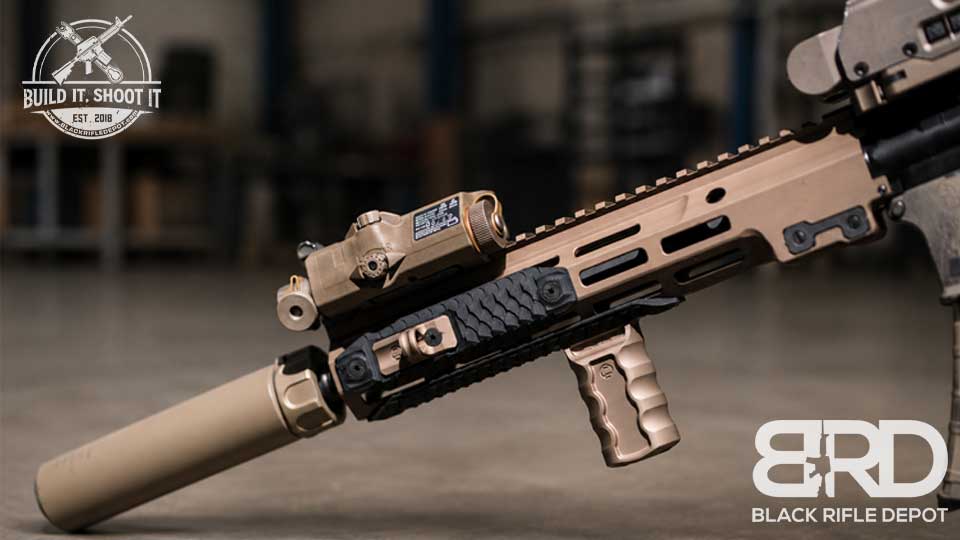
In 2026, the hand stop remains popular among shooters who prefer lightweight, streamlined rifles with minimal bulk. Meanwhile, the vertical grip remains a dependable choice for shooters seeking a larger grip surface, added leverage, and greater support during training, competition, or extended-range sessions.
Neither option automatically makes an AR-15 perform better. The right choice depends on your handguard length, shooting position, support-hand technique, rifle weight, and intended use. This guide compares the hand stop and vertical grip across the most important categories so you can choose the best AR-15 Foregrip for your setup.
What Is a Hand Stop?
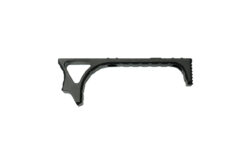
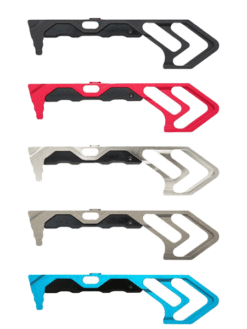
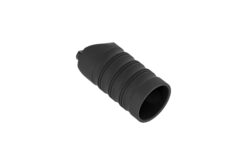
A hand stop is a compact accessory mounted beneath the handguard. Instead of wrapping the entire support hand around it, the shooter usually places one or more fingers against the stop. This creates a repeatable reference point and helps prevent the support hand from sliding too far forward.
Most designs have a short, low-profile shape. Some are little more than a raised index point, while others include a wider surface that supports several fingers. A hand stop may be installed near the front of the handguard, closer to the magazine well, or in another position that matches the shooter’s natural reach.
Manufacturers also offer models for M-LOK, KeyMod, and Picatinny mounting systems. For example, Magpul describes its M-LOK Index Stop as a compact reference point designed to improve support-hand positioning, comfort, and protection.
What Is a Vertical Grip?
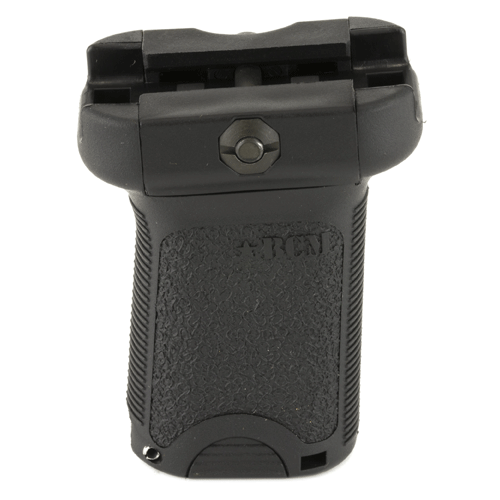
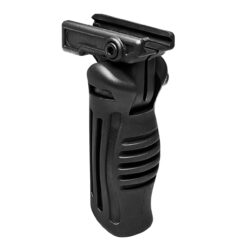
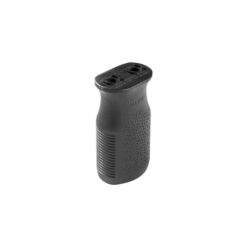
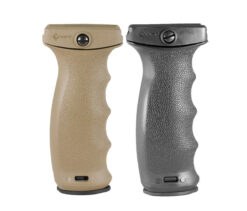
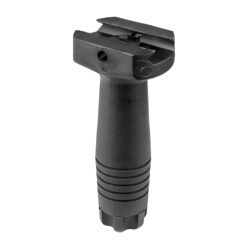
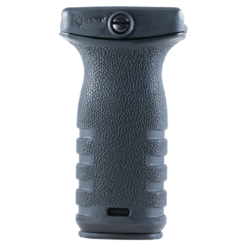
A vertical grip attaches beneath the handguard and extends downward, creating a larger surface for the support hand. Depending on the model and shooting technique, the shooter can wrap the entire hand around it or use it as a reference point while gripping the handguard.
A full-length vertical grip offers plenty of surface area, while compact versions provide similar control without extending as far below the rifle. Some shooters use a short vertical grip, almost like a larger hand stop, placing the index and middle fingers against it while keeping the thumb over the handguard.
A vertical grip can help a shooter pull the rifle firmly into the shoulder and maintain control during movement or rapid target transitions. Magpul’s M-LOK MVG, for example, is designed to place the support hand closer to the bore while supporting both a traditional hold and a thumb-forward gripping method.
Hand Stop vs Vertical Grip Comparison
| Category | Hand Stop | Vertical Grip |
|---|---|---|
| Size | Small and low profile | Larger and more noticeable |
| Weight | Usually very light | Generally heavier |
| Grip style | Fingers brace against it | Partial or complete hand wrap |
| Rail space | Uses minimal space | Requires more mounting space |
| Storage | Less likely to catch on gear | May snag inside tight cases |
| Short handguards | Excellent option | May feel crowded |
| Long-range sessions | Limited gripping surface | May reduce hand fatigue |
| Rifle control | Good indexing and leverage | Strong pulling and steering leverage |
| Best for | Lightweight, compact builds | Control-focused rifle builds |


Which Option Provides Better Rifle Control?
The vertical grip generally provides more surface area and leverage. Shooters can pull rearward against it, steer the muzzle during transitions, and maintain a strong grip when moving through unconventional positions.
However, more surface area does not always mean better control. Shooters who use a modern thumb-over-bore or C-clamp-style hold may find that a hand stop works better. It provides a solid point to pull against without forcing the hand into a fully vertical position.
The rifle’s weight also matters. A heavier rifle with a large optic, suppressor, bipod, or weapon light may benefit from the additional leverage offered by a vertical grip. A lightweight rifle may feel balanced and responsive with only a small hand stop.
For most shooters, control will depend more on proper placement and consistent technique than on the accessory’s size.
Which Is More Comfortable?
Comfort depends on wrist position, hand size, handguard shape, and shooting duration.
A hand stop allows the support hand to remain wrapped naturally around the handguard. Because the wrist does not need to turn as far, this setup may feel comfortable during active shooting and target transitions. It also allows the shooter to adjust the exact position of the hand without being locked into one grip.
A vertical grip may be more comfortable during long-range sessions because it gives the shooter another way to hold the rifle. Changing between a traditional hold, a partial grip, and a thumb-forward hold can reduce fatigue.
Shooters with wrist, elbow, or shoulder discomfort may prefer a vertical grip because it can support a more neutral wrist angle. Others may find the downward extension uncomfortable or unnecessary. Testing both positions before settling on permanent placement is usually the best approach.
Which Is Better for a Short Handguard?
A hand stop is often the better choice for a short handguard. Its compact footprint preserves mounting space for a weapon light, pressure switch, sling attachment, or other equipment.
The accessory also provides an important physical reference point near the front of the rail. On a compact setup, this can help the shooter maintain consistent support-hand placement without crowding the muzzle area.
A vertical grip can still work on a short handguard, but placement becomes more important. If installed too close to the magazine well, it may limit the shooter’s reach and reduce leverage. If mounted too far forward, it may interfere with lights or other accessories.
Compact vertical grip designs can reduce these problems, but a hand stop generally integrates more easily with limited rail space.

Which Is Better for a Full-Length Rifle?
A vertical grip can be useful on rifles with longer handguards because it provides the shooter with a clear, substantial gripping point. This may be helpful when the rifle carries additional front-end weight from a suppressor, laser, light, or heavy barrel.
The vertical grip can also make the rifle easier to manage while standing, kneeling, or shooting from a barricade. Some shooters use the accessory to pull the rifle into the shoulder, while others use it only as a positioning reference.
A hand stop still works well on a full-length rifle, particularly when keeping weight low is the main priority. It allows the shooter to extend the support arm farther along the rail without adding a large accessory underneath the handguard.
The best option depends on whether you prioritize maximum leverage or minimum weight.
Weight and Rifle Balance
One of the strongest arguments for a hand stop is its low weight. Many models add only a small amount of material to the handguard. This helps preserve the quick, responsive feel of a lightweight AR-15.
Although a vertical grip is not usually heavy, every component mounted toward the front of a rifle can affect balance. The difference becomes more noticeable when combined with a weapon light, suppressor, front sight, laser, or other rail-mounted equipment.
A lightweight vertical grip may create only a minor change in balance, but shooters building the lightest possible rifle often choose a hand stop. The smaller accessory provides indexing and control without adding unnecessary bulk.
Storage, Carrying, and Snagging
A low-profile hand stop is less likely to catch on clothing, range bags, vehicle racks, or other equipment. It also allows the rifle to fit more easily into narrow cases and storage compartments.
The downward profile of a vertical grip can make storage less convenient. Full-length models may require a deeper case, and they can catch on straps or gear during movement.
This does not mean a vertical grip is unsuitable for practical use. Compact models reduce snagging and take up less space. However, the hand stop has a clear advantage when the goal is to maintain a smooth and streamlined rifle profile.


M-LOK, KeyMod, or Picatinny Compatibility
Before buying either accessory, confirm the mounting system used by your handguard.
An M-LOK hand stop must attach directly to M-LOK slots or use a compatible rail adapter. The same rule applies to an M-LOK vertical grip. Picatinny models require a section of 1913 rail, while KeyMod accessories require compatible KeyMod slots.
Direct-mount accessories usually sit closer to the handguard, reducing unnecessary weight. A Picatinny version may offer greater flexibility because it can be moved between rifles that have compatible rail sections.
Do not assume that every hand stop or vertical grip will fit every handguard. Review the mounting standard, hardware requirements, available rail space, and manufacturer instructions before ordering.
What About AR Pistols?
The firearm’s legal configuration must be considered before installing a vertical grip. ATF guidance states that adding a vertical foregrip to a handgun can change its federal classification and may cause it to fall under the National Firearms Act as an “any other weapon.”
A hand stop is physically and functionally different from a traditional vertical foregrip, but owners should not rely on a product’s marketing name alone. The design, installation, firearm dimensions, and complete configuration may matter.
Federal, state, and local requirements can vary by jurisdiction. Review current laws and seek qualified legal guidance before installing a forward-mounted accessory on an AR pistol or other firearm with an uncertain classification.
Which One Is Better for Home Defense?
A hand stop is often a practical choice for a home-defense rifle because it keeps the rifle compact and provides a repeatable support-hand position. It may also help prevent the hand from moving too far forward during stressful or low-light handling.
The smaller profile leaves more room for a weapon light and pressure switch. It is also less likely to catch on clothing, furniture, or a sling.
A compact vertical grip can also work well, especially for shooters who want greater leverage and a clearly defined grip position. The added surface can make the rifle easier to control with wet, gloved, or unsteady hands.
The best home-defense option is the one the shooter can operate consistently after practicing with the rifle and its accessories.


Which One Is Better for Competition?
Competition shooters may benefit from either design depending on the event and shooting style.
A hand stop supports fast transitions and aggressive support-hand placement without adding much weight. It is especially useful for shooters who extend the support arm and pull rearward against the stop.
A vertical grip may provide better leverage when moving between shooting positions or controlling a heavier competition rifle. It can also serve as a reference point when quickly mounting the rifle after movement.
Some competitions may restrict specific accessories or firearm configurations. Shooters should review the current rules for their division before selecting equipment.
Is a Hand Stop Winning in 2026?
For lightweight and general-purpose builds, the hand stop has a slight advantage in 2026. Modern handguards are slimmer, accessories are increasingly direct-mounted, and many shooters prefer a support-hand position that wraps around the rail.
The hand stop complements this style by providing an index point without adding much size or weight. It works particularly well on compact rifles, short handguards, and setups already carrying lights or other forward-mounted equipment.
However, the vertical grip is far from obsolete. It remains an excellent choice for shooters who value a larger gripping surface, stronger leverage, and multiple hand positions. Compact vertical grip designs also bridge the gap between the two categories.
The handstop may be winning in overall popularity, but the vertical grip still wins out for certain rifle setups and shooting techniques.
Hand Stop or Vertical Grip: The Final Decision
The hand stop is the stronger choice for shooters who want a lightweight, streamlined accessory that supports modern support-hand techniques. It takes up little rail space, reduces snagging, and works particularly well on compact rifles and short handguards.
The vertical grip remains the better choice for shooters who want a larger gripping surface, added leverage, and more hand-position options. It can also improve comfort on heavier rifles or during extended shooting sessions.
There is no universal winner for every AR-15. Consider your rifle’s length, weight, mounting system, accessories, and intended use. Place the accessory where your support hand falls naturally, test it during live-fire practice, and adjust the position until it supports consistent control.
Shop AR-15 Foregrips at Black Rifle Depot. Compare quality options for M-LOK, KeyMod, and Picatinny handguards and find the right equipment for your rifle today.
Frequently Asked Questions
Choosing between these accessories often comes down to small differences in fit, placement, and shooting style. The following FAQs answer additional questions about selecting and installing a hand stop or vertical grip.
Can a hand stop improve accuracy?
A hand stop does not mechanically improve barrel or ammunition accuracy. However, it can help the shooter maintain the same position for the support hand every time. More consistent positioning may improve stability, recoil management, and practical shooting performance.
Where should I position a hand stop?
Position the hand stop where your support hand naturally reaches without locking the elbow or straining the shoulder. Many shooters place it near the front of the handguard, but the ideal location depends on arm length, rail length, and shooting technique.
Start with a temporary position, shoulder the rifle several times, and adjust the accessory before applying final torque.
Should I wrap my entire hand around a vertical grip?
You can, but it is not required. Many shooters place only two or three fingers around the vertical grip while keeping the thumb and remaining fingers on the handguard. This technique combines the leverage of the grip with the control of a rail-based hold.
Can I use a vertical grip as a hand stop?
A short vertical grip can be used as a larger indexing point. The shooter can pull against the front or rear surface instead of wrapping the entire hand around it. However, firearm classification considerations still apply based on the accessory and firearm configuration.
Do I need thread-locking compound during installation?
Follow the accessory manufacturer’s instructions. Some mounting hardware may require a small amount of removable thread-locking compound, while other hardware arrives pretreated. Do not use permanent compound unless specifically directed.
How tight should the mounting screws be?
Use the torque specification provided by the accessory or handguard manufacturer. Excessive torque can damage polymer components, mounting nuts, or handguard slots. Insufficient torque may allow the accessory to loosen during use.
Is aluminum better than polymer?
Aluminum offers strength and heat resistance, while polymer keeps the weight and cost low. A quality polymer hand stop or vertical grip is suitable for many general-purpose rifles. Aluminum may be preferred for hard-use setups or when the accessory may contact barricades and other surfaces.
For additional resources, check out our X Page.
