
AR-15 Parts, AR-15 accessories
Best AR-15 Vertical Foregrips for Sale: Top Brands Compared
Aug
Table of Contents
A quality vertical foregrip can improve control, support consistent hand placement, and make an AR-15 easier to manage during movement or rapid follow-up shots. While the basic purpose is simple, foregrips vary widely in length, mounting system, material, texture, angle, and overall design.
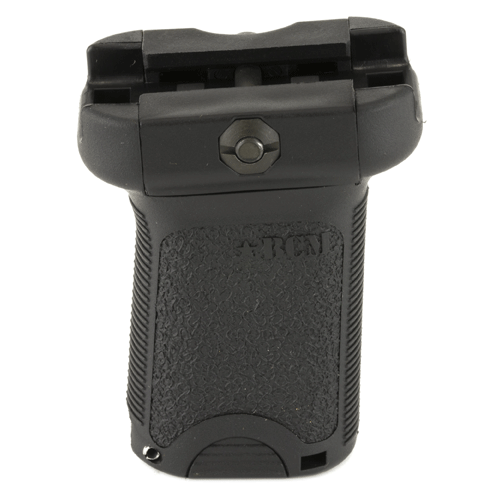
Choosing the best option depends on how the rifle is configured and how the shooter prefers to support the front of the firearm. Some users want a full-length grip for a traditional hold, while others prefer a short foregrip that works more like a hand stop. Brands such as Magpul, BCM, Fortis, TangoDown, and Strike Industries offer several proven designs for different rail systems and shooting styles.
This guide compares popular options and explains what to consider before buying an AR-15 vertical foregrip.
What Does a Vertical Foregrip Do?
A vertical foregrip attaches beneath the handguard and gives the support hand a consistent contact point. Depending on its size and shape, it may be used with a full grip, a thumb-forward hold, or as a reference point for pulling the rifle into the shoulder.
Potential benefits include:
- More consistent support-hand placement
- Improved leverage during transitions
- Better control during rapid fire
- Reduced contact with a hot handguard
- Additional stability when shooting from unconventional positions
The best grip is not necessarily the longest or most aggressive model. A compact grip often provides enough leverage without adding unnecessary weight or taking up excessive rail space.
Vertical Foregrip Comparison Chart
| Brand or style | Common mounting system | Material | Best suited for |
|---|---|---|---|
| Magpul MVG | M-LOK | Reinforced polymer | Lightweight general-purpose builds |
| BCM Gunfighter Grip | M-LOK or Picatinny | Reinforced polymer | Thumb-forward and modern support-hand positions |
| Fortis Shift | M-LOK or KeyMod, depending on model | Aluminum | Lightweight premium builds |
| TangoDown Stubby | Picatinny | Reinforced polymer | Duty-style rifles and short grip users |
| Strike Industries Grip | M-LOK or Picatinny | Polymer or aluminum, depending on model | Modern lightweight builds |
| Full-length grip | Picatinny or M-LOK | Polymer or metal | Traditional vertical gripping |
| Angled grip | M-LOK or Picatinny | Polymer or aluminum | Low-profile hand positioning |
Magpul
Magpul is one of the most recognized names in AR-15 furniture and accessories. The compact Magpul MVG mounts directly to compatible M-LOK handguards, eliminating the need for an added rail section.
Its reinforced polymer construction keeps weight to a minimum, while the textured surface provides a secure and comfortable contact point. The short profile also works well for shooters who use it as a hand stop or indexing point instead of wrapping the entire hand around it.
Magpul also offers Picatinny-mounted options for quad rails and handguards equipped with rail sections. For a simple, durable, and affordable upgrade, Magpul remains a popular choice.
BCM
The BCM grip is known for its compact profile and slight forward angle, which helps support a more natural wrist position. Its shape works especially well with modern thumb-over-bore and thumb-forward shooting techniques.
Some shooters mount it with the angle facing forward, while others reverse it to better match their reach and preferred hand placement. This flexibility provides a useful indexing point without the bulk of a traditional full-length design.
BCM offers both M-LOK and Picatinny versions, making it easy to pair with a wide range of handguards. For shooters who value control, comfort, and a compact setup, BCM remains one of the strongest options available.
Fortis
Fortis Manufacturing is known for lightweight, machined accessories with distinctive styling. Many of its grips are made from aluminum, giving them a rigid feel and a clean, streamlined appearance compared with polymer options.
Their compact design works well on lightweight or premium builds, providing a secure contact point without adding unnecessary length or bulk. The machined surface also offers solid traction for consistent hand placement.
Because aluminum transfers heat more quickly than polymer, the grip may become warm during extended firing. Shooters should consider handguard temperature, firing volume, and whether gloves will be used when choosing a metal option.
TangoDown
TangoDown has built a strong reputation for rugged accessories designed for duty-style and military-inspired rifles. Full-size models provide plenty of gripping area, while the Stubby versions deliver similar durability in a more compact design.
The TangoDown Stubby is a solid choice for Picatinny-equipped handguards, especially when space is limited. Its shorter profile is less likely to snag on barricades, bags, or storage compartments while still giving the support hand a consistent indexing point.
Some models also include internal storage for small items, although features vary by version.




M-LOK or Picatinny?
The mounting system is one of the first details to check before purchasing a vertical foregrip.
An M-LOK vertical foregrip attaches directly to the slots on an M-LOK handguard. This creates a clean installation with fewer parts and less bulk. Search terms such as vertical foregrip MLOK and M LOK vertical foregrip generally refer to this direct-mount style.
A vertical foregrip Picatinny model clamps to a 1913 rail. This is the correct choice for traditional quad rails or handguards fitted with an M-LOK-to-Picatinny rail section.
Direct mounting is usually lighter, but Picatinny models are easier to move between rifles that already have compatible rail space.
Vertical, Short, or Angled Grip?
A traditional vertical foregrip allows the hand to wrap around the grip. This can provide strong leverage, but a full grip may feel bulky on a compact rifle.
A short model offers a smaller indexing point and works well with a partial grip. This is often preferred on modern handguards where the shooter keeps most of the support hand around the rail.
An angled vertical foregrip places the wrist in a more relaxed position and can bridge the gap between a hand stop and a full vertical design. The right choice depends on arm length, handguard length, shooting position, and personal preference.
What About a Vertical Foregrip With a Light?
Some shooters search for a vertical foregrip with a light, but integrated light-and-grip combinations are less common on modern builds. Separate components usually provide more flexibility because the light can be positioned for easier switch access while the grip remains in the ideal hand position.
A separate weapon light also makes future upgrades and repairs easier. When mounting both accessories, confirm that the grip does not interfere with the light body, pressure switch, cable routing, or support-hand placement.
Choosing the Best Vertical Foregrip
Before purchasing, consider:
- Handguard mounting system
- Available rail space
- Preferred support-hand position
- Grip length
- Polymer or aluminum construction
- Overall rifle weight
- Weapon-light placement
- Intended shooting style
The best vertical foregrip is the one that improves control without forcing the wrist into an uncomfortable position. Compact polymer grips from Magpul and BCM work well for lightweight rifles, while Fortis offers premium aluminum options. TangoDown remains a strong choice for shooters who prefer a durable Picatinny-mounted design.
Shop AR-15 Foregrips at Black Rifle Depot
Black Rifle Depot carries vertical and angled foregrips for a wide range of AR-15 handguards, build styles, and shooting preferences. Whether you need a compact BCM design, a lightweight Magpul grip, a machined Fortis option, or a rugged TangoDown model, choosing the correct mounting system, material, and profile is the first step toward finding the right fit.
Shop AR-15 foregrips at Black Rifle Depot to compare M-LOK and Picatinny options in polymer, aluminum, vertical, angled, and short-profile designs. With choices for lightweight builds, duty-style rifles, and general-purpose setups, it is easy to find a grip that improves comfort, control, and support-hand placement.
Frequently Asked Questions About Vertical Foregrips
What is the best vertical foregrip for an AR-15?
The best option depends on the handguard and preferred grip style. Magpul and BCM are excellent lightweight choices, Fortis offers premium aluminum designs, and TangoDown is popular for rugged Picatinny-mounted setups.
Is an M-LOK vertical foregrip better than Picatinny?
M-LOK models attach directly to compatible handguards and generally weigh less. Picatinny grips are ideal for quad rails and can be moved easily between rifles with 1913 rail sections.
Is a short vertical foregrip easier to use?
A short grip provides a useful indexing point without adding excessive bulk. It works especially well for shooters who use a thumb-forward or partial-grip technique.
Are aluminum vertical foregrips better than polymer grips?
Aluminum grips are rigid and durable, while polymer grips are lighter and transfer less heat. Neither material is automatically better for every rifle.
What is the difference between an angled grip and a vertical foregrip?
A vertical grip extends downward from the handguard, while an angled grip supports the hand at a shallower angle. The most comfortable option depends on wrist position and shooting technique.
Will a Picatinny foregrip fit an M-LOK handguard?
It will fit only if a compatible Picatinny rail section is installed on the M-LOK handguard. A direct-mount M-LOK model eliminates the need for an adapter.
Where should a vertical foregrip be mounted?
It should be positioned where the support arm remains comfortable and slightly bent. Mounting it too far forward can cause fatigue, while placing it too close may reduce control.
Can I install a vertical foregrip next to a weapon light?
Yes, provided there is enough rail space and the grip does not block the light, switch, or cable. Test the final position to ensure both accessories can be operated comfortably.
For additional support and online deals, check out our X Page.
