
AR-15 Optics, AR-15 Scopes
AR-15 Scope Checklist: Magnification, Reticle, Eye Relief, and Mounts
Aug
Table of Contents
Choosing an AR-15 scope involves more than selecting the highest magnification or the largest objective lens available. The optic must match the rifle’s intended use, barrel length, typical shooting distance, ammunition, stock position, and mounting system. A scope that works well on a precision-oriented rifle may feel slow and cumbersome on a lightweight general-purpose build.
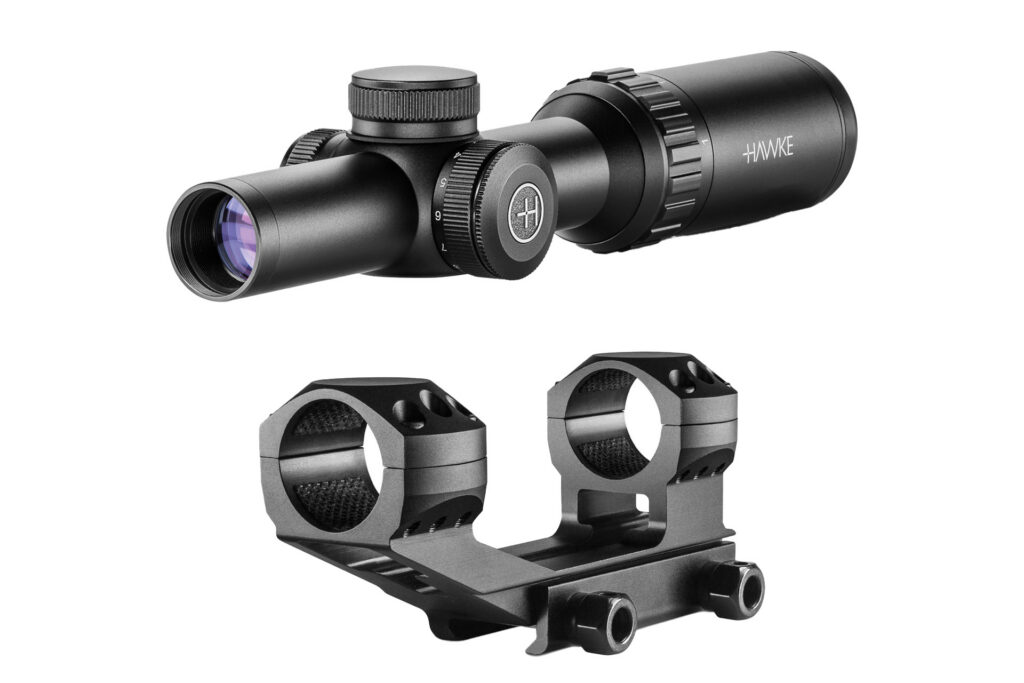
The best approach is to evaluate the complete setup rather than treating the optic as a separate component. Magnification affects field of view, the reticle influences aiming speed, eye relief determines mounting position, and the mount controls whether the optic can be installed correctly.
This checklist explains the most important factors to consider when comparing the best AR15 optics for your rifle.
Start With the Rifle’s Intended Purpose
Before comparing specifications, decide how the rifle will normally be used. This helps narrow the available options and prevents you from buying more magnification, size, or weight than necessary.
A defensive or close-range rifle may benefit from a red dot, prism sight, or low-power variable optic. A general-purpose setup may work well with a 1-6x or 1-8x AR-15 scope, while a rifle intended for targets at greater distances may require additional magnification.
Consider the following questions:
- What distances will you shoot most often?
- Will the rifle be fired from standing, supported, or prone positions?
- Is fast target acquisition more important than identifying small targets?
- Will the optic remain on one rifle or move between several rifles?
- How much additional weight can the build support?
- Do you need illumination, holdover marks, or range-estimation features?
The best scope for AR-15 use is not necessarily the most expensive or powerful option. It is the model that supports the rifle’s actual role without introducing unnecessary complexity.
Choose a Practical Magnification Range
Magnification affects how large a target appears through the optic, but more power is not always better. Increased magnification generally reduces field of view, makes targets appear more pronounced, and can make it harder to locate them quickly.
For close-range and general-purpose shooting, an AR-15 scope with a true or near-true 1x low setting can provide fast target acquisition. Common low-power variable optic ranges include:
- 1-4x
- 1-6x
- 1-8x
- 1-10x
A 1-6x model is often sufficient for shooters who want a balance between close-range speed and moderate-distance precision. A 1-8x or 1-10x option provides more target detail but may have a tighter eye box, greater weight, or reduced image quality at the upper end, depending on its design.
For rifles used primarily at medium or extended distances, an AR-15 scope in the 2-10x, 3-12x, or 4-16x range may be more appropriate. These optics usually sacrifice close-range speed in exchange for greater target identification and more precise aiming.
Match Magnification to Realistic Distances
Avoid choosing magnification based only on the farthest distance you might shoot once or twice. Select an optic that works well across the distances you encounter regularly.
A 16-inch general-purpose rifle does not automatically need high magnification. The best optic for an AR-15 with a 16-inch barrel may be a red dot, prism optic, low-power variable scope, or medium-power scope, depending on the rifle’s purpose.
A versatile AR-15 scope should provide enough magnification to identify and aim at the target without making the rifle unnecessarily heavy or difficult to use at closer distances.
Understand Field of View
Field of view describes how much of the area around the target is visible through the optic at a specified distance. Lower magnification generally provides a wider field of view, while higher magnification narrows the visible area.
A wide field of view helps the shooter:
- Locate targets more quickly
- Track moving targets
- Maintain awareness of nearby objects
- Transition between multiple targets
- Reacquire the target after recoil
When comparing two scopes with the same magnification range, check their published field-of-view specifications. One AR-15 scope may provide a noticeably wider view than another, even when both are set to the same magnification.
Field of view is especially important when the rifle may be used at close or intermediate distances. A narrow view can make a high-magnification optic feel slow, even when its image is clear.
Select the Right Reticle
The reticle determines how aiming information is presented to the shooter. Some designs use a simple center dot or crosshair, while others include holdover marks, wind references, ranging features, or illuminated circles.
A basic reticle may be ideal for short distances and uncomplicated shooting. More detailed reticles can help with elevation and wind corrections but may appear cluttered when used quickly.
When evaluating an AR-15 scope, consider whether the reticle matches the intended shooting style and ammunition.
Simple Reticles
A duplex-style reticle uses thicker outer lines that narrow near the center. This design is easy to see and keeps attention focused on the aiming point. It is commonly found in hunting and general-purpose scopes.
Simple reticles are easy to understand but may provide limited assistance for holding over at different distances.
Bullet-Drop Reticles
A bullet-drop compensating reticle includes aiming references below the primary zero. These markings are intended to approximate the trajectory of a particular cartridge, velocity, and zero distance.
Because actual trajectories vary, the marks should be confirmed through live fire. Barrel length, ammunition, altitude, temperature, optic height, and muzzle velocity can all change where the rounds strike.
An AR-15 scope with a bullet-drop reticle can be useful, but the markings should be treated as references rather than guaranteed impact points.
MIL and MOA Reticles
MIL- and MOA-based reticles allow measured corrections for elevation and wind. They are most useful when the turret adjustments use the same measurement system as the reticle.
A MIL reticle paired with MIL turrets or an MOA reticle paired with MOA turrets makes corrections easier to calculate. Mixing systems can work, but it adds unnecessary conversion steps.
Reticle Thickness and Visibility
Reticle thickness affects how easily the aiming point can be seen. A thick reticle is often faster to locate at low magnification, but it may cover too much of a small target at longer distances.
A thin reticle supports precise aiming but may become difficult to find against dark backgrounds, shadows, or cluttered environments. Illumination can help, although brightness quality varies between models.
The most useful AR-15 scope reticle remains visible across the complete magnification range without covering excessive portions of the target.
First Focal Plane vs. Second Focal Plane
A first focal plane reticle changes apparent size as magnification changes. Its measurement markings remain valid throughout the magnification range.
A second focal plane reticle appears to remain the same size as magnification changes. Its holdover and ranging marks are generally calibrated for one specific setting, often the highest magnification.
First focal plane designs are useful when measured reticle references must work at multiple magnification levels. However, the reticle may appear very small at the lowest setting.
Second focal plane reticles can remain bold and easy to see at low power. They may be a practical choice when the shooter normally uses holdover marks only at maximum magnification.
Neither system automatically makes an AR-15 scope better. The decision depends on how the reticle will be used.
Evaluate Eye Relief and Eye Box
Eye relief is the distance between the rear lens and the shooter’s eye at which the full image is visible. Adequate eye relief helps provide a comfortable shooting position and reduces the risk of the optic contacting the shooter during recoil.
Eye box describes the three-dimensional area in which the eye can move while maintaining a usable sight picture. A forgiving eye box allows small changes in head position without causing the image to darken or disappear.
A scope can have adequate stated eye relief while still having a restrictive eye box. This is why, when possible, looking through an optic can reveal more than specifications alone.
The ideal AR-15 scope should provide a complete image from the shooter’s normal cheek position without requiring the head to stretch forward, pull backward, or tilt unnaturally.
Eye Relief Through the Magnification Range
Some scopes maintain relatively consistent eye relief as magnification changes. Others require the shooter to adjust head position slightly at higher settings.
The usable eye box may also become tighter as magnification increases. This is common in high-ratio variable optics, particularly at maximum power.
When mounting an AR-15 scope, set the eye relief at the highest magnification because that is often where head position is least forgiving. The shooter should be able to shoulder the rifle naturally and obtain a full sight picture without moving the head forward.
Account for the Adjustable Stock
An adjustable stock changes the shooter’s distance from the optic. Moving the stock outward increases the length of pull, while collapsing it brings the shooter closer to the receiver.
Before securing the mount, set the stock in the position used most often. Establish a natural cheek weld and move the optic until the full image appears without the shooter shifting position.
Different users may require different stock settings. A properly installed AR-15 scope should support the primary shooter while leaving enough adjustment for alternate positions, clothing, or shooting postures.
The optic should not be mounted too far rearward simply because the stock is fully extended during installation. Confirm eye relief from standing, kneeling, prone, and supported positions when possible.
Confirm Scope Tube Diameter
Scope mounts are designed for specific tube diameters. Common sizes include:
- 1 inch
- 30 mm
- 34 mm
- 35 mm
A mount designed for one diameter cannot securely hold a different tube size without an approved insert or adapter. Before purchasing AR-15 scope mounts, confirm the optic’s main tube diameter rather than relying on the objective lens measurement.
Larger tubes do not automatically collect more light or produce a brighter image. Tube diameter primarily affects internal adjustment range, mechanical design, weight, and mount compatibility.
Select the Correct Mount Height
Mount height determines the relationship between the optic, rifle, and shooter’s head position. A mount that is too low may force the shooter to press the face downward. A mount that is too high may weaken the cheek weld and make alignment less consistent.
Many traditional AR-style scope mounts position the optic centerline approximately 1.4 to 1.5 inches above the rail. Taller mounts have become common for shooters who prefer a more upright head position or need clearance for equipment.
The right height for an AR-15 scope depends on:
- Stock design
- Shooter anatomy
- Objective lens diameter
- Intended head position
- Backup sight clearance
- Night-vision or accessory compatibility
- Charging-handle access
An optic riser for AR15 setups may raise an existing mount, but stacking multiple mounting components can add weight and additional fasteners. A purpose-built mount at the required height is generally a cleaner solution.
Does Objective Lens Size Control Mount Height?
Objective lens size can influence the minimum mount height, but it does not determine the complete setup by itself. The scope body, rail, handguard, lens caps, and mount design all affect clearance.
A large objective lens may require taller rings or a cantilever mount to prevent contact with the rail. However, an excessively high mount should not be selected solely to create additional clearance.
An AR-15 scope with a 24 mm objective is usually easy to mount at a standard height. Models with 40 mm, 44 mm, 50 mm, or larger objectives require more careful measurement.
Leave enough clearance for lens covers and normal movement, but avoid raising the optic higher than necessary.
Use a Cantilever Mount When Needed
The continuous top rail on an AR-style upper receiver provides a solid mounting surface, but many scopes must be positioned farther forward than standard rings allow.
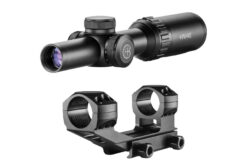
A cantilever mount extends the scope forward while keeping the mounting base attached to the upper receiver. This helps establish proper eye relief without placing the mount on the handguard.
The amount of offset required depends on the optic’s tube length, turret location, eye relief, stock position, and shooter anatomy.
A typical AR-15 scope mount may provide approximately two inches of forward offset, although extended models offer more. The correct amount is whatever allows the optic to sit entirely on the upper receiver while providing a natural sight picture.
Avoid bridging the mount between the receiver and handguard. Even a free-float rail can shift slightly under pressure, which may affect zero consistency.
Check Mount Compatibility Before Buying
Before reusing an existing mount with a new AR-15 scope, verify:
- Tube diameter
- Available ring spacing
- Forward offset
- Mount height
- Objective-lens clearance
- Turret and adjustment-ring clearance
- Manufacturer torque specifications
- Rail compatibility
A mount may have the correct tube diameter but place the rings where they interfere with the scope’s turret housing or magnification ring.
Also inspect the mount for damaged fasteners, distorted rings, or worn clamping surfaces. A reliable optic cannot perform consistently when held by an unsuitable or damaged mount.
Consider Alternative AR-15 Optics
A traditional variable scope is not the only option available. The best AR15 optics include several sighting systems, each with distinct advantages.
Red Dot Sights
Red dots provide fast target acquisition, unlimited or highly forgiving eye relief, and simple aiming. They work well at close distances but offer no magnification unless paired with a magnifier.
An AR-15 scope red dot combo may place a miniature red dot beside or above a magnified scope. This adds an alternate close-range aiming system but also increases weight and mounting complexity.
Prism Optics
A prism optic for AR15 use provides a fixed magnification level and an etched reticle. Because the reticle is physically etched into the optical system, it remains visible without battery power.
Prism sights are generally more compact than variable scopes but have more limited eye relief than red dots.
Carry-Handle Optics
An AR15 carry handle optic requires a mount designed for the carry-handle channel. This creates a higher sight line than a receiver-mounted optic and may require an altered cheek position.
Confirm the attachment method, height, and ability to maintain zero before installing one.
Thermal Optics
A thermal optic for AR15 use detects heat signatures rather than relying on visible light. Thermal devices are specialized, heavier, and considerably more expensive than standard scopes.
Their value depends on lawful hunting, observation, or professional applications. Buyers should confirm local regulations before use.
Brand-Specific Options
A Leupold AR-15 scope may appeal to shooters looking for a lightweight hunting, defensive, or precision optic. A Holosun AR15 optic may include a red dot, enclosed emitter, prism sight, or thermal product depending on the model.
Brand matters, but the optic’s specifications and intended role should remain the primary selection factors.
Avoid Building Around Appearance Alone
An AR-15 rifle with silencer and scope may look balanced in a product image, but the completed rifle can become significantly front-heavy. The barrel, muzzle device, suppressor, rail, optic, and mount all contribute to total weight.
Select an AR-15 scope based on function, not appearance. A large objective lens and high magnification may look impressive while making the rifle slower and less comfortable to carry.
The most practical setup often uses the smallest and lightest optic that still meets the shooter’s performance requirements.
AR-15 Scope Buying Checklist
Before purchasing, confirm each of the following:
- The magnification range matches typical shooting distances.
- The field of view supports the rifle’s intended use.
- The reticle remains visible at useful magnification settings.
- The reticle and turret measurements match.
- Eye relief works with the normal stock position.
- The eye box is forgiving enough for positional shooting.
- The tube diameter matches the mount.
- The mount provides sufficient forward offset.
- The objective lens clears the rail and handguard.
- The complete optic and mount do not add excessive weight.
- Controls remain accessible after installation.
- The mount stays entirely on the upper receiver.
Completing this checklist before ordering an AR-15 scope can prevent fitment issues and reduce the likelihood of purchasing an optic that does not match the rifle’s purpose.
Find the Right AR-15 Scope at Black Rifle Depot
The right AR-15 scope should make the rifle easier to use, not add unnecessary weight, complexity, or mounting problems. Start with realistic shooting distances, then compare magnification, field of view, reticle design, eye relief, eye box, tube diameter, and mount requirements.
Black Rifle Depot carries AR-15 scopes, sights, mounts, risers, and other optic solutions for close-range, general-purpose, hunting, and precision builds. Shop AR-15 scopes at Black Rifle Depot to find an optic and mounting setup that matches your rifle, shooting style, and performance goals.
Frequently Asked Questions About AR-15 Scopes
Magnification numbers and mount dimensions do not always explain how an optic will feel once installed. These answers address common questions about field of view, reticles, eye relief, stock adjustment, and mount compatibility.
How does scope magnification affect field of view on an AR-15?
Increasing magnification generally narrows the field of view. This makes the target appear larger but reduces the amount of surrounding area visible through the AR-15 scope. Lower magnification is usually faster for finding targets and maintaining awareness.
Is a wider magnification range always better for an AR-15 scope?
No. A wider range may provide greater versatility, but it can also increase cost, weight, optical compromises, and eye-box sensitivity. Select a range that supports realistic shooting distances rather than choosing the largest ratio available.
What reticle features make an AR-15 scope easier to use with both eyes open?
A bold illuminated center point, horseshoe, circle, or prominent outer references can help the eye locate the aiming point at low magnification. The reticle should remain visible without covering too much of the target.
How does reticle thickness affect visibility at different magnification levels?
A thick reticle is easier to locate quickly but may cover small targets at higher magnification. A thin reticle supports precise aiming but may disappear against dark or cluttered backgrounds. The best design balances speed and precision.
Does eye relief change as magnification increases on an AR-15 scope?
It can. Some scopes maintain consistent eye relief, while others require small changes in head position as magnification increases. The eye box also commonly becomes tighter near maximum power.
What is the difference between eye relief and eye box on an AR-15 scope?
Eye relief is the distance between the eye and the rear lens where a full image is visible. Eye box is the larger three-dimensional area in which the eye can move while maintaining a usable sight picture.
How does an adjustable stock affect scope eye relief on an AR-15?
Changing stock length moves the shooter closer to or farther from the optic. Set the stock in the normal shooting position before adjusting the AR-15 scope mount. Confirm the sight picture from multiple shooting positions before tightening the hardware.
Does objective lens size determine the mount height needed on an AR-15?
It influences minimum clearance but is not the only factor. Tube diameter, rail height, lens caps, handguard dimensions, and the shooter’s preferred head position also affect mount height.
How much cantilever offset should an AR-15 scope mount provide?
The mount should provide enough offset to establish proper eye relief while remaining completely attached to the upper receiver. Approximately two inches is common, but some scopes and shooters require more or less.
Can I reuse my existing AR-15 scope mount with a different scope?
Yes, provided the tube diameter, ring spacing, height, offset, objective clearance, and rail interface are compatible. Inspect the mount and hardware before reuse, and follow the correct torque specifications.
For additional resources and online deals, check out our X Page.
