
Forced Reset Triggers
Forced Reset Triggers Explained: FRT vs Binary vs “Super Safety”
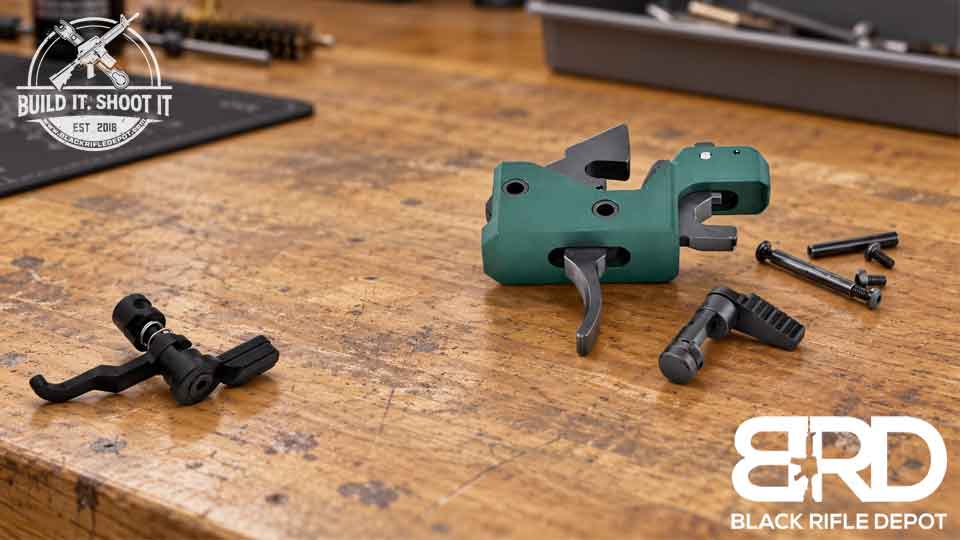
Oct
Table of Contents
Few AR-15 upgrades generate as much curiosity—or as much confusion—as forced reset triggers, binary triggers, and the device commonly known as the”Super Safety.” All three are associated with faster firing speeds than a traditional semiautomatic trigger. Still, they achieve that result in very different ways.
That distinction matters. An FRT is not simply another name for a binary trigger, and a Super Safety is not technically the same mechanism as either one. They differ in how the trigger resets, what the shooter does between shots, how the selector functions, what components are involved, and potentially how state or local laws treat them.
Federal treatment of forced reset triggers has also changed substantially in recent years. Because firearm laws and interpretations can change, shooters should always verify current federal, state, and local requirements before purchasing, possessing, installing, or using any rapid-reset or alternative fire-control device.
Here is a closer look at FRT vs. binary vs. Super Safety systems and what separates the three.
What Is a Forced Reset Trigger?
A Forced Reset Trigger, commonly shortened to FRT, is a fire-control system designed to reset the trigger after each shot actively.
With a traditional semiautomatic AR-15 trigger, the shooter pulls the trigger, the firearm cycles, and the trigger must reset before another shot can be fired. The shooter generally lets the trigger move forward to the reset point, then presses it again.
An FRT changes that relationship by using the firearm’s cycling action to move actively, or “force,” the trigger forward into the reset position.
The important point is that the trigger still resets between individual shots. The shooter must then apply rearward pressure again for the next shot.
This active-reset action can make follow-up shots significantly faster in the hands of an experienced shooter because the trigger is mechanically driven back toward its reset point instead of relying entirely on the shooter’s finger movement.
FRTs became the subject of years of federal litigation over whether they met the statutory definition of a machine gun. In July 2024, a federal district court held that the Rare Breed FRT-15 and Wide Open Trigger were not machine guns under federal law. In 2025, the federal government and Rare Breed reached a settlement under which the government agreed not to enforce federal machine-gun restrictions against possession or transfer of eligible FRTs covered by that agreement. ATF has since acknowledged that decision and settlement in its published guidance.
That does not mean every trigger-like device or conversion component automatically receives the same treatment, and state restrictions remain an important consideration.
What Is a Binary Trigger?
A binary trigger works differently.
Rather than actively forcing the trigger to reset, a binary system can fire once when the trigger is pressed and once when the trigger is released.
FranklinArmory’ss BFSIII system is one of the best-known examples. Its selector offers traditional safe and semiautomatic positions, plus a binary position. In binary mode, one shot occurs on the trigger pull, and another occurs on the trigger release. Franklin’ss system also lets the shooter cancel the release shot by moving the selector out of binary mode before releasing the trigger.
That makes the firing sequence fundamentally different from an FRT.
With an FRT:
Pull → Fire → Trigger is mechanically reset → Pull again
With a binary trigger:
Pull → Fire → Release → Fire
The second shot therefore comes from releasing the trigger rather than pulling it back again.
For shooters accustomed to conventional semiautomatic triggers, this requires a different manual of arms. Understanding exactly what happens when the trigger is released is especially important before using a binary-equipped firearm.
What Is a”Super Safety”?
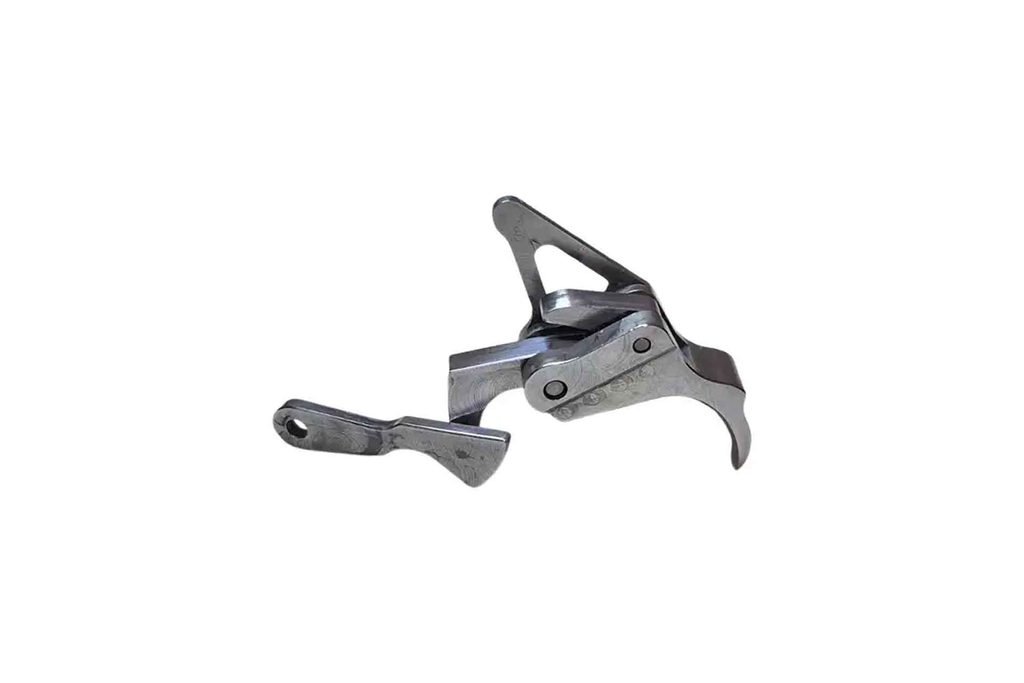
The Super Safety is another active-reset concept developed by Hoffman Tactical.
Although it is frequently discussed alongside FRTs, the design approaches the fire-control system differently. Hoffman Tactical describes the Super Safety as an active reset trigger mechanism that replaces the standard safety selector on AR-pattern firearms.
That selector-based design is one of the biggest visual and mechanical differences between a Super Safety and a conventional drop-in or cassette-style trigger upgrade.
The system interacts with the AR’s fire-control components to help reset the trigger as the action cycles. Like an FRT, the underlying concept involves resetting the trigger between shots rather than using the pull-and-release firing sequence associated with a binary trigger.
The Super Safety also differs commercially from many traditional trigger products. Hoffman Tactical released the design as an open project and states that it does not sell completed Super Safeties itself.
Because various manufacturers and third parties may produce components based on or related to open-source designs, quality, dimensions, materials, and compatibility can vary considerably.
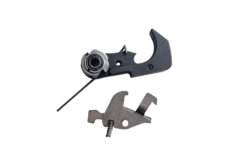
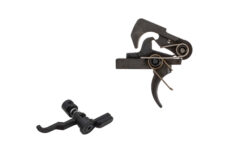
FRT vs Binary vs Super Safety: What’s the Difference?
The easiest way to understand these systems is to compare the basic operating concepts.
| Feature | Forced Reset Trigger | Binary Trigger | Super Safety |
|---|---|---|---|
| Basic concept | Active trigger reset | Fires on pull and release | Selector-based active reset |
| Fires when trigger is pulled | Yes | Yes | Yes |
| Can fire during trigger release | No, not as its operating principle | Yes, in binary mode | No, not as its operating principle |
| Trigger actively reset by firearm cycling | Yes | No | Yes |
| Conventional semi mode | Depends on design | Commonly yes | Depends on configuration |
| Main difference | Trigger is driven forward after each cycle | Second firing event occurs on release | Active reset incorporated around selector/fire-control interaction |
The biggest dividing line is therefore between active reset systems and binary operation.
Both an FRT and Super Safety use mechanical interaction with the cycling firearm to help reset the trigger. A binary trigger instead changes when firing events occur by allowing one shot on pull and another on release.
Is an FRT Basically Full Auto?
No. Mechanically and legally, that distinction has been the central issue surrounding forced reset triggers.
A conventional automatic firearm can continue firing multiple rounds from a single trigger function while ammunition remains available and the trigger remains actuated.
An FRT operates differently because the trigger physically moves and resets during the firing sequence. The Northern District of Texas relied heavily on that trigger movement when determining that the FRT-15 and WOT at issue did not meet the federal statutory machine-gun definition. ATF’s current public guidance acknowledges that court decision and the subsequent settlement concerning eligible FRTs.
From the shooter’s perspective, an FRT may allow an extremely fast firing cadence, which is why people frequently compare the experience with automatic fire. But similar firing speed does not mean the internal mechanisms are identical.
FRT vs Binary Trigger: Which Feels Different?
The largest practical difference comes from trigger movement.
A binary trigger intentionally adds an extra function to the trigger release. Shooters need to remember that releasing the trigger while in binary mode can result in another shot.
With an FRT, the trigger is actively reset after the firearm cycles. Maintaining appropriate pressure and trigger control lets the shooter operate the trigger again quickly.
Consequently, someone familiar with a conventional semiautomatic trigger may find an FRT’s basic pull-fire-reset sequence conceptually more familiar, even though the reset is dramatically faster.
Binary systems require the shooter to become comfortable with both portions of the trigger’s travel being meaningful.
Don’t treat either as an ordinary mil-spec trigger without first understanding how that system operates.
Reliability and AR-15 Compatibility
Alternative trigger systems can be more sensitive to firearm configuration than a standard semiautomatic trigger.
The AR-15 is a system in which the bolt carrier group, buffer, spring, ammunition, gas system, trigger components, and overall cycling speed interact. A rifle that is extremely over-gassed, under-gassed, improperly lubricated, or experiencing other cycling problems may not behave like a properly functioning rifle.
This matters especially with active-reset designs because their operation depends on timing between the fire-control system and the cycling action.
Compatibility can also vary by manufacturer and product generation. Shooters should rely on the specifications and documentation supplied for their specific trigger or fire-control component rather than assuming that every FRT-style device, binary trigger, or Super Safety component is interchangeable.
Are Forced Reset Triggers Legal in 2026?
At the federal level, the legal environment surrounding certain forced reset triggers is very different today than it was several years ago.
In 2024, the Northern District of Texas ruled that the Rare Breed FRT-15 and Wide Open Trigger at issue were not machine guns under the National Firearms Act. A 2025 settlement subsequently resolved major litigation between Rare Breed and the federal government. ATF’s current guidance says the government agreed not to enforce federal machine-gun provisions against possession or transfer of eligible FRTs covered by the settlement.
However, this should not be interpreted as a universal statement that every rapid-reset trigger or fire-control device is legal everywhere.
ATF specifically notes that some states independently prohibit forced reset triggers or trigger-activating devices.
The same caution applies to binary triggers and Super Safety-style devices. State laws can define prohibited trigger devices more broadly than federal law, and those definitions can change.
Hoffman Tactical also advises that state laws vary and recommends consulting local legal counsel when you’re unsure about Super Safety or other firearm-accessory legality.
Always verify the law where you live before purchasing or configuring your firearm.
Final Thoughts: FRT vs Binary vs Super Safety
The main difference between these systems comes down to how they operate. A forced reset trigger actively resets the trigger as the firearm cycles, a binary trigger can fire on both the pull and release, and a Super Safety uses a selector-based active-reset design.
Each system offers a different shooting experience, compatibility requirements, and legal considerations. Before purchasing or installing one, always verify current federal, state, and local laws.
For AR-15 triggers, lower parts, fire-control components, and other build upgrades, shop the latest selection at Black Rifle Depot and choose components that fit your setup and local requirements.
Frequently Asked Questions About FRT, Binary and Super Safety Triggers
Forced reset systems can be confusing because several designs can produce rapid follow-up shots while using very different internal mechanisms. These quick answers cover some of the most common questions shooters have when comparing them.
Is a binary trigger the same thing as an FRT?
No. A binary trigger can fire one round when you pull the trigger and another when you release it. An FRT uses the cycling action to reset the trigger so you can actively actuate it again.
Is a Super Safety an FRT?
Both involve an active-reset concept, but they are different designs. The Super Safety uses a mechanism tied to the selector and fire-control system, rather than being another brand name for every traditional FRT.
Does a forced reset fire more than one round from a single trigger pull?
The FRT-15 and WOT examined in federal litigation were found to involve trigger movement and reset between shots, which was central to the court’s conclusion that those devices were not machine guns under federal law.
Does a binary trigger fire when you release it?
When the trigger is set tos binary operating mode, yes, a binary trigger can fire on the pull and again on the release. Some systems include a way to cancel the release shot.
Are FRTs legal in every state?
No. State and local restrictions can apply even when a device isn’t prohibited under federal law. Always check current laws in your jurisdiction.
Are binary triggers legal everywhere?
No. Binary trigger laws also vary by state. Verify state and local regulations before purchasing or installing one.
Does every AR-15 work with an FRT or Super Safety?
No. Compatibility depends on the specific system, firearm configuration, fire-control components, and manufacturer requirements. Never assume universal compatibility.
For additional support and online deals, check out our X Page.
