
AR-15 Parts
Best Foregrip Brand for Home Defense Builds
Sep
Table of Contents
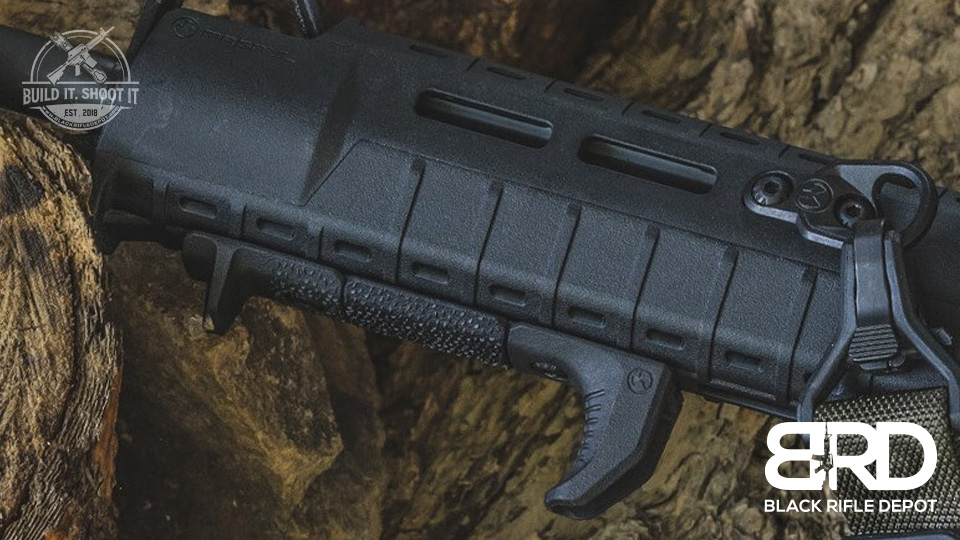
Choosing the Best Foregrip Brand for a home defense build comes down to more than appearance. A foregrip can change how an AR feels in the hands, how naturally the support hand settles on the handguard, and how comfortable the rifle is to control during practice. For a defensive firearm, simplicity usually matters more than adding unnecessary accessories. The goal should be a grip that fits the shooter, works with the available rail space, and provides a consistent point of contact without interfering with lights, sling hardware, or other accessories. The right choice can also help create a more natural support-hand position while keeping the front end of the firearm streamlined and easy to manage.
With vertical grips, angled grips, hand stops, and compact hybrid designs all available, understanding the different options can make choosing the right setup much easier. Comparing size, mounting style, texture, and overall ergonomics can help narrow down which design best matches the build and the shooter’s preferences.
What Makes a Good Foregrip for a Home Defense Build?
A quality foregrip should provide a comfortable, repeatable support-hand position while staying secure on the handguard. Size, mounting system, texture, material, and overall profile can all affect how well a grip works on a particular build.
Size and Profile
Home defense rifles and pistols are often configured to remain relatively compact. Oversized accessories can make the front end feel crowded, particularly on shorter handguards. Compact angled grips, short vertical grips, and hand-stop-style designs can provide additional control without taking up excessive rail space.
Mounting System
M-LOK has become one of the most widely used mounting systems for modern AR handguards. Direct-mount M-LOK accessories generally keep weight and bulk lower than accessories requiring an additional Picatinny rail section. Shooters researching the best M-LOK angled foregrip should consider the available mounting slots and how the grip will interact with lights, switches, sling mounts, and other equipment.
Texture
A foregrip should provide enough texture to remain comfortable and secure without creating unnecessary irritation during longer training sessions. Some brands use aggressive texturing, while others rely on molded contours and finger placement to provide control.
Material
Most modern foregrips use reinforced polymer or aluminum. Polymer keeps weight and cost down while remaining durable enough for most applications. At the same time, aluminum grips generally offer increased rigidity but may add weight and can become hotter or colder depending on environmental conditions.
Types of Foregrips
Understanding the different types of foregrips is important because each design changes the support-hand position differently.
Vertical Foregrips
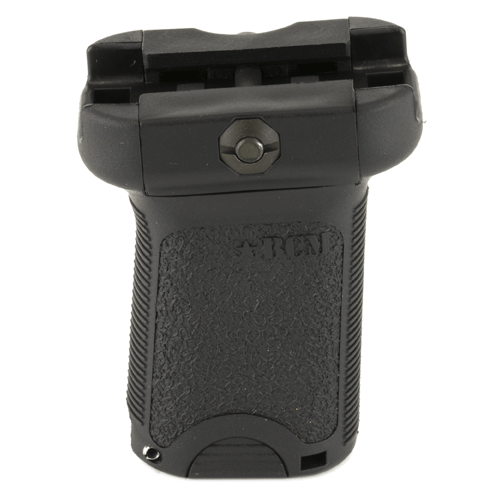
A vertical grip extends downward from the handguard and gives the shooter a dedicated foregrip handle. Traditional vertical grips were often relatively long, but many modern options use shorter profiles. Some shooters wrap their entire hand around the grip, while others use it primarily as a reference point with part of the hand remaining on the handguard.
When searching for the best vertical grip, consider length, texture, mounting strength, and available clearance underneath the rifle.
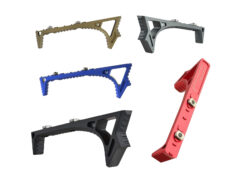
Angled Foregrips
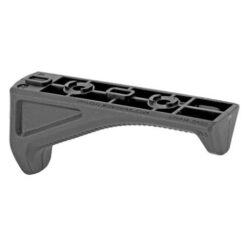
Angled grips position the wrist differently than traditional vertical grips. Many shooters prefer them because they provide a defined hand position without extending very far below the handguard, which can make them especially attractive for streamlined builds.
An angled design may also fit well on rifles using weapon lights or other accessories along the sides of the handguard.
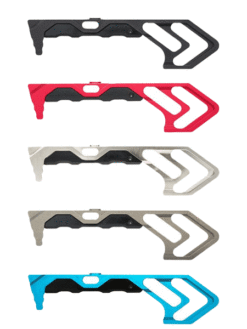
Hand Stops
Hand stops are smaller than traditional foregrips and primarily provide a physical indexing point for the support hand. They are useful when rail space is limited or when the shooter wants the smallest possible accessory. Some designs include a slight hook or ledge that gives the hand a consistent stopping point.
Hybrid Designs
Several manufacturers now offer grips that combine characteristics of angled grips, hand stops, and shortened vertical grips. These compact accessories have become popular because they provide a defined support-hand position without adding the size of a traditional vertical grip.


Popular Foregrip Brands to Consider
No single best foregrip brand fits every shooter because hand size, shooting style, handguard length, and accessory placement all affect what feels comfortable. However, several established manufacturers offer strong options across different foregrip styles, giving shooters plenty of choices in materials, mounting systems, profiles, textures, and overall ergonomics.
Magpul
Magpul offers some of the most recognizable foregrips available for the AR platform. Its lineup includes angled grips, vertical grips, and hand-stop-style accessories in multiple mounting configurations. Magpul products are known for lightweight polymer construction and straightforward installation, making the brand a useful starting point for shooters still deciding which grip style they prefer. The broad selection also makes it easier to match a grip to different rail systems, handguard lengths, and preferred support-hand positions.
BCM
Bravo Company Manufacturing offers compact grip designs that work well on rifles where keeping the front end streamlined is important. BCM grips tend to emphasize a natural support-hand position rather than the oversized vertical-grip designs commonly seen on older builds. Their smaller profiles can also work well on compact setups where available rail space is limited.
Strike Industries
Strike Industries produces a wide variety of lightweight AR accessories, including compact angled grips and handguards; the company’s designs often appeal to shooters who want something low-profile with more aggressive styling. Many options minimize bulk and weight while still providing a defined indexing point.
Ergo
Ergo produces several traditional and modern foregrip options, emphasizing comfort and grip texture. For shooters who prefer a larger foregrip handle, Ergo offers designs that provide more surface area than minimalist hand stops or short angled grips. This can appeal to users who prefer a fuller grip and more contact with the support hand.
Mission First Tactical
Mission First Tactical offers lightweight polymer accessories designed around modern AR configurations. Their foregrip options typically emphasize compact dimensions and straightforward installation. The brand also offers streamlined designs that can complement lightweight builds without adding unnecessary bulk to the front of the firearm.
Best Foregrip for AR Pistol Builds
Choosing the best foregrip for AR pistol configurations requires additional consideration because firearm configuration and accessory selection can have legal implications. Compact hand stops and angled grips are commonly considered when rail space is limited. Still, owners should verify current federal, state, and local laws before installing accessories that affect a firearm’s legal classification.
Beyond legal considerations, shorter firearms often have limited handguard space. Compact accessories can provide a consistent indexing point without interfering with lights or other components.
How to Choose the Best Foregrip
Instead of selecting a grip based only on brand recognition, consider how the accessory fits the complete firearm. A good foregrip should fit the available handguard space, match the rifle’s mounting system, provide a comfortable wrist position, avoid interfering with lights or sling hardware, stay securely mounted during use, and match the shooter’s preferred support-hand position. Weight, overall size, material, and how the grip affects balance should also factor into the decision, especially on compact or lightweight builds.
Whenever possible, testing several styles can help determine whether a vertical grip, angled grip, or hand stop feels most natural. What works well for one shooter may feel awkward for another, so comfort and repeatable hand placement should remain a priority.
Find AR-15 Foregrips at Black Rifle Depot
Building a comfortable, practical AR setup starts with accessories that match the rifle and the shooter. Black Rifle Depot carries a selection of AR-15 foregrips, including vertical grips, angled grips, hand stops, and M-LOK-compatible options from established manufacturers.
Whether you’re upgrading an existing rifle or finishing a new build, you can compare multiple grip styles and find an option that fits your handguard and preferred shooting position.
Frequently Asked Questions
Choosing the right foregrip often comes down to fit, mounting style, and personal preference. These common questions can help you narrow your options.
What is the best foregrip brand for an AR-15?
No single option is best for every shooter. Brands such as Magpul, BCM, Ergo, Strike Industries, and Mission First Tactical offer different grip shapes, materials, and mounting styles.
Is an angled foregrip better than a vertical foregrip?
Neither style is universally better. Angled grips usually stay lower, while vertical grips offer a more pronounced gripping surface. Personal comfort and hand placement should guide the decision.
What is the best M-LOK angled foregrip?
The best choice depends on hand size, available rail space, and preferred wrist angle. Look for a secure direct-M-LOK mounting system, comfortable shape, and sufficient clearance around other accessories.
What is the difference between a foregrip and a hand stop?
A foregrip provides a larger gripping surface, while a hand stop mainly creates a reference point that helps establish consistent support-hand placement.
Are vertical grips legal on AR pistols?
Accessory rules can vary based on the firearm’s specific configuration and current regulations. Verify applicable federal, state, and local requirements before installing a vertical grip or making configuration changes.
Do I need a foregrip on a home defense rifle?
No. A foregrip is optional. Some shooters find that it improves comfort and provides a consistent hand position, while others prefer gripping the handguard directly. The best setup stays simple, comfortable, and reliable during regular training.
For additional support and online deals, check out our X Page.
