
AR-15 Complete Uppers
AR-15 Complete Upper Compatibility: How to Match It With Your Lower
Aug
Table of Contents
One of the biggest advantages of the AR-15 platform is its modular design. Instead of purchasing an entirely different rifle for every application, you can often change the firearm’s configuration by pairing your existing lower receiver with a different AR-15 complete upper.
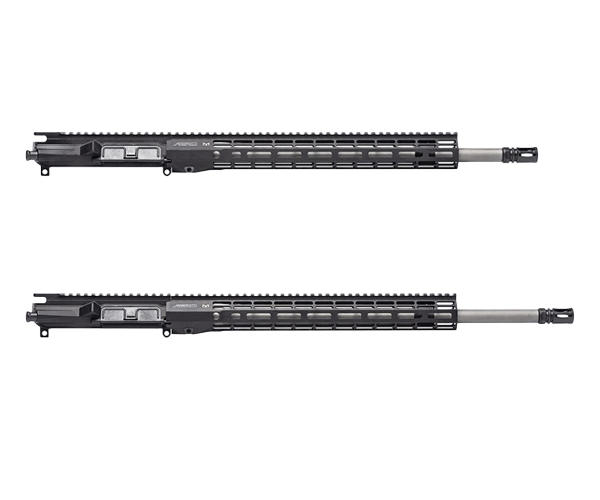
However, that does not mean every upper will work correctly with every lower. Most standard AR-15 components share common dimensions, but caliber, operating system, magazine type, buffer configuration, receiver design, and legal classification can all affect compatibility.
Before choosing an AR-15 complete upper, look beyond whether the receiver pins line up. A proper match should fit physically, feed the correct ammunition, cycle reliably, and comply with applicable laws.
This guide explains how to evaluate compatibility, what specifications matter most, and how to select the right upper for your existing lower.
What Is an AR-15 Complete Upper?
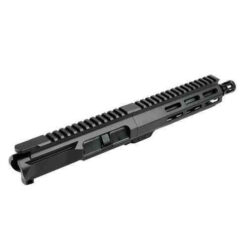
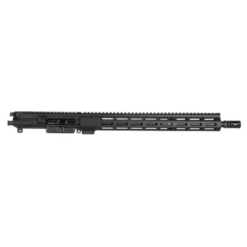
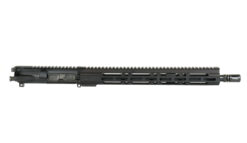
An AR-15 complete upper is an assembled upper receiver group that normally includes the upper receiver, barrel, gas system, handguard, and muzzle device. Some models also include the bolt carrier group and charging handle, while others require those components to be purchased separately.
The word “complete” can therefore mean different things depending on the manufacturer or retailer.
Before placing an order, confirm whether the package includes:
- An assembled upper receiver
- Barrel
- Gas block and gas tube
- Handguard
- Muzzle device
- Bolt carrier group
- Charging handle
An AR-15 complete upper with BCG and CH offers the most convenient installation because the bolt carrier group and charging handle are already included. A model sold without those parts is still assembled, but it will not be ready to function until the missing components are added.
Aero Precision, for example, distinguishes between assembled receivers and complete upper assemblies, while also noting that its complete AR-15 lowers can be joined to a compatible complete upper using the receiver pins.
Will Any AR-15 Complete Upper Fit Any Lower?
Most standard AR-15 uppers will physically attach to most standard AR-15 lowers. The front pivot pin and rear takedown pin locations are generally consistent across conventional AR-15 receivers.
That makes it possible to pair an upper from one manufacturer with a lower made by another manufacturer. You do not normally need to use the same brand for both halves.
However, physical attachment is only the first compatibility check.
An AR-15 complete upper can fit onto a lower while still being unsuitable because of:
- An incompatible caliber or magazine
- The wrong buffer weight or spring
- A proprietary receiver design
- An incompatible bolt carrier group
- Differences in operating systems
- Excessively tight receiver tolerances
- An unlawful barrel, stock, or brace configuration
Standardization makes AR-15 component selection relatively straightforward, but individual manufacturers may incorporate proprietary designs or tighter tolerances. Aero Precision, for instance, markets matched receiver sets for users who want consistent fit and finish, while certain enhanced components are designed around specific receiver systems.
AR-15 Complete Upper Compatibility Chart
Use this chart as a starting point when comparing an upper assembly with your current lower.
| Upper configuration | Standard AR-15 lower fit | Standard 5.56 magazine compatibility | Typical additional considerations |
|---|---|---|---|
| 5.56 NATO | Usually yes | Yes | Confirm barrel length and buffer setup |
| .223 Wylde | Usually yes | Yes | Accepts .223 Remington and 5.56 NATO when properly manufactured |
| .300 Blackout | Usually yes | Often yes | Clearly separate and identify ammunition |
| 9mm blowback | Sometimes | No | May require a magazine adapter, dedicated lower, ejector, and different buffer |
| 6.5 Grendel | Usually yes | No | Requires the correct bolt and caliber-specific magazines |
| 6mm ARC | Usually yes | No | Requires the correct bolt and compatible magazines |
| 7.62×39 | Usually yes | No | Requires a compatible bolt and magazines |
| .350 Legend | Usually yes | Usually no | Requires compatible magazines |
| .450 Bushmaster | Usually yes | Usually no | Requires compatible magazines and an appropriate buffer setup |
| Rimfire conversion or dedicated .22 LR | Usually yes | No | Requires a rimfire bolt and magazines |
| AR-10 or .308 upper | No | No | Uses a larger receiver platform |
| Proprietary piston or specialty upper | Varies | Varies | Check the manufacturer’s requirements |
This chart covers common patterns, but it should not replace the manufacturer’s specifications. Confirm the bolt, magazine, buffer system, ammunition, and lower requirements before assembling or firing a new configuration.

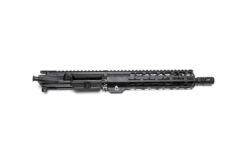
Geissele URGI CHF Barrel 5.56 Complete Upper Assembly Black/DDC Anodized-MK16 HG
Geissele Automatics

Start by Identifying Your Lower Receiver Platform
Before selecting an AR-15 complete upper, verify that your lower is actually a standard AR-15 lower.
AR-15 and AR-10-style components are not interchangeable. A .308 or AR-10-pattern upper is physically larger and will not attach to a standard AR-15 lower. Compatibility can also be less predictable within large-frame .308 platforms because those rifles do not follow one universally adopted receiver pattern.
You should also determine whether your lower is:
- A standard AR-15 lower
- A dedicated pistol-caliber lower
- A proprietary receiver
- A fixed-magazine configuration
- A lower designed for a specific upper system
- An older receiver with unusual pin dimensions
Some pistol-caliber and specialty platforms resemble ordinary AR-15 receivers but use different magazine wells, bolts, ejectors, or receiver profiles. Palmetto State Armory, for example, specifies that its AR-V system uses dedicated components rather than ordinary 9mm AR upper and lower combinations.
When dealing with an unfamiliar or proprietary lower, check its manufacturer and model number before purchasing an upper.
Match the Upper to the Lower’s Magazine System
The lower receiver holds the magazine, which means magazine compatibility must be considered whenever you change calibers.
A standard AR-15 lower is built around the general dimensions of the 5.56 NATO magazine well. Several cartridges can function within that receiver size, but they may require caliber-specific magazines.
For example:
- 5.56 NATO and .223 Remington generally use standard AR-15 magazines.
- .223 Wylde uses the same general magazine pattern as 5.56 NATO.
- .300 Blackout commonly uses standard 5.56-pattern magazines, although dedicated, clearly marked magazines can reduce ammunition confusion.
- 6.5 Grendel and 6mm ARC normally require compatible magazines.
- 7.62×39 requires magazines designed for its cartridge geometry.
- Straight-wall cartridges such as .350 Legend may require modified or dedicated magazines.
- Most 9mm configurations require Glock-pattern, Colt-pattern, Endomag-style, or another dedicated magazine system.
An AR-15 complete upper should therefore be evaluated as part of a complete feeding system. The receiver may attach correctly, but the firearm will not function properly unless the lower, magazine, bolt, and cartridge are compatible.
Verify the Bolt Carrier Group
The bolt carrier group is one of the most important components in the compatibility equation.
When buying a complete AR-15 upper with bolt carrier group, confirm that the included bolt matches the barrel extension and cartridge. Many AR-15 cartridges use a standard carrier body but require a different bolt face.
Common examples include:
- 5.56 NATO, .223 Remington, and .300 Blackout commonly use a standard 5.56 bolt.
- 6.5 Grendel and 6mm ARC use a larger compatible bolt face.
- 7.62×39 uses a caliber-specific bolt.
- 9mm blowback uppers use a completely different bolt design.
- Dedicated .22 LR uppers use a rimfire bolt assembly.
If an AR-15 complete upper does not include a bolt carrier group, do not assume the BCG from your current upper will work. Compare the cartridge, bolt face, barrel extension, and manufacturer’s specifications first.
BCM notes that its MK2 upper maintains compatibility with USGI-pattern bolt carriers, charging handles, and barrel assemblies, demonstrating how manufacturers may specifically identify which standardized components their receivers accept.

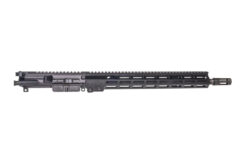


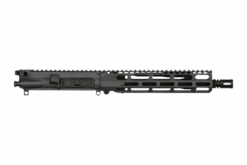
Check Whether the Charging Handle Is Included
The charging handle is usually one of the simpler compatibility points. Most standard direct-impingement AR-15 uppers accept a standard AR-15 charging handle.
However, an AR-15 complete upper with BCG and CH removes uncertainty and gives you a self-contained upper assembly. Keeping a dedicated bolt carrier group and charging handle with each upper can also make swapping configurations more convenient.
Specialty uppers may use:
- Side-charging handles
- Proprietary charging handles
- Modified carrier keys
- Nonstandard upper receiver channels
- Manufacturer-specific operating components
Always check the product description instead of assuming a standard charging handle will fit.
Compare the Gas System and Buffer Assembly
The gas system is contained primarily in the upper, but the buffer and recoil spring are installed in the lower. These systems must work together.
An AR-15 complete upper may use a:
- Pistol-length gas system
- Carbine-length gas system
- Mid-length gas system
- Rifle-length gas system
- Blowback operating system
- Piston operating system
A standard carbine lower can function with many different gas-system lengths, but reliability may depend on the buffer weight, recoil spring, ammunition, gas-port size, suppressor use, and barrel length.
Changing from a mild 16-inch upper to a very short or strongly gassed upper can alter carrier velocity. Switching to a blowback-operated pistol-caliber upper may require an entirely different buffer setup.
The fact that an upper closes onto the lower does not prove the operating system is balanced. Follow the upper manufacturer’s buffer and spring recommendations, particularly when using specialty calibers or compact barrels.
Consider Barrel Length and the Lower’s Configuration
Barrel length is not usually a mechanical fit issue, but it can affect the firearm’s legal classification.
A compact 5-inch AR-15 complete upper may physically pin onto a standard lower, but that does not automatically make the resulting configuration lawful. The legality may depend on how the lower is configured, whether it has a shoulder stock, how the firearm is classified, and which federal, state, or local laws apply.
Do not select an upper based only on whether it fits. Confirm the legal requirements that apply to the completed firearm before assembly.
Laws and regulations can change, and state restrictions may be more demanding than federal rules. Consult current official guidance or a qualified professional when you are uncertain about a proposed configuration.
Does the Upper’s Caliber Match the Lower?
Lower receivers are often marked with a specific caliber, such as 5.56 NATO or “multi.” In many standard AR-15 configurations, the lower’s caliber marking does not prevent it from being used with another AR-15-compatible cartridge.
The upper assembly, barrel, bolt, and magazine determine most of the caliber-specific functionality.
For example, a standard 5.56 lower can often be paired with:
- A 5.56 NATO upper
- A .223 Wylde upper
- A .300 Blackout upper
- A 6.5 Grendel upper with the correct bolt and magazine
- A 6mm ARC upper with the correct bolt and magazine
- Certain straight-wall cartridge uppers
- A compatible rimfire upper
The key is verifying the entire system rather than relying solely on the marking engraved on the lower.
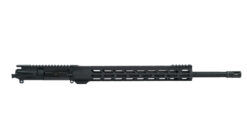
Choosing Between 5.56 NATO and .223 Wylde
For a versatile general-purpose build, AR-15 complete uppers 556/223 remain among the most common choices.
A 5.56 NATO chamber is designed to fire 5.56 NATO and .223 Remington ammunition. A properly manufactured .223 Wylde chamber is also designed to accommodate both cartridges while combining features intended to support reliable 5.56 use and strong accuracy with .223 ammunition.
A complete AR-15 upper 223 Wylde can be a strong option for users who want one upper for recreational shooting, training, and accuracy-focused use.
When comparing the two, look at more than the chamber:
- Barrel length
- Barrel profile
- Twist rate
- Gas-system length
- Handguard style
- Muzzle threads
- Bolt carrier group
- Overall weight
The chamber designation matters, but the complete barrel and upper configuration will have a greater effect on how the rifle handles.
Will a Blemished Upper Fit Differently?
An AR-15 complete upper blemished model should normally function like a non-blemished version when it is sold as a cosmetic blemish by a reputable manufacturer or retailer.
Typical blemishes may include:
- Small scratches
- Uneven anodizing
- Minor finish marks
- Tooling marks
- Color variation between components
A cosmetic blemish should not involve damaged threads, incorrect receiver dimensions, unsafe barrel installation, or defective operating components.
Read the seller’s description and warranty terms before buying. A blemished AR-15 complete upper can offer excellent value when the defect is cosmetic and does not affect fit, safety, or reliability.
Forged, Billet, and Proprietary Receiver Fit
Forged and billet uppers can both work with standard forged or billet lowers, provided they follow standard AR-15 receiver dimensions.
The difference is often cosmetic. A billet upper may have more angular contours, thicker walls, or styling that does not align perfectly with the lower. That does not necessarily affect function.
Some combinations may also have slight movement between the receivers. A small amount of upper-to-lower play is not automatically a reliability or accuracy problem. Other combinations may fit tightly and require firm pressure to move the takedown pins when new.
You should not have to force an AR-15 complete upper into place or remove material from either receiver. If the holes do not align with normal hand pressure, stop and inspect the parts for interference, manufacturing defects, debris, or proprietary dimensions.
How to Check Compatibility Before Buying
Before shopping for AR-15 complete uppers, collect the following information about your lower:
- Lower manufacturer and model
- AR-15 or large-frame platform
- Magazine type
- Buffer tube type
- Buffer weight
- Recoil spring type
- Stock, brace, or other rear configuration
- Intended cartridge
- Intended barrel length
- Applicable state and local restrictions
Then compare that information with the upper manufacturer’s specifications.
The product page should clearly identify:
- Platform
- Caliber
- Chamber
- Barrel length
- Gas-system length
- Twist rate
- Muzzle thread pattern
- Whether a BCG is included
- Whether a charging handle is included
- Recommended buffer configuration
- Magazine requirements
- Proprietary component requirements
The more unusual the upper, the more important manufacturer verification becomes.
Common Compatibility Mistakes
Before pairing a new upper with your lower, watch for these common compatibility mistakes that can affect fit, function, reliability, and safety.
Assuming “Complete” Means Everything Is Included
Some products called complete uppers do not include a BCG or charging handle. Read the component list carefully.
Confusing AR-15 and AR-10 Components
A .308-pattern upper is not a larger-caliber AR-15 complete upper. It belongs to a different receiver platform.
Reusing the Wrong Bolt
A standard carrier does not mean the bolt is compatible with every caliber. Confirm bolt-face dimensions and barrel compatibility.
Using the Wrong Magazine
The upper may attach and cycle manually while still failing to feed because the magazine is not designed for the cartridge.
Ignoring the Buffer System
Short barrels, blowback calibers, suppressors, and specialty cartridges can require different buffer or spring setups.
Mixing Up Ammunition
Cartridges such as 5.56 NATO and .300 Blackout may use similar magazines. Clearly label uppers, magazines, and ammunition to prevent dangerous ammunition mix-ups.
Assuming Mechanical Fit Equals Legal Compliance
A configuration can assemble correctly while still being restricted under federal, state, or local law.
Find the Right AR-15 Complete Upper at Black Rifle Depot
The right AR-15 complete upper should do more than attach to your lower. It should match the platform, caliber, bolt, magazines, buffer system, intended use, and legal configuration of your build.
Black Rifle Depot offers upper assemblies in multiple calibers, barrel lengths, handguard styles, and configurations. Whether you are looking for a lightweight 5.56 upper, a versatile .223 Wylde setup, a compact configuration, or an upper that includes the BCG and charging handle, reviewing the specifications first will help you make a better selection.
Explore AR-15 Complete Uppers for Sale at Black Rifle Depot to compare compatible configurations for your next build or upgrade.

Frequently Asked Questions About AR-15 Complete Upper Compatibility
Here are answers to common questions about matching an AR-15 complete upper with an existing lower, including fit, caliber, BCG, magazine, and buffer compatibility.
What complete uppers fit AR-15 lowers?
Most standard AR-15-pattern uppers will attach to standard AR-15 lowers. Compatibility still depends on the caliber, bolt, magazines, buffer system, and whether either receiver uses proprietary dimensions.
Can any AR-15 upper match with any AR-15 lower?
Not every combination is guaranteed to work. A conventional AR-15 complete upper will usually fit a conventional AR-15 lower, but pistol-caliber, rimfire, piston-driven, side-charging, and proprietary systems may require additional or manufacturer-specific parts.
Can I put a 5.56 upper on a multi-caliber lower?
In most cases, yes. A standard multi-caliber AR-15 lower can generally accept a compatible 5.56 AR-15 complete upper, provided the lower uses the correct magazine and buffer system.
Can a .300 Blackout upper use a 5.56 lower?
A standard .300 Blackout upper can commonly be used on a standard AR-15 lower originally paired with a 5.56 upper. The cartridges may use similar magazines and bolt components, but ammunition and magazines should be clearly separated and identified.
Can I use my existing BCG in a different upper?
Only when the bolt carrier group is compatible with the new upper’s barrel and cartridge. Many 5.56, .223 Wylde, and .300 Blackout uppers use the same bolt-face pattern, while calibers such as 6.5 Grendel and 7.62×39 require different bolts.
Is an upper complete if it does not include a BCG?
Retail terminology varies. Some sellers call an assembled barreled upper “complete” even when the bolt carrier group and charging handle are excluded. Review the included-components list before purchasing.
Will a billet upper fit a forged lower?
Usually, provided both receivers use standard AR-15 dimensions. Their exterior contours or finish may not match perfectly, but that does not necessarily affect function.
Does an AR-15 complete upper need to be the same brand as the lower?
No. Standard components from different manufacturers can usually be combined. Using a matched receiver set may provide a more consistent cosmetic appearance or tighter fit, but matching brands is not normally required.
What should I check before attaching a new upper?
Confirm the receiver platform, caliber, bolt, magazine, buffer, spring, barrel length, operating system, and manufacturer requirements. Also verify that the completed configuration complies with all applicable laws.
For additional support and online deals, check out our X Page.
