
AR-15 Stocks, Pistol Braces
Pistol Brace vs PDW Stock: Pros, Cons & Legal Considerations
Sep
Table of Contents
Compact AR-style firearms have become increasingly popular among shooters who want a shorter, more maneuverable platform without giving up the familiar controls and modularity of the AR system. Two rear-end configurations frequently considered for compact builds are pistol stabilizing braces and Personal Defense Weapon, or PDW, stocks.
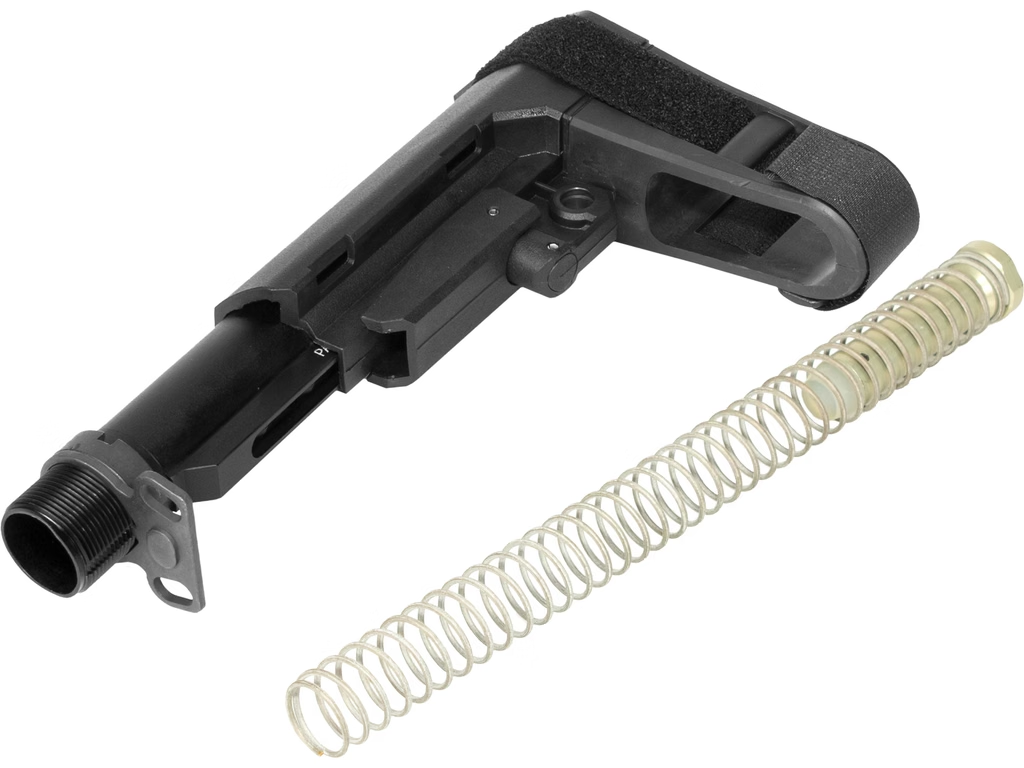
Although the two can sometimes look similar, they are not interchangeable terms. A pistol brace and a PDW stock serve different purposes, can produce very different handling characteristics, and may affect how a firearm is classified under federal or state law. Understanding the differences between pistol braces and PDW stocks is especially important before assembling, modifying, or purchasing a compact AR platform.
The right choice depends on the firearm’s configuration, intended use, ergonomics, buffer system, and applicable laws. This guide breaks down how pistol braces and PDW stocks differ, where each design performs well, their potential disadvantages, and the legal considerations shooters should understand before modifying a firearm.
What Is a Pistol Brace?
A pistol stabilizing brace is a rear-mounted firearm accessory originally developed to help a shooter stabilize a firearm while firing it with one hand. Depending on the design, a brace may include a flexible cuff, split rear section, strap, blade-style structure, or another stabilizing configuration.
Braces became particularly popular on AR pistols because the AR platform normally uses a rear receiver extension, commonly called a buffer tube, as part of its operating system. Leaving the tube exposed can work mechanically, but adding a purpose-designed brace can provide a more practical and comfortable rear-end configuration.
Modern pistol braces come in numerous styles. Some use a traditional carbine-style receiver extension, while others use compact rails or proprietary assemblies intended to reduce the firearm’s overall length. Because designs vary widely, always check compatibility before buying a replacement brace or building a new setup.
Remember that a handgun brace’s appearance does not, by itself, determine a firearm’s legal classification. You must consider the complete configuration and the applicable law.
What Is a PDW Stock?
A PDW stock is a shoulder stock designed to reduce a rifle’s overall length while still giving the shooter a dedicated shoulder contact point. PDW stands for Personal Defense Weapon, a term commonly used for compact firearms designed to provide rifle-like capability in a smaller package.
On AR-style firearms, PDW stocks often use shortened rails, compact receiver extensions, shortened buffer assemblies, or proprietary recoil systems. These systems let the stock collapse farther than many conventional carbine stocks, creating a much shorter package for storage and transport.
A PDW stock is still a stock, however. Its compact size does not change the fact that it is designed to be shouldered. This distinction matters most when the firearm has a barrel shorter than 16 inches because federal law generally treats a shoulder-fired rifle with a barrel under 16 inches as a short-barreled rifle subject to the National Firearms Act.
For that reason, choosing between a brace and PDW stock involves more than deciding which one looks better or collapses into the smallest package.

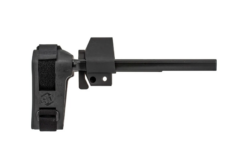
Pistol Brace vs PDW Stock: What Is the Main Difference?
The main difference between a pistol brace and a PDW stock is the intended function of the rear-mounted component. A brace is designed as a stabilizing accessory, while a stock is designed specifically to provide shoulder support.
That difference affects how each system feels, how compact it can become, and which firearm configurations it may be appropriate for. A pistol brace is commonly associated with AR pistols, while a PDW stock is normally found on rifles or properly configured short-barreled rifles.
Both can use compact designs, and some braces and stocks may even look similar from a distance. The important consideration is what the component actually is and how the complete firearm is configured.
Advantages of a Pistol Brace
One of the biggest advantages of a pistol brace is its usefulness on compact pistol configurations. Shooters who want a short-barreled AR-style firearm without converting the firearm into a rifle may consider a brace as part of the overall setup, provided the complete firearm remains compliant with applicable federal, state, and local regulations.
Braces also offer a wide range of design choices. Some are lightweight and minimalist, while others provide adjustable lengths or more substantial rear sections. This variety lets shooters choose a design that fits the firearm’s receiver extension, intended role, and preferred handling characteristics.
Another advantage is compatibility. Many braces are designed around commonly used AR receiver extensions, which may allow the owner to retain a more traditional buffer and spring arrangement. This can simplify replacement-part selection compared with some highly specialized PDW systems.
Weight can also be a benefit. A relatively simple AR PDW brace or conventional pistol brace may weigh less than a heavy stock assembly, helping keep a short firearm balanced and easy to maneuver.
Disadvantages of a Pistol Brace
The biggest disadvantage of a pistol brace is the legal uncertainty surrounding these accessories in recent years. Federal policies and court decisions involving pistol braces have changed repeatedly, so owners should check current regulations rather than relying on older articles, social media posts, or advice written under a previous rule.
Braces can also offer less consistent support than a traditional stock. Because a brace is not simply a rifle stock with a different name, its shape and construction may prioritize stabilization rather than the shoulder support normally expected from a stock.
Comfort also varies widely between models. A minimalist brace may keep a firearm very light but offer less surface area, while a larger brace may provide more support at the cost of added size and weight.
There can also be compatibility limitations. A brace designed for one receiver extension or compact recoil system may not work with another. Before purchasing, shooters should verify tube diameter, buffer-system requirements, mounting method, adjustment range, and any manufacturer-specific components.
Advantages of a PDW Stock
The primary advantage of a PDW stock is that it combines compact dimensions with a true shoulder stock. For a rifle configured legally to use one, this can provide a more familiar shooting position than many brace designs.
PDW stocks are particularly attractive for shooters who want a firearm to collapse into the smallest practical package. Traditional carbine stocks slide along a receiver extension that remains the same length regardless of stock position. Many PDW systems instead use shorter extensions or parallel guide rods that allow the stock to collapse much closer to the receiver.
That shorter collapsed length can help with compact storage and transportation. It may also improve maneuverability in tight spaces or when a shorter overall configuration is preferred.
A well-designed PDW stock can also provide repeatable shoulder placement. Although the contact surface may be smaller than that of a full-size stock, it is still purpose-built as a shoulder stock and may provide better support than a minimalist rear accessory.
Disadvantages of a PDW Stock
Compactness usually comes with trade-offs. One of the biggest is the use of proprietary components. Many PDW stocks require special receiver extensions, buffers, springs, bolt-carrier components, or guide systems that differ from standard carbine parts.
That can complicate future maintenance. If a replacement part is needed, the shooter may need a component made specifically for that particular PDW system rather than something readily available for a conventional AR buffer assembly.
PDW stocks can also be heavier or more expensive than a traditional stock-and-buffer combination. The rails, locking mechanism, proprietary buffer components, and compact engineering required to shorten the system can increase both cost and complexity.
Another potential downside is limited cheek weld. Because many PDW stocks use narrow rails instead of a traditional stock body, they may provide less surface area for consistent facial contact. This does not necessarily make them uncomfortable, but the experience is noticeably different from shooting a conventional carbine stock.
Most importantly, installing a PDW stock on a firearm with a barrel under 16 inches can create significant legal implications. The firearm may meet the federal definition of a short-barreled rifle and could be subject to National Firearms Act requirements.
Buffer System Differences
One of the most overlooked parts of the Pistol Brace vs PDW Stock discussion is the buffer system. On a conventional direct-impingement AR-15, the buffer tube is not simply a mounting point for the brace or stock. It houses components needed for the firearm’s operating cycle.
Many pistol braces work with standard carbine receiver extensions, buffers, and springs. That means the builder can often select from familiar buffer weights and replacement springs without changing the basic operating system.
PDW stocks frequently take a different approach. To shorten the firearm, manufacturers may use a shorter receiver extension combined with a shortened or specially designed buffer and spring. Some systems use dual guide rods or other proprietary components to achieve a shorter collapsed length.
Because of these differences, shooters should not assume that a compact stock or brace can simply replace an existing one. Changing the rear assembly can potentially alter buffer weight, spring tension, bolt travel, and overall cycling characteristics.
Always confirm exactly what components a particular system requires before installation.
Which Option Is More Compact?
A purpose-built PDW stock often provides the shortest collapsed configuration because the entire recoil and stock assembly may be designed around reducing length. Some systems collapse almost directly against the receiver, eliminating much of the extra length associated with a conventional carbine stock.
Compact pistol braces can achieve similar results, especially models built around PDW-style rails or shortened recoil systems. However, a brace installed on a standard carbine receiver extension may not collapse as far as a dedicated PDW system.
The practical difference depends heavily on the specific products being compared. A compact pistol brace stock setup can sometimes be shorter than a larger PDW stock, while a dedicated ultra-compact PDW assembly may be significantly shorter than a traditional brace-and-buffer-tube combination.
For most shooters, consider collapsed length alongside reliability, replacement-part availability, comfort, weight, and cost rather than treating it as the only deciding factor.

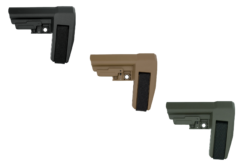
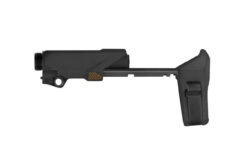
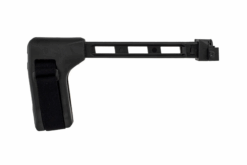
Pistol Brace vs PDW Stock for Shooting Comfort
A traditional stock generally provides more shoulder contact than a brace, but PDW stocks themselves tend to be smaller than full-size carbine stocks. This means a PDW stock may offer better shoulder support than many braces while still sacrificing some of the comfort found on a larger rifle stock.
Pistol braces vary even more. Some have broad rear sections, while others use narrow blades or compact stabilizing surfaces. The most comfortable option often depends on the shooter and the firearm’s design.
Length adjustment can make a noticeable difference. A system with multiple adjustment positions gives the shooter more flexibility to fit the firearm to their body size, arm length, optic position, and shooting stance.
Shooters should also consider where their cheek naturally contacts the assembly. Narrow PDW rails may provide less cheek-weld area than a conventional stock or buffer tube cover, especially when using magnified optics that require a repeatable head position.
Weight and Balance
Compact firearms are often built to reduce overall size and weight, so the rear assembly can noticeably affect balance.
A lightweight brace paired with a standard receiver extension can keep the rear of the firearm relatively light. This may be desirable on extremely short builds where the barrel, handguard, and muzzle device already make up a large percentage of the firearm’s overall weight.
A PDW stock can add rear weight because of its rails, locking hardware, and specialized recoil components. In some cases, that additional rear weight can actually improve balance by offsetting accessories mounted toward the muzzle.
There is no universal ideal. The best balance depends on barrel length, handguard length, optic selection, weapon lights, suppressors, and other accessories.
Cost and Replacement Parts
Price is another area where conventional pistol braces may have an advantage. Many braces use standard AR components, which can make both the initial build and future maintenance more affordable.
PDW systems can cost substantially more because they often include not just a stock but an entire proprietary recoil assembly. Replacement parts can also be more expensive and harder to find.
This does not mean proprietary systems should automatically be avoided. Some shooters are willing to pay more for an extremely compact configuration. The important thing is understanding that a specialized PDW system may lock the owner into a particular manufacturer’s replacement components.
For a firearm expected to see heavy use, consider replacement-part availability before choosing a highly specialized system.
Legal Considerations for Pistol Braces
The legal status of pistol braces has received considerable attention over the past several years. Federal regulations, agency interpretations, lawsuits, and court decisions have all affected how these accessories are discussed and regulated.
Because these rules have changed, shooters should be extremely cautious when relying on older guidance. Information published only a few years ago may no longer reflect the current federal legal environment.
As of 2026, owners should verify current guidance directly with the Bureau of Alcohol, Tobacco, Firearms and Explosives and consider applicable court decisions before configuring a firearm. State and local laws may impose additional restrictions that are separate from federal requirements.
It is also important to evaluate the complete firearm rather than focusing exclusively on the accessory attached to the rear. Barrel length, overall configuration, receiver classification, and other characteristics can affect the firearm’s legal status.
A pistol brace should therefore never be viewed as a shortcut around firearm regulations. Anyone uncertain about a specific configuration should verify the current law before assembling or modifying the firearm.
PDW Stocks and Short-Barreled Rifles
The legal considerations surrounding a PDW stock are generally more straightforward because a PDW stock is a shoulder stock.
Under federal law, rifles with barrels shorter than 16 inches, or certain rifles with an overall length below federal minimum requirements, can fall under the National Firearms Act as short-barreled rifles. Possessing or assembling an NFA-regulated firearm without satisfying applicable requirements can carry serious consequences.
For example, an AR-style firearm with a sub-16-inch barrel should not simply have a PDW stock installed without first determining whether the resulting configuration would constitute an NFA-regulated short-barreled rifle.
Shooters planning a compact rifle should verify barrel length, firearm configuration, and all applicable federal and state requirements before installing a stock.
State and Local Laws Matter Too
Federal law is only one part of the legal picture. States and municipalities can impose additional restrictions on firearm features, overall configurations, magazine capacity, specific accessories, or classifications.
A configuration that is permissible under federal law may still face restrictions in a particular state. Conversely, discussions about federal brace regulations may not address additional state-level requirements that apply to the owner.
This is particularly important for people who travel with firearms. Transporting a firearm across state lines can expose the owner to different regulations depending on the configuration and destination.
Always research the laws that apply where the firearm is possessed, transported, or used.
Who Should Consider a Pistol Brace?
A pistol brace may appeal to shooters who want a compact AR pistol configuration and prefer a stabilizing accessory rather than a conventional stock. Braces come in many sizes and styles, making it possible to build anything from a relatively traditional buffer-tube setup to a highly compact system.
They can also be appealing to shooters who want to maintain compatibility with standard AR buffer components. Depending on the brace, changing the rear accessory may require little or no modification to the firearm’s recoil system.
Before selecting one, verify receiver-extension compatibility, adjustment range, weight, mounting system, and current legal requirements.
Who Should Consider a PDW Stock?
A PDW stock makes sense for shooters building a legally configured rifle who prioritize minimum collapsed length and true shoulder support.
It may also be a strong option for an appropriately registered short-barreled rifle when maximum compactness is a priority. The combination of a short barrel and collapsing PDW stock can produce an extremely small platform while retaining familiar AR controls.
The trade-off is usually increased cost, greater dependence on proprietary components, and a smaller shoulder contact area than a conventional rifle stock.
For shooters who do not need the absolute shortest configuration, a standard adjustable stock may remain simpler and less expensive.
Choosing Between a Pistol Brace and PDW Stock
Choosing between a pistol brace and PDW Stock starts with the firearm itself. Determine whether the platform is being configured as a pistol or rifle and whether barrel length or other dimensions could bring National Firearms Act requirements into the discussion.
From there, consider how compact the firearm actually needs to be. A specialized PDW system may save several inches when collapsed, but weigh that benefit against cost, proprietary replacement parts, and the potential effect on the recoil system.
Comfort also matters. If you’ll use the firearm frequently at the range, the most compact option may not be the most enjoyable to shoot. A slightly larger system that provides better ergonomics can sometimes be the better practical choice.
Finally, verify compatibility before ordering anything. AR-pattern firearms are highly modular, but not every brace, stock, receiver extension, buffer, and spring is interchangeable.
Shooters looking for compact rear-end options can explore Black Rifle Depot’s pistol stabilizer selection and compare designs based on fit, adjustability, intended configuration, and manufacturer specifications.
Final Thoughts on Pistol Brace vs PDW Stock
Choosing between a pistol brace and a PDW Stock comes down to more than overall size or appearance. Each serves a different purpose and can affect comfort, compatibility, overall firearm length, buffer-system requirements, and legal classification.
A pistol brace can be a practical option for shooters looking for a compact stabilizing setup, while a PDW stock is designed to provide shoulder support on an appropriately configured rifle. Before making a change, consider the entire firearm, including barrel length, receiver extension, buffer system, mounting requirements, and any federal, state, or local regulations that may apply.
If you are building or upgrading a compact AR platform, shop pistol stabilizers and AR-15 parts at Black Rifle Depot. With a variety of components available, you can compare options and find the parts that best match your setup, intended use, and build requirements.
Frequently Asked Questions About Pistol Braces and PDW Stocks
The differences between braces and compact stocks can be confusing, especially because the products can sometimes look similar. The following answers cover some of the most common questions shooters have when comparing the two.
Is a pistol brace the same thing as a stock?
No. A pistol brace is a stabilizing accessory, while a rifle stock provides a shoulder contact point. Although some models may look similar, their intended designs are different.
What is a PDW stock?
A PDW stock is a compact rifle stock designed to collapse into a shorter overall package than many conventional AR stocks. These systems frequently use shortened or proprietary recoil components.
Can a PDW stock be installed on an AR pistol?
Installing a shoulder stock on a firearm configured with a barrel under 16 inches can potentially create a short-barreled rifle under federal law. Verify the legal configuration before installing a stock.
What does AR PDW brace mean?
An AR PDW brace generally refers to a compact pistol brace that uses a collapsing design similar to many PDW stocks. Some use rails or shortened receiver-extension systems to minimize the firearm’s overall length when collapsed.
Are pistol braces legal?
The federal regulatory treatment of pistol braces has changed significantly in recent years because of agency rules and court litigation. Owners should confirm the latest federal, state, and local requirements before purchasing, installing, or modifying a brace-equipped firearm.
Is a PDW stock shorter than a regular AR stock?
Often, yes. Many PDW stocks use specialized receiver extensions or recoil systems that collapse closer to the receiver than a traditional carbine stock.
Do PDW stocks use standard buffers?
Some do, but many do not. Highly compact PDW stocks frequently require proprietary buffers, springs, receiver extensions, or other recoil components. Always check the manufacturer’s specifications.
Can a pistol brace use a standard buffer tube?
Many pistol braces are designed around standard AR carbine receiver extensions, but compatibility varies. Some compact braces require their own specialized tube or recoil assembly.
Does a shorter buffer system affect reliability?
It can. Changing buffer weight, spring length, spring rate, or bolt travel can affect how an AR cycles. A well-designed compact system accounts for these differences, which is why using the manufacturer-specified components matters.
Which is better, a pistol brace or PDW stock?
Neither is universally better. They serve different purposes. A brace is intended for a pistol configuration, while a PDW stock provides shoulder support on a properly configured rifle. The better choice depends on the firearm’s legal classification, intended use, ergonomics, budget, and desired overall size.
For additional resources and online deals, check out our X Page.
