
AR-15 Complete Uppers
Is a Premium AR-15 Complete Upper Worth It?
Aug
Table of Contents
When shopping for a complete upper, prices can range from a few hundred dollars to well over $1,000. At first glance, the differences may seem easy to explain. One upper has a more expensive handguard, another has a cold hammer-forged barrel, and another comes from a company known for hard-use rifles.
But those differences don’t fully explain why some complete uppers cost two or three times as much as others.
The more important question is whether the additional money translates into noticeable performance.
In many cases, it does—but not necessarily in the ways people expect.
Premium manufacturers such as BCM, Geissele, and Noveske generally aren’t charging more simply because their components have recognizable names. Much of the value comes from manufacturing consistency, assembly quality, barrel performance, quality control, and how precisely the major components interface.
At the same time, manufacturers such as Aero Precision, Dirty Bird, and PSA have shown that dependable AR-15 uppers don’t necessarily require a four-figure investment.
That creates an important distinction:
A more expensive complete upper may be better, but that doesn’t automatically mean it will be better for your particular rifle or intended use.
Understanding where the differences actually matter makes it much easier to decide where your money should go.

What Are You Really Paying for With a Premium Complete Upper?
Two AR-15 complete uppers can look almost identical on paper.
Both may include:
- A 16-inch barrel
- A mid-length gas system
- A free-float M-LOK handguard
- A forged upper receiver
- A similar muzzle device
One may cost around $450, while another sells for $1,200 or more.
The difference often comes down to factors that are not immediately visible on a specification sheet.
Higher-end manufacturers typically invest more in tolerance control, component inspection, barrel selection, assembly procedures, quality control, and overall consistency from one upper to the next.
That consistency is one of the most important distinctions.
A budget upper can still be extremely reliable and accurate. A premium manufacturer’s advantage is often a lower likelihood of significant variation between individual examples.
Independent testing also shows that price alone does not determine performance. Pew Pew Tactical, for example, has ranked BCM as an editor’s choice, Geissele as a high-end option, Aero Precision as a value pick, and PSA as an affordable choice while considering factors such as reliability and accuracy.
That is why the better question is not whether the most expensive complete upper is automatically the best.
The better question is:
What practical improvements are you getting for the additional cost?
Practical Performance Matters More Than the Parts List
AR-15 buyers often compare complete uppers by looking at specification sheets. That information is useful, but it tells only part of the story.
The most important practical differences generally fall into four areas:
Reliability: Does the upper continue cycling consistently as round counts increase and operating conditions become more demanding?
Accuracy Consistency: Can it repeatedly produce predictable groups with quality ammunition?
Durability: How well do the barrel, bolt carrier group, handguard, gas system, and supporting components hold up over extended use?
Assembly Consistency: Were the components properly matched, aligned, and assembled so they function together as intended?
That last category often receives far less attention than it deserves.
Even premium components can underperform if they are poorly fitted or assembled. On the other hand, a reasonably priced barrel installed in a properly machined receiver with careful attention to alignment and fitment can deliver excellent results.
That is why one of the most overlooked parts of an AR build isn’t necessarily the barrel, handguard, or bolt carrier group—it is how well the upper receiver brings those components together.



The Most Overlooked Part of an AR Build: Upper Receiver Fitment
When AR-15 enthusiasts discuss accuracy, the barrel usually receives most of the attention. When reliability comes up, the bolt carrier group and gas system tend to dominate the conversation.
The upper receiver is often treated as little more than a housing for those components.
In reality, several important mechanical relationships come together at the receiver, including:
- Barrel extension fit
- Receiver face alignment
- Handguard and rail alignment
- Barrel nut interface
- Optic mounting alignment
Small dimensional differences do not automatically create performance problems. AR-15 components are manufactured within established tolerance ranges specifically so parts from different manufacturers can function together.
What matters is how those tolerances interact once you assemble the upper. When multiple components land at opposite ends of their allowable ranges, tolerance stacking can affect fitment, alignment, and overall consistency.
That is one reason upper receiver quality and assembly deserve more attention when comparing complete uppers.
Barrel Extension Fit
The rear of an AR-15 barrel contains the barrel extension, which fits into the upper receiver and forms a critical part of the barrel-to-receiver interface.
Because both components are manufactured within allowable tolerance ranges, the same barrel may fit slightly differently in two different receivers. One combination may slide together easily, while another may have noticeably less clearance.
Neither condition automatically indicates a problem.
What matters is that both components remain within specification and create a stable, properly aligned interface once assembled.
Barrel-extension fit should also be distinguished from receiver-face squareness because they affect different parts of the assembly. A tighter fit around the barrel extension does not correct an uneven receiver face, and a square receiver face does not change the amount of clearance around the extension itself.
This distinction matters most when comparing premium complete uppers. Because the manufacturer controls the receiver, barrel, and assembly process, it has more opportunity to manage tolerance stacking and ensure the components work together consistently.
That level of control is one of the less obvious advantages of buying a complete upper rather than combining separately sourced components.
What Is a Thermal-Fit Upper Receiver?
The term thermal fit often comes up when discussing premium or precision-oriented AR builds.
A thermal-fit receiver uses a very close dimensional relationship between the upper receiver’s barrel-extension bore and the barrel extension itself. The goal is to create a tighter, more consistent mechanical interface between the two components.
This approach is often associated with precision builds because reducing movement at the barrel-to-receiver interface can help eliminate another potential source of inconsistency.
That said, thermal fit should not be viewed as a requirement for an accurate AR-15. A properly machined and well-assembled conventional receiver-and-barrel combination can still deliver excellent accuracy.
The real advantage of tighter fitment is consistency. Premium performance often comes from reducing small variables throughout the system rather than relying on one dramatic mechanical improvement.
There is also ongoing debate over how much measurable benefit thermal fitment provides in a typical rifle. Barrel quality, ammunition, optics, component dimensions, assembly quality, and shooter ability still play much larger roles in overall accuracy.
In short, thermal fit can be a worthwhile refinement, but it is only one piece of the larger accuracy equation.
Receiver Face Squareness
The barrel extension seats against the front face of the upper receiver, making that surface an important part of the barrel-to-receiver interface.
Ideally, the receiver face should be square and perpendicular to the receiver’s bore axis. This helps the barrel extension seat evenly and maintain consistent contact around the interface.
If the receiver face has dimensional irregularities, the barrel extension may not contact the receiver uniformly. On a general-purpose rifle, very small deviations may never create a noticeable performance issue.
For a precision-oriented AR, however, builders often pay closer attention to receiver face squareness because consistency becomes more important as accuracy expectations increase.
It is another example of why the upper receiver should not be viewed as simply a housing. Even though it does not directly interact with the bullet, its dimensions and alignment can influence how consistently the barrel is supported.
Rail Alignment
Modern AR-15s commonly use free-float handguards that create a nearly continuous top rail between the upper receiver and the handguard.
Proper alignment matters because the receiver, barrel nut, and handguard must work together as a stable system. Poor alignment can indicate an assembly issue, while excessive movement or rotation can affect how securely forward-mounted accessories stay positioned.
A quality free-float rail should remain rigid during normal use and maintain consistent orientation relative to the upper receiver.
Aero Precision’s ATLAS handguards are a good example of this system-based approach. They are designed to pair closely with the company’s M4E1 threaded receivers while remaining compatible with conventional Mil-Spec receivers.
Premium manufacturers often put considerable effort into controlling the relationship between the receiver, barrel nut, and handguard because that interface directly affects front-end rigidity, alignment, and overall consistency.
These differences may be difficult to see in product photos, but they can become much more noticeable after extended use.
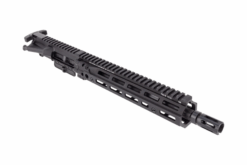
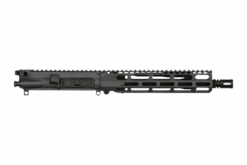
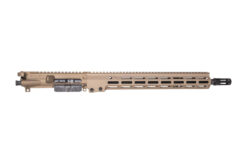
Daniel Defense DD4 RIIIS AR-15 5.56 NATO Carbine 1:7 11.5″ Complete Upper Receiver – Black
Daniel Defense

BCM: Premium Reliability Without Excessive Luxury
BCM has built much of its reputation around durability, reliability, and consistent performance rather than premium styling or unnecessary extras.
Its complete uppers are commonly chosen for hard-use and general-purpose AR builds because they are designed to handle substantial round counts and regular use.
The primary advantage is consistency. BCM emphasizes dependable components, proper assembly, and configurations designed to perform reliably over time.
Independent testing from Pew Pew Tactical selected a BCM 16-inch mid-length upper as its editor’s choice and reported thousands of rounds through the test example without reliability issues.
For many shooters, BCM represents a practical step into the premium category. The additional cost can bring meaningful gains in durability, reliability, and overall confidence without moving fully into boutique-level pricing.
Best For
Shooters who prioritize proven reliability, long-term durability, and consistent performance in a hard-use or general-purpose complete upper.
Geissele: When Premium Performance Becomes the Goal
Geissele sits firmly in the premium category, but the appeal goes beyond simply using more expensive individual components.
Its complete uppers are designed as integrated systems, with the barrel, gas system, bolt carrier group, receiver, and handguard selected and assembled to work together with high consistency.
That system-focused approach can translate into better overall refinement, dependable cycling, strong accuracy potential, and a more consistent shooting experience across extended use.
Independent testing has also placed the Geissele Super Duty MOD1 among the higher-end complete upper options, with accuracy and reliability standing out as key strengths.
The real question is whether the shooter will benefit from that additional level of refinement.
For rifles expected to see high round counts, frequent training, competition use, or suppressed shooting, the added investment can be easier to justify. For a rifle that only sees occasional recreational use, however, the performance difference may be harder to notice compared with a well-built mid-tier upper.
Best For
Shooters who prioritize premium construction, system-level refinement, and consistent performance—and are willing to pay more to get it.
Aero Precision: The Value Benchmark
Aero Precision occupies an important middle ground in the AR market. It is generally positioned above entry-level options while remaining substantially more affordable than many premium brands.
That balance has made Aero a popular choice for shooters who want better machining, fit, and overall refinement without moving into high-end pricing.
The company’s M4E1 ecosystem also highlights the advantage of designing receivers and handguards to work together as a more integrated system. That can help improve fitment, alignment, and the overall feel of the finished upper.
For many recreational shooters, Aero is also where diminishing returns start to show. Moving from a very inexpensive upper to an Aero can result in meaningful gains in machining quality, handguard construction, fit, and overall consistency.
Stepping up from Aero into the premium category can still bring improvements, but those gains are often smaller relative to the additional cost.
Best For
Shooters looking for a well-built, refined complete upper that offers a noticeable step up from entry-level options without entering premium pricing.
Dirty Bird: Performance-Focused Value
Dirty Bird takes a value-focused approach to complete uppers, emphasizing practical component selection and balanced configurations.
Rather than simply combining lower-cost parts, its complete uppers are built around components intended to work well together as a complete system. Attention to receiver machining, tolerances, inspection, and component compatibility also helps support consistent fitment and dependable performance.
This approach can be especially appealing to builders who understand that a reliable, capable rifle does not require premium or boutique components in every position.
Choosing a well-built, reasonably priced upper can also leave more budget for areas that may have a greater effect on the overall shooting experience, such as quality optics, ammunition, magazines, training, and a dependable bolt carrier group.
The result is a practical middle ground for shooters who want solid construction and performance without paying primarily for premium branding or diminishing returns.
Best For
Shooters looking for a strong performance-to-price ratio, practical component choices, and a dependable complete upper without premium-level pricing.
PSA: Maximum Performance Per Dollar
Palmetto State Armory has fundamentally changed expectations surrounding entry-level AR pricing.
A PSA upper can cost dramatically less than a premium alternative while still delivering perfectly acceptable performance for recreational shooting.
That doesn’t mean it is identical to a BCM, Geissele, or Noveske.
It means the performance gap may be smaller than the price gap for many shooters.
PSA is particularly compelling for:
- First AR builds
- Range rifles
- Backup rifles
- Budget builds
- Shooters experimenting with different configurations
Independent comparisons still recognize PSA primarily for affordability, rather than positioning it directly against top-tier, duty-oriented uppers. Pew Pew Tactical’s current rankings similarly place PSA in the affordable category while giving premium positions to BCM and Geissele.
Best For:
Buyers whose primary goal is functional performance at the lowest reasonable cost.
Noveske: Premium Construction for the Enthusiast
Noveske occupies the high end of the AR market and has long been associated with premium barrels, refined construction, and performance-oriented rifles.
For many buyers, a Noveske upper goes beyond basic functionality. The higher price reflects the overall package, including component selection, manufacturing standards, barrel quality, assembly consistency, brand reputation, and attention to detail.
Is that level of refinement necessary for a dependable AR?
No.
But for experienced shooters who have already addressed the other variables in their rifle setup, those incremental improvements can still matter.
This is where diminishing returns become important. The performance difference between a poorly assembled $300 upper and a quality $600 upper can be substantial. The difference between a very good $700 upper and a $1,300 premium upper is often much smaller.
That does not mean the difference is nonexistent. It simply means the extra money typically buys smaller gains in consistency, refinement, barrel performance, and overall build quality rather than a dramatic leap in basic functionality.
Best For
Experienced enthusiasts who value premium construction, proven barrel quality, and incremental performance improvements—and are willing to pay more to get them.

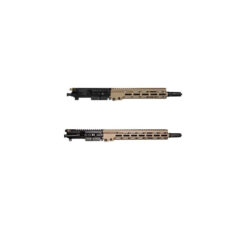
Geissele URGI CHF Barrel 5.56 Complete Upper Assembly Black/DDC Anodized-MK16 HG
Geissele Automatics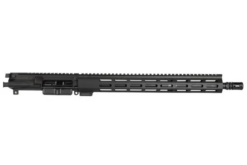
Complete Upper Price vs. Practical Performance
A useful way to think about the market is:
| Category | Typical Strength | Practical Tradeoff |
|---|---|---|
| PSA | Maximum affordability | Greater emphasis on price than refinement |
| Dirty Bird | Performance/value balance | Fewer boutique features |
| Aero Precision | Consistent mid-tier quality | Premium alternatives may offer greater refinement |
| BCM | Proven hard-use reliability | Higher price |
| Geissele | Highly refined system performance | Significant cost increase |
| Noveske | Premium construction and barrel reputation | Strong diminishing returns |
This isn’t a worst-to-best ranking.
It represents different priorities.
A $500 complete upper that reliably shoots the ammunition you use and provides the accuracy you need is not automatically inferior simply because another upper costs $1,200.
Where Premium Uppers Make the Biggest Difference
The additional expense becomes easiest to justify when the rifle will experience demanding use.
That could include:
- High round counts
- Frequent training
- Competition
- Precision-focused shooting
- Heavy accessory use
- Long-term ownership
- Environments where reliability is especially important
Under those conditions, small improvements in component life, assembly consistency, rail rigidity, barrel performance, and quality control begin adding up.
For occasional recreational shooting, those same improvements may be difficult to notice.
That’s the key to answering whether premium uppers are worth the money.
Is a Premium AR-15 Complete Upper Actually Worth It?
For some shooters, absolutely. For everyone, probably not.
A quality mid-priced Complete Upper can deliver excellent reliability, accuracy, and durability without premium-level pricing. Aero Precision and Dirty Bird offer strong performance in the middle of the market, while PSA remains a solid choice for budget-conscious builds.
BCM suits shooters who prioritize reliability and hard-use durability, while Geissele and Noveske appeal more to those seeking greater refinement, consistency, and overall build quality.
Much of the premium comes from details that are not obvious on a spec sheet, including barrel extension fit, receiver alignment, rail stability, machining consistency, assembly quality, and quality control.
In many cases, paying more means paying for tighter control over those variables.
If you are ready to compare options, Black Rifle Depot carries a wide selection of AR-15 complete uppers, from value-focused builds to premium configurations for shooters who want more refinement and long-term consistency.
Frequently Asked Questions
Choosing the right complete upper comes down to balancing performance, reliability, fitment, and budget. Here are answers to some of the most common questions buyers have when comparing AR-15 complete uppers.
What is an AR-15 Complete upper?
A complete upper generally combines the upper receiver, barrel, gas system, handguard, and muzzle device into an assembled unit. Some models also include a bolt carrier group and charging handle, while others require you to buy those components separately.
Are expensive AR-15 complete uppers more accurate?
Not automatically. Barrel quality, ammunition, optics, barrel-to-receiver fitment, assembly consistency, and shooter ability can all influence accuracy. Premium manufacturers generally offer greater consistency, but an affordable upper can still be exceptionally accurate.
Is BCM considered a premium AR-15 upper?
Yes. BCM is generally positioned toward the premium or duty-oriented side of the market, with a strong reputation for durability and reliability. It is often considered a practical premium option rather than a boutique manufacturer.
Is Aero Precision considered premium?
Aero Precision is more commonly considered a quality mid-tier manufacturer. Aero products typically provide better refinement and consistency than many entry-level options while remaining significantly less expensive than premium brands.
Are PSA complete uppers worth buying?
For many shooters, yes. PSA’s biggest strength is value. Its uppers are particularly attractive for recreational rifles, first builds, backup rifles, and budget-conscious projects where premium-level refinement isn’t necessary.
Does upper receiver fit affect accuracy?
It can. The relationship between the barrel extension and receiver, receiver-face alignment, barrel quality, and assembly consistency can all affect an upper’s overall mechanical consistency. However, receiver fit is only one part of the accuracy equation.
What is a thermal-fit AR-15 upper receiver?
A thermal-fit receiver uses a particularly tight dimensional relationship between the upper receiver and barrel extension. It is intended to create a very secure interface between the components. While popular among some precision builders, it isn’t required for an accurate or reliable AR-15.
Does the upper receiver brand need to match the lower receiver?
Generally, no. AR-15 components produced to compatible specifications are designed to work across manufacturers. Matching brands can improve cosmetic consistency, but performance depends more heavily on proper dimensions and component quality.
What matters most when buying a complete upper?
Start with intended use. Barrel quality, reliable cycling, bolt carrier group quality, gas-system configuration, handguard stability, assembly quality, and manufacturer quality control generally matter more than cosmetic upgrades.
How much should I spend on a complete upper?
There isn’t a single correct amount. A recreational shooter may be completely satisfied with an affordable or mid-priced upper, while someone expecting high round counts, demanding training, competition, or precision shooting may benefit from spending more.
Is a premium complete upper worth the extra money?
A premium complete upper is most worthwhile when you can benefit from greater manufacturing consistency, durability, barrel performance, assembly quality, and quality control. For typical range use, a well-made mid-tier upper often provides the better performance-to-price ratio.
What is the biggest overlooked factor when choosing an AR-15 upper?
Receiver and barrel fitment deserve considerably more attention than they receive. Buyers tend to focus on barrels, handguards, and BCGs, but the dimensional relationship between the receiver, barrel extension, receiver face, and rail system helps determine how consistently the entire upper functions as one assembly.
For additional support and online deals, check out our X Page.
