
AR-15 Optics
Best AR-15 Optics in 2026: LPVO to Red Dots
Jun
Table of Contents
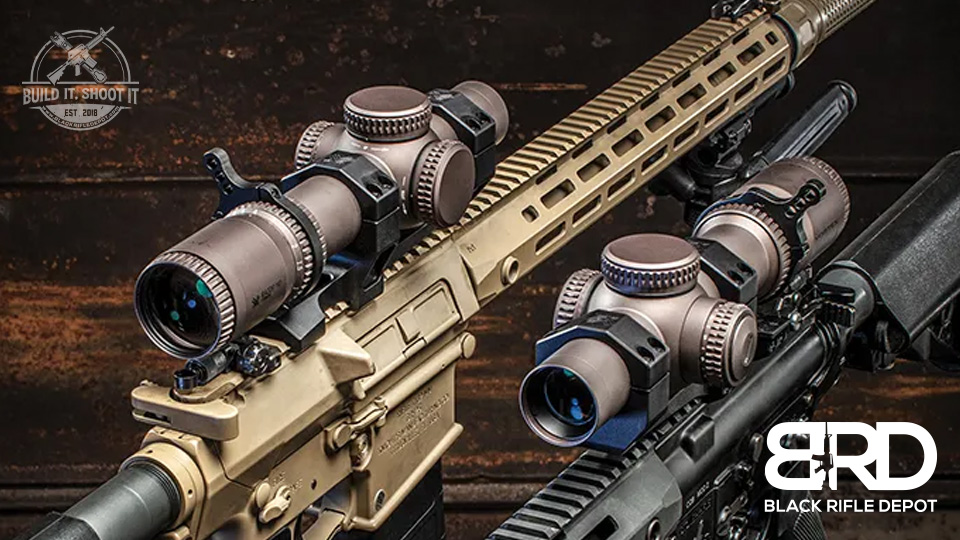
Choosing the right AR-15 optics can change how your rifle handles, how quickly you find your target, and how confident you feel at different distances. The AR-15 platform is extremely versatile, which is why no single optic works best for every shooter. A close-range home defense rifle, a range rifle, a competition setup, and a general-purpose carbine may all benefit from different sighting systems.
For most shooters, the decision usually comes down to three major options: red dots, holographic sights, and LPVO optics. Red dots are simple, fast, lightweight, and easy to use. Holographic sights serve a similar close-range role but offer a different reticle system and viewing experience. LPVO scopes, short for low-power variable optics, offer true versatility by allowing you to dial from low to higher magnification for better target identification and distance work.
The goal is not to say one is always better than the other. The goal is to help you understand what each optic does well, where each one has tradeoffs, and how to choose the best setup for your rifle.
What Are AR-15 Optics?
AR-15 optics are sighting systems designed to help shooters aim faster, see targets more clearly, and improve consistency. While iron sights still have their place, modern optics make the AR-15 easier to use for a wide range of shooting styles.
The most common AR-15 optics include:
- Red dot sights
- Holographic sights
- LPVO scopes
- Prism sights
- Magnifier combos
- Offset or piggyback red dot setups
For this guide, the focus is on LPVO, red dots, and holographic sights because those are among the most popular choices for modern AR-15 builds.
Red Dot Sights: Fast, Simple, and Lightweight
A red dot sight is one of the most popular AR-15 optics for close-range shooting. It uses an illuminated aiming point, usually a dot, that appears on the lens. The shooter places the dot on the target and presses the shot.
The biggest advantage of a red dot sight is speed. There is no magnification to adjust, no eye relief to fight, and no complex reticle to interpret. For close-range targets, range drills, home defense setups, and fast shooting, a red dot is hard to beat.
A red dot sight also allows both-eyes-open shooting. This helps maintain awareness and makes it easier to transition between targets. For many shooters, that natural aiming style is what makes red dots so appealing on AR-15 rifles.
Pros of Red Dot Sights
Red dots are lightweight, easy to mount, and simple to use. They work well on compact rifles and pistols, and they are usually more forgiving than magnified optics when shooting from awkward positions.
They are also available at many price points. Budget-friendly models can work well for range use, while premium red dots offer better durability, longer battery life, clearer glass, and more refined controls.
Cons of Red Dot Sights
The main limitation is distance. A red dot does not magnify the target. While skilled shooters can use a red dot at longer distances, target identification and precision become harder as distance increases.
Another factor is astigmatism. Some shooters see a dot as a starburst, smear, or comma instead of a crisp aiming point. In that case, a green dot, prism optic, holographic sight, or LPVO may be easier to use.
Holographic Sight vs Red Dot
The holographic sight vs red dot debate comes up often because both optics fill a similar role. Both are designed for fast aiming, close-range shooting, and both-eyes-open use. The difference is how they create the reticle and how the shooter experiences it.
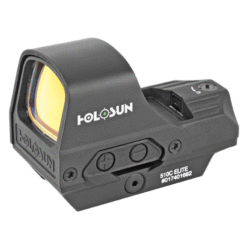
A red dot sight typically uses an LED emitter that reflects the dot back to the shooter. A holographic sight uses a different system to project a holographic reticle. In practical terms, both can be fast, but holographic sights often provide a larger viewing window and a reticle that some shooters find easier to pick up quickly.
Holographic sights also commonly use reticles with a center dot and outer ring. That design can be very fast at close range while still giving the shooter a finer aiming point for more precise shots.
When a Holographic Sight Makes Sense
A holographic sight makes sense if you want a fast optic with a large viewing window, a more detailed reticle, and strong close-range performance. It is a good fit for shooters who like the speed of a red dot but prefer a different reticle design.
When a Red Dot Makes More Sense
A red dot sight makes more sense if you want a lighter optic, longer battery life, simpler controls, and a wide range of price options. For many AR-15 owners, a red dot is the most practical optic choice.
LPVO Optics: Versatility From Close to Mid-Range
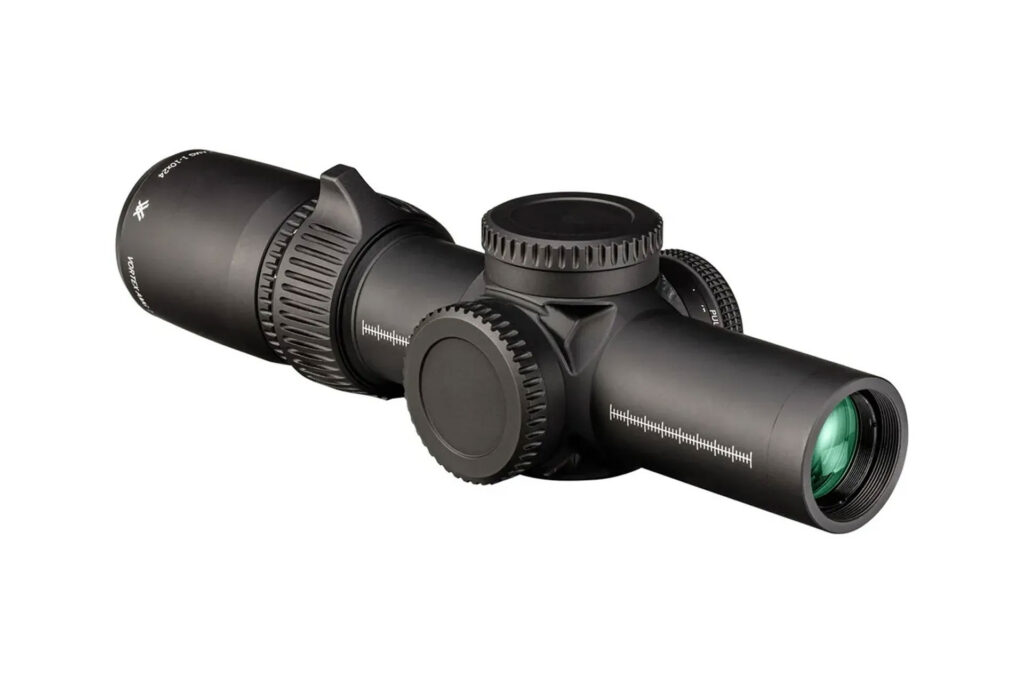
An LPVO scope is a low-power variable optic, usually starting at 1x and increasing to 4x, 6x, 8x, or 10x depending on the model. A common LPVO scope for an AR-15 might be a 1-6x or 1-8x.
At low magnification, an LPVO can be used for closer shooting. At higher magnification, it helps with target identification, more precise aiming, and longer shots. This is why LPVO optics have become so popular on general-purpose AR-15 rifles.
The best LPVO for AR-15 use depends on what you want the rifle to do. A 1-6x LPVO is a strong all-around choice. A 1-8x gives more magnification for distance, but it may add weight and cost. A 1-10x can be extremely capable, but usually makes the most sense for shooters who need the added magnification and are willing to pay for better glass.
LPVO vs Red Dot: Which Is Better?
The LPVO vs red dot question depends on distance, speed, weight, and simplicity.
A red dot is usually faster at close range. It is lighter, easier to use, and more forgiving from odd positions. For a rifle focused on close-range drills, defense, or simple range use, a red dot sight is often the better choice.
An LPVO is usually better when distance and target identification matter. If you want one optic that can handle close-range shooting and still help you see targets farther out, an LPVO is more versatile.
The tradeoff is weight and complexity. LPVO optics require proper mounting, adequate eye relief, magnification adjustment, and additional training to use effectively at speed. A red dot is more straightforward.

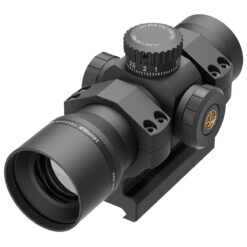
LPVO vs Red Dot Comparison Chart
| Feature | Red Dot Sight | Holographic Sight | LPVO Scope |
|---|---|---|---|
| Best Use | Close range, fast shooting | Close range, fast shooting, larger reticle window | Close to mid-range versatility |
| Magnification | None | None | Variable, usually 1x to 6x, 8x, or 10x |
| Speed Up Close | Excellent | Excellent | Good, but requires practice |
| Distance Capability | Limited without a magnifier | The reticle may still work without illumination | Stronger at distance |
| Weight | Light | Medium | Heavier |
| Battery Dependence | Yes | Yes | Reticle may still work without illumination |
| Simplicity | Very simple | Simple | More complex |
| Best For | Defense, drills, lightweight rifles | Fast shooting, larger viewing window | General-purpose rifles, range, hunting, competition |
Red Dot With Magnifier vs LPVO
A red dot with a magnifier is another popular AR-15 optic setup. This gives you the speed of a red dot with the option to flip a magnifier into place for longer shots.
A red dot and magnifier combo can be a good middle ground. With the magnifier flipped away, the rifle behaves like a standard red dot setup. When you need more reach, flip the magnifier into place.
However, this setup also has tradeoffs. A red dot and magnifier can be heavier than some LPVO setups, depending on the models used. It can also feel more cluttered on the upper receiver. An LPVO gives you a cleaner single-optic system, while a red dot and magnifier give you true red dot speed with optional magnification.
Best LPVO for AR-15 Use
The best LPVO for AR-15 rifles depends on budget, rifle purpose, and expected distance.
For most shooters, a 1-6x LPVO is one of the best all-around choices. It provides enough magnification for practical mid-range shooting without becoming too heavy or complicated. A 1-8x LPVO offers greater reach and can be a better fit for shooters who regularly shoot at longer distances. A 1-10x LPVO offers even more flexibility, but quality matters more as magnification increases.
When shopping for the best LPVO for the money, look at:
- Glass clarity
- Reticle design
- Illumination brightness
- Turret quality
- Weight
- Eye box forgiveness
- Mount quality
- Durability
- Warranty
A cheaper LPVO may look good on paper, but poor glass, a tight eye box, or weak illumination can make it frustrating to use. A good LPVO should be clear, repeatable, durable, and easy to use at both low and high magnification.
Vortex LPVO Options
Vortex LPVO scopes are popular because the brand offers options across a range of budgets. A Vortex LPVO can be a good fit for shooters seeking a practical optic with solid features, dependable construction, and a range of magnification options.
Entry-level Vortex LPVO optics can work well for range rifles and general shooting. Higher-end Vortex options offer better glass, improved reticles, stronger illumination, and more refined controls. For shooters comparing the best LPVOs for AR-15 rifles, Vortex is often one of the first brands to consider.
Vortex Red Dot Sight Options
A Vortex red dot sight is another strong choice for AR-15 owners who want a fast, simple optic. Vortex offers several red dot options that work well on carbines, AR pistols, shotguns, and handguns.
For AR-15 use, look for a red dot with a durable housing, usable brightness settings, a clear dot, and a mount height that works with your rifle. Some red dots are designed around a lower 1/3 co-witness or absolute co-witness height, while others may need a separate riser.
A pistol red dot sight can also be used on some rifle setups, depending on the mount. However, make sure the optic is durable enough for the rifle and that the mounting system gives you the proper height.
Pistol Red Dot Sight vs Rifle Red Dot Sight
A pistol red dot sight is usually smaller and lighter than a rifle red dot. It is designed to mount on a handgun slide, which means it must handle slide movement and recoil. These optics are also popular for offset or piggyback mounting on rifles.
The best red dot sight for pistol use may not always be the best red dot for an AR-15. On a rifle, you may prefer a larger window, bigger controls, longer battery life, or a more rugged mount. On a pistol, size, weight, footprint, and concealability matter more.
That said, pistol red dots can work very well as secondary optics on AR-15 rifles. Many shooters mount a small red dot at a 45-degree offset next to an LPVO. Others mount one on top of the LPVO mount for quick close-range use.
LPVO With Offset Red Dot
An LPVO with an offset red dot gives you the best of both worlds, but it also adds weight and complexity. The LPVO handles magnified shooting, while the offset red dot gives you a fast close-range option.
This setup is popular with competition shooters and experienced users who want quick transitions between close and mid-range targets. Instead of dialing the LPVO back to 1x, the shooter can rotate the rifle slightly and use the red dot.
For most casual shooters, this may be more setup than necessary. For a rifle that needs maximum versatility, it can be very effective.
How to Sight In a Red Dot
Learning how to sight in a red dot is important if you want consistent results. A red dot must be zeroed so the point of aim matches the point of impact at your chosen distance.
A common AR-15 red dot zero is 50 yards. Some shooters prefer 25 yards, while others use 36 yards, 100 yards, or another distance based on their needs. The right zero depends on your rifle, ammunition, optic height, and intended use.
Basic red dot sight-in process:
- Mount the optic securely.
- Confirm the rifle is unloaded before setup.
- Use a stable shooting position at the range.
- Start at a closer distance if needed to get on paper.
- Fire a careful group, usually three to five shots.
- Adjust windage and elevation based on the group.
- Repeat until the group lands where you want it.
- Confirm at your chosen zero distance.
- Recheck your zero after transport, optic changes, or hard use.
How Do You Zero a Red Dot Sight?
To zero a red dot sight, adjust the optic until the bullet impact matches your aiming point at a specific distance. Most red dots have windage and elevation adjustments. Windage moves the point of impact left or right. Elevation moves it up or down.
Always adjust based on the group, not a single shot. A single shot can be affected by shooter error, wind, ammo inconsistency, or position. A group gives you a better idea of where the rifle is actually printing.
Once zeroed, make a note of the distance, ammunition, and optic setup. If you change ammo, barrel length, optic mount, or riser height, confirm your zero again.
What About Co-Witness?
Co-witness refers to how iron sights line up with a red dot sight. With an absolute co-witness, the red dot lines up directly with the iron sights. With a lower 1/3 co-witness, the irons sit lower in the optic window.
Neither is automatically better. Absolute co-witness can feel familiar if you like using irons. The lower 1/3 co-witness provides a less cluttered sight picture and is very popular on AR-15 rifles.
If you are using a red dot sight, make sure your mount height matches the co-witness setup you want.
Which AR-15 Optic Should You Choose?
For the fastest, simplest, and lightest close-range setup, a red dot is hard to beat. It works especially well on a home-defense rifle, range carbine, or lightweight AR pistol.
Shooters who like red-dot speed but want a larger viewing window may prefer a holographic sight. The reticle style can also be easier for some users to track quickly.
When distance and versatility matter more, an LPVO is the better fit. It gives you improved target identification and the ability to shoot at varying distances using a single optic.
Maximum flexibility comes from pairing an LPVO with an offset red dot. This setup gives you both magnified capability and fast close-range aiming, but it does add weight, cost, and setup complexity.
A red dot with a magnifier is another strong option. You still get true red-dot speed up close, with the ability to flip the magnification when needed.
FAQ: AR-15 Optics, LPVO, and Red Dots
Choosing among a red dot, holographic sight, LPVO, or magnifier setup can raise many common questions. The answers below cover the basics of AR-15 optics, how each option works, and which setup may make the most sense for your rifle.
What is the best optic for an AR-15?
The best optic for an AR-15 depends on how the rifle will be used. A red dot is best for speed and close-range shooting. An LPVO is better for versatility and distance. A holographic sight is a strong option for shooters who want fast target acquisition with a larger reticle window.
Is an LPVO better than a red dot?
An LPVO is better if you need magnification, target identification, and more precision at distance. A red dot is better if you want speed, simplicity, lighter weight, and easier close-range use.
What is the best LPVO for AR-15 rifles?
The best LPVO for AR-15 rifles is usually a quality 1-6x or 1-8x scope with clear glass, a usable reticle, reliable adjustments, and a forgiving eye box. Vortex LPVO optics are popular because they offer options for a range of budgets and shooting needs.
What is the best LPVO for the money?
The best LPVO for the money is one that balances glass quality, durability, reticle design, and price. Do not shop by magnification alone. A clear, dependable 1-6x may be more useful than a cheaper 1-10x with poor glass or a tight eye box.
Are red dots good for AR-15 rifles?
Yes, red dots are excellent for AR-15 rifles. They are fast, simple, lightweight, and easy to use. They are especially popular for close-range shooting, range drills, defensive setups, and lightweight builds.
What is the difference between a holographic sight and a red dot?
A red dot uses an LED emitter to create the aiming point, while a holographic sight uses a different reticle projection system. Both are fast, but holographic sights often have larger windows and more complex reticles. Red dots are usually lighter and often have longer battery life.
Can you use a pistol red dot sight on an AR-15?
Yes, a pistol red dot sight can be used on an AR-15 with the correct mount. Many shooters use pistol red dots as offset or piggyback optics with an LPVO. Just make sure the optic and mount are appropriate for rifle use.
How do you zero a red dot sight?
To zero a red dot sight, shoot a group at your chosen distance, adjust windage and elevation until the group matches your aiming point, and confirm with additional groups. Common red dot zero distances include 25, 36, 50, and 100 yards.
How do you sight in a red dot?
Mount the red dot securely, shoot from a stable position, fire a group, make adjustments, and repeat until your point of impact matches your point of aim. Always confirm zero at the distance you plan to use.
Should I run a red dot with a magnifier or an LPVO?
A red dot with a magnifier is better if you want true red dot speed with optional magnification. An LPVO is better if you want a cleaner single-optic setup with adjustable magnification and a more detailed reticle.
Final Thoughts: Choosing the Right AR-15 Optics
The best AR-15 optics are the ones that match your rifle, your shooting style, and your realistic distance needs. A red dot sight is one of the fastest and simplest options for close-range shooting. A holographic sight offers similar speed with a different reticle experience. An LPVO gives you more flexibility when targets move from close range to mid-range distances.
For many shooters, the choice comes down to speed versus versatility. If you want a lightweight rifle that is fast and simple, choose a red dot. If you want a single optic that can handle longer distances, choose an LPVO. If you want both, consider a red dot and magnifier combo or an LPVO with an offset red dot.
When you are ready to upgrade your rifle, shop AR-15 red dot sights, holographic sights, LPVO optics, mounts, risers, and magnifiers at Black Rifle Depot. The right optic can make your AR-15 faster, more capable, and better suited to the way you actually shoot.
For additional support, check out our X Page.
