
AR-15 Bolt Carrier Group, AR-15 BCG, AR-15 Parts
Premium vs. Budget AR-15 BCG: Is a More Expensive Bolt Carrier Group Worth It in 2026?
Sep
Table of Contents
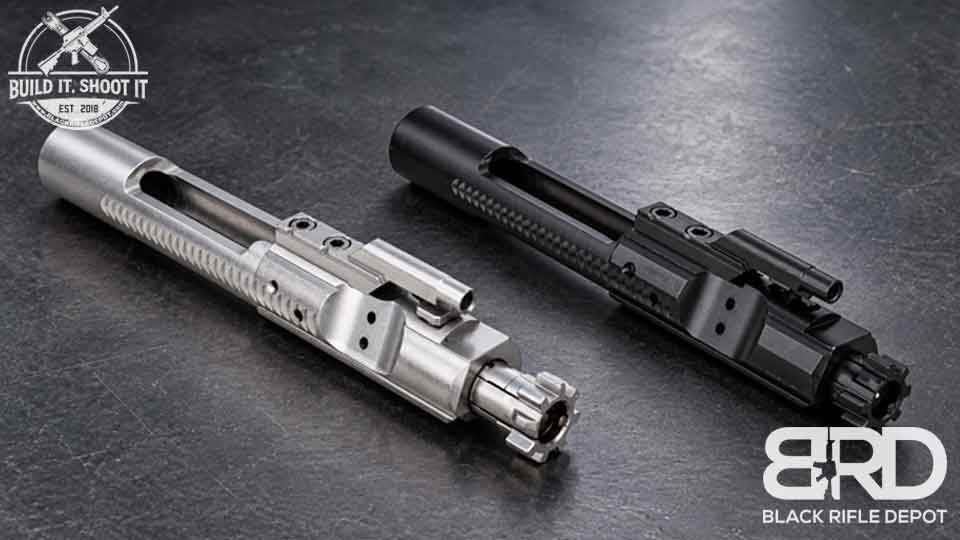
The bolt carrier group is one of the hardest-working assemblies inside an AR-15. Every time the rifle cycles, the BCG unlocks the bolt, extracts and ejects the fired case, resets the hammer, strips the next round from the magazine, chambers it, and locks the action back into battery. Because it performs so many critical functions, it is easy to assume that spending more on AR-15 BCGs automatically means getting better reliability and longer service life.
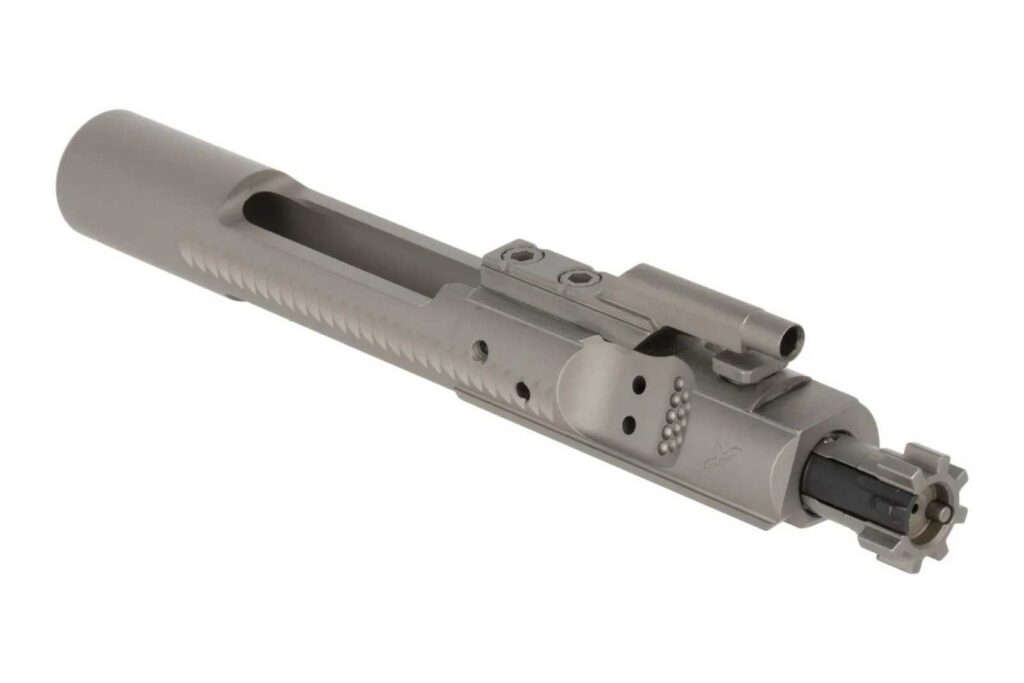
That is not always the case. A properly manufactured budget bolt carrier group can deliver excellent reliability for thousands of rounds, while a premium model may cost two or three times as much without producing a noticeable difference for the average shooter. At the same time, some premium AR-15 BCGs offer better materials, more extensive quality control, advanced coatings, enhanced bolt designs, or specialized features that can justify the extra cost.
The real question is not whether premium BCGs are better. It is whether the extra features matter for how you actually use your rifle.
What Makes a Good AR-15 BCG?
Before comparing budget and premium options, it helps to understand what matters in an AR-15 bolt carrier group. Price should come after the fundamentals, because an expensive BCG with poor manufacturing is still a poor BCG.
A dependable bolt carrier group should use quality materials, proper machining, reliable heat treatment, a correctly installed gas key, durable gas rings, and consistent dimensional tolerances. Common features worth looking for include Carpenter 158 or quality 9310 bolt steel, an 8620 steel carrier, a properly torqued and staked gas key, durable extractor components, and a proven surface finish such as phosphate, nitride, chrome, DLC, or another reputable treatment.
Testing is another factor. Magnetic Particle Inspection, commonly referred to as MPI, is used to identify potential surface or near-surface defects in the bolt. High Pressure Testing, or HPT, subjects the bolt to a proof load before inspection. These procedures can add confidence, but they should be considered alongside the manufacturer’s overall quality control, not treated as the only indicators of quality.
Budget AR-15 BCGs Have Improved
The AR market has changed significantly over the years, and reliable components are now much more affordable than they once were. Better manufacturing, increased competition, and higher production volume have allowed many companies to offer AR-15 BCGs at reasonable prices without sacrificing the basic materials and features needed for dependable operation.
That creates an important distinction between a budget BCG and a cheap BCG. A budget BCG is priced competitively but still built to solid specifications. A cheap BCG may hit a low price by cutting corners on machining, materials, staking, inspection, heat treatment, or quality control.
For a general-purpose rifle, recreational build, spare upper, or range gun, a well-made budget bolt carrier group from an established manufacturer may be more than enough. The key is evaluating the component itself instead of assuming price automatically reflects quality.
How Cheap Is Too Cheap?
There is no exact dollar amount where a bolt carrier group suddenly becomes unreliable. Instead, buyers should focus on what they are actually getting for the price.
If an unusually inexpensive AR-15 BCG provides little information about bolt steel, carrier material, testing, gas key staking, or finish, that should raise questions. The same is true when the manufacturer has little track record or gives vague specifications.
On the other hand, established manufacturers often sell standard phosphate or nitride BCGs at very competitive prices. These models may lack exotic coatings or enhanced geometry, but they can still offer excellent reliability if the machining, materials, and assembly are correct.
For most shooters, the strongest value often falls in the middle of the market. Once the core specifications are there, the next price jump usually buys refinement rather than a dramatic increase in basic function.
Where Diminishing Returns Begin
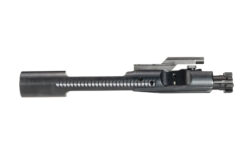
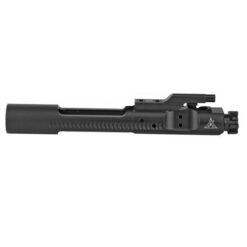
Diminishing returns are one of the most important factors when comparing AR-15 BCGs. Moving from a poorly made no-name BCG to a properly manufactured budget or mid-range option can meaningfully improve reliability, consistency, and durability.
Moving from a good mid-range BCG to a premium model can still provide benefits, but they’re usually smaller. You may gain a premium coating, better quality-control procedures, upgraded bolt components, tighter manufacturing consistency, or a specialized carrier design.
At higher price points, those improvements become increasingly specific to certain rifles and use cases. A $300 BCG is not automatically three times more reliable than a $100 BCG. Once the fundamentals are covered, extra money usually buys specialized advantages rather than a proportional performance increase.
That is why it makes more sense to choose a BCG based on the rifle’s purpose than to shop by price alone.
What Features Can Justify Premium Pricing?
Premium AR-15 BCGs make the most sense when the additional cost is tied to features that offer a practical benefit. Some premium features genuinely improve durability, maintenance, or consistency, while others may have little value for a recreational rifle.
Better Quality Control
One of the strongest reasons to pay more is manufacturing consistency. Premium manufacturers may perform more extensive inspection, individual bolt testing, dimensional checks, or additional quality-control procedures before the component leaves the factory.
This does not mean every budget BCG has poor quality control. It means premium pricing can sometimes reduce the chances of receiving an out-of-spec part, which may be especially valuable for rifles intended for defensive, professional, or high-round-count use.
Premium Coatings and Finishes
Traditional phosphate remains one of the most proven carrier finishes available, while nitride is popular because it provides a hard, smooth, corrosion-resistant surface at a reasonable price. Both can work extremely well when applied correctly.
Premium AR-15 BCGs may use finishes such as hard chrome, nickel boron, DLC, or proprietary coatings. Depending on the treatment, these finishes may offer easier cleaning, increased surface hardness, improved corrosion resistance, reduced friction, or better wear resistance.
Those benefits can be worthwhile, especially for shooters who run suppressed rifles or shoot frequently. However, an expensive coating does not automatically make the BCG more reliable than a properly made phosphate or nitride option.
| BCG Finish / Coating | Corrosion Resistance | Ease of Cleaning | Lubricity | Wear Resistance | Typical Cost | Best For |
|---|---|---|---|---|---|---|
| Phosphate | Good | Fair | Fair | Very Good | $ | Proven, general-purpose builds |
| Black Nitride | Very Good | Very Good | Good | Very Good | $–$$ | Best overall value |
| Hard Chrome | Excellent | Excellent | Very Good | Excellent | $$–$$$ | High-round-count and hard-use rifles |
| Nickel Boron (NiB) | Excellent | Excellent | Excellent | Very Good | $$–$$$ | Easy cleaning and slick operation |
| DLC | Excellent | Excellent | Excellent | Excellent | $$$ | Premium and high-use builds |
| TiN | Excellent | Excellent | Excellent | Very Good | $$$ | Premium builds and appearance |
Enhanced Bolt Designs
Some premium manufacturers go beyond traditional bolt designs by changing lug geometry, extractor support, cam path geometry, materials, or heat treatment. These changes are often intended to improve durability or reliability under more demanding operating conditions.
A high-quality AR-15 bolt carrier group with enhanced components may make more sense in a rifle that sees high round counts, heavy suppressed use, short gas systems, or prolonged training sessions. In a low-round-count recreational rifle, those advantages may be much harder to notice.

Full-Auto vs. Semi-Auto BCGs
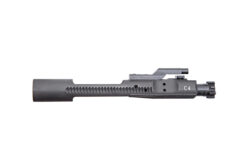
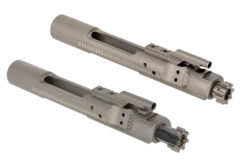
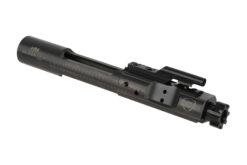
The phrase FA BCG AR15 generally refers to a carrier with the traditional M16 or full-auto profile. A full-auto bolt carrier for AR15 rifles is commonly used in standard semi-automatic builds because it provides the traditional full-mass carrier design.
That extra carrier mass can help provide consistent cycling across a wide range of common AR configurations. It is also one of the most standardized designs available, which is why many manufacturers use it as their default carrier profile.
The terminology sometimes causes confusion. A full-auto-profile carrier does not make a standard semi-automatic AR-15 fully automatic. The term describes the physical carrier profile, not the rifle’s firing capability.
For most general-purpose builds, a standard full-mass BCG is still an excellent place to start.
Does BCG Weight Matter?
Carrier weight can influence how the rifle cycles, particularly in tuned or specialized builds. A standard full-mass carrier provides a wide reliability window and generally works well with common gas systems, buffer weights, springs, and ammunition.
Lightweight carriers reduce reciprocating mass and may create a softer or flatter-feeling recoil impulse when combined with a properly tuned gas system. However, they are usually part of a complete system rather than a simple drop-in upgrade.
Changing carrier weight without considering gas flow, buffer weight, spring rate, ammunition, and suppressor use can reduce reliability. This is another example of why you should buy more expensive or specialized AR-15 BCGs for a specific purpose, not just because they are considered an upgrade.
When a Premium BCG Is Worth the Money
A premium bolt carrier group becomes easier to justify when the rifle sees harder use or when the added features address a specific operating condition.
High-round-count training rifles and competition guns can benefit from more durable finishes, improved extractor components, upgraded bolt materials, and tighter quality-control standards. The more frequently a rifle is used, the more meaningful small improvements in wear resistance and service life can become.
Suppressed rifles can also benefit from premium features. Suppressors often increase heat, fouling, and gas in the operating system. Certain AR-15 BCGs feature enhanced coatings or specialized features that make maintenance easier or help manage those conditions.
Duty and defensive rifles are another area where buyers may be willing to spend more. In those cases, the value is often less about gaining a dramatic performance increase and more about paying for additional consistency, testing, and confidence in the manufacturing process.
Short-barreled or highly tuned builds can also justify specialized carriers. Shorter gas systems may cycle more aggressively, and enhanced bolt or carrier designs can make more sense when you’re already tuning the operating system around specific ammunition, suppressors, buffers, or springs.
When a Budget BCG Makes More Sense
Premium does not always mean necessary. For a recreational rifle, occasional range gun, spare upper, or general-purpose 16-inch build, a proven budget or mid-range BCG can provide everything most shooters need.
If the BCG uses quality materials, has proper gas key staking, reliable gas rings, good machining, and a durable finish, spending significantly more may not produce a noticeable difference. In many cases, that extra money may be better spent elsewhere in the rifle.
A better barrel, optic, trigger, magazines, ammunition, or additional training can often provide a more obvious improvement than moving from a reliable mid-range BCG to a very expensive premium option.
That is why the best value isn’t always at the lowest or highest end of the market. It is often found in the middle, where the major reliability features are already present without paying heavily for specialized refinements.
What About .22 LR Bolt Carrier Groups?
A .22 bolt carrier group for AR platforms is different from a conventional centerfire BCG. Many .22 LR conversion systems use a dedicated conversion assembly that replaces the standard carrier and lets the rifle run on rimfire ammunition.
Dedicated .22 LR uppers may also use their own bolt systems designed specifically around the cartridge. Because the operating system is different, .22 LR conversion assemblies should not be directly compared with standard 5.56 or .223 AR-15 BCGs.
If you are shopping for a .22 LR conversion or dedicated rimfire build, make sure the bolt assembly is designed for your specific barrel, chamber, and upper configuration.
Final Thoughts: Are Premium AR-15 BCGs Worth It?
Premium AR-15 BCGs can absolutely be worth the additional money, but only when the extra cost gives you something that matters for your rifle. For many shooters, the biggest improvement comes from moving away from questionable bargain components and into a properly manufactured budget or mid-range BCG with proven materials, good machining, proper gas key staking, and consistent quality control.
Once those fundamentals are covered, the benefits of spending more become more incremental. Premium coatings can make cleaning easier, enhanced bolts may improve durability, specialized carriers can benefit tuned or suppressed rifles, and additional testing can provide more confidence in the component. Those advantages can matter, but they are not equally valuable to every shooter.
For a recreational rifle that sees moderate use, a dependable mid-priced BCG may provide nearly everything you need. For a high-round-count, suppressed, duty, or specialized build, stepping up to a premium option may make more sense.
The best AR-15 BCG is not automatically the cheapest or the most expensive. It is the one that offers the right combination of reliability, durability, materials, finish, and features for how you actually use your rifle.
If you are comparing AR-15 BCG’s for sale, Black Rifle Depot carries bolt carrier groups across a range of brands, finishes, configurations, and price points. Whether you are building on a budget or looking for a premium upgrade, comparing the actual specifications can help you choose the right BCG without paying for features you do not need.
AR-15 BCG FAQ
Budget, mid-range, and premium bolt carrier groups overlap a lot. These quick answers cover some of the most common questions buyers have when comparing AR-15 BCGs.
Is an expensive AR-15 BCG more reliable?
Not automatically. Manufacturing quality, materials, tolerances, assembly, and quality control are more important than price alone. A properly made mid-priced BCG can be extremely dependable.
Is a full-auto BCG better for an AR-15?
A full-auto-profile BCG is a popular choice because of its standard full-mass design and broad compatibility with conventional AR-15 setups. It does not make a semi-automatic rifle fully automatic.
Is HPT and MPI testing important?
Both are useful quality-control procedures. MPI helps identify potential material defects, while HPT subjects the bolt to a high-pressure proof load before inspection. Buyers should consider testing alongside the manufacturer’s overall reputation and QC standards.
Are premium BCG coatings worth paying more for?
They can be. Chrome, DLC, nickel boron, and other enhanced finishes may provide benefits such as easier cleaning, corrosion resistance, or reduced friction. However, a properly manufactured phosphate or nitride BCG can still perform excellently.
How much should I spend on an AR-15 BCG?
There isn’t one ideal price. For most builders, prioritize a reputable manufacturer, quality materials, good gas key staking, appropriate testing, and consistent machining before paying extra for cosmetic or specialized features.
For additional support and online deals, check out our X Page.
