
AR-15 Triggers
Single-Stage vs. Two-Stage AR-15 Triggers: What’s the Difference?
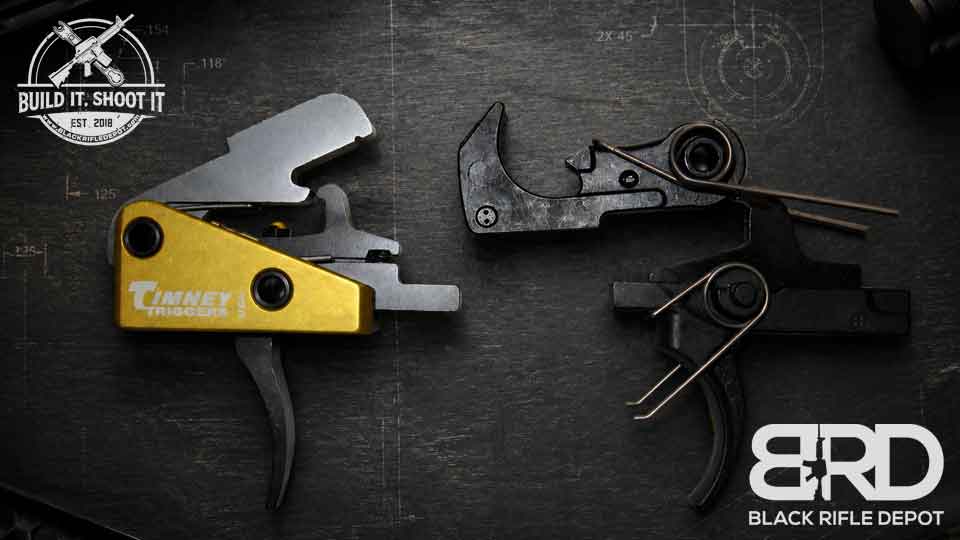
Aug
Table of Contents
Few upgrades change the way an AR-15 feels as immediately as the trigger. AR-15 Triggers are one of the primary contact points between the shooter and the rifle’s firing mechanism, so differences in pull, break, reset, and overall feel can have a noticeable effect on consistency and control.
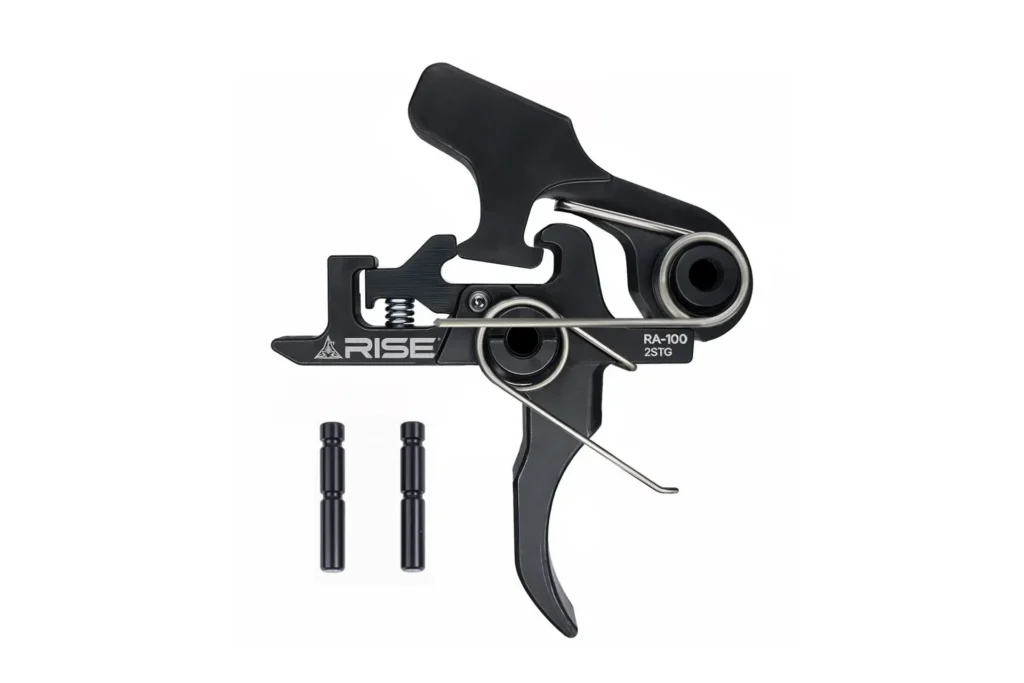
That makes choosing between single-stage and two-stage AR-15 triggers an important decision when building a new rifle or upgrading an existing one.
The debate over Single-Stage Vs. Two-Stage Triggers is not really about one design being universally better than the other. Both can offer excellent performance. The better choice depends on the rifle, the type of shooting being done, and the trigger characteristics the shooter prefers.
Some shooters want the direct, predictable break of a single-stage trigger. Others prefer the deliberate take-up and defined wall of a two-stage design.
Understanding how these two types of AR-15 Triggers differ makes it much easier to determine which setup belongs in your rifle.
What Does “Stage” Mean in AR-15 Triggers?
A trigger stage describes how the movement and resistance of the trigger are felt before the shot breaks. It does not describe how many times the rifle fires, nor does it necessarily indicate how complicated the trigger is internally.
With single-stage AR-15 Triggers, pressure is applied through one primary movement until the trigger reaches its break point.
With a two-stage design, the pull is intentionally divided into two distinct portions. The shooter moves through the first stage, reaches a defined resistance point commonly referred to as the wall, and then applies additional pressure through the second stage until the trigger breaks.
Single-stage designs are common among conventional factory AR-pattern fire control groups, while two-stage designs create a distinct first-stage-to-second-stage transition.
The easiest way to understand the difference is by looking at how each trigger feels during the pull.
What Is a Single-Stage AR-15 Trigger?
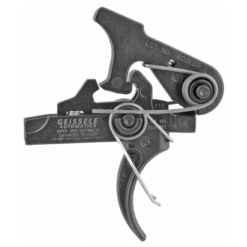
A single-stage trigger delivers its pull in one primary stage.
Once the shooter begins applying pressure, the trigger moves toward the break without the pronounced first-stage-to-second-stage transition found in a two-stage system.
Many shooters first become familiar with AR-15 Triggers through a conventional single-stage fire control group. Aftermarket versions retain that general operating feel while potentially offering a smoother pull, cleaner break, reduced creep, a more noticeable reset, a different trigger shoe, or a different pull weight.
The defining characteristic is not how light the trigger is.
A single-stage trigger can have a relatively heavy or light pull depending on its design. What makes it a single-stage trigger is the way resistance and movement are presented to the shooter.
Advantages of Single-Stage AR-15 Triggers
One of the primary advantages of single-stage AR-15 Triggers is simplicity of feel.
Shooters who want a straightforward trigger press often appreciate being able to apply pressure and move directly toward one predictable break point.
Depending on the individual design, advantages may include:
- One direct trigger press
- Little perceptible staging
- A crisp, easily recognized break
- Positive reset characteristics
- A familiar feel for shooters accustomed to traditional AR fire control groups
- Versatility for recreational, general-purpose, and competition-oriented rifles
A shooter searching for the best single-stage trigger for ar15 use should look beyond pull weight alone.
Break quality, creep, overtravel, reset, trigger shoe shape, materials, construction, reliability, intended application, and personal preference can all be important when comparing single-stage AR-15 Triggers.


Potential Drawbacks of a Single-Stage Trigger
The direct feel that makes single-stage triggers appealing can also be less desirable for someone who likes to deliberately prepare the trigger before a precision shot.
There is no distinct first stage that can be taken up before reaching a separate wall.
Very light AR-15 Triggers also require careful handling and disciplined trigger-finger placement. A lighter trigger is not automatically a better trigger, particularly when a rifle will be used from different shooting positions or for several different purposes.
For many shooters, the ideal single-stage trigger is not necessarily the lightest model available.
It is the one that provides a consistent, predictable break that matches the rifle and its intended use.
What Is a Two-Stage AR-15 Trigger?
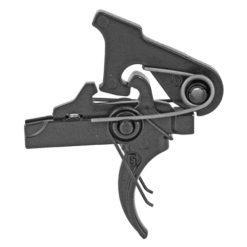
A two-stage trigger divides the trigger press into two perceptible sections.
During the first stage, the shooter deliberately moves through a portion of the trigger’s travel. The trigger then reaches a more defined point of resistance known as the wall.
From there, a smaller additional amount of pressure moves the trigger through the second stage and releases the hammer.
An AR-15 2-stage trigger therefore gives the shooter a tactile indication that the trigger has been prepared and is approaching its break point.
This first-stage-plus-wall arrangement is why two-stage triggers are commonly associated with deliberate and precision-oriented shooting.
The total trigger pull should not be confused with only the second-stage weight. The overall resistance can be distributed between the first and second stages depending on the specific trigger design.
Advantages of Two-Stage AR-15 Triggers
Two-stage AR-15 Triggers provide a defined stopping point before the final break.
Many shooters find that this allows them to prepare the trigger while continuing to refine sight alignment and shooting position.
Potential advantages include:
- A clearly recognizable first stage
- A defined wall before the break
- Greater tactile feedback during trigger preparation
- The ability to deliberately stage the trigger
- A controlled feel favored by many precision-oriented shooters
- A combination of initial resistance and a refined final break
These characteristics make two-stage AR-15 Triggers worth considering for precision rifles, target rifles, SPR-style builds, hunting configurations, and other applications where deliberate shot placement is a priority.
Potential Drawbacks of a Two-Stage Trigger
Not every shooter prefers the additional movement of the first stage.
Someone accustomed to a crisp single-stage trigger may initially interpret the first stage as unnecessary travel.
There can also be a slight learning curve. A shooter needs to become familiar with where the first stage ends, how clearly the wall is defined, and how much additional pressure is necessary to complete the second stage.
That does not make two-stage AR-15 Triggers slower or inferior by default. It simply demonstrates why trigger preference is highly individual.
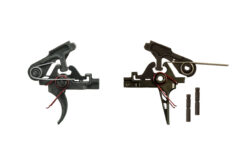
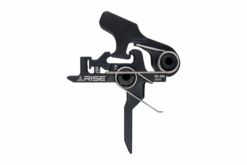
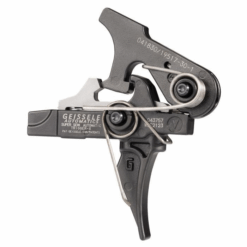
Single-Stage Vs. Two-Stage Triggers: Side-by-Side Comparison
| Characteristic | Single-Stage | Two-Stage |
|---|---|---|
| Pull sequence | One primary pull | First stage, wall, second stage |
| Trigger preparation | Direct press toward break | Can be prepared at the wall |
| Typical feel | Direct and crisp | Progressive and controlled |
| Noticeable take-up | Usually minimal | Intentionally present |
| Precision use | Very capable | Frequently preferred |
| General-purpose use | Excellent | Excellent |
| Learning curve | Usually familiar | May require adjustment |
| Reset | Depends on model | Depends on model |
| Pull weight | Varies widely | Varies widely |
| Drop-in versions available | Yes | Yes |
This comparison illustrates why choosing between AR-15 Triggers should be based on feel and intended use rather than broad assumptions.
A premium single-stage trigger can provide excellent control for precision shooting, while a quality two-stage trigger can still operate efficiently during faster strings of fire.
Stage count describes how the trigger communicates with the shooter. It does not establish a hard limit on what the rifle can do.
Do Two-Stage AR-15 Triggers Make a Rifle More Accurate?
A trigger does not change the mechanical accuracy potential of the barrel, ammunition, optic, or other components of the rifle.
What AR-15 Triggers can change is how easily the shooter interacts with that mechanically accurate system.
A predictable trigger break can make it easier for the shooter to avoid disturbing the rifle immediately before the shot.
For some shooters, the defined wall of a two-stage trigger makes that process easier. They can move through the first stage, settle against the wall, refine the sight picture, and then complete the trigger press.
Other shooters achieve excellent consistency with a crisp single-stage trigger.
Instead of asking which trigger makes a rifle more accurate, a more useful question is:
Which trigger allows you to press the trigger most consistently without disturbing the rifle?
That answer can be different for every shooter.
Trigger Pull Weight Is Only Part of the Story
It is easy to focus entirely on advertised pull weight when shopping for AR-15 Triggers.
However, two triggers with identical advertised pull weights can feel dramatically different.
Several characteristics influence the overall trigger experience.
Take-Up
Take-up is movement that occurs as the trigger begins traveling toward the primary resistance point or break.
Two-stage triggers intentionally use noticeable first-stage movement. Single-stage models generally minimize this sensation.
The Wall
The wall is the noticeable increase in resistance immediately before the trigger breaks.
A pronounced wall is one of the defining characteristics shooters look for when choosing an AR-15 2-stage trigger.
Creep
Creep refers to perceptible trigger movement that continues while pressure is being applied before the trigger finally breaks.
Some shooters are particularly sensitive to creep and prefer AR-15 Triggers with an extremely crisp break.
Break
The break is the point where the trigger releases the firing mechanism.
Trigger reviews frequently describe a break using terms such as crisp, clean, rolling, or glass-like because the sensation can differ significantly between designs.
Overtravel
Overtravel is the distance the trigger continues moving after the break.
Some performance-oriented triggers minimize this movement.
Reset
Reset occurs as the trigger moves forward after a shot until the fire-control system is ready for another trigger press.
Reset distance and feel vary considerably among different AR-15 Triggers.
This is why buyers should evaluate the complete trigger cycle instead of comparing triggers solely by pull weight.
What Is an AR15 Drop-In Trigger?
An ar15 drop-in trigger is a modular trigger assembly in which several of the primary fire-control components are contained inside a cassette or housing.
Instead of installing the traditional trigger and hammer components individually, the modular assembly is positioned inside the lower receiver and secured according to the manufacturer’s design.
Black Rifle Depot describes drop-in trigger groups as modular units that house fire-control components together, distinguishing the construction style from a conventional multi-piece fire-control group.
One important distinction is that drop-in does not mean single-stage.
An ar15 drop-in trigger can be single-stage or two-stage.
These terms answer two completely different questions:
- Single-stage or two-stage? — This describes how the trigger pull feels.
- Traditional or drop-in? — This describes how the trigger assembly is constructed.
Drop-in AR-15 Triggers are available in both stage configurations, as are more traditional component-style trigger groups.
Understanding that distinction can make shopping much easier.
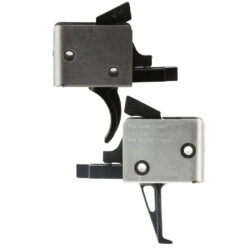
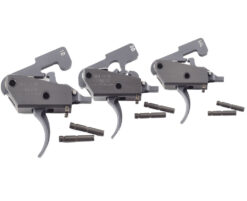
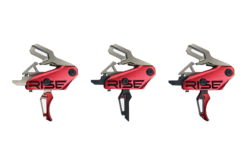
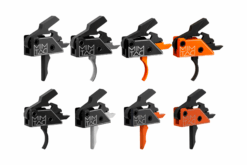
Traditional Fire Control Groups vs. Drop-In AR-15 Triggers
Traditional fire control groups typically use separate hammer, trigger, disconnector, springs, and associated components installed directly into the lower receiver.
A drop-in trigger group many of those working components inside a self-contained housing.
Neither format automatically produces a better trigger.
High-quality AR-15 Triggers can be found in both configurations.
A buyer may prefer a drop-in design because of its modular construction, while another shooter may prefer a traditional component-based system.
Stage configuration should still be evaluated separately.
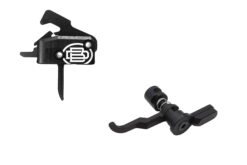
Curved vs. Flat AR-15 Trigger Shoes
After deciding between single-stage and two-stage AR-15 Triggers, another decision is trigger shoe shape.
The most common choices are curved and flat.
Curved Trigger
A curved trigger provides the familiar contour found on traditional AR trigger shoes.
The curved surface tends to naturally guide the trigger finger toward the center portion of the shoe.
Shooters who have spent significant time behind conventional AR-15 Triggers may find this shape immediately familiar.
Flat Trigger
A flat trigger provides a straighter trigger face.
This can allow more flexibility in where the trigger finger contacts the shoe. Moving the finger higher or lower on the trigger can also change the perceived leverage.
Some flat models include a slight hook or raised edge near the bottom to help establish consistent finger placement.
Neither shape is inherently superior.
Trigger shoe geometry is largely a matter of comfort, hand size, shooting technique, and preference.
What About an AR-15 Forced Reset Trigger?
An AR-15 forced-reset trigger should not be confused with the conventional single-stage and two-stage AR-15 Triggers covered in this comparison.
Forced-reset systems use a different operating concept and belong to a separate category.
The federal legal treatment of forced-reset triggers has also changed substantially in recent years. In May 2025, the Department of Justice announced a settlement concerning Rare Breed forced-reset triggers after federal litigation addressing their classification. State and local laws can impose separate restrictions.
Because regulations and product availability can change, anyone considering an AR-15 forced-reset trigger should verify current federal, state, and local requirements before purchasing or installing one.
For the purposes of choosing between conventional Single-Stage Vs. Two-Stage Triggers, standard semi-automatic trigger systems are the relevant comparison.
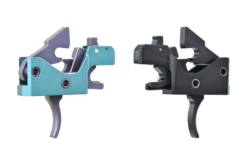
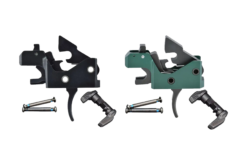
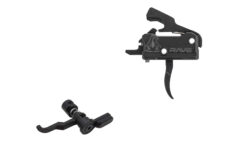
Which AR-15 Triggers Are Better for a General-Purpose Rifle?
Either design can work extremely well on a general-purpose AR-15.
A shooter who prefers a straightforward trigger press, familiar movement, and direct break may prefer single-stage AR-15 Triggers.
Someone who likes noticeable take-up followed by a clearly defined wall may prefer a two-stage design.
Rather than choosing based on what another shooter considers “best,” consider how the trigger will actually be used.
Ask:
- Do you prefer a direct trigger press?
- Do you like noticeable first-stage take-up?
- Do you want to prepare the trigger against a wall before firing?
- Will the rifle primarily be used for recreational shooting?
- Is precision shooting a major priority?
- Will the rifle be used in competition?
- What pull weight feels appropriate?
- Do you prefer a curved or flat trigger shoe?
- Do you want a traditional fire control group or drop-in assembly?
Answering those questions usually makes comparing AR-15 Triggers much easier.
Single-Stage AR-15 Triggers for Precision Shooting
Although two-stage triggers are frequently associated with precision rifles, single-stage triggers should not automatically be excluded.
A quality single-stage trigger can provide a clean, predictable break with very little perceptible movement.
Shooters who prefer that direct feel may find a well-designed single-stage trigger extremely effective for deliberate shooting.
The important factor when choosing precision-oriented AR-15 Triggers is consistency.
The shooter should be able to apply pressure repeatedly without introducing unnecessary movement into the rifle as the trigger breaks.
Two-Stage AR-15 Triggers for Precision Shooting
Two-stage triggers provide a different approach.
The shooter takes up the first stage until reaching the wall. At that point, much of the initial trigger movement has already occurred.
The shooter can then refine the sight picture and apply the remaining pressure necessary to complete the second stage.
That combination is why two-stage AR-15 Triggers remain popular among shooters who prioritize deliberate shot placement. Both PSA’s comparison and contemporary trigger testing resources describe precision-oriented use as a common reason shooters select two-stage designs.
Whether that system actually feels better is ultimately a matter of personal preference.
Single-Stage AR-15 Triggers for Faster-Paced Shooting
Many shooters prefer single-stage triggers when they want a simple press without intentionally moving through a first stage.
A clean break combined with a positive reset can create an intuitive trigger cycle.
However, buyers should avoid assuming that every single-stage trigger automatically has a shorter reset than every two-stage trigger.
Modern AR-15 Triggers vary considerably.
Reset distance, reset force, overtravel, pull weight, and trigger geometry should be evaluated on the individual product rather than assumed from stage count alone.
Is a Two-Stage Trigger Slower Than a Single-Stage Trigger?
Not necessarily.
Although a two-stage trigger contains intentional first-stage movement, experienced shooters do not always operate it as two dramatically separate movements during every shot.
How quickly either design can be used depends heavily on the individual trigger, the shooter’s familiarity with it, and the shooting application.
The more important distinction between these AR-15 Triggers is the feedback they provide.
Single-stage triggers generally emphasize a direct path toward the break.
Two-stage triggers emphasize a preparatory first stage followed by a recognizable wall.
Should You Replace a Factory AR-15 Trigger?
A factory trigger does not automatically need to be replaced.
If the existing trigger is reliable and its feel works well for the rifle’s intended purpose, there may be no immediate reason to change it.
However, upgrading AR-15 Triggers is popular because the trigger is one of the areas where the shooter can immediately feel the difference between components.
An aftermarket trigger may offer different pull characteristics, a cleaner break, a more defined reset, another trigger shoe profile, or a stage configuration better suited to the shooter.
The goal should be improving the interface between the shooter and rifle rather than upgrading simply for the sake of replacing a factory component.
How to Choose the Right AR-15 Triggers
The easiest way to narrow the field is to begin with the rifle’s intended purpose and the trigger feel you prefer.
Consider Single-Stage AR-15 Triggers If You Want:
- One direct trigger press
- Minimal perceptible staging
- A simple, familiar feel
- A crisp break
- A versatile trigger for general-purpose use
Consider Two-Stage AR-15 Triggers If You Want:
- Intentional first-stage movement
- A clearly defined wall
- More tactile feedback before the shot
- The ability to prepare the trigger
- A trigger feel suited to deliberate shooting
After deciding between stages, compare individual AR-15 Triggers according to pull weight, reset, trigger shoe shape, construction style, materials, adjustability, compatibility, and manufacturer specifications.
There is no universal winner.
The best trigger is one that fits the rifle and allows the shooter to operate it safely, predictably, and consistently.
Buy AR-15 Triggers at Black Rifle Depot
There is no universal winner in the Single-Stage Vs. Two-Stage Triggers debate.
Single-stage AR-15 Triggers provide a direct and familiar pull that many shooters appreciate for general-purpose and faster-paced shooting. Two-stage designs add intentional take-up and a defined wall, giving the shooter another level of tactile feedback before the trigger breaks.
Neither design automatically makes an AR-15 more accurate, faster, or better.
The right choice depends on how you want the trigger to feel and how the rifle will be used.
Consider the complete trigger experience, including pull weight, take-up, wall, break, overtravel, reset, trigger shoe shape, construction, and compatibility. Doing so provides a much better way to compare AR-15 Triggers than simply choosing the lightest trigger or assuming one stage configuration is superior.
If you’re ready to upgrade your rifle, shop AR-15 Triggers at Black Rifle Depot. Compare single-stage, two-stage, and drop-in options from trusted manufacturers and find the trigger setup that best matches your next AR-15 build or upgrade.
Frequently Asked Questions About AR-15 Triggers
Choosing between single-stage and two-stage AR-15 Triggers often comes down to trigger feel, intended use, and personal preference. The FAQs below cover some of the most common questions shooters have when comparing trigger types, pull characteristics, and AR-15 trigger options.
What is the main difference between single-stage and two-stage AR-15 triggers?
Single-stage AR-15 Triggers have one primary pull leading to the break. Two-stage triggers provide an intentional first stage followed by a defined wall and second stage before the break. The primary difference is how resistance and movement are presented to the shooter.
Are two-stage AR-15 triggers better for accuracy?
Two-stage AR-15 Triggers do not make the rifle mechanically more accurate.
However, some shooters find that the first stage and defined wall make it easier to apply trigger pressure consistently during deliberate or precision shooting.
What is the best single-stage trigger for AR15 rifles?
There is no universal best single-stage trigger for ar15 rifles because shooters have different requirements. Pull weight, break quality, reset, trigger shoe shape, budget, construction, intended use, and personal preference should all be considered.
Is an AR15 2-stage trigger good for a general-purpose rifle?
An AR-15 2-stage trigger can work very well in a general-purpose rifle, particularly for someone who likes a defined wall before the break. A single-stage trigger can be equally appropriate for someone who prefers a more direct press.
Is an AR15 drop-in trigger always single-stage?
No.
An AR-15 drop-in trigger can use either a single-stage or two-stage design.
“Drop-in” refers to the modular construction of the trigger assembly, while “single-stage” and “two-stage” describe the characteristics of the trigger pull.
Do single-stage AR-15 triggers have a reset?
Yes.
Both single-stage and two-stage AR-15 Triggers reset after the firing cycle.
Reset distance, feel, and force depend on the individual trigger design rather than simply whether it is single-stage or two-stage.
What does trigger reset mean?
Reset is the forward movement necessary for the trigger mechanism to become ready for another trigger press. Different AR-15 Triggers can have very different reset characteristics, including how far the trigger moves and how noticeable the reset feels.
Should I choose the lightest AR-15 trigger available?
Not automatically.
Pull weight should match the intended application and the shooter’s preferences and experience.
A predictable and controllable trigger is generally more useful than simply choosing the lowest advertised pull weight.
Can a single-stage trigger be used for precision shooting?
Absolutely.
Quality single-stage AR-15 Triggers can provide a crisp and predictable break that works very well for precision-oriented rifles. Two-stage triggers are popular for precision applications because of their defined first stage and wall, but they are not the only option.
Can a two-stage trigger be used for faster shooting?
Yes.
A two-stage trigger is not restricted to slow-fire precision shooting. Shooters who are familiar with the trigger can operate it efficiently in a variety of applications. Stage count is only one characteristic of AR-15 Triggers and should not be used as the sole measure of performance.
Are drop-in AR-15 triggers better than traditional triggers?
Not necessarily.
Both modular drop-in and traditional component-style AR-15 Triggers are available in high-quality configurations. The better choice depends on the trigger’s design, intended use, construction, feel, compatibility, and the shooter’s preferences.
For additional support and online deals, check out our X Page.
