
AR-15 Barrels
AR-15 Barrel Twist Rates: How to Choose the Right Twist for Your Ammo
Jul
Table of Contents
Choosing the right AR-15 barrel involves more than deciding on length, profile, finish, or gas-system configuration. You also need to consider barrel twist rate. Twist rate determines how quickly the rifling spins a bullet as it travels through the bore, directly influencing bullet stability and downrange performance.
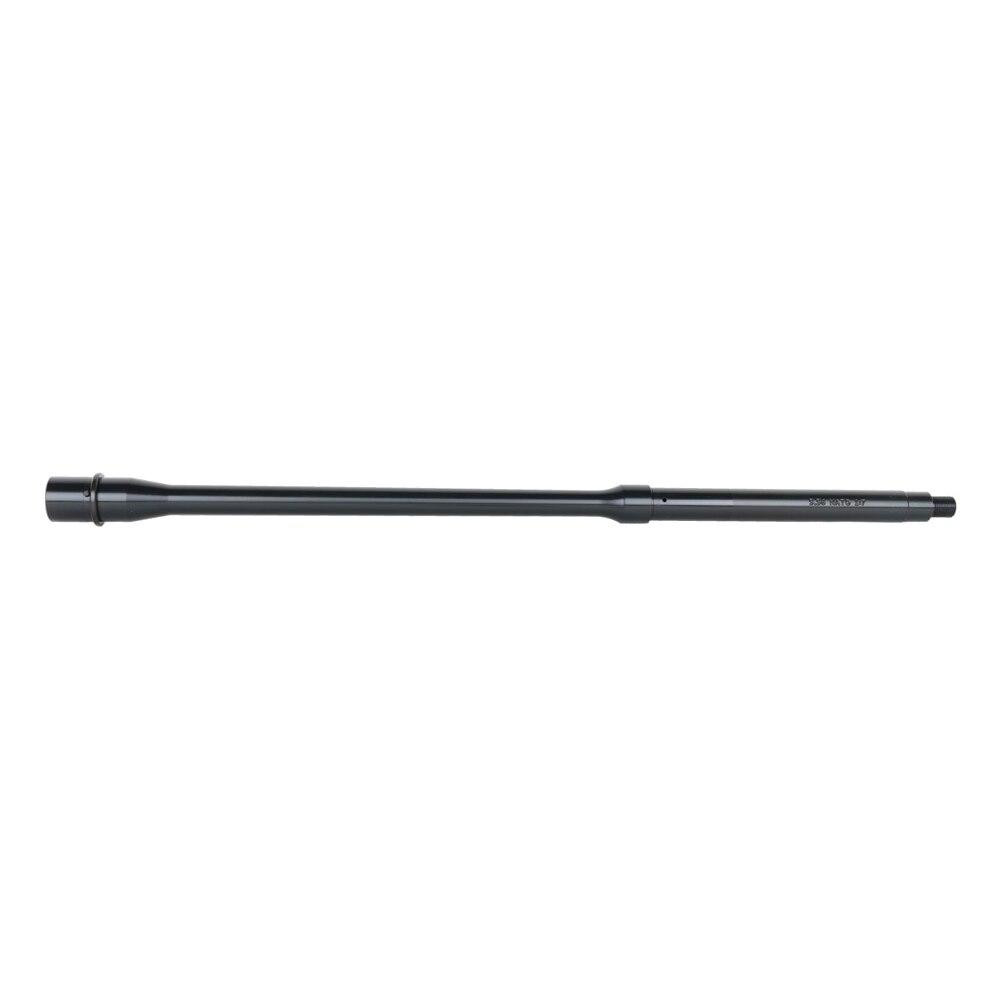
The best twist rate depends primarily on the ammunition you plan to shoot. Lightweight varmint bullets, common 55-grain range ammunition, and heavier match projectiles can perform differently when fired through the same barrel. Selecting a compatible combination can improve consistency, reduce stability issues, and help you achieve better results with your rifle.
This guide explains how AR-15 barrel twist rates work, compares the most common options, and helps you choose the right barrel for your preferred ammunition.
What Is an AR-15 Barrel Twist Rate?
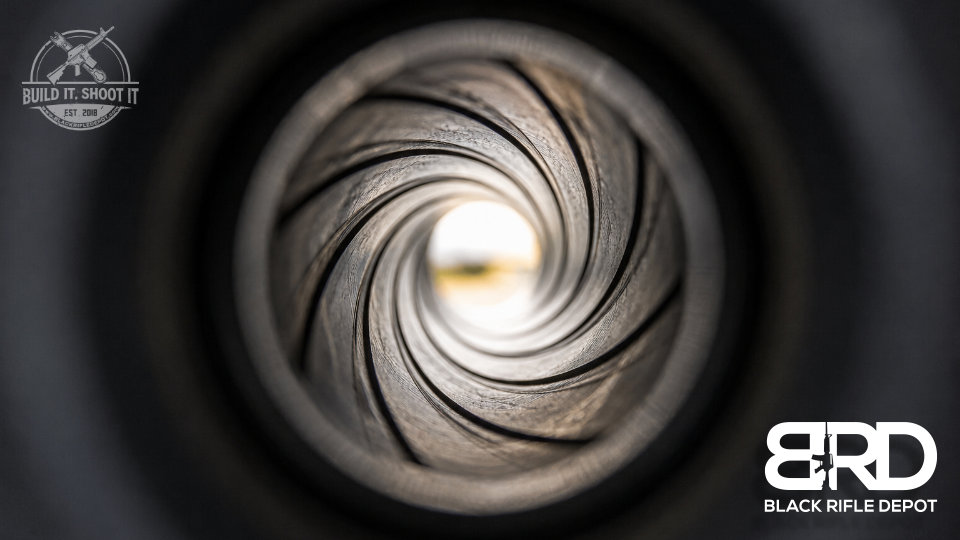
An AR-15 barrel contains spiral grooves called rifling. As a bullet moves through the bore, these grooves cause it to rotate. That rotation provides gyroscopic stability, helping the projectile maintain its forward orientation after leaving the muzzle.
Twist rate describes the distance a bullet travels through the barrel before completing one full rotation. It is normally written as a ratio:
- 1:7 twist: One full rotation every seven inches
- 1:8 twist: One full rotation every eight inches
- 1:9 twist: One full rotation every nine inches
- 1:12 twist: One full rotation every 12 inches
A lower second number indicates a faster twist. Therefore, a 1:7 AR-15 barrel spins the bullet faster than a 1:9 barrel.
For example, a bullet traveling through a 16-inch barrel with a 1:8 twist completes approximately two full rotations before leaving the muzzle. However, the number of rotations completed inside the barrel is not the only factor that matters. Velocity, projectile length, construction, diameter, and atmospheric conditions also influence stability.
Why Does AR-15 Barrel Twist Rate Matter?
A bullet must spin fast enough to remain stable during flight. When a twist rate is too slow for the projectile, the bullet may not receive enough rotational stability. This can produce larger groups, inconsistent impacts, or elongated holes in the target known as keyholing.
A faster twist is generally needed for longer bullets. Heavier bullets are often longer, which is why bullet weight is commonly used as a convenient reference when selecting a twist rate. However, bullet length and construction are more accurate indicators than weight alone.
For example, a lead-free copper bullet can be longer than a lead-core bullet of the same weight because copper is less dense. That longer projectile may require a faster twist even though both bullets have the same listed grain weight.
The objective is not simply to choose the fastest available twist. It is about choosing an AR-15 barrel that provides dependable stability with the ammunition you expect to use.
AR-15 Barrel Twist Rate Chart
The following chart provides general starting recommendations for .223 Remington and 5.56 NATO ammunition. Individual barrels and loads can perform differently, so always review the ammunition manufacturer’s recommendations when they are available.
| Twist Rate | General Bullet-Weight Range | Best Uses | Key Considerations |
|---|---|---|---|
| 1:12 | 35–55 grains | Lightweight varmint ammunition and older rifle configurations | Usually too slow for modern heavy match bullets |
| 1:9 | 45–69 grains | Range use, varmint shooting, and common 55- or 62-grain ammunition | Some barrels stabilize select 69- or 75-grain loads, but results vary |
| 1:8 | 50–80 grains | General-purpose builds, competition, and mixed ammunition | One of the most versatile choices for modern AR-15 rifles |
| 1:7 | 55–80+ grains | Heavy match bullets, defensive ammunition, and military-style loads | Excellent for long projectiles; not always ideal for extremely light, thin-jacketed bullets |
| 1:6.5 or faster | Specialized 80–90+ grain bullets | Specialized competition and long-range applications | Usually unnecessary for a standard general-purpose build |
This chart should be treated as a practical guideline rather than an absolute rule. Berger’s stability resources emphasize that twist-rate suitability depends on several variables, including bullet dimensions, velocity, and atmospheric conditions. Sierra also specifies faster twist requirements for some of its longer .224-caliber match bullets.

Understanding the Most Common AR-15 Twist Rates
Choosing the right AR-15 barrel twist rate starts with understanding how the most common options affect bullet stability. Each twist rate works best with a different range of bullet lengths and weights, so comparing them can help you select the right barrel for your ammunition and intended use.
1:7 Twist Rate
A 1:7 twist is a fast and widely available option for 5.56 NATO barrels. It is especially well suited to longer, heavier projectiles such as 69-, 75-, 77-, and certain 80-grain bullets.
This twist rate is commonly selected for defensive rifles, duty-style builds, and rifles intended to fire heavy open-tip match or specialized ammunition. It can also stabilize common 55- and 62-grain loads in most situations.
A 1:7 twist does not automatically make lightweight ammunition inaccurate. Many rifles with this twist adequately shoot standard 55-grain full-metal-jacket ammunition. However, extremely light or thin-jacketed varmint bullets fired at high velocity may not be the best match for an especially fast twist.
Choose a 1:7 AR-15 barrel when heavy projectiles are a priority or when you want compatibility with a broad selection of modern 5.56 ammunition.
1:8 Twist Rate
A 1:8 twist offers an excellent balance between lightweight and heavy projectiles. It is commonly found in .223 Wylde barrels and is one of the most versatile options for a general-purpose rifle.
It can typically handle common 55- and 62-grain range ammunition and stabilize many 69-, 75-, 77-, and 80-grain projectiles. Some specialty bullets may have different requirements, but a 1:8 twist covers the ammunition used by most recreational, defensive, and competition shooters.
For builders who do not want to limit their rifle to one narrow bullet-weight range, a 1:8 barrel is often the safest all-around choice.
1:9 Twist Rate
The 1:9 twist was once extremely common on commercial AR-15 rifles. It remains a practical option for shooters who primarily use lightweight and medium-weight ammunition.
A quality 1:9 barrel usually performs well with 45-, 50-, 55-, and 62-grain bullets. Many examples also stabilize 69-grain projectiles, although performance with longer 69-, 73-, or 75-grain bullets can vary.
Differences in actual bore dimensions, velocity, projectile shape, elevation, and temperature can determine whether a particular heavy load performs well. A load that remains stable in warm weather at a higher elevation may become marginal in cold, dense air closer to sea level.
A 1:9 barrel makes sense for range rifles and varmint builds that will primarily shoot common 55-grain ammunition or lighter projectiles.
1:12 Twist Rate
A 1:12 twist is much slower than the rates used in most current AR-15 barrels. It is mainly associated with older rifles and barrels designed around lightweight .223 projectiles.
This twist can perform very well with 40-, 45-, 50-, and certain 55-grain bullets. However, it is normally too slow for 62-grain military-style ammunition and modern heavy match projectiles.
A 1:12 barrel can still be useful for a dedicated varmint rifle, especially when paired with lightweight ammunition. It is not the most practical option for a rifle expected to fire a wide variety of modern loads.
Is 1:7 or 1:8 Better for an AR-15 Barrel?
Neither option is universally better. The right choice depends on your ammunition and intended use.
A 1:7 twist may be preferable when:
- You regularly shoot 75- or 77-grain ammunition
- You want to use long match or defensive projectiles
- You are building a duty-style or military-inspired rifle
- Heavy-bullet stability is more important than optimizing very light loads
A 1:8 twist may be preferable when:
- You regularly switch between 55-, 62-, 69-, and 77-grain ammunition
- You want one barrel for range use, training, and competition
- You are building a versatile .223 Wylde rifle
- You want balanced performance across common bullet weights
For most shooters seeking a single do-everything configuration, 1:8 offers outstanding versatility. A 1:7 twist remains an excellent option when heavier ammunition is the main priority.

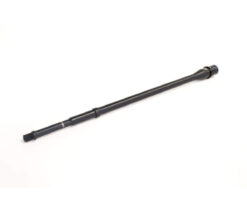
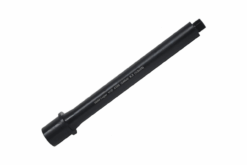
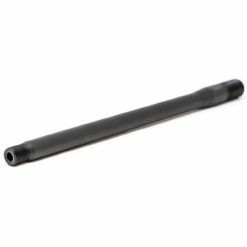
Bullet Length Matters More Than Bullet Weight
Twist-rate charts rely on bullet weight because it is easy to identify on an ammunition box. However, rifling stabilizes a bullet based more closely on its length, diameter, velocity, and shape.
Two 62-grain bullets can have different stability requirements. A conventional lead-core projectile may be shorter than a solid-copper bullet of the same weight. Since the copper projectile is longer, it may require a faster twist.
Projectile design also matters. Boat-tail bullets, open-tip match bullets, ballistic-tip projectiles, and monolithic copper bullets can all differ in length even when their weights are identical.
When choosing ammunition near the upper limit of your barrel’s expected range, consult the bullet or ammunition manufacturer for a specific minimum twist recommendation.
Does Barrel Length Change the Twist Rate You Need?
AR-15 Barrel length and twist rate are separate specifications. A 10.5-inch barrel with a 1:7 twist and a 20-inch barrel with a 1:7 twist both rotate the bullet once every seven inches of travel.
However, barrel length can affect muzzle velocity. Velocity is one of the variables that influences gyroscopic stability, so the same bullet may behave somewhat differently when fired from barrels of different lengths.
A shorter AR barrel usually produces less velocity than a longer barrel using the same ammunition. When a bullet is already marginally stabilized, that velocity reduction may matter. This is one reason faster twist rates are common on short barrels designed to use heavy projectiles.
You should still choose twist rate based primarily on projectile requirements rather than assuming that every short barrel needs the fastest available rifling.
Twist Rate for Other AR-15 Calibers
Although .223 Remington and 5.56 NATO receive most of the attention, other AR-15 cartridges have their own common twist rates.
.300 Blackout
Many .300 Blackout barrels use a 1:7 or 1:8 twist. Faster options are useful for stabilizing long, heavy subsonic projectiles, particularly when fired from short barrels.
6.5 Grendel
A 1:8 twist is common for 6.5 Grendel and works with a wide selection of popular projectiles. Ballistic Advantage, for example, lists 1:8 as its standard twist for 6.5 Grendel barrels.
6mm ARC
A 1:7 or 1:7.5 twist is commonly used to stabilize the long, high-ballistic-coefficient bullets associated with 6mm ARC. Ballistic Advantage identifies 1:7 as its standard twist for the cartridge.
9mm
AR-style 9mm barrels commonly use approximately a 1:10 twist, although specifications vary by manufacturer.
Always match the twist rate to the specific caliber and projectile rather than applying 5.56 NATO recommendations to every AR-platform cartridge.
Other Factors to Consider When Buying an AR-15 Barrel
Twist rate is important, but it should not be the only specification guiding your purchase.
Chamber Type
A 5.56 NATO chamber is designed for 5.56 NATO and .223 Remington ammunition. A .223 Wylde chamber is also designed to safely accommodate both while providing dimensions intended to support strong accuracy.
An AR-15 barrel marked only for .223 Remington should not automatically be treated as interchangeable with a 5.56 NATO barrel. Follow the markings and ammunition recommendations supplied by the barrel manufacturer.
Barrel Length
Barrel length affects velocity, handling, weight, and gas-system selection. Short AR-15 barrels offer compact handling, while longer barrels can provide more velocity and a longer sight radius when iron sights are used.
Make sure the finished firearm complies with all applicable federal, state, and local laws.
Barrel Profile
Government, pencil, heavy, SOCOM, and hybrid profiles distribute weight differently. Lightweight profiles are easier to carry, while heavier profiles can absorb more heat before group sizes begin to change.
Barrel Material and Finish
Common barrel materials include 4150 chrome-moly-vanadium steel and various stainless-steel alloys. Nitride, chrome lining, phosphate, and stainless finishes each offer different combinations of corrosion resistance, service life, maintenance, and cost.
Gas-System Length
The AR barrel determines the gas port location, making gas-system length an important compatibility consideration. Common choices include pistol, carbine, mid-length, and rifle-length systems.
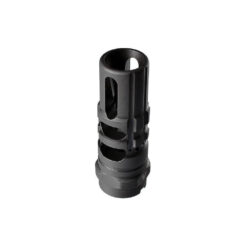
Muzzle Threads
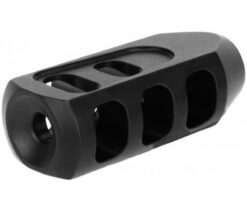
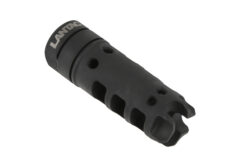
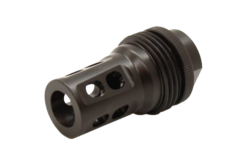
Verify that the barrel’s muzzle threads match your intended muzzle device. The common thread pattern for many .223 Remington and 5.56 NATO barrels is 1/2×28, but other AR-15 calibers frequently use different patterns.

Barrel Extension and Installation Considerations
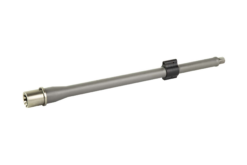
A barrel extension for an AR-15 is fitted to the rear of the barrel and includes a locking-lug interface for the bolt. Most replacement barrels arrive with the barrel extension already installed and properly indexed by the manufacturer.
The extension also includes feed ramps that should align correctly with the upper receiver. M4-style feed ramps are common, but builders should confirm that the barrel extension and receiver are compatible.
During assembly, the barrel slides into the upper receiver and is secured by the barrel nut. The exact installation process depends on the selected handguard and barrel-nut design.
An AR-15 barrel nut wrench may be required to tighten or remove the barrel nut. Some handguards use a standard-style nut, while others include a proprietary design and matching installation tool. Use the wrench and torque instructions specified by the component manufacturer rather than assuming one tool or procedure applies to every handguard.
How to Choose the Best Twist Rate for Your Build
Start by identifying the ammunition you expect to shoot most frequently.
For common 55-grain range ammunition, a 1:9, 1:8, or 1:7 barrel can all work. For a combination of 55- to 77-grain loads, a 1:8 twist is highly versatile. For heavy match or defensive projectiles, a 1:7 twist is generally the more dependable choice.
A simple selection process looks like this:
- Identify your caliber and chamber.
- Determine your most frequently used bullet weight and design.
- Review the ammunition manufacturer’s minimum twist recommendation.
- Consider whether you will use heavier ammunition later.
- Select a twist rate that supports your expected range of projectiles.
- Test several loads to see what your individual barrel shoots best.
Even the best AR-15 barrels can show preferences for certain loads. Twist rate establishes a suitable stability range, but it does not guarantee that every compatible load will produce identical accuracy.
Choose the Right AR-15 Barrel for Your Ammunition
Twist rate determines how effectively an AR-15 barrel stabilizes different projectiles. A 1:9 twist works well for many lightweight and medium-weight loads, a 1:8 twist provides excellent versatility, and a 1:7 twist is a dependable choice for longer, heavier bullets.
Your final decision should reflect the ammunition you shoot most often, the rifle’s intended purpose, and any loads you may want to use later. After selecting an appropriate twist rate, compare chamber type, barrel length, profile, material, gas-system location, and muzzle threads to complete your build.
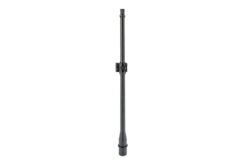
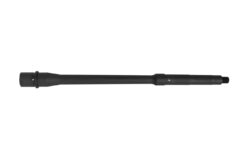
Shop AR-15 barrels at Black Rifle Depot to find quality options for general-purpose rifles, lightweight builds, precision setups, caliber conversions, and replacement projects. With multiple lengths, profiles, chambers, and twist rates available, you can choose the right barrel for your ammunition and build goals.

Frequently Asked Questions About AR-15 Barrel Twist Rates
Twist-rate markings can be confusing when comparing barrels and ammunition. The following answers cover some of the most common questions shooters have when choosing a barrel for a new build or replacing an existing one.
What twist rate is best for a 55-grain AR-15 bullet?
A 55-grain bullet generally works well with 1:9, 1:8, and 1:7 twist rates. A 1:9 twist is particularly well suited to lightweight and medium-weight ammunition, while 1:8 and 1:7 options provide greater flexibility for heavier bullets.
What is the best all-around AR-15 barrel twist rate?
A 1:8 twist is often considered the best all-around option because it can stabilize a broad selection of common .223 Remington and 5.56 NATO projectiles. A 1:7 twist is another versatile choice, especially for shooters who prioritize heavier ammunition.
Can a 1:7 twist shoot 55-grain ammunition?
Yes. Most 1:7 barrels can shoot standard 55-grain ammunition without a problem. Accuracy depends on the quality of the AR barrel and ammunition, but using a 55-grain bullet in a 1:7 twist is common.
Is a faster twist rate always more accurate?
No. Twist rate must provide enough stability for the bullet, but accuracy also depends on barrel quality, chamber dimensions, ammunition consistency, velocity, optics, and shooter technique. A faster twist does not automatically make every load more accurate.
What happens when the twist rate is too slow?
A twist rate that is too slow may fail to stabilize a long projectile adequately. Possible signs include poor groups, unpredictable impacts, and keyholing. Instability can become more noticeable at longer distances or under dense atmospheric conditions.
Can a bullet be overstabilized?
A bullet can be spun faster than necessary, but moderate excess stability is rarely a major concern for ordinary AR-15 use. Extremely fast twist rates combined with lightweight, thin-jacketed bullets and high velocity may create performance issues. Most standard 55- to 77-grain factory ammunition performs normally in common 1:7 or 1:8 AR barrels.
Where is the twist rate marked on an AR-15 barrel?
Manufacturers often engrave or stamp the caliber and twist rate on the exposed portion of the barrel. Markings may appear near the muzzle, gas block, or chamber area. The product description or manufacturer specifications should also list the twist rate.
Do I need a special AR-15 barrel nut wrench?
That depends on the handguard and barrel-nut system. Some assemblies use a standard armorer’s wrench, while others require a proprietary tool supplied or sold by the handguard manufacturer. Confirm tool compatibility before beginning installation.
For additional support, check out our X Page.
