
AR-15 Optics
AR-15 Scope Reticles vs. Glass Quality: What Matters More?
Jul
Table of Contents
When shooters compare optics, glass quality often gets the most attention. Clear lenses, strong light transmission, and sharp edge-to-edge images are all valuable, but those features do not automatically make an optic easier to use. For many rifle owners, the reticle has a much greater effect on speed, accuracy, and confidence behind the gun.
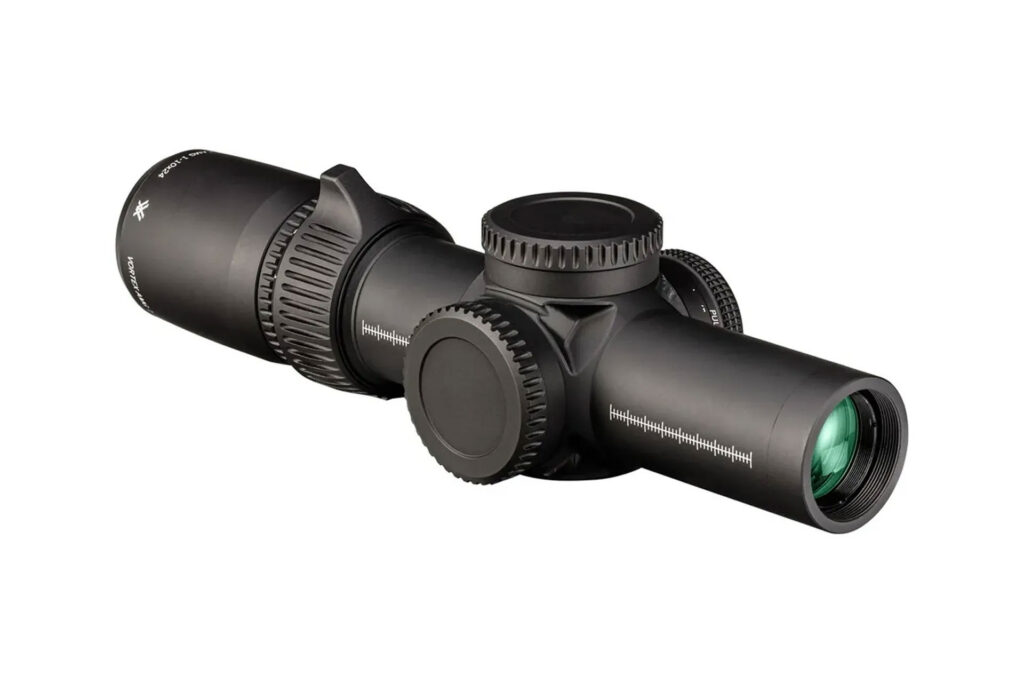
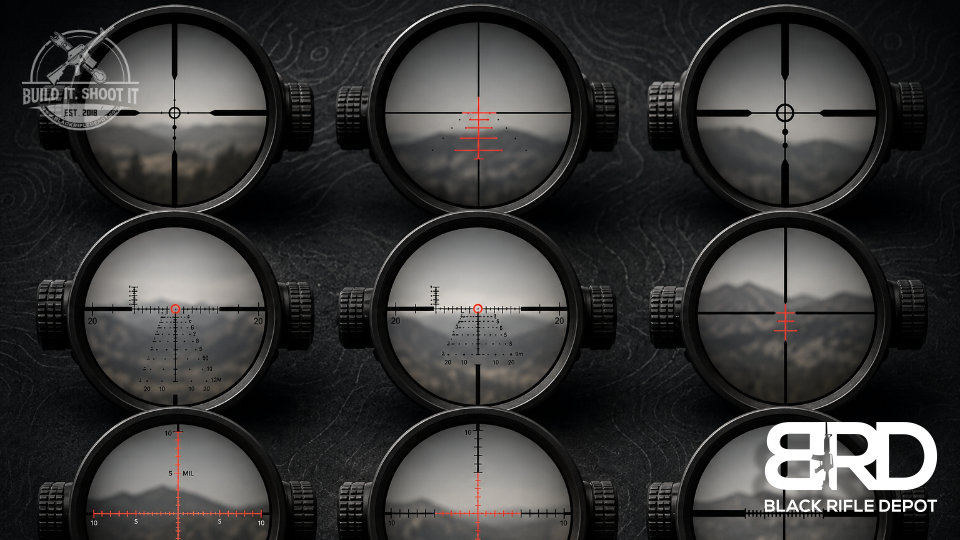
The reticle is the part of an AR-15 Scope that gives the shooter an aiming point. Depending on the design, it may also provide holdovers, wind references, ranging information, or a bright illuminated center for close-range use. A scope can have excellent glass and still feel slow if the reticle is too thin, too cluttered, or poorly matched to the rifle.
Choosing the right AR-15 Scope should start with the reticle, the intended shooting distance, and the way the rifle will be used. Glass quality still matters, but a well-designed reticle often delivers a more noticeable improvement for the average shooter.
What an AR-15 Scope Reticle Actually Does
A reticle is more than a set of crosshairs. It serves as the shooter’s visual reference point and helps connect the target, the rifle, and the expected bullet path.
A basic reticle may provide only a center aiming point. More advanced designs can include elevation marks, windage references, range estimation tools, moving-target leads, or a full measurement grid. These features allow an AR-15 Scope to do more than magnify the target.
A useful reticle can help the shooter:
- Locate the aiming point quickly
- Hold for bullet drop at different distances
- Estimate wind corrections
- Measure misses and make adjustments
- Keep the rifle on target during rapid transitions
- Use the optic effectively at multiple magnification settings
The best reticle is not always the one with the most markings. It is the one that gives the shooter the right information without slowing down the sight picture.
Why AR-15 Scope Reticle Design Matters So Much
Glass quality affects how clearly the shooter sees the target. Reticle design affects what the shooter does after seeing it.
That difference is important. A bright, high-resolution image is helpful, but the shooter still needs a clear point of aim. If the center dot covers too much of the target, the reticle disappears against a dark background, or the holdover marks are confusing, the quality of the glass cannot solve the problem.
A practical AR-15 Scope should make the aiming process feel natural. The eye should move quickly toward the center, and the shooter should understand what the markings mean without pausing to interpret them.
Reticle design directly affects several parts of the shooting process.
Target Acquisition
Bold outer posts, illuminated circles, horseshoes, and center dots can guide the eye toward the aiming point. This is especially useful at low magnification or during fast close-range shooting.
A reticle with a strong visual center can help the shooter establish a sight picture faster. By contrast, an extremely fine reticle may be difficult to locate against shadows, foliage, or dark targets.
Precision
A fine center point allows more precise placement on smaller targets. However, a center point that is too fine may become difficult to see in poor lighting or against a busy background.
The ideal design balances visibility and precision. It should be bold enough to locate quickly without covering too much of the target at longer distances.
Holdovers
Elevation marks give the shooter reference points for bullet drop. This allows the shooter to hold above the target rather than adjust the turret before each shot.
Holdovers can be particularly useful when shooting at multiple distances. A properly selected AR-15 Scope can help the shooter transition between close and distant targets without making constant mechanical adjustments.
Wind Corrections
Horizontal marks help estimate wind holds. The amount of detail needed depends on the distance, target size, and type of shooting.
A general-purpose shooter may only need a few simple references. A precision shooter may benefit from a complete grid that allows simultaneous elevation and wind corrections.
Speed
A simple reticle can be faster at short range, while a more detailed reticle can make longer-range corrections faster. The correct choice depends on how the AR-15 Scope will be used.

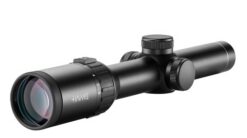
AR-15 Scope Reticle Design vs. Glass Quality
Both features are important, but they contribute to performance in different ways.
| Feature | Reticle Design | Glass Quality |
|---|---|---|
| Main purpose | Provides aiming and correction references | Improves clarity, brightness, and contrast |
| Close-range speed | Strong influence | Moderate influence |
| Long-range holdovers | Essential | Helps with target identification |
| Wind corrections | Can provide direct reference marks | Does not provide correction data |
| Low-light use | Improved by visible or illuminated aiming points | Improved by light transmission and contrast |
| Precision | Depends on center-point size and layout | Helps reveal small details |
| Ease of use | Depends on simplicity and organization | Depends on the distortion and image quality |
| Best for most shooters | Often, the more noticeable factor | More important in demanding conditions |
For daylight range use, many affordable optics already provide acceptable clarity. The difference between average and premium glass may become more obvious at dawn, dusk, or extended distances. Reticle design, however, affects every shot made through an AR-15 Scope.
That does not mean shooters should ignore glass quality. Poor lenses can cause distortion, reduced contrast, or difficulty identifying distant targets. The point is that once glass reaches an acceptable level, a better reticle may provide a more useful upgrade than a small improvement in image quality.
Common Reticle Types for an AR-15 Scope
Different reticle styles are designed for different tasks. Understanding the most common options can make AR-15 Scope selection much easier.
Duplex Reticle
The duplex reticle uses thick outer posts that narrow toward the center. It offers a clean sight picture and is easy for new shooters to understand.
A duplex reticle works well in an AR-15 Scope used for hunting, casual target shooting, or turret-based adjustments. It is less useful for rapid holdovers because it usually provides few or no elevation references.
The simplicity of a duplex reticle is its greatest strength. There are no complicated grids to interpret, and the thicker outer sections naturally guide the eye toward the center.
BDC Reticle
A bullet-drop compensating reticle includes a series of aiming points below the center. Each reference is intended to represent a different distance.
This is a popular choice for an AR-15 Scope because it offers simple holdovers without the complexity of a full measurement grid. However, BDC marks are based on assumed ballistic conditions. Barrel length, ammunition, muzzle velocity, zero distance, optic height, and environmental conditions can all change where the rounds impact.
Shooters should confirm every BDC reference at the range rather than assuming the printed distances will match their rifle perfectly. A mark labeled for 400 yards may produce a slightly different impact depending on the rifle and ammunition being used.
MIL Reticle
A MIL reticle uses milliradian-based markings for measuring elevation, windage, and corrections. It is commonly paired with MIL-adjustment turrets.
The main advantage is consistency. A shooter can observe a miss, measure the correction through the reticle, and dial the same value on the turret. A MIL-based AR-15 Scope is a strong option for precision shooting and distance work.
MIL reticles can appear complicated at first, but they become highly useful once the shooter understands the measurement system. They are especially practical when targets are placed at unknown or changing distances.
MOA Reticle
An MOA reticle uses minute-of-angle markings. Like a MIL system, it can be used for elevation, wind, and shot correction.
MOA reticles are often familiar to shooters choosing an AR-15 Scope and thinking in inches at 100 yards. The best choice between MIL and MOA is usually the system the shooter understands and uses consistently.
Neither system is automatically more accurate. The most important factor is matching the reticle to the turrets and avoiding unnecessary conversions.
Horseshoe or Circle-Dot Reticle
A horseshoe or circle-dot reticle surrounds a smaller center point with a bold outer aiming feature. At low magnification, the outer shape helps the eye find the center quickly. At higher magnification, the smaller center point allows more precise aiming.
This design works especially well in a general-purpose AR-15 Scope because it can support both close-range speed and longer-range accuracy.
A bright horseshoe or segmented circle can behave almost like a red-dot sight at low power. When the magnification increases, the shooter can transition to the finer center point and use any additional elevation marks.
Christmas Tree Reticle
A Christmas tree reticle places a widening grid of elevation and windage marks below the center. It allows the shooter to hold for drop and wind simultaneously.
This design is useful for precision and competition shooting. It may be too busy for shooters who rarely engage targets at longer distances.
The additional markings can speed up complex corrections, but only when the shooter understands the reticle. Otherwise, the grid may distract from the primary aiming point.
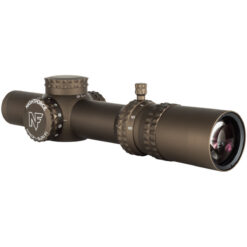
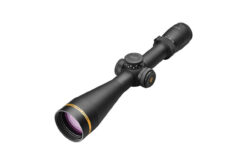
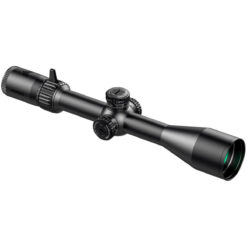
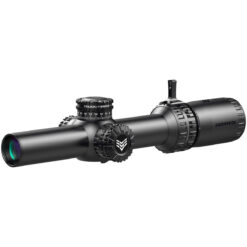
Simple vs. Complex AR-15 Scope Reticles
A simple AR-15 Scope reticle is usually easier to learn and faster to process. It gives the shooter a clean field of view and reduces visual clutter. This makes it a practical choice for close-range use, hunting, and general range shooting.
Simple reticles generally offer:
- Faster center-point recognition
- A cleaner view of the target
- Less visual distraction
- An easier learning curve
- Better usability at low magnification
A complex reticle provides more data. It may include detailed elevation marks, wind references, measurement scales, and correction grids.
Complex reticles can offer:
- More precise elevation holds
- Detailed windage corrections
- Faster adjustments after a missed shot
- Better support for unknown distances
- The ability to hold for elevation and wind simultaneously
These features are valuable only when the shooter understands how to use them.
When selecting an AR-15 Scope, avoid choosing a complex reticle simply because it looks advanced. More information is not always better. The reticle should match the distances, targets, and shooting positions the rifle will encounter.
First Focal Plane vs. Second Focal Plane
The focal plane determines how an AR-15 Scope reticle behaves when magnification changes.
First Focal Plane
In a first focal plane optic, the reticle appears to grow or shrink as magnification changes. The measurement marks remain accurate throughout the magnification range.
This is useful when the shooter wants to use elevation or windage references at different power settings. A first-focal-plane AR-15 Scope can be a strong choice for competition, precision shooting, and unpredictable target distances.
The drawback is that the reticle may appear very small at minimum magnification. A well-designed first focal plane reticle often uses bold outer features or illumination to remain visible at low power.
A poorly designed first focal plane reticle may be difficult to use at either end of the magnification range. It may appear too small at low power or become excessively large at maximum magnification. This makes reticle design especially important when comparing first-focal-plane models.
Second Focal Plane
In a second focal plane optic, the reticle remains the same apparent size as magnification changes. This can make it easier to see at lower power.
The tradeoff is that the reticle’s holdover marks are usually accurate at only one specific magnification setting. Shooters need to know which setting is required before using the marks for distance or wind corrections.
A second-focal-plane AR-15 Scope is a practical option for shooters who mostly use minimum or maximum magnification and prefer a consistently visible reticle.
Second focal plane optics may also cost less than comparable first focal plane models, making them attractive for general-purpose builds and recreational range rifles.
The Role of AR-15 Scope Reticle Illumination
AR-15 Scope illumination improves reticle visibility by increasing contrast between the aiming point and the target.
This can be especially useful:
- In shaded environments
- Against dark targets
- During dawn or dusk
- At the lowest magnification setting
- During fast target transitions
- When shooting against visually complex backgrounds
Brightness control matters. A setting that is too dim may disappear in daylight, while a setting that is too bright can bloom and cover the center of the target.
Daylight-bright illumination is especially useful on low-power variable optics. It can make the center aiming point easier to locate when the optic is set at 1x or another low magnification.
A dependable AR-15 Scope should also have an etched reticle that remains visible without battery power. Illumination should improve the aiming point, not become the only way to use the scope.
Some optics include automatic shutoff, motion activation, or multiple night-vision-compatible settings. These features may be helpful, but they should not replace good reticle geometry and reliable controls.
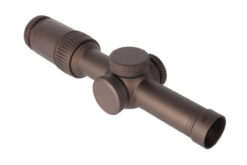
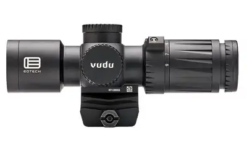
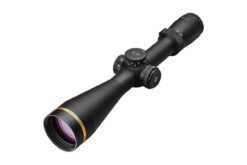
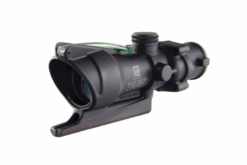
Why Premium Glass Cannot Fix the Wrong AR-15 Scope Reticle
Premium AR-15 Scope glass can improve image sharpness, contrast, and low-light visibility. It cannot correct a reticle that does not fit the shooter’s needs.
Better glass will not fix:
- A center dot that is too large
- Hold marks that are difficult to understand
- A reticle that disappears at low magnification
- Weak daylight illumination
- Excessive visual clutter
- Mismatched turret and reticle measurements
- A BDC system that does not match the rifle’s ballistics
- Outer aiming features that block too much of the target
A lower-priced AR-15 Scope with an intuitive reticle may be easier to use than a more expensive model with better glass but a poorly suited aiming system.
Premium glass becomes increasingly valuable when identifying small targets, shooting in low light, or working at extended distances. However, the shooter still needs a reticle that clearly presents the right information.
How to Choose the Right AR-15 Scope Reticle
Start with the rifle’s purpose. An AR-15 Scope for a home-defense-oriented rifle needs a different reticle than one for a precision setup.
Ask the following questions:
- What distances will the rifle be used at most often?
- Will the shooter dial the turrets or use reticle holds?
- Is daylight-bright illumination necessary?
- Are windage references needed?
- Will the optic be used mostly at low or high magnification?
- Should the reticle remain accurate at every magnification setting?
- Do the reticle and turrets use the same measurement system?
- Is the center point small enough for the intended target size?
- Will the reticle remain visible against dark or cluttered backgrounds?
- Does the shooter understand every mark included in the design?
A general-purpose AR-15 Scope often benefits from a clean illuminated center, a few simple holdovers, and enough open space to avoid blocking the target.
Shooters should also consider optic height, rifle weight, eye relief, and mounting position. These features do not change the reticle itself, but they affect how quickly and comfortably the shooter can use it.
Whenever possible, look through the optic before purchasing it. Product images may show the reticle at an ideal magnification and against a plain background. Its real appearance can be very different when viewed outdoors.
Reticle Recommendations by Use
| Intended Use | Recommended Reticle | Main Advantage |
| Close-range defense | Illuminated horseshoe or circle-dot | Fast target acquisition |
| General range shooting | Duplex or simple BDC | Easy to understand |
| Hunting | Duplex or clean BDC | Uncluttered field of view |
| Competition | Bright center with practical holdovers | Fast transitions and quick corrections |
| Precision shooting | First focal plane MIL or MOA grid | Detailed wind and elevation holds |
| Lightweight carbine | Simple etched BDC | Useful references with less complexity |
| Mixed-distance use | Horseshoe with elevation references | Balances speed and precision |
Conclusion: Choose the Reticle That Matches the Rifle
Glass quality should be part of any scope comparison, but it should not be the only deciding factor. The reticle controls how quickly the shooter finds the aiming point, applies holdovers, reads wind, and makes corrections.
The best AR-15 Scope is not automatically the model with the clearest glass or the highest price. It is the optic with a reticle that matches the rifle, the shooter, and the expected distance.
Before buying, compare the center aiming point, illumination, focal plane, measurement system, and overall reticle layout. A clear and practical design can make the rifle easier to use every time it comes out of the safe.
Shop AR-15 Scope options, LPVOs, mounts, and other optics at Black Rifle Depot. Whether you are finishing a new build or upgrading an existing rifle, Black Rifle Depot can help you find the right optic for your needs and budget.
Frequently Asked Questions About AR-15 Scope Reticles
AR-15 Scope reticle terminology can make optic shopping feel more complicated than it needs to be. The following answers explain the most important factors to compare before choosing an optic.
What is the best reticle for an AR-15 Scope?
The best reticle depends on the rifle’s purpose. A horseshoe or circle-dot works well for close-range and general-purpose use. A simple BDC is useful for basic holdovers, while a MIL or MOA grid is better for precision shooting.
Is reticle design more important than glass quality?
For many shooters, yes. Glass quality helps the shooter see the target, but reticle design determines how quickly and accurately the shooter can aim. Premium glass becomes more important in low light and at long range.
Are BDC reticles accurate with every type of ammunition?
No. BDC reticles are based on assumed ballistic data. Actual impacts can change with ammunition, barrel length, velocity, optic height, zero distance, temperature, and altitude.
Shooters should verify each holdover with their own rifle and ammunition before relying on the marks.
Is the first focal plane better for an AR-15 Scope?
The first focal plane is useful when the shooter wants accurate reticle measurements at different magnification settings. The second focal plane may be easier to see at low power and can be simpler for general shooting.
Neither option is universally better. The choice should match how frequently the shooter changes magnification and uses reticle-based measurements.
Should the reticle and turrets use the same system?
Yes. Matching MIL with MIL or MOA with MOA makes corrections easier and reduces the need for conversions.
For example, if a missed shot appears one MIL low through the reticle, a matching turret allows the shooter to dial one MIL directly.
Is an illuminated reticle worth having?
Illumination can make the aiming point easier to find in low light, against dark backgrounds, or during fast close-range shooting. The optic should still have a visible etched reticle if the battery fails.
Can a reticle have too many markings?
Yes. A cluttered reticle can slow the shooter down and obscure parts of the target. Choose only the amount of information needed for the rifle’s intended use.
What magnification range is best for a general-purpose AR-15 Scope?
Low-power variable optics such as 1-6x and 1-8x models are popular for general-purpose rifles because they provide a wide field of view at low power and additional precision at higher magnification.
The correct range depends on the rifle’s expected distance, target size, and overall weight goals.
Does an expensive scope always have a better reticle?
No. Price can reflect glass quality, construction, tracking reliability, features, and brand reputation. Reticle usefulness remains subjective and depends on the shooter’s needs.
A less expensive optic may have a reticle that works better for a particular rifle or shooting style.
For additional support, check out our X Page.
